

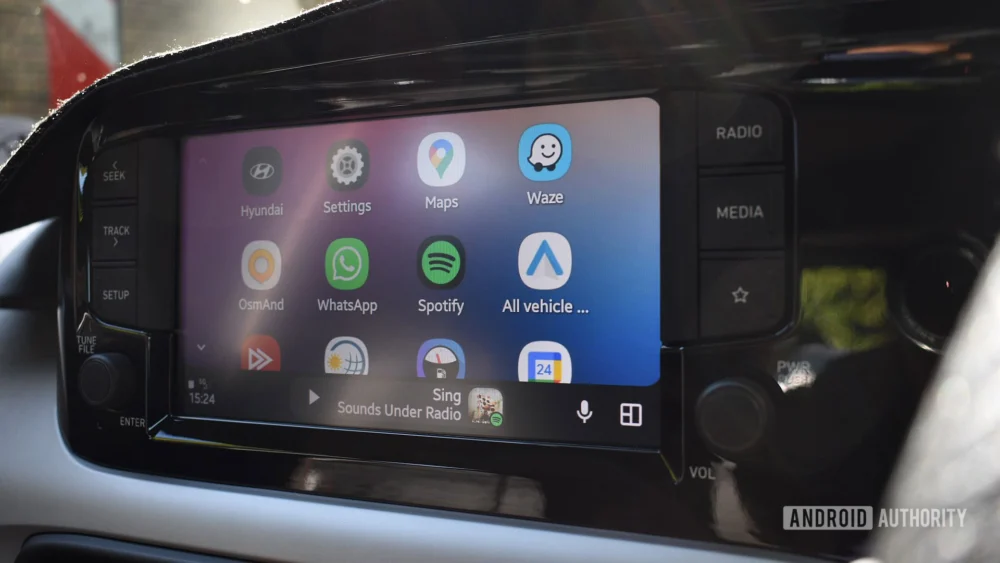
The seamless integration of mobile technology into the automotive environment remains a cornerstone of modern driving convenience, yet recent reports highlight a significant, albeit niche, regression within Google’s Android Auto platform. A specific software anomaly appears to be blocking message reply functionality exclusively for users accessing the system via Google Workspace accounts. This error manifests as an abrupt denial of service upon attempting to dictate or send a reply through the vehicle’s infotainment display, often citing the need to consult a Workspace administrator for authorization—a message that is perplexing and frustrating for end-users relying on this feature for hands-free communication.
This issue underscores the complex intersection between consumer technology platforms and enterprise-level identity management systems. While the vast majority of Android Auto users operate under standard personal Google accounts, the segment utilizing corporate or educational Workspace credentials is disproportionately affected by this specific breakdown. Reports detailing this unexpected roadblock have surfaced over the past month, suggesting a persistent bug introduced in a recent update, potentially relating to how the platform validates session tokens or permissions associated with managed accounts. The inability to respond to incoming communications while driving transforms a safety feature into a point of friction, demanding immediate attention from the development teams responsible for maintaining platform integrity.
Contextualizing the Connectivity Crisis: Android Auto and Managed Environments
Android Auto is engineered under the core principle of minimizing driver distraction. Voice commands and limited, safety-vetted interfaces are paramount. Messaging functionality, which typically relies on Google Assistant integration, is heavily scrutinized to ensure that interactions are brief, audible, and executed without requiring the driver to look away from the road. When this capability fails, the utility of the entire system is diminished, forcing drivers back toward risky, manual phone interaction or simply rendering communication impossible.
The pivot toward Google Workspace for business and institutional use means that many professionals rely on their corporate Android profiles to manage communications, calendars, and contacts seamlessly across devices, including their vehicles. When Android Auto—a crucial tool for mobile professionals—presents an administrative barrier, it suggests a misinterpretation or misapplication of organizational policy enforcement within the application’s communication module. Unlike standard consumer accounts, Workspace accounts are governed by administrative controls that dictate security settings, application access, and data sharing permissions. The error message itself points directly to this layer of governance: "Sorry, but to do that you’ll have to ask your Google Workspace admin."
This implies that the software, post-update, is treating the act of replying to a message as an action requiring explicit, elevated administrative clearance, an authorization that standard, non-restricted messaging operations should not require. For a personal Gmail account, this step is bypassed entirely. For a managed account, the system is erroneously flagging the message reply function as a sensitive operation akin to installing new software or accessing restricted cloud storage.
Industry Implications: Security Posture vs. Usability Trade-offs
The ramifications of this Workspace-specific bug extend beyond mere inconvenience; they touch upon critical industry considerations regarding security posture, deployment methodologies, and the user experience dichotomy between personal and professional technology use.
From a security standpoint, organizations deploy Workspace precisely to enforce granular control over data access. If Android Auto is mistakenly initiating a security check that wasn’t previously required, it suggests a potential overreach in permission checking introduced during the platform update cycle. This forces IT administrators into a difficult position: either they must investigate and potentially loosen security policies—a move generally discouraged—or accept that a significant segment of their employees cannot safely use a key productivity tool while driving.
This situation highlights the enduring challenge in creating unified software experiences that cater effectively to both consumer and enterprise users simultaneously. Developers must partition code paths and permission checks cleanly. In this instance, the enterprise authentication layer seems to be bleeding into the consumer functionality, creating unnecessary friction. This kind of error erodes user trust, not just in the specific application, but in the stability of mobile-to-automotive integration generally. If users cannot rely on core communication functions, they may abandon the platform altogether in favor of simpler, dedicated hardware solutions or risk using non-sanctioned methods.
Furthermore, the rollout strategy of Android Auto updates plays a role here. If this bug was introduced in a recent beta or even a staggered stable rollout, the lack of immediate, broad-spectrum identification suggests that the testing matrices may not adequately stress-test the platform across diverse Workspace configurations. Enterprise environments vary widely based on administrative setups, making comprehensive testing an intricate, ongoing challenge.
Expert Analysis: Deconstructing the Authentication Barrier
Analyzing the technical nature of the error, we can hypothesize several potential root causes. The issue is likely rooted in OAuth token validation or specific API calls related to the Assistant’s ability to send data back to the connected messaging application (e.g., Google Messages, or potentially integrated enterprise communication apps).
-
Token Scoping Error: A recent update might have incorrectly scoped the necessary authorization token required for the "send reply" action. If the new scope requested implicitly requires Workspace-level data modification permissions rather than standard message sending rights, the Workspace security framework would rightfully deny the request, triggering the administrator alert.
-
Deprecation of Legacy APIs: Google frequently updates its underlying APIs. If the Android Auto component relied on a legacy API for message handling that has recently been deprecated or had its security model hardened, the system might default to the strictest possible authentication requirement when the expected, simpler pathway fails.
-
Profile Identification Flaw: The software may be failing to correctly identify the user profile as "personal/consumer" versus "managed/Workspace" during the critical moment of the reply action. A momentary failure in profile identification could cause the system to apply the more restrictive set of rules associated with managed corporate devices, even if the user is operating in a mode intended for personal use.
The fact that this has persisted for weeks, evolving from isolated reports to a noticeable trend, suggests that the fix is not trivial, likely requiring a targeted patch rather than a simple server-side adjustment. The slow resolution pace, despite the clarity of the error message, suggests engineering complexity, possibly involving deep integration points between the Android OS, the Google Services framework, and the vehicle head unit firmware.
Future Impact and Platform Trends
The temporary paralysis of messaging for Workspace users serves as a salient case study for the future development of in-car operating systems. As vehicles become true extensions of our digital lives, the line between personal and professional connectivity will blur further.
The Need for Clearer Enterprise Differentiation: Google will need to invest in creating demonstrably distinct user profiles or settings within Android Auto that explicitly delineate consumer and enterprise usage modes. This differentiation must be robust enough to satisfy IT security requirements while ensuring that essential, safety-critical functions like messaging remain fully operational under the appropriate contexts. Future iterations of Android Automotive OS (the native in-car platform) and Android Auto (the phone-projected system) must bake in superior identity management granularity.
The Role of Version 16.0: The anticipated stable rollout of Android Auto 16.0, currently rumored to be imminent, carries significant weight. If this version deployment coincides with a resolution for the Workspace bug, it suggests the engineering team has successfully isolated and patched the specific authentication flaw. Conversely, if the bug persists through 16.0, it signals a deeper architectural problem that could plague the platform for longer, potentially forcing users to temporarily disable Workspace account access for their vehicles.
Competitive Landscape: Platforms like Apple CarPlay, while facing their own integration challenges, often handle enterprise profiles through more rigid, device-level MDM (Mobile Device Management) structures, which sometimes leads to simpler, albeit more restrictive, interaction models. Google’s approach, leveraging the flexibility of the Android ecosystem, offers more functionality but, as evidenced here, introduces more potential failure points when managing complex authentication schemes. Competitors are watching closely to see how quickly and effectively Google rectifies this specific lapse in cross-platform governance. For now, professionals relying on Android Auto for critical hands-free communication are advised to exercise caution and perhaps revert to voice-only readouts until official confirmation of a patch is distributed. The reliability of in-car tech hinges on these nuanced background processes remaining invisible and flawless to the end-user.