

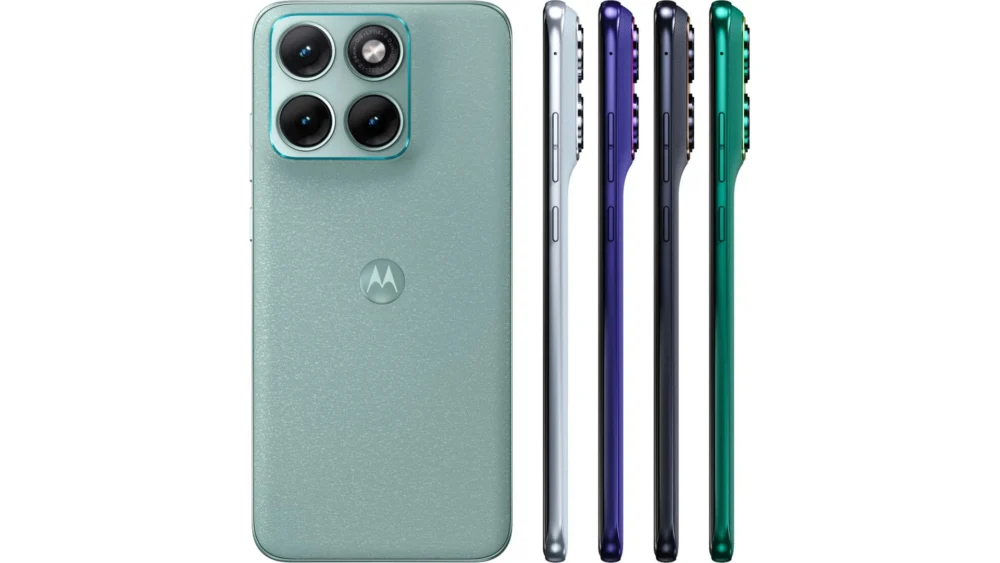
The continuous trickle of information preceding a major smartphone launch often resembles a complex jigsaw puzzle, where preliminary specifications and leaked imagery offer tantalizing but sometimes contradictory clues. For the upcoming Motorola Edge 70 Fusion, a device positioned squarely in the competitive upper-midrange segment, this process of revelation has been particularly fraught with minor technical ambiguities. A recent piece of purported marketing collateral has surfaced, however, appearing to definitively resolve a key component specification that had caused a degree of confusion among industry watchers and enthusiasts alike: the exact iteration of the Qualcomm Snapdragon system-on-a-chip (SoC) destined for the device.
Initial insights into the Edge 70 Fusion’s hardware profile suggested the inclusion of the Snapdragon 7s Gen 3. This processor, part of Qualcomm’s recent mid-tier refresh cycle, offers a reliable balance of performance and power efficiency expected in this market tier. However, subsequent benchmark data, notably filings appearing on platforms like Geekbench, began hinting at the presence of a slightly more advanced, perhaps yet-to-be-fully-launched, chip: the Snapdragon 7s Gen 4. This discrepancy—a potential generational leap in the marketing phase—created a genuine question mark regarding Motorola’s final silicon selection, a choice that significantly impacts performance ceilings, modem capabilities, and thermal management.
The latest leak, reportedly derived from fresh marketing assets for the Edge 70 Fusion, clearly displays the "Snapdragon 7s Gen 4" branding adjacent to a memory specification. This visual confirmation strongly suggests that Motorola is opting for the newer generation silicon, effectively settling the debate that had been circulating since the first detailed specification dumps. This selection is not merely a minor footnote; it carries substantial weight in the context of the broader Android smartphone ecosystem and Motorola’s strategic positioning against rivals like Samsung, Xiaomi, and its Lenovo parent company’s own branding efforts.
The Significance of the Generational Shift
For the consumer, the difference between a "Gen 3" and a "Gen 4" designation in the Snapdragon 7 series typically implies advancements in core architecture, fabrication process efficiency, or integrated modem technology. While the exact performance uplift of the rumored Snapdragon 7s Gen 4 remains under wraps until official announcements, moving to a newer generation, even within the same numerical family, usually signals incremental but meaningful gains in CPU clock speeds, GPU efficiency for gaming, and, critically for modern applications, enhanced Artificial Intelligence (AI) processing capabilities via the Hexagon processor.
In the modern smartphone landscape, where on-device generative AI features are rapidly becoming standard—even in mid-range devices—the choice of SoC dictates the ceiling for these experiences. A newer generation processor is inherently designed with better support for evolving software requirements, including enhanced security frameworks and more complex background processing tasks managed by the operating system. Motorola’s apparent commitment to the 7s Gen 4 suggests an intent to future-proof the Edge 70 Fusion slightly longer than if it had settled for the Gen 3.
Furthermore, this decision sheds light on Qualcomm’s own product roadmap. If the Snapdragon 7s Gen 4 is indeed debuting in the Edge 70 Fusion, it suggests that this chip is either already available for mass production or is on the cusp of a wider rollout. For Motorola, securing early access to newer silicon can be a competitive advantage, allowing them to market a "latest generation" performance claim against competitors who might still be relying on older stock or slightly less powerful alternatives.
RAM Configuration Confirmed and Contextualized
Accompanying the chipset confirmation in the leaked visual is a direct reference to 12GB of Random Access Memory (RAM). This solidifies the expectation that the top-tier configuration of the Edge 70 Fusion will boast substantial memory, a necessity for maintaining high refresh rates and multitasking smoothly across demanding applications and games. The leak also acknowledges prior rumblings that an 8GB RAM variant will likely coexist, catering to budget-conscious consumers while allowing Motorola to maintain a lower entry price point for the series.
From an editorial perspective, the 12GB option positions the Edge 70 Fusion as a serious productivity and media consumption tool, moving beyond the traditional limitations often associated with mid-range devices. High RAM configurations are crucial for Android’s memory management, especially when paired with aggressive features like 144Hz displays, which demand constant data throughput.
Deconstructing the Display and Imaging Package
Beyond the silicon centerpiece, the surrounding specifications paint a picture of a device aggressively targeting display quality and charging speed—areas where Motorola has historically tried to differentiate itself in crowded markets.
The anticipated 6.78-inch AMOLED panel is noteworthy not just for its size but for its stated specifications: 1.5K resolution, HDR10+ certification, and a blistering 144Hz refresh rate. The 1.5K resolution (a midpoint between standard FHD+ and QHD+) offers visual fidelity that often satisfies power users without imposing the extreme processing overhead of a true QHD+ panel, thus working synergistically with the mid-to-high-end Snapdragon platform.
The peak brightness figure cited—5,200 nits—is particularly aggressive, even if this represents a peak highlight brightness rather than sustained full-screen brightness. For context, many flagship devices hover around 1,700 to 2,000 nits for peak outdoor visibility. If the Edge 70 Fusion can approach even a significant fraction of 5,200 nits in small bursts, it suggests exceptional outdoor viewing capability, a key selling point in diverse global markets.
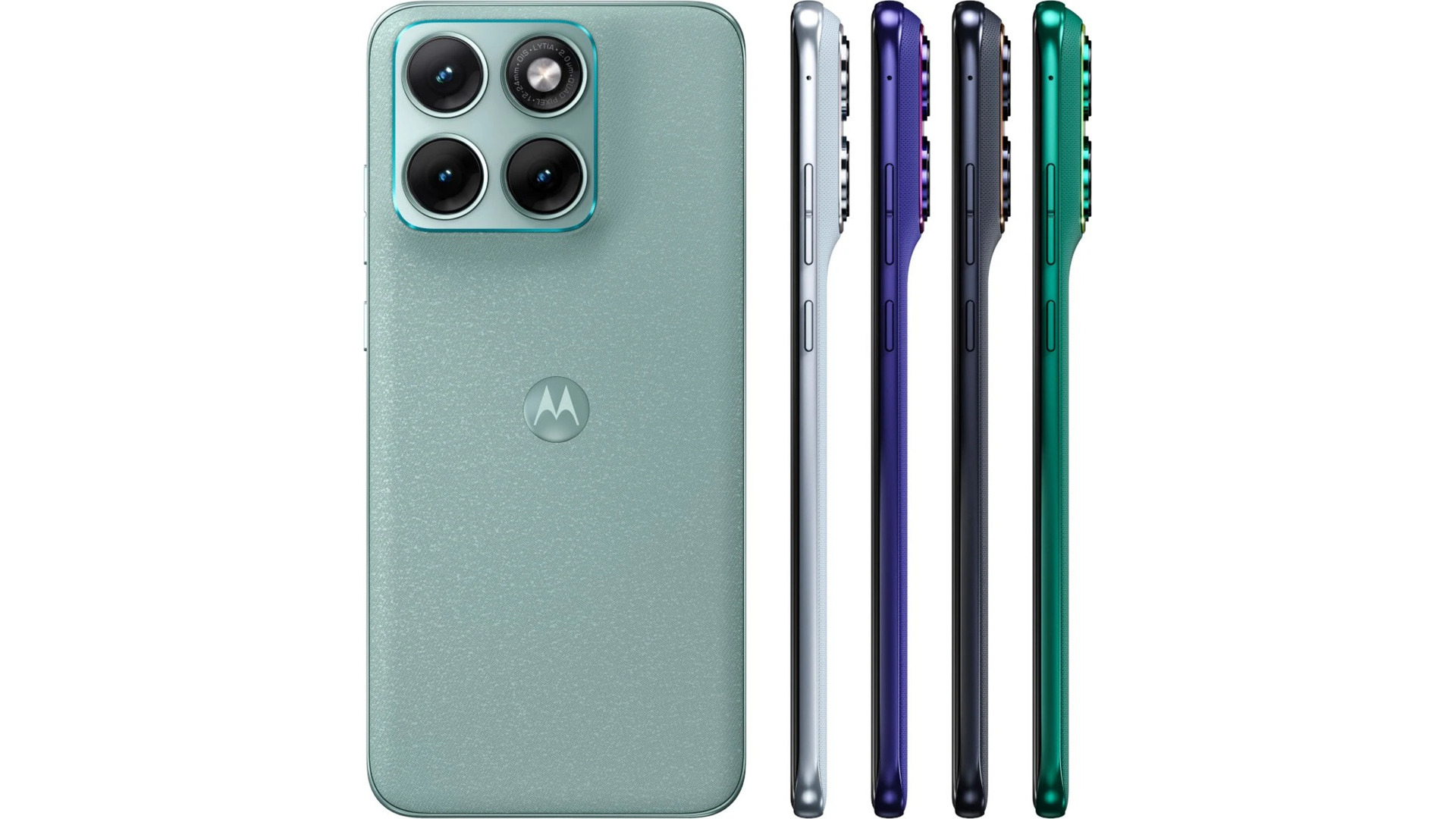
The camera hardware, featuring a 50MP primary sensor and a 32MP front-facing shooter, suggests a focus on high-resolution primary photography and capable selfies. While megapixel count is only one facet of imaging performance, a high-resolution sensor coupled with the presumed advancements in the Snapdragon 7s Gen 4’s Image Signal Processor (ISP) should yield competitive results in daylight, though low-light performance will ultimately depend on sensor size and computational photography integration.
Charging Ecosystem and Longevity Commitment
The inclusion of 68W fast charging is another area where Motorola continues to compete fiercely. While some Chinese competitors push well beyond 100W, 68W represents a significant speed upgrade over older standards and allows the substantial 5,000mAh-class battery (implied by the high-end specs) to be replenished rapidly. This speed is crucial for users whose usage patterns demand quick top-ups between meetings or travel segments.
Equally important, and reflective of a broader industry shift towards sustainability and perceived value, is the reported commitment to three major OS updates. In the past, Motorola has lagged behind Google and Samsung in software support longevity for its mid-range devices. A commitment to three full Android version upgrades, coupled with the expected security patch cadence, signals a strategic pivot aimed at increasing the perceived lifespan and residual value of the Edge series, directly addressing a common point of consumer friction.
The incorporation of Corning Gorilla Glass 7i for front protection rounds out the durability package. While often positioned below the top-tier Victus or Armor variants, 7i suggests modern scratch and drop resistance tailored for the expected price bracket, balancing protection with cost containment.
Industry Implications: The Mid-Range Arms Race
The detailed specifications emerging for the Motorola Edge 70 Fusion underscore the escalating "arms race" occurring in the upper-midrange smartphone segment. This segment, positioned between entry-level affordability and true flagship pricing (e.g., $1000+ devices), is now demanding features previously reserved for premium tiers: 144Hz displays, high-wattage charging, and advanced processor generations.
Motorola, under Lenovo, has long relied on offering a near-flagship experience at a reduced price point, often prioritizing clean software (near-stock Android) and unique hardware features like advanced haptics or desktop modes (Ready For). The adoption of the Snapdragon 7s Gen 4, if confirmed, allows them to compete directly on raw processing power benchmarks against rivals who might be using slightly older or less optimized chipsets in similar price brackets.
This trend puts pressure on incumbent leaders. When a mid-range phone offers a 144Hz panel and 68W charging, the value proposition of last year’s flagship or the current year’s base model flagship begins to erode for general consumers who prioritize day-to-day smoothness and battery endurance over extreme camera versatility or bleeding-edge chipset efficiency.
Furthermore, the emphasis on software support (three major updates) is a direct response to consumer education. Users are increasingly aware that longevity is a key component of total cost of ownership. For Motorola to gain market share against Samsung, which has aggressively expanded its update commitment across its A-series, is contingent upon matching or exceeding these support promises.
Future Trends: The Role of Silicon Naming Conventions
The confusion surrounding the "Gen 3" versus "Gen 4" designation highlights a growing complexity in SoC nomenclature that manufacturers must navigate carefully. As chipmakers like Qualcomm and MediaTek iterate faster, the naming conventions often become less intuitive to the average consumer. A "Gen 4" chip that offers a modest 10% performance gain might be marketed aggressively against a "Gen 3" chip offering an 8% gain, but the perception of being "newer" holds marketing sway.
For analysts and journalists, tracking these subtle generational shifts is vital because it often reveals chipset segmentation strategies. The Snapdragon 7s series occupies a crucial space—it is powerful enough for sustained high-performance tasks but often omits the very latest architectural enhancements found in the flagship 8-series, allowing for better thermal control and cost management. The Edge 70 Fusion appears poised to be a bellwether for how effectively this new-generation mid-range silicon can deliver a truly compelling "flagship-lite" experience without demanding flagship pricing. If the 7s Gen 4 proves to be a significant efficiency leap, it could signal a new era where mid-range phones maintain peak performance for longer periods without throttling, a genuine user experience improvement rooted entirely in silicon evolution.
In conclusion, the latest leak regarding the Motorola Edge 70 Fusion—specifically the apparent confirmation of the Snapdragon 7s Gen 4—moves the narrative beyond mere speculation to solidify the device’s profile as a highly competitive contender. By pairing this potentially advanced mid-range processor with premium display technology, robust charging, and a commitment to extended software life, Motorola seems to be deploying a comprehensive strategy designed not just to compete, but to aggressively redefine expectations within the upper-midrange Android space. The market now awaits the official unveiling to quantify the real-world impact of this newly confirmed silicon foundation.