


The technology sector is currently experiencing a fascinating divergence in user interface philosophy. While high-resolution, vibrant LCD and OLED screens dominate the primary interaction points within our digital lives—smartphones, tablets, and large living room displays—there is a burgeoning counter-movement advocating for less intrusive, more specialized interfaces. This trend is finding a compelling champion in Electrophoretic Display (E-Ink) technology, which prioritizes readability, low power consumption, and minimal visual distraction. SwitchBot, a company well-established in the realm of affordable, accessible smart home automation, is leveraging this exact philosophy with its newly announced Weather Station, a device explicitly designed to serve as a permanent, passive information fixture near the nexus of daily departure: the front door or main entryway.
This launch, highlighted during the recent confluence of industry innovation at CES, positions the SwitchBot Weather Station not as a competitor to the ubiquitous smart speaker display, but as a specialized antidote to screen fatigue. The device integrates comprehensive environmental monitoring with the distinctive visual characteristics of E-Ink, suggesting a maturing understanding within the smart home market that not every piece of data requires the high refresh rate and color saturation of traditional displays.
The Appeal of the Passive Display: Contextualizing E-Ink in the Home
The proliferation of always-on screens has led to a paradoxical situation where consumers, seeking convenience, are often bombarded with notifications, updates, and the inherent cognitive load associated with active digital interfaces. E-Ink, conversely, offers a display solution that mimics the look of printed paper. Its fundamental advantage lies in its bistable nature: it only requires power to change the image, not to maintain it. For a device displaying static or slow-changing data—like weather, time, or calendar entries—this results in exceptionally low energy demands and a visual presentation that is easy on the eyes, even in bright sunlight.
SwitchBot has strategically capitalized on this by building a 7.5-inch E-Ink module into a dedicated station. The placement suggestion—by the front door—is crucial. This is the point of transaction between the domestic environment and the external world. Users transitioning from inside to outside need immediate, contextually relevant data: Is it raining? How cold is it outside? Do I need a jacket? Traditional solutions often necessitate unlocking a phone, navigating to a weather application, and then deciphering graphical forecasts. The Weather Station aims to replace this multi-step process with a single, instantaneous glance.
The design ethos appears to be ‘information-first, attention-second.’ By eschewing the dynamic animations and vivid colors of LCDs, the Weather Station ensures the displayed data is absorbed rather than demanded. This aligns perfectly with the emerging category of ambient computing, where technology fades into the background until its specific information is required.
Deep Dive into Environmental Data Aggregation
The device’s utility is anchored in its robust sensor array, providing both localized and external environmental readings. Internally, the station continuously monitors temperature and humidity within the immediate vicinity. This baseline data is essential for smart home management, allowing users to correlate external weather events with indoor comfort levels, potentially triggering HVAC adjustments or dehumidification cycles via the broader SwitchBot ecosystem.
The external data aggregation is significantly more detailed than what one typically finds on a basic digital clock. The display comprehensively segments information across its surface. One section is dedicated to core temporal metrics—time, date, and crucial astronomical markers like sunrise and sunset times, valuable for scheduling outdoor activities or managing smart lighting routines.
The central focus is dedicated to meteorological granularity. This includes not only the expected current temperature and humidity but also secondary, yet highly practical, metrics such as wind speed and direction, visibility range, and, importantly in modern urban environments, local air quality readings. The inclusion of air quality data elevates the device beyond mere weather reporting into genuine personal environmental awareness, a growing concern for health-conscious consumers.
Completing the forecast picture is a dedicated six-day outlook occupying a significant portion of the screen real estate. This extended view allows for proactive planning without requiring a deep dive into a smartphone app for the next half-week.
Integration and Automation: Bridging Passive Display to Active Control
What elevates the SwitchBot Weather Station beyond a sophisticated digital thermometer is its integration capabilities within the existing smart home infrastructure. As a SwitchBot product, it inherently communicates with the company’s established hub and automation routines.
The station is engineered to interface with multiple calendar platforms. This integration suggests the display is dynamic, capable of showing upcoming appointments alongside environmental data. Imagine the display shifting subtly when a critical morning meeting is imminent, or highlighting a scheduled outdoor event against a backdrop of poor forecasted weather.
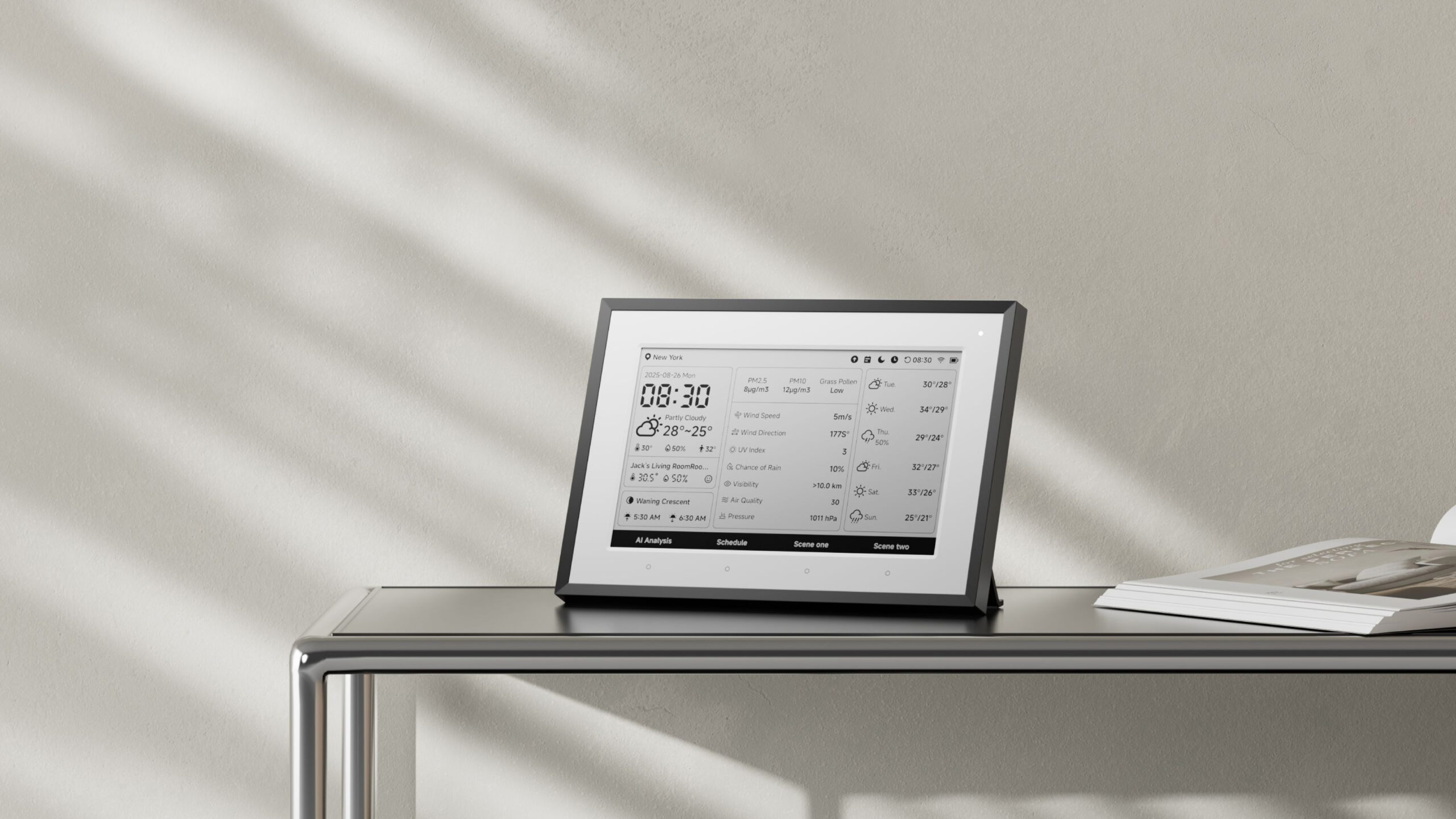
More powerfully, the device serves as a trigger point for automated scenes. This is where the passive display transitions into an active component of the smart home. For instance, if the internal humidity sensor registers a reading above a user-defined threshold, the station can initiate an automation sequence to activate a connected smart dehumidifier. Similarly, a severe weather alert pulled from the external data feed could automatically close smart blinds or send a notification to other household devices. This capability transforms the E-Ink station from a mere reader into a localized environmental control sentinel.
Beyond Utility: Incorporating Personality and AI Context
In a move that attempts to soften the often sterile nature of data-driven gadgets, SwitchBot has introduced elements designed to enhance the user experience beyond pure functionality. The incorporation of AI-powered tools for generating daily weather briefings suggests an attempt to contextualize the raw data. Instead of merely showing "20% chance of rain," the AI might generate a briefing stating, "Light showers expected after 4 PM; perhaps pack a compact umbrella for your evening commute." This layer of interpretation bridges the gap between raw sensor output and actionable human advice.
Furthermore, the inclusion of a rotating selection of weather-themed quotes offers a touch of aesthetic personality. While seemingly minor, in a device that aims to be a permanent fixture, these small, personalized touches can significantly influence long-term adoption and acceptance, making the technology feel less like a utility and more like integrated home decor. This nods toward the concept of ‘calm technology,’ where devices enhance life without demanding constant interaction.
Industry Implications: The E-Ink Renaissance in Consumer Tech
The strategic deployment of E-Ink by a major smart home player like SwitchBot has significant implications for the broader consumer electronics industry. For years, E-Ink was largely confined to e-readers (like Amazon’s Kindle) due to its excellent reading experience and battery life. However, recent advancements in refresh rates and color E-Ink technology have opened new avenues.
This Weather Station exemplifies a growing realization: different use cases demand different display technologies. While gaming consoles and video streaming require high frame rates, stationary information displays—like smart thermostats, digital signage, and specialized home dashboards—benefit immensely from E-Ink’s inherent advantages.
This product challenges the "bigger and brighter" mentality that has driven smart display development. It suggests a viable market segment exists for devices that aim to reduce, rather than increase, screen engagement. Competitors may now be prompted to explore similar low-power, high-readability interfaces for dedicated tasks within the home, perhaps leading to E-Ink integrations in smart kitchen appliances, specialized home security panels, or dedicated home inventory trackers.
The industry is watching how effectively SwitchBot can market the absence of distraction as a primary feature. If successful, it validates the creation of highly specialized, single-purpose smart devices that integrate seamlessly into the background, contrasting sharply with multi-functional, always-on competitors.
Future Trajectory and E-Ink’s Role in the Evolving Smart Home
Looking ahead, the success of this E-Ink Weather Station could catalyze deeper integration of this display technology across the smart home landscape. Future iterations could incorporate more sophisticated, low-refresh-rate visualization of energy consumption data, historical environmental trends, or even simplified network health dashboards.
The inherent power efficiency of E-Ink also opens up possibilities for completely wireless, battery-powered secondary displays that could be placed anywhere in the home without proximity to an outlet—a significant advantage over Wi-Fi-dependent LCD screens that require constant charging or tethering. This freedom of placement is critical for true ambient intelligence.
Moreover, as smart home systems become more complex, the need for an easily digestible, centralized summary point increases. While a smartphone app can handle complexity, it cannot replicate the utility of a device that requires zero input to deliver the current status. The Weather Station appears to be positioned as the ultimate ‘pre-flight check’ for leaving the house, summarizing everything from local air quality to the next day’s forecast on a surface that demands attention only when the information itself is necessary.
While pricing and final availability specifics remain pending—details typically finalized closer to mass market rollout—the conceptual framework SwitchBot is presenting is clear: the next frontier in smart home convenience may not be faster processing or brighter screens, but rather the thoughtful application of technology that knows precisely when to step back and simply display the facts. This E-Ink Weather Station is a compelling artifact of that mature design philosophy, staking a claim not just on your counter space, but on providing a calmer, more focused digital presence within the modern residence. The device represents a quiet, highly readable challenge to the noisy, attention-demanding nature of contemporary connected technology. Its intended placement by the door underscores its function: delivering essential intelligence precisely when the user is making the decision to engage with the outside world.