

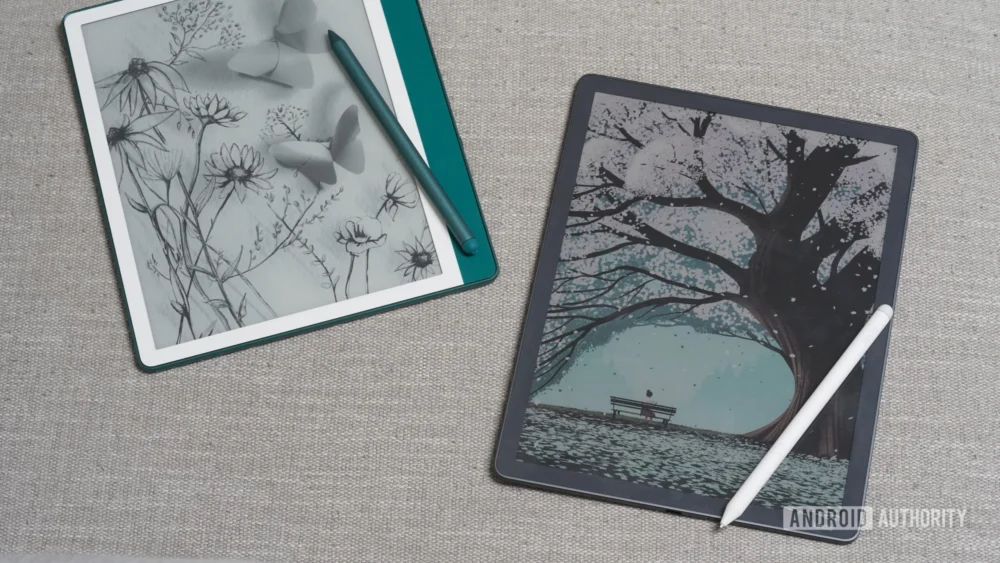
The integration of color into E-Ink technology has long been the holy grail of digital paper, frequently promising revolutionary leaps while delivering incremental, often compromised, steps. Historically, color E-Ink panels suffered from low refresh rates, muted palettes, and significant text clarity degradation. For years, the general consensus among digital reading enthusiasts was that dedicated monochrome displays offered a superior, distraction-free experience. However, the introduction of the Amazon Kindle Scribe Colorsoft marks a pivotal moment where these long-standing compromises appear to have been substantially minimized, positioning this device not just as an iterative update, but as the definitive realization of Amazon’s large-format e-reader vision.
Contextualizing the Evolution of E-Ink Color
To fully appreciate the Scribe Colorsoft, one must understand the technological hurdles Amazon and its panel partners have overcome. Early color E-Ink, typified by technologies like Kaleido, relied on a color filter array (CFA) layered over the monochrome electrophoretic layer. This CFA inherently diffused the light and reduced the effective pixel density for color content, resulting in text that often appeared muddy or slightly blurred compared to pure black-and-white displays. Furthermore, achieving a satisfactory refresh rate for color changes often necessitated full-screen flashes, which disrupt the reading flow.
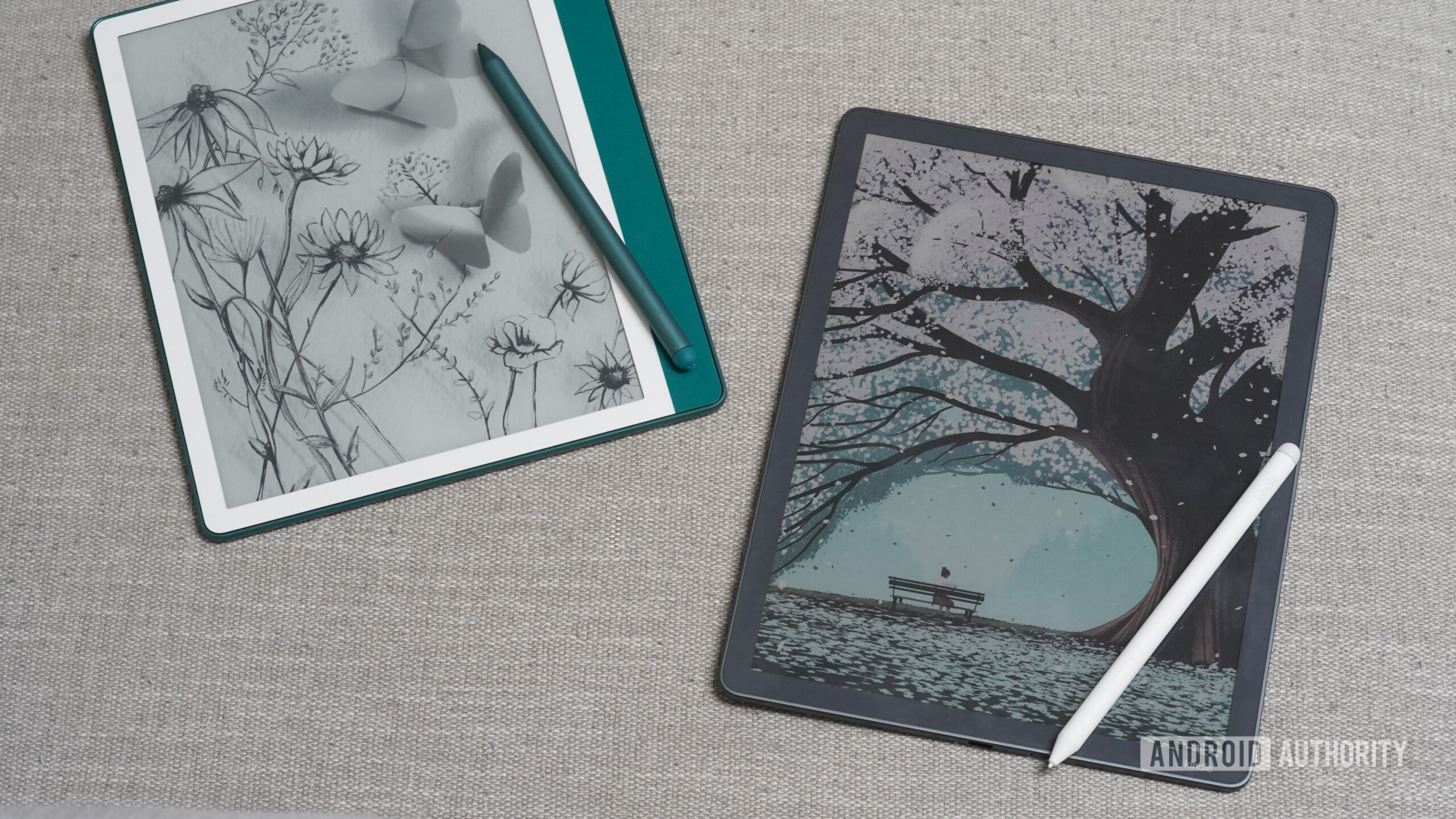
The Scribe Colorsoft, by leveraging advanced generations of color E-Ink, such as those utilizing Print Array or similar fourth-generation color filtering structures, manages to maintain the razor-sharpness required for extended text consumption while introducing a viable, nuanced color spectrum. This is critical: Amazon has clearly prioritized the core Kindle function—reading—over turning the device into a vibrant, general-purpose tablet replacement. The resulting hues are deliberately soft, avoiding the garish oversaturation of traditional screens, ensuring the device remains fundamentally easy on the eyes, even during marathon reading sessions. This intentional aesthetic choice speaks volumes about Amazon’s focus on the dedicated reader demographic.
Hardware Refinement: The 11-Inch Canvas
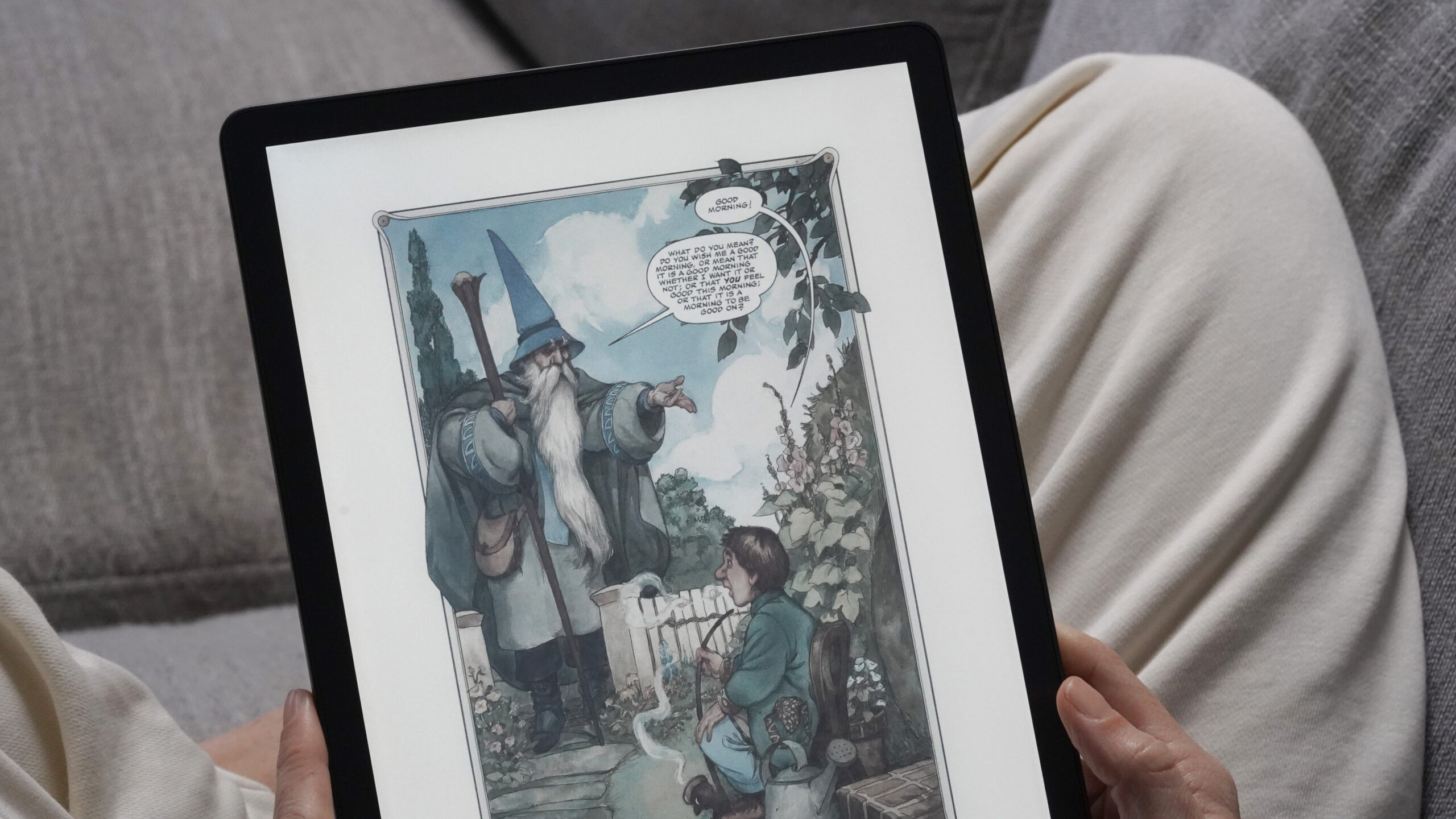
Physically, the Scribe Colorsoft builds upon the robust foundation of its predecessor, the monochrome Scribe. The shift to a uniform bezel design, eliminating the asymmetrical grip area, contributes to a more balanced and modern aesthetic. The 11-inch display diagonal provides an expansive canvas that is transformative for specific content types. For general novel reading, the larger size means fewer page turns, which inherently improves immersion.
More significantly, this screen real estate elevates the utility of PDF viewing and document management. Academic papers, technical manuals, and complex spreadsheets—formats often poorly rendered on smaller 6-inch or 7-inch devices—become genuinely usable. The device retains the slim profile and premium, utilitarian build quality that readers expect from higher-end Kindle hardware, successfully blending portability with readability scale. While it inevitably sacrifices the pocketability of its smaller siblings, the added volume is justified by the expanded functional area, making it a bag-worthy companion rather than a strictly handheld device.
Software Maturation: Bridging the Usability Gap
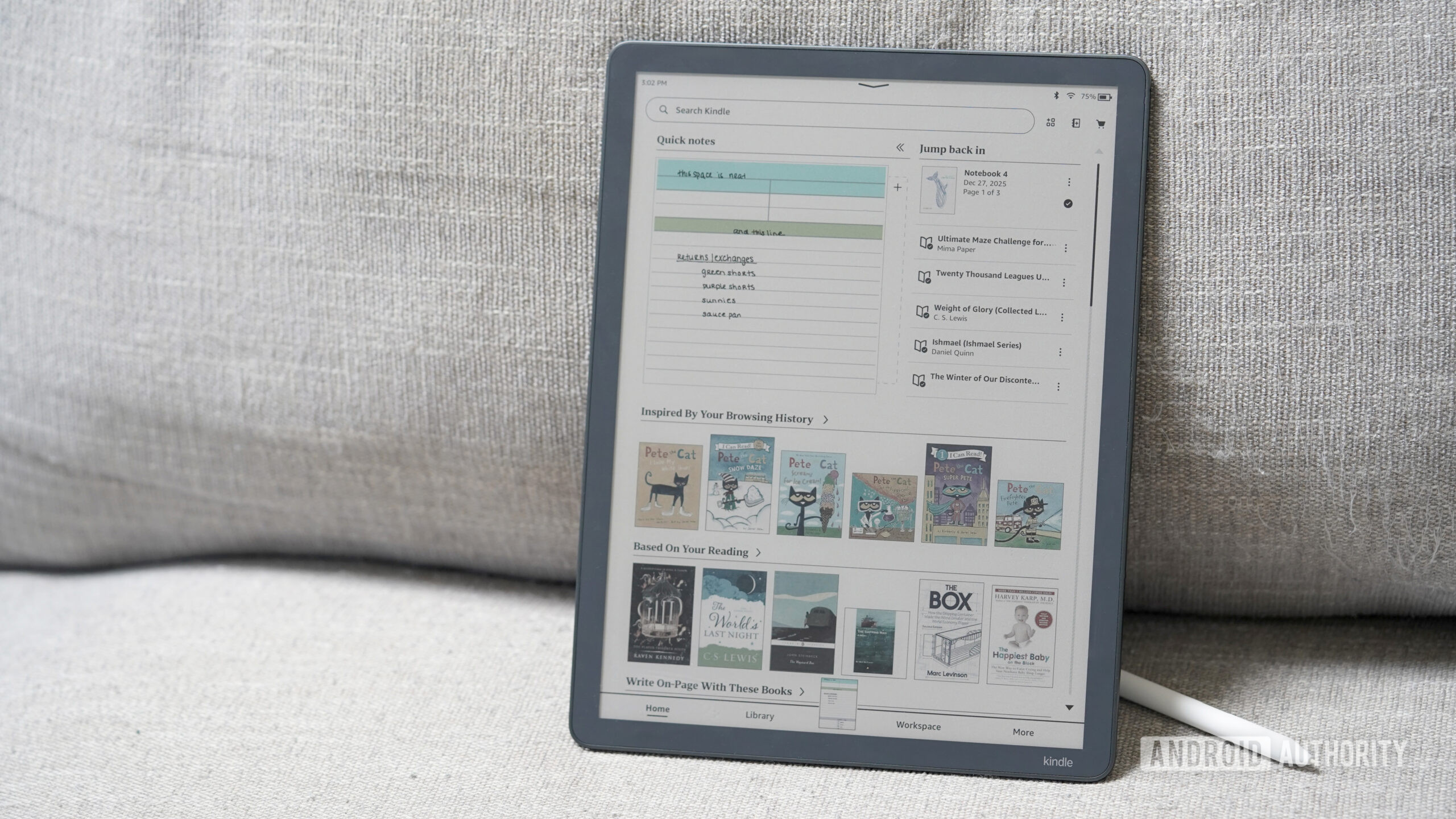
Perhaps the most underrated improvement in the Colorsoft iteration is the significant overhaul to the operating system interface. The original Scribe, while functionally sound, often felt like a scaled-up version of the standard Kindle interface, leading to awkward spacing and less efficient navigation on the larger display. The Colorsoft’s software experience feels cohesive and purpose-built for 11 inches. Menus are cleaner, information density is optimized, and overall responsiveness has been tightened.
This software polish addresses a key critique of previous E-Ink productivity devices: the feeling of using slightly outdated technology. The Scribe Colorsoft operates with a consistency and fluidity that closes this gap. Page transitions are swift, menu interactions are immediate, and the writing latency, which is paramount for a note-taking hybrid, is impressively low. While color refreshes can occasionally introduce minor ghosting artifacts—a known limitation of current E-Ink color technology—these instances are infrequent and do not significantly detract from the overall performance envelope.
The adjustable front light system remains best-in-class, offering uniform illumination that adapts seamlessly from bright daylight to late-night reading environments. This consistency in lighting quality, combined with the low-power draw of the E-Ink panel, results in battery life measured in weeks, not hours. This longevity is a crucial element of the Kindle appeal, allowing users to disconnect from charging cycles and focus purely on content consumption.
Color as Utility, Not Gimmick
The true test of the Colorsoft lies in how effectively color enhances the reading experience without becoming a visual burden. Amazon wisely avoids the temptation to push for hyper-saturation. Instead, the subtle color palette proves highly effective in several key areas:
- Bibliographic Context: Book covers, previously rendered in monochrome, now display their intended artwork, lending a richer feel to the library view.
- Specialized Content: For children’s literature, graphic novels, or textbooks containing diagrams and charts, color provides essential contextual separation and visual engagement that black-and-white renders flatly.
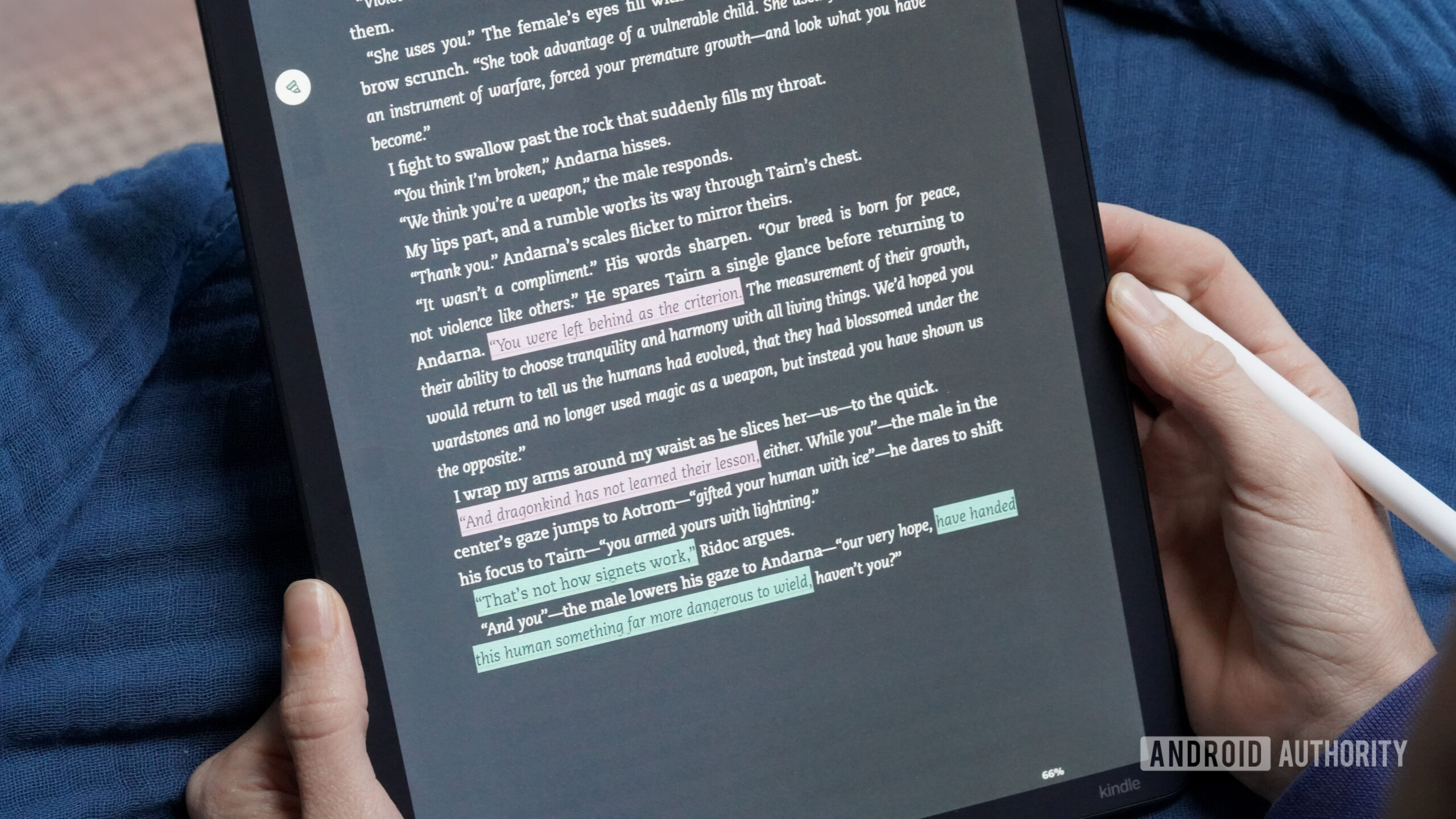
- Personalized Annotation: The ability to assign different colors to different categories of highlights transforms marginalia from simple textual emphasis into a functional organizational system. For researchers or heavy non-fiction readers, color-coding themes, counter-arguments, or action items significantly enhances post-reading review efficiency.
It is essential to reiterate that the Colorsoft is not designed to compete with high-refresh-rate LCD or OLED tablets optimized for artistic creation. Users seeking layered drawing capabilities, professional color grading, or high-frame-rate media consumption will be better served elsewhere. The Scribe’s color is strategic, serving to augment the written word, not replace it.
The Annotation Ecosystem: Precision and Friction
The included stylus experience is highly polished, offering low latency and reliable palm rejection—hallmarks of a mature stylus implementation. The responsiveness makes the act of underlining, circling, or jotting down quick thoughts feel natural. Customization of the stylus shortcut button is a welcome addition, catering to the user’s most frequent writing action.
However, the method of annotation introduces a philosophical point of friction unique to Amazon’s implementation. When using the "Active Canvas" mode for direct writing over reflowable text, the surrounding text dynamically reflows to accommodate the input. While this theoretically keeps notes perfectly aligned with the text they reference, it can feel cumbersome during dense annotation. Watching text jump to make room for a quick sketch or a multi-line comment breaks the flow and can be less satisfying than the "overlay" style of writing found on some competing platforms, where ink simply rests atop the page elements.
For longer, more comprehensive notes, the expandable margin canvas offers a more traditional solution, separating lengthy handwritten thoughts from the main text flow until needed. This hybrid approach successfully manages the tension between immediate annotation and deep note-taking. Nevertheless, the fundamental limitation remains: the tools are basic. There is no sophisticated shape recognition, no complex layering, and the brush selection is minimal. This reinforces the device’s primary identity: a premium e-reader that offers excellent, but constrained, note-taking capabilities.
Industry Implications and Pricing Strategy
The launch price of the Kindle Scribe Colorsoft, significantly higher than the introductory price of the original Scribe, forces a direct confrontation with the wider market of E-Ink devices. At this premium tier, the competition is fierce, extending beyond dedicated E-Ink competitors like reMarkable or Onyx Boox, to full-fledged productivity tablets.
The industry implication here is twofold. Firstly, Amazon is staking a claim on the high-end, reading-centric segment of the large-format E-Ink market, betting that its ecosystem lock-in and superior reading software outweigh the flexibility offered by more open Android-based E-Ink platforms. Secondly, the price reflects the current manufacturing cost of high-resolution, large-format color E-Ink panels. Until economies of scale drive these display costs down, premium color E-Ink devices will occupy a price point comparable to entry-level traditional tablets, necessitating a much clearer value proposition rooted in eye comfort and battery endurance.
The trade-off is stark: for the price premium, the user gains color integration and a more refined UI, but sacrifices the software openness, third-party application support, and advanced organizational features present on competitors like the Boox line. For the devoted Amazon customer, the Scribe Colorsoft feels like a natural, albeit expensive, upgrade. For users prioritizing open file formats or advanced productivity, the investment is harder to rationalize against platforms that offer far greater cross-compatibility.
Future Trajectories and Missing Features
While the Colorsoft is remarkably polished for a launch product in this new category, immediate gaps exist that point toward future development. The lack of a system-wide dark mode for the user interface, despite the ability to dim book pages via page color settings, feels conspicuous on a premium device. The interface remains stark white, which undermines the overall ambient light strategy when reading in low-light conditions where the E-Ink panel itself is dimmed. Amazon’s confirmed plans to introduce this feature via firmware updates signal an acknowledgment of this oversight, suggesting a commitment to continuous refinement beyond the initial hardware release.
Looking ahead, the Scribe Colorsoft sets a benchmark for what Amazon envisions for its large-format reading. The future trajectory likely involves further refinement of the color panel technology—aiming for higher color saturation without sacrificing text clarity—and deeper integration of AI-driven organizational tools within the notes ecosystem. As E-Ink technology matures, we anticipate seeing these devices move closer to true, dual-purpose utility, though Amazon will likely always tether this utility tightly to the constraints of its proprietary content environment.
Final Assessment for the Dedicated Reader
The Kindle Scribe Colorsoft is, unequivocally, the most sophisticated large-screen Kindle available. Its appeal is directed precisely at the user who values the unparalleled reading experience of the Kindle ecosystem above all else, but desires the functional enhancements of color and the convenience of light handwriting capability. It successfully integrates color in a non-intrusive manner that adds genuine value to specific content types and annotation workflows.
For the individual accustomed to the Kindle ecosystem, who reads extensively and occasionally needs to mark up documents or organize thoughts with colored tags, this device justifies its elevated position. It delivers on the promise of a refined, large-format E-Ink experience that feels contemporary.
However, potential buyers must maintain clear priorities. If the primary requirement is robust digital note-taking, advanced file management (e.g., native cloud sync outside of Amazon’s specific storage solutions), or compatibility with formats beyond Amazon’s core offerings, competing E-Ink tablets offer superior flexibility, often at a comparable or lower cost. Similarly, those seeking vivid color for artistic endeavors should look toward color LCD/OLED alternatives.
Ultimately, the Kindle Scribe Colorsoft represents a significant, albeit expensive, step forward in color E-Ink realization. It succeeds because it remains fundamentally a Kindle—a device built for distraction-free reading. Its new color capabilities enhance this core function beautifully. For those within the Amazon walled garden who crave a large display and subtle color accents, this is the current apex of the platform. For everyone else, the high barrier to entry necessitates a careful weighing of ecosystem lock-in against the robust capabilities of more open platforms.