

As electric grids across the globe face mounting pressure to decarbonize while simultaneously accommodating surging demand from artificial intelligence data centers, advanced manufacturing, and widespread electrification, the search for firm, continuous carbon-free power has intensified. Solar and wind technologies have made monumental strides in cost-efficiency and deployment scale, yet their inherent intermittency leaves power systems vulnerable without massive energy storage buildouts or steady baseload supply. Geothermal energy has long promised the ideal solution: a dispatchable, continuous source of zero-emission electricity generated directly from the Earth’s internal heat. However, traditional geothermal projects have historically suffered from high upfront exploration risks, rapid thermal depletion, and narrow geographic applicability.
A dramatic operational turnaround at a remote geothermal facility in New Mexico is offering the energy sector a powerful proof of concept for how modern subsurface data modeling and deep-drilling technology can breathe new life into declining clean energy assets. The site, known as Lightning Dock, was once considered an economically unviable enterprise, hampered by rapidly plunging underground temperatures that threatened to shut down generation entirely. Today, thanks to a data-driven intervention by geothermal startup Zanskar, the facility has experienced a complete operational resurgence, doubling its power generation and establishing a prospective blueprint for maximizing hydrothermal resources across North America.
The Physics of Thermal Decline at Lightning Dock
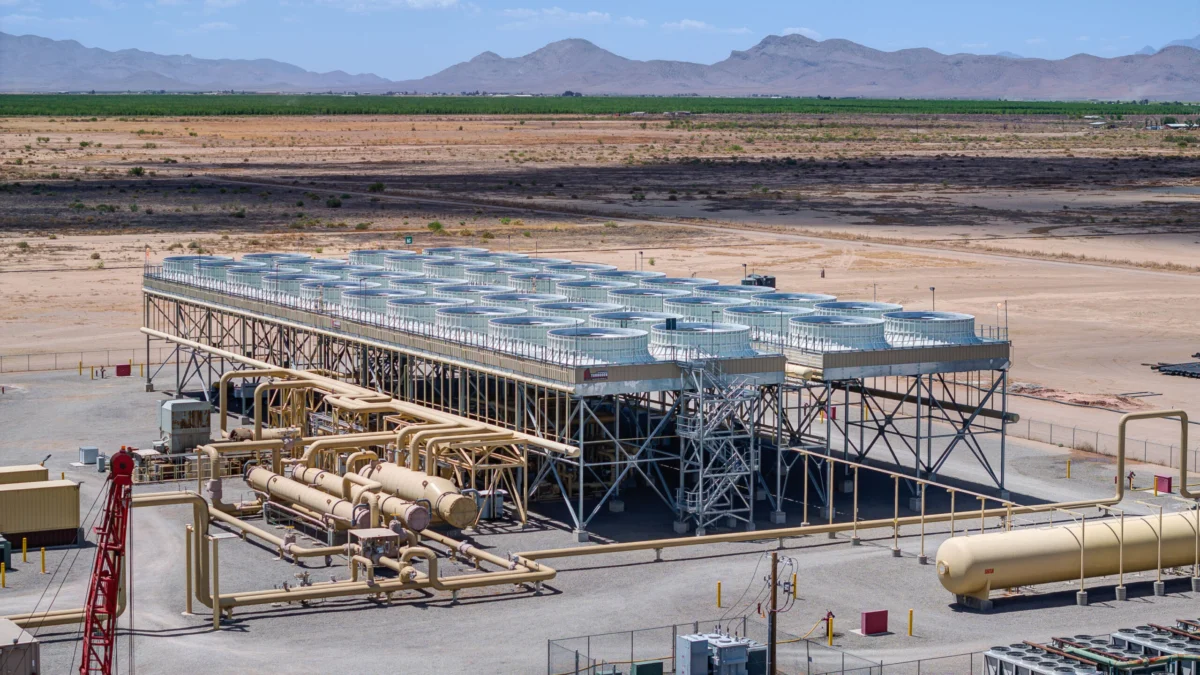
Located in the Animas Valley of southwestern New Mexico, the Lightning Dock geothermal project first began delivering electricity to the local power grid in 2013. Designed as a conventional binary-cycle hydrothermal plant, the facility relied on natural geological configurations: heated fluids circulating through permeable, fractured subterranean rocks, which were then pumped to the surface to boil a secondary working fluid with a low boiling point, driving a turbine to create electricity. To maintain optimal thermodynamic efficiency, the power block required source water delivered at a minimum threshold of 310°F (154.4°C).
However, hydrothermal reservoirs are delicate dynamic systems. Under typical operational conditions, a production well field might experience a slight, manageable temperature decline over time—usually on the order of 1°F to 2°F per year—as cold re-injected water slowly extracts heat from the surrounding rock matrix. At Lightning Dock, the thermal decline took an abnormally destructive trajectory. In the five-year period leading up to mid-2024, the temperature of the extracted geothermal brine plunged by a staggering 50°F, translating to an annual cooling rate of 10°F.
By the time Zanskar acquired the asset in June 2024, the water reaching the surface had dropped to just 250°F (121.1°C). In thermodynamic terms, this drop was catastrophic. Power output from binary geothermal facilities scales non-linearly with fluid temperature; as enthalpy falls, net plant capacity drops sharply. The plant was rapidly becoming an economic drain, incapable of operating at its rated nameplate design and raising fundamental questions about whether the subterranean resource had been permanently exhausted.
Uncovering the Reservoir with Predictive Subsurface Modeling
To understand why Lightning Dock was cooling so prematurely, Zanskar deployed a suite of advanced subsurface mapping and predictive modeling technologies. Historical geothermal development often relied on simplified 2D geological cross-sections, sparse surface heat-flow measurements, and exploratory wildcat drilling—a high-risk methodology akin to the early days of oil exploration. By applying modern computational algorithms, machine learning models, and integrated geophysical data analysis, Zanskar built a detailed, high-resolution model of the complex fault network beneath the Animas Valley.
The computational diagnosis was decisive: the original production wells were simply not deep enough, nor were they positioned in the core thermal channels of the geothermal system. The plant’s historical infrastructure depended on two primary production wells drilled to a shallow depth of approximately 2,500 feet. Rather than tapping into the heart of the hydrothermal upwelling, these wells were merely skimming the cool, top layer of the underground thermal plume where incoming ambient groundwater was mixing with and diluting the rising thermal fluids.
The predictive model generated by Zanskar’s geoscientists suggested that a far richer, hotter, and more expansive hydrothermal channel existed several thousand feet deeper, locked beneath the shallow layers that had been tapped a decade earlier. If a well could be precisely targeted to intersect this deep structural conduit, the thermodynamic performance of the plant could be fully restored.
Overcoming the Deep Permeability Barrier
Acting on its predictive models, Zanskar authorized a deep-drilling campaign at Lightning Dock. The engineering team bypassed the shallow 2,500-foot horizon, driving a new production well down to a depth of 8,000 feet. The well was completed and integrated into the plant’s operational fluid loop in May 2025.
The results validated the predictive modeling, but they also challenged a long-standing tenet of conventional geothermal geology. A foundational rule of thumb in geothermal exploration is that heat increases with depth—a function of the Earth’s natural geothermal gradient. However, going deeper typically presents a severe physical trade-off: lithostatic pressure from thousands of feet of overlying rock compresses fracture networks, reducing matrix permeability and drastically restricting fluid movement. Without high fluid flow rates, even the hottest geothermal well cannot produce sufficient power to justify the capital expenditures of deep drilling.
At Lightning Dock, however, the newly drilled 8,000-foot well did not encounter tight, impermeable rock. Instead, fluid flow rates surged far beyond initial baseline expectations. After a full year of continuous operational monitoring, the deep well maintains a robust flow rate exceeding 4,000 gallons per minute (gpm) of high-temperature geothermal fluid.
Joel Edwards, co-founder and CEO of Zanskar, noted that the facility has undergone a total transformation, moving from a failing, low-output asset to a high-performing baseline asset. Data accumulated over the first twelve months of sustained deep production indicates that the reservoir exhibits long-term stability, alleviating fears that the deeper target would suffer the rapid thermal degradation seen in the shallow horizon. As Edwards emphasized, long-term operational validation is essential to proving the longevity of complex subterranean formations, and the preliminary long-term performance metrics at Lightning Dock remain exceptionally favorable.
Over its first complete year utilizing the deeper resource, Lightning Dock generated more than double the electrical output it would have achieved using the decaying shallow wells. Generating roughly 15 megawatts of reliable capacity to the regional power grid, the facility supplies enough firm, uninterrupted electricity to power approximately 11,000 homes.
According to Ben Brenner, director of federal affairs at Zanskar, the discovery that flow rates actually increased at greater depth within this fault system fundamentally alters the operational outlook not just for Lightning Dock, but for legacy hydrothermal systems throughout the United States. It demonstrates that deep natural permeability channels exist where conventional geoscientific models previously assumed rock would be too dense to sustain economic flow rates.
Rethinking Geothermal Strategy: Hydrothermal Optimization versus EGS
The success at Lightning Dock arrives amid a broader resurgence of interest and venture investment in the geothermal clean energy sector. Much of the recent public and market attention has centered on Enhanced Geothermal Systems (EGS) and novel closed-loop technologies. Companies like Fervo Energy have adapted multi-stage hydraulic fracturing and horizontal directional drilling techniques perfected during the shale revolution to create artificial fracture networks in hot, impermeable basement rock. By cracking open tight granite formations, EGS aims to make geothermal energy deployable almost anywhere on Earth, unconstrained by natural subsurface permeability.
While EGS represents a critical frontier for mid-century grid decarbonization, Zanskar’s work at Lightning Dock highlights an immediate, highly cost-effective strategy that remains underutilized: optimizing existing conventional hydrothermal fields. Edwards points out that there remains significant "low-hanging fruit" across legacy geothermal domains. Conventional fields often possess existing surface infrastructure, such as power blocks, cooling towers, substation interconnections, and established transmission rights-of-way—the precise assets that frequently stall new greenfield developments due to lengthy permitting and grid interconnection queues.
By applying sophisticated computational mapping to re-examine brownfield or underperforming conventional sites, developers can locate untapped natural flow paths and bypass the immense capital requirements and technical complexities associated with artificial hydraulic stimulation. Upgrading existing fields yields immediate capacity additions to the grid at a fraction of the cost and timeline required for unproven greenfield projects.
The Upstream Evolution: Following the Hydrocarbon Path
The trajectory of geothermal energy development is beginning to mirror the structural evolution experienced by the oil and gas industry over the past half-century. In the early stages of petroleum extraction, drillers focused exclusively on shallow, highly pressurized, easily accessible reservoirs. As those near-surface resources depleted, the industry invested heavily in high-temperature, high-pressure downhole tools, polycrystalline diamond compact (PDC) drill bits, real-time measurement-while-drilling (MWD) logging, and deep subsurface imaging. These technological breakthroughs expanded the economic horizon of hydrocarbon extraction from shallow depths of a few thousand feet to sub-surface plays reaching 20,000 feet or deeper.
The geothermal industry is now embarking on an identical structural shift. Historically restricted to shallow well fields spanning 3,000 to 5,000 feet, geothermal developers are leveraging modern, heat-tolerant drilling hardware and computational modeling to push into deeper subterranean zones. As deep-drilling economics continue to improve, tapping reservoirs at 8,000 to 12,000 feet could soon become standard operating procedure for hydrothermal developers worldwide.
Long-Term Outlook and Grid Implications
For Lightning Dock, the successful deployment of the 8,000-foot well is only the initial step in a broader, multi-phase expansion. With the deep thermal engine now proven and stable, Zanskar plans to undertake further subsurface development and execute thermodynamic retrofits on the surface power plant. Over the next several years, engineering upgrades to the heat exchangers and turbine systems are expected to squeeze even higher conversion efficiencies from the elevated brine temperatures, pushing total generation capacity beyond historical limits.
The broader implications for global energy transitions are profound. Firm carbon-free resources are rapidly emerging as the most valuable asset class in modern power markets. As variable solar and wind capacity expands, electrical grids require dispatchable generation to balance output during periods of low renewable resource availability. Geothermal facilities operate at capacity factors that routinely exceed 90%, providing continuous, weather-independent baseload power while occupying a remarkably small physical surface footprint compared to utility-scale solar farms or utility-scale battery installations.
The revitalization of Lightning Dock proves that the barriers to expanding hydrothermal energy have not always been a lack of underground heat, but rather a lack of visibility into deep, complex subsurface structures. By replacing geological speculation with high-resolution predictive modeling, energy developers can systematically de-risk subsurface exploration, resurrect dying power plants, and unlock gigawatts of clean, continuous energy hiding deep beneath existing infrastructure.
