

Contemporary analysis of the technology sector is often characterized by a weary skepticism. The foundational promise of universal improvement, championed during the rise of the internet and mobile computing, has been frequently undermined by years of innovation seemingly focused less on global betterment and more on optimizing convenience for affluent, specific demographic cohorts, particularly within established tech hubs. This prevailing "techlash"—a justified reaction against superficial "disruptions" and unchecked platform power—can obscure a crucial truth: that fundamental scientific and engineering progress continues apace, driven by a vision for a healthier, more sustainable, and more equitable world.
Despite the cyclical nature of digital hype, genuine progress is being forged in laboratories and specialized startups globally. These initiatives are not merely generating new apps or marginally improved consumer gadgets; they are developing foundational, potentially world-changing technologies capable of addressing planetary-scale challenges. Identifying which of these advances will move from experimental potential to widespread reality is the essential mandate of rigorous technological forecasting.
Each year, a panel of editors, scientists, and journalists undertakes an extensive, months-long forensic analysis of the global innovation landscape to identify the ten technologies deemed most likely to fundamentally alter global systems within the near future. This selection process, which often involves intense debate regarding timing, feasibility, and scale of impact, culminates in the annual release of the list of 10 Breakthrough Technologies. This year marks the twenty-fifth anniversary of this specific forecasting exercise, bringing the cumulative total of technologies spotlighted over a quarter-century to 250. This milestone provides a unique vantage point from which to assess not only where technology is headed, but also how innovation itself unfolds.
The Inevitability of Failure: Lessons from 250 Breakthroughs
While the process of identifying future successes is inherently glamorous, an equally critical, though less celebrated, academic endeavor lies in analyzing the technologies that fail to reach their projected potential. The history of the list confirms that while all 250 previously identified technologies remain technically relevant—meaning the core scientific principle was sound—their progression has often been unpredictable. They evolve, they pivot, and frequently, they encounter insurmountable non-technical barriers.
As Fabio Duarte, a principal research scientist specializing in urban technology, observes, the study of technological failure is vital for understanding the true path of innovation. When a potential breakthrough stalls, it is rarely due to a catastrophic engineering flaw; rather, the impediments are usually societal, economic, or infrastructural. A groundbreaking medical device might fail to achieve mass adoption because of complex regulatory hurdles or resistance from established healthcare payment models. A revolutionary clean energy source might remain niche because it cannot compete with the entrenched infrastructure subsidized by fossil fuels.
Academics studying the diffusion of innovation often revisit these historical forecasts, analyzing why certain technologies experienced "unpredictable evolution." This exercise reveals that a true breakthrough requires more than just scientific novelty; it demands alignment across regulation, market demand, public acceptance, and robust supply chains. Technologies, therefore, do not simply succeed or fail; they adapt to the environment they enter. Understanding the mechanisms of these failures provides crucial guardrails for the next generation of innovators, tempering techno-optimism with pragmatic realism about the speed and direction of systemic change.
The Quest for Sustainable Power: Aluminum and the Industrial Pivot
One of the most pressing global challenges is decarbonizing the "hard-to-abate" sectors—industrial processes like manufacturing and heavy transport that require intense, sustained heat or exceptionally dense energy storage. Current breakthroughs are pushing novel materials science and chemical engineering to address this need, moving beyond conventional battery storage and intermittent renewables.
A compelling example of this innovative pivot lies in the development of aluminum as a zero-carbon fuel source. Aluminum scrap, a pervasive industrial byproduct, contains significant stored chemical energy. The key challenge lies in safely and rapidly harnessing this energy through a controlled reaction—typically an aluminum-water reaction catalyzed to produce heat and pure hydrogen, without generating carbon emissions.
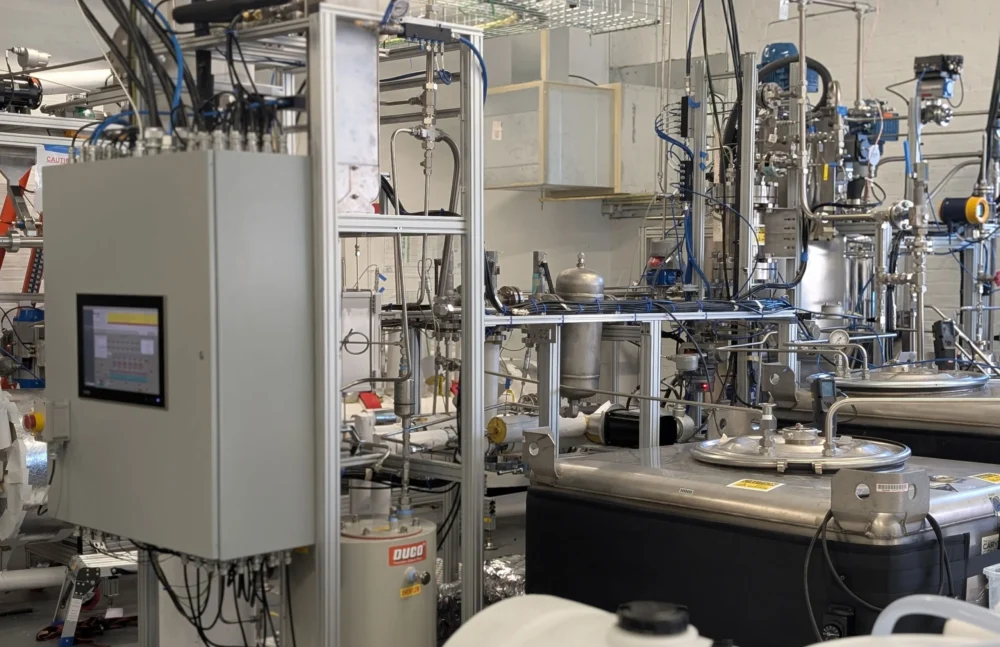
A startup, Found Energy, is currently undertaking the largest real-world deployment of an aluminum-water reactor. This technology, scaled up significantly from initial small-scale pilots since 2022, is designed to be installed at industrial sites, such as a tool manufacturing facility in the southeastern United States. Crucially, the system aims to use the aluminum waste produced by the plant itself as its fuel source, creating a closed-loop, localized energy solution.
If this test proves commercially viable and scalable, the implications are transformative. Aluminum scrap, currently a recycling challenge, could become a high-density, zero-carbon industrial fuel, offering a decentralized path toward hydrogen production and localized heat supply. This approach offers a significant alternative to relying solely on large-scale, centralized green hydrogen plants, addressing the immediate energy needs of high-intensity manufacturing and accelerating the transition away from fossil fuels in industrial heat generation.

The Geopolitical and Ethical Crises of Digital Infrastructure
While foundational research provides hope for energy and health crises, the immediate geopolitical reality underscores the fragility and potential weaponization of current digital infrastructure. The promise of the internet as a universally liberating force is being severely tested by state-level actions and the deployment of powerful, unregulated surveillance tools.
The recent, near-total internet blackout in Iran serves as a chilling case study in digital authoritarianism. By almost completely severing access to the global internet, the government effectively created an information vacuum, making it nearly impossible for the outside world to document or verify state actions against protestors. This strategy is not merely a simple switch-off; reports indicate the shutdown is sophisticated and sustained, utilizing advanced network control methods to achieve chilling effectiveness. This event highlights the vulnerability of global connectivity and the need for resilient, censorship-resistant communication pathways, like satellite networks, in regions facing civil unrest.
Simultaneously, the growth of domestic surveillance capabilities within democracies poses profound ethical questions. The acquisition of powerful new monitoring tools by agencies such as Immigration and Customs Enforcement (ICE) in the US, enabling neighborhood-wide tracking of individuals via mobile device data, demonstrates the rapid erosion of privacy norms. These tools often rely on commercially available data streams or obscure technical loopholes, allowing governmental bodies to gain panoptic surveillance powers with minimal public oversight or regulatory restraint. This trend necessitates urgent legislative action to define and limit the scope of algorithmic policing and data exploitation by state security apparatuses.
The Unstoppable Momentum of AI and its Energy Dilemma
The most immediate and complex breakthrough trajectory centers on Artificial Intelligence. The proliferation of powerful generative models continues to redefine creative industries and foundational business processes, yet this rapid advance has exposed significant systemic vulnerabilities, particularly concerning energy consumption and content governance.
Meta’s recent high-profile agreements with multiple nuclear energy providers to secure over six gigawatts of power underscore a critical shift. As AI models scale into the trillion-parameter range, the energy required for training and deployment is becoming astronomically high, exceeding the capacity of many existing renewable energy grids. Nuclear power, with its high density and reliable output, is increasingly viewed by major technology corporations as a necessary partner to fuel the continued expansion of AI data centers. This strategic alignment suggests that the future of large-scale AI may be intrinsically tied to the revival and expansion of nuclear fission technology, raising new debates about safety, waste management, and centralized energy control.
Furthermore, the integrity and reliability of large language models (LLMs) face serious intellectual property challenges. Research has demonstrated that some AI models exhibit a "memorization problem," reproducing copyrighted or training data verbatim. This capability contradicts the claims of model makers that their systems merely synthesize new content, raising complex legal battles regarding authorship and fair use. The ability of an AI to essentially plagiarize challenges the fundamental legal and ethical definitions of creativity and ownership in the digital age.
These technical shortcomings are compounded by severe policy crises related to misuse. The emergence and rapid spread of non-consensual explicit deepfakes generated by certain AI tools, such as Grok, have prompted immediate international intervention. Malaysia and Indonesia, for instance, became among the first nations globally to outright ban access to the tool due to its documented role in generating and disseminating abusive content targeting women and girls. This rapid regulatory response highlights the urgent need for global standards governing the ethical deployment and liability of generative AI platforms.
Synthesizing the Future Landscape
Looking ahead, the landscape is defined by a tension between profound technological promise and immediate ethical peril. The annual list of breakthrough technologies provides a necessary anchor, focusing attention on the genuine scientific advancements—from novel clean energy like aluminum fuel to potentially curative biomedical treatments—that can tangibly improve the human condition.
However, the surrounding geopolitical and ethical news cycle—the sophisticated digital suppression in Iran, the expansion of surveillance powers, and the policy lag behind AI deployment—serves as a constant reminder that technological power is an amplifier, magnifying both positive and negative human intentions. The current era demands a focus not just on what technologies are being built, but how they are governed and who benefits from their deployment.
The widespread adoption of communication platforms, such as WhatsApp, now used by nearly half the global population, demonstrates the immense power of connection. Yet, this connectivity has not automatically translated into better digital experiences or a more harmonious global conversation. As technologists and society navigate the complexities of AI-generated content, hyper-surveillance, and energy resource demands, the ultimate breakthrough may not be a new algorithm or material science discovery, but the creation of a moral and architectural framework for the digital realm—a pursuit for better online experiences that truly prioritize human welfare over mere engagement metrics. This quest for meaningful technological stewardship will define whether the innovations of the next twenty-five years fulfill their potential for universal betterment or merely serve to reinforce existing societal fractures.