

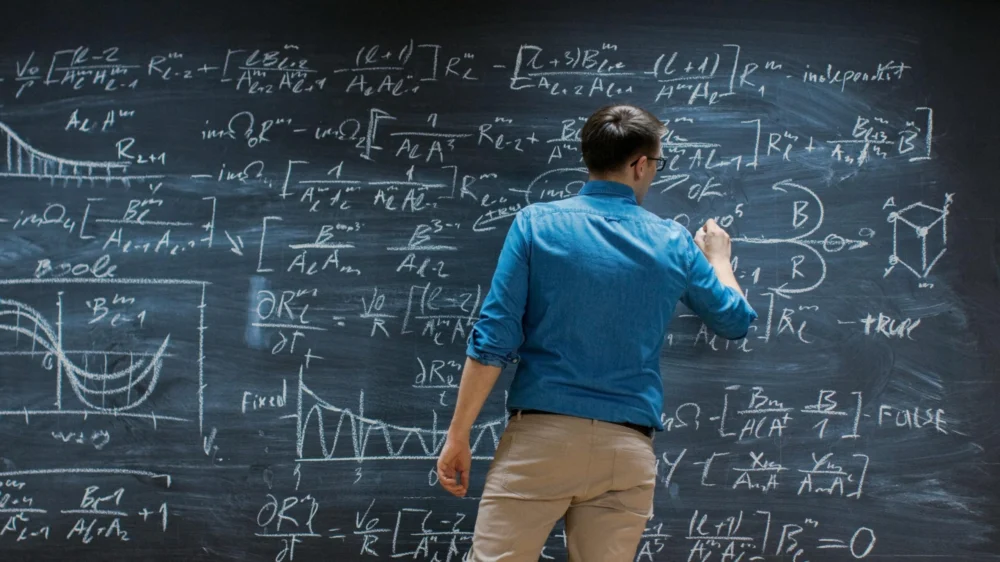
The landscape of pure mathematics is dominated by a single, towering peak that has resisted the ascent of the world’s most brilliant minds for over 160 years: the Riemann Hypothesis. Often described as the "Holy Grail" of number theory, this conjecture is more than just an abstract puzzle; it is the key to understanding the very atoms of mathematics—prime numbers. While the problem has historically been the exclusive domain of human intuition and chalkboard-and-ink deduction, a new protagonist has entered the fray. Artificial Intelligence, specifically Large Language Models (LLMs) and automated theorem provers, is beginning to provide the conceptual scaffolding necessary for non-mathematicians to grasp the problem and for professionals to potentially solve it.
The stakes are not merely academic. The Clay Mathematics Institute has designated the Riemann Hypothesis as one of the seven Millennium Prize Problems, offering a $1 million reward for its solution. To date, only one of these problems—the Poincaré Conjecture—has been solved. The Riemann Hypothesis remains the most coveted and perhaps the most difficult. Yet, as we move deeper into the era of generative AI, the methodology of mathematical discovery is shifting from solitary genius to a collaborative synthesis of human creativity and machine logic.
The Anatomy of a Mathematical Mystery
To understand why the Riemann Hypothesis is so significant, one must first understand the mystery of prime numbers. Primes—numbers like 2, 3, 5, 7, and 11 that are divisible only by themselves and one—are the building blocks of all integers. Despite their foundational role, their distribution appears chaotic. There is no simple formula that predicts when the next prime will appear as we count toward infinity.
In 1859, the German mathematician Bernhard Riemann published a landmark paper that proposed a revolutionary way to view this distribution. He utilized what is now known as the Riemann zeta function. In its simplest terms, the hypothesis suggests that all "nontrivial" zeros of this function lie on a single vertical line in the complex plane, specifically where the real part is exactly 1/2.
If this conjecture is proven true, it would confirm that the primes are distributed as regularly as possible. It would transform the "noise" of prime distribution into a predictable "music." However, if even a single zero is found off that "critical line," the entire structure of modern number theory would be shaken. Thousands of subsequent mathematical theorems begin with the phrase, "Assuming the Riemann Hypothesis is true…" A disproof would render those theorems invalid, while a proof would solidify them as absolute truths.
Why Brute Force Fails
In many fields of technology, problems are solved through sheer computational power. We can simulate weather patterns, crack passwords, and render complex graphics by throwing more "flops" at the problem. But the Riemann Hypothesis is an "infinite claim."
To date, supercomputers have checked the first 10 trillion zeros of the zeta function. Every single one of them falls exactly on the 1/2 line. In a scientific or engineering context, a success rate of 10 trillion to zero would be considered a definitive law. In mathematics, however, it is merely a suggestion. The history of mathematics is littered with "conjectures" that held true for trillions of cases only to fail at an unimaginably large number.
Because the set of zeros is infinite, we can never "check" them all. This is where the limitations of traditional computation become apparent. A solution requires a deductive proof—a logical argument that demonstrates why a zero must be on the line, or a single counter-example that proves it is not. This is a problem of logic, not arithmetic, and it is here that Artificial Intelligence is starting to change the game.
The AI Intervention: From Calculation to Logic
The current generation of AI, particularly models like GPT-4 or specialized systems like Google DeepMind’s AlphaProof, represents a departure from the "brute force" calculators of the past. These systems are being trained in formal mathematical languages like Lean or Isabelle, which allow them to verify logical steps with absolute certainty.
The role of AI in solving the Riemann Hypothesis is likely to manifest in three distinct ways:

-
Lemma Discovery and Pattern Recognition: Mathematical proofs often rely on "lemmas"—smaller, intermediate claims that act as stepping stones to a larger conclusion. AI is exceptionally good at scanning vast swaths of mathematical literature to find obscure connections between disparate fields, such as complex analysis and quantum physics. By suggesting these intermediate targets, AI can provide the "map" for a human mathematician to follow.
-
Formal Verification: One of the greatest fears in mathematics is the "hidden error." In 2018, the late Sir Michael Atiyah, one of the most decorated mathematicians of the 20th century, claimed to have a proof for the Riemann Hypothesis. The mathematical community eventually deemed it insufficient. AI systems can act as "automated referees," checking every line of a proposed proof for logical consistency, ensuring that a $1 million solution is actually airtight.
-
Heuristic Exploration: AI can explore "what if" scenarios at a speed no human can match. It can test various mathematical inequalities and bounds, looking for a contradiction. If an AI can show that a zero off the 1/2 line would create a logical impossibility (a contradiction of an established property), it would effectively prove the hypothesis in one stroke.
Industry Implications and the Cryptographic Threat
Why does the tech industry care about a 19th-century math problem? The answer lies in cybersecurity. Much of modern encryption, including the RSA algorithm that secures our bank transfers and private messages, relies on the difficulty of factoring large prime numbers.
While proving the Riemann Hypothesis wouldn’t "break" encryption overnight, it would provide a much more precise toolkit for understanding the gaps between primes. This could lead to more efficient algorithms for factoring, potentially shortening the lifespan of current cryptographic standards. More broadly, the tools developed to solve the Riemann Hypothesis—whether they involve new AI architectures or new branches of mathematics—will inevitably trickle down into fields like quantum computing, signal processing, and data science.
Furthermore, the quest for the Riemann Hypothesis is a benchmark for "Artificial General Intelligence" (AGI). Many experts believe that the first AI to solve a Millennium Prize Problem will have effectively demonstrated human-level reasoning. Unlike winning at Chess or Go, which are closed systems with set rules, solving a major mathematical conjecture requires "out-of-the-box" creativity and the ability to synthesize abstract concepts.
The Philosophical Shift: Knowing vs. Checking
The integration of AI into this quest highlights a profound philosophical divide between science and mathematics. In science, we use induction: we observe that the sun rises every morning, and we conclude it is a law of nature. In mathematics, we use deduction: we must prove that the sun cannot possibly fail to rise.
For the layperson using AI to understand these concepts, the technology acts as a translator. It bridges the gap between the "all Greek" definitions of Wikipedia and the intuitive logic of the human mind. It explains that the "zeros" are like "wiggles" in a graph, and the hypothesis is simply the claim that these wiggles are as constrained as they can be.
However, as AI becomes more capable, we may face a future where a machine produces a proof that is 10,000 pages long—too complex for any single human to read in a lifetime. If a computer verifies that the proof is correct, but no human understands why, have we truly "solved" the problem? This "black box" mathematics could be the next frontier of the discipline.
The Road Ahead
The Riemann Hypothesis remains unsolved, but the "tools" that mathematicians lamented lacking are finally being forged in the crucibles of AI research labs. We are moving toward a hybrid era of discovery. The million-dollar prize from the Clay Institute is a powerful motivator, but the true reward is the expansion of human knowledge.
Whether the solution comes from a lone genius in a university office or a massive neural network running in a data center, the result will be the same: a fundamental truth about the universe will be revealed. For now, the zeros remain "slippery," and the infinite line remains unproven. But for the first time in a century and a half, the odds are beginning to shift. The quest to solve the Riemann Hypothesis is no longer just a human endeavor; it is a testament to the symbiotic future of carbon and silicon. The million dollars is still out there, but the intellectual profit of solving the infinite will be worth far more.