

The landscape surrounding Dhaka, Bangladesh’s pulsating industrial heart, has long served as a stark illustration of the true environmental cost of fast fashion. For decades, the Buriganga River, once a vital artery, has been choked by a toxic effluent cocktail—a slurry of highly concentrated dyes, caustic chemicals, and heavy metals such including lead and cadmium—discharged directly from the textile and tanning sectors. This environmental catastrophe was mirrored by a parallel human tragedy, culminating in the 2013 collapse of the Rana Plaza factory complex. That disaster, which claimed the lives of 1,134 people and injured thousands more, crystallized the global understanding of the catastrophic social and structural failures underpinning the world’s reliance on cheap South Asian manufacturing.
Yet, from this crucible of crisis, an extraordinary industrial transformation has begun to take root. Bangladesh, the world’s second-largest garment exporter, is now quietly emerging as a global leader in sustainable manufacturing practices, specifically within the realm of resource efficiency and green building certification. This shift is not merely cosmetic; it represents a deep-seated technological and infrastructural pivot, driven by a combination of global market pressure, strategic local financing, and a pragmatic realization that resilience is the only path forward for a sector vulnerable to climate impacts and supply chain disruption.
The most tangible metric of this transition is the country’s unprecedented accumulation of LEED (Leadership in Energy and Environmental Design) certified garment factories. Bangladesh currently boasts 268 such facilities—a tally that surpasses any other nation globally. This status is particularly remarkable because it relies heavily on "frugal engineering"—smart, localized, and highly resource-efficient technologies tailored to the constraints of a developing economy, rather than relying solely on prohibitively expensive, imported Western clean-tech solutions.

These modern facilities are engineered for maximum efficiency across all vectors of production. Dyeing houses have transitioned to less toxic, standardized chemical palettes, while tanneries, historically massive polluters, are adopting cleaner tanning methodologies and implementing advanced primary and secondary wastewater treatment protocols. Across factory floors, older, energy-hungry lighting systems have been systematically replaced by high-efficiency LED fixtures, and rooftops are increasingly utilized for solar photovoltaic arrays, feeding clean power directly into operations. The ambition is to mitigate both environmental harm and operational expenses simultaneously.
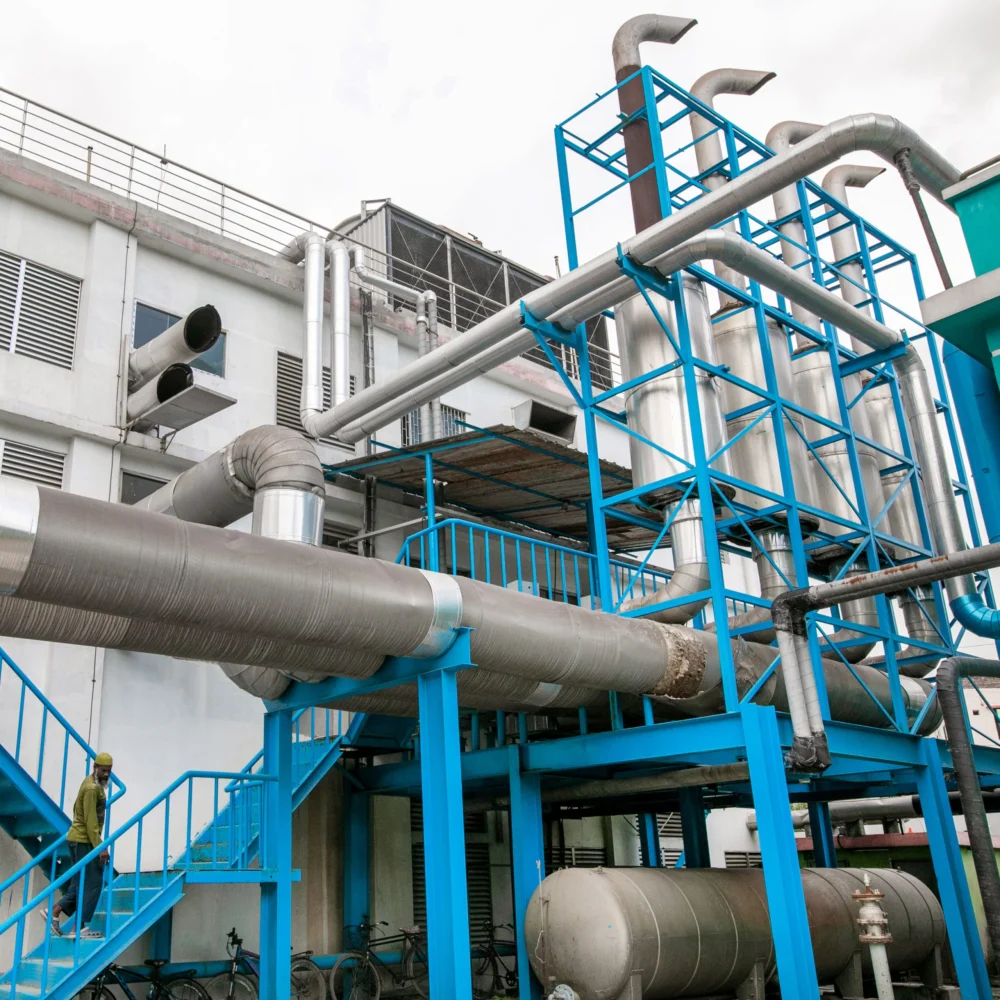
A closer examination of factories like the LEED Gold-certified Fakir Eco Knitwears near Dhaka illustrates the integrated approach to sustainability. Architectural design prioritizes natural light, utilizing expansive skylights and intelligent fenestration to achieve up to a 40% reduction in reliance on electric lighting during daytime shifts. This passive design is complemented by active technological deployment. Instead of traditional, energy-intensive climate control, factories deploy technologies such as exhaust gas absorption chillers, which utilize waste heat generated by power systems (like boilers or generators) to produce cooling, maintaining optimal floor temperatures (often around 28°C or 82°F) while minimizing electrical input.
Crucially, textile waste is being addressed at a fundamental level. Modern facilities employ sophisticated, AI-driven fabric cutting systems. These systems use complex algorithms to optimize pattern placement on raw material, significantly reducing off-cut waste. Furthermore, fabric scraps, which once went straight to landfill, are now processed and recycled on-site, with facilities achieving up to 95% material recovery, feeding new yarns back into the production cycle. Water management represents the most critical technological leap. Factories are implementing closed-loop systems, utilizing advanced effluent treatment plants (ETPs) and, in some cases, reclaiming sewage water for non-potable uses within the facility, such as landscaping and restrooms, dramatically cutting demand on increasingly strained freshwater sources.
This comprehensive green shift is fundamentally a financial endeavor, requiring massive capital investment. The impetus for funding stems from three primary sources: internal factory investments recognizing long-term operational savings; strategic loans from state-backed mechanisms, notably the Bangladesh Bank’s Green Transformation Fund; and, most powerfully, explicit mandates from international buyers. Global brands are increasingly leveraging their procurement power, rewarding environmentally compliant suppliers with larger, more stable order volumes.

Institutional support has been vital in translating ambition into actionable metrics. The Partnership for Cleaner Textile (PaCT), launched in 2013 by the World Bank Group’s International Finance Corporation (IFC), has served as a key accelerator. Working with over 450 factories, PaCT provides technical assistance and financing to adopt cleaner production methods. The quantifiable results are staggering: the initiative is credited with saving an estimated 35 billion liters of fresh water annually, a volume sufficient to meet the yearly needs of nearly two million people. This demonstrates that sustainability is not just an ethical luxury but a powerful economic tool for resource conservation in a water-stressed region.
Expert Analysis: The Geopolitical and Regulatory Tipping Point
The current environmental momentum is inextricably linked to anticipated changes in global regulatory frameworks, particularly those emanating from the European Union, which remains the largest export market for Bangladeshi garments. The EU’s forthcoming Corporate Sustainability Due Diligence Directive (CSDDD), scheduled for phased implementation beginning around 2027, mandates that large companies actively monitor and mitigate adverse human rights and environmental impacts throughout their value chains.
Expert analysis suggests that this regulatory pivot is the ultimate driver, shifting the onus of responsibility from voluntary audits to legally enforceable supply chain compliance. For Bangladeshi manufacturers, achieving high-level certifications like LEED is becoming a prerequisite for market access, rather than a competitive advantage. Factories that fail to modernize their energy and water footprint risk exclusion from contracts with major European retailers, leading to a bifurcation of the industry.
Dr. Aisha Rahman, a specialist in global supply chain resilience, notes that the investment in green technology is essentially a long-term risk management strategy. "The cost of non-compliance, particularly fines or market exclusion imposed by the EU, far outweighs the capital expenditure required for LEED certification," she states. "The savvy manufacturers are investing now to secure future contracts, transforming environmental stewardship into economic security."

The Unfinished Tapestry: Labor Rights and Inequality
Despite the undeniable progress in technological and environmental performance, the narrative of transformation in Bangladesh’s garment sector remains tragically incomplete. The rapid shift toward environmentalism at the factory level has failed to translate into commensurate improvements for the sector’s estimated 4.4 million workers.
Since the Rana Plaza tragedy, significant improvements have been made in structural building safety and fire hazard mitigation, driven by collaborative agreements like the Accord on Fire and Building Safety. However, the foundational issues of labor rights—fair wages, safe working hours, and the right to unionize—persist largely unresolved.
The core of the conflict revolves around remuneration. The legally mandated minimum wage, recently adjusted to approximately 12,500 taka per month (roughly $113), remains drastically insufficient to cover basic living expenses in major urban centers. Labor unions have consistently advocated for a minimum wage closer to $200, leading to widespread industrial unrest, frequent protests, and strikes over stagnant pay, mandated overtime, and job security concerns.
A.K.M. Ashraf Uddin, Executive Director of the Bangladesh Labour Foundation, highlights a deep-seated cultural resistance to change: "The physical safety standards have improved dramatically since 2013, but the fundamental managerial mindset remains unchanged. Profit is still the paramount concern. The technological and environmental upgrades are viewed as necessary costs to satisfy international buyers, not as part of a holistic commitment to sustainability that includes the human element. Freedom of association and collective bargaining rights remain largely suppressed."

This disparity creates a concerning imbalance. While factory owners benefit from lower operational costs (reduced energy and water bills) and secured international orders, the gains from efficiency are not equitably distributed to the workforce. This situation exemplifies the concept of ‘greenwashing’ at an operational level: environmental sustainability is achieved without the corresponding social sustainability, creating a two-tiered system where planet-friendly production coexists with exploitative labor practices.
Future Impact and The Threat of Market Fragmentation
Looking ahead, the successful continuation of Bangladesh’s green revolution hinges on scaling the transformation down to the vast majority of suppliers. The industry is characterized by a pyramid structure, with a few hundred large, vertically integrated groups (Tier 1 suppliers) and thousands of smaller, often less financially stable, Tier 2 and Tier 3 subcontractors.
These smaller enterprises, which constitute a significant portion of the production capacity, often operate on razor-thin margins and lack the capital or access to credit required for multi-million dollar investments in ETPs, solar arrays, or advanced automation systems.
This structural vulnerability poses a major risk: the regulatory environment designed to promote sustainability could inadvertently catalyze market fragmentation and economic inequality. As international buyers intensify their audits to meet CSDDD requirements, they will increasingly concentrate orders among the certified, resilient, and compliant Tier 1 factories. The smaller, non-compliant workshops face the very real threat of being cut off from global supply chains entirely, leading to mass job losses and economic dislocation, potentially undermining the entire sector’s stability.

To mitigate this, future policy must focus on accessible, micro-financing solutions and shared infrastructure development. The creation of common effluent treatment plants (CETPs), financed through public-private partnerships, could provide smaller factories with necessary compliance without requiring prohibitive individual capital outlay. Furthermore, technological intervention must include scalable, low-cost digitalization tools that help smaller operators monitor resource consumption and identify areas for "frugal" improvement.
Bangladesh has demonstrated remarkable fortitude in reinventing its global image, moving from a symbol of industrial tragedy to a pioneer in sustainable factory design. The shift towards LEED certification and advanced resource management systems signals a commitment to long-term environmental stewardship and economic resilience. However, for this revolution to be truly sustainable—in the holistic sense of the word—it must extend its focus beyond water and energy metrics. The final, critical chapter in this industrial saga must address the systemic failures in labor governance, ensuring that the environmental dividend is shared equitably and that the industry’s 4.4 million workers are granted the dignity and security commensurate with their vital role in the global economy. The future of the Buriganga River may look cleaner, but the vast tapestry of social need remains largely untouched.