

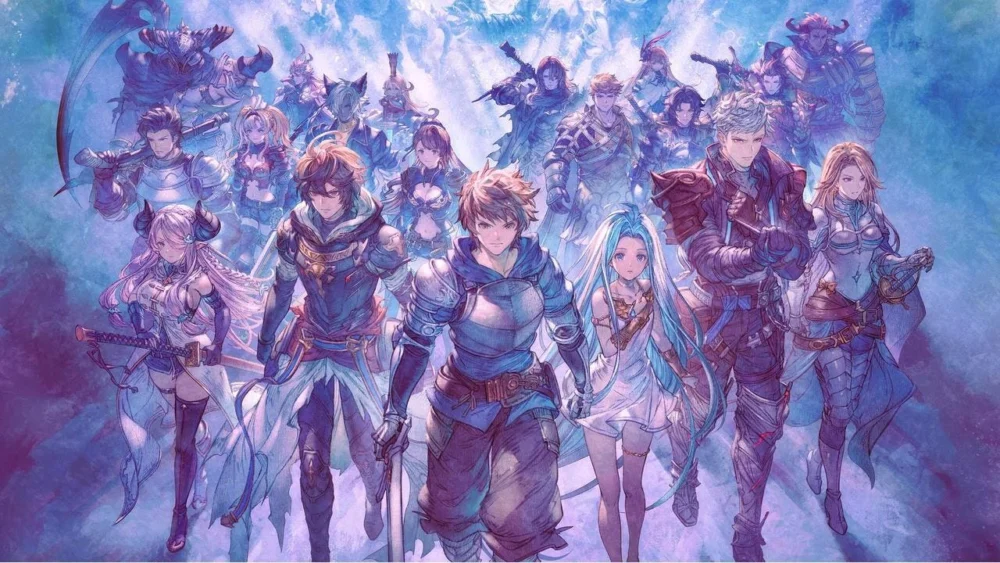
The landscape of the modern gaming industry is often defined by a delicate tension between developer monetization and consumer goodwill. For years, the "enhanced edition" model—particularly within the Japanese RPG (JRPG) sector—has been a point of contention for dedicated fans. Players who support a title at launch frequently find themselves penalized years later when a "definitive" version arrives, often requiring a second full-price purchase to access new story content, mechanics, and characters. However, the recent announcement from Cygames regarding Granblue Fantasy: Relink – Endless Ragnarok suggests a significant shift in this paradigm, offering a consumer-first blueprint that could, and perhaps should, become the new industry standard.
Earlier this week, Cygames pulled back the curtain on the next major chapter for its high-flying action-RPG. Granblue Fantasy: Relink – Endless Ragnarok is not merely a content patch; it is an ambitious expansion and refinement of the original experience that launched to critical and commercial success in early 2024. While the base game was originally confined to the PlayStation ecosystem and PC, Endless Ragnarok is broadening its horizons, notably confirming a release for the Nintendo Switch 2. This move positions the title as a flagship offering for Nintendo’s next-generation hardware, signaling both the technical scalability of the engine and Cygames’ intent to capture a wider audience.
The most transformative aspect of this announcement, however, lies in its pricing and delivery model. In an era where "Director’s Cuts" and "Royal" editions frequently demand a fresh $60 or $70 investment, Cygames has opted for a more equitable "Upgrade Kit" priced at $30. This allows existing owners of the base game to transition to the Endless Ragnarok content without the "double-dip" tax that has plagued the genre for decades. By offering a clear, affordable bridge for early adopters while maintaining a full-priced SKU for newcomers, Cygames is demonstrating a level of respect for its community that is increasingly rare in the AAA space.
The Historical Context of the "Definitive Edition"
To understand why the Endless Ragnarok upgrade path is so significant, one must look at the historical precedent set by major JRPG publishers. For decades, the "International Version" or "Final Mix" was a staple of the Japanese market. Games like Final Fantasy X, Kingdom Hearts, and Dragon Quest would receive updated releases months or years after their initial launch, often featuring significant new bosses, cutscenes, and mechanical overhauls. During the era of physical-only media, these re-releases were a necessity of the distribution model; there was no digital infrastructure to deliver large-scale updates to existing discs.
However, the transition to the digital age did not immediately do away with this practice. Companies like Atlus have become synonymous with this "two-step" release cycle. Persona 5 was followed by Persona 5 Royal; Shin Megami Tensei V was followed by Shin Megami Tensei V: Vengeance. In both cases, the updated versions were sold as standalone, full-priced products. While these versions often included a staggering amount of new content, they left early adopters feeling like "beta testers" who paid full price for an inferior version of the product, only to be asked for another $60 to see the story’s true conclusion.
This friction has reached a breaking point in the current market. SEGA, the parent company of Atlus, recently acknowledged a growing trend of "patient gaming" among its audience. Internal data suggested that a segment of the player base was intentionally skipping the launch of high-profile titles like Metaphor: ReFantazio, specifically because they anticipated an expanded version would be released two years later. This consumer hesitation creates a dangerous cycle for developers: if initial sales are suppressed by the fear of a future "definitive" version, the franchise may never receive the very expansion the fans are waiting for.
Analyzing the $30 Value Proposition
By pricing the Endless Ragnarok Upgrade Kit at $30, Cygames is effectively treating the update as a massive, traditional expansion pack—reminiscent of the way CD Projekt Red handled The Witcher 3’s Blood and Wine or how Monster Hunter Rise transitioned into Sunbreak. This model acknowledges that the new content has a development cost that justifies a price tag, but it does not ignore the $60 already invested by the day-one player.
The "Endless Ragnarok" content is reportedly substantial, featuring a wealth of new endgame raids, playable characters from the deeper Granblue lore, and significant quality-of-life improvements to the game’s progression systems. For a game like Relink, which leans heavily into a "boss-rush" and cooperative hunting loop similar to the Monster Hunter series, new content is the lifeblood of the community. A $30 entry fee for what essentially doubles the endgame longevity is a fair trade that maintains the game’s momentum without alienating the core fanbase.
Furthermore, this strategy serves as a powerful marketing tool for the Nintendo Switch 2. By launching the "complete" experience on a new platform while allowing PlayStation and PC players to upgrade, Cygames ensures that the community remains unified across hardware generations. It prevents the fragmentation that often occurs when a community is split between "legacy" owners and "definitive" owners.

The Technical and Platform Caveats
While the Endless Ragnarok upgrade path is a major step forward, it is not without its limitations. Cygames has clarified that the Upgrade Kit is platform-locked. A player who owns the base game on Steam cannot use the $30 upgrade to play the game on a PlayStation 5 or the upcoming Switch 2. This remains one of the final hurdles for the industry at large: the lack of cross-platform ownership.
In an ideal world, a digital purchase of a game would grant access to that title across all available ecosystems. However, due to the walled gardens maintained by Sony, Valve, and Nintendo, and the commission fees each platform holder takes, such a reality remains a distant dream. Nevertheless, within the confines of a single platform, the ability to upgrade is a vital feature.
The inclusion of a closed beta test from March 13 through March 16 further highlights Cygames’ commitment to technical stability. As the game adds more complex online interactions and prepares for the hardware specificities of the Switch 2, these stress tests are essential. They also serve as a "soft launch" to re-engage the community and build hype for the July 8 release date.
Industry Implications and Future Trends
The success of the Endless Ragnarok model could force other major players to reconsider their release strategies. If Cygames can achieve high attachment rates for its upgrade kit while also selling a full-priced "All-in-One" edition to new players, the financial argument for forcing a $70 re-purchase begins to crumble.
We are seeing a slow but steady shift in this direction across the industry. Sony’s recent handling of Ghost of Tsushima: Director’s Cut and Death Stranding: Director’s Cut offered $10 to $20 upgrade paths for existing owners, which were well-received. However, those were often seen as technical upgrades for a new console generation. Cygames is applying this logic to a content-heavy JRPG expansion, which is a much rarer occurrence in that specific sub-genre.
This shift is also reflective of the "Games as a Service" (GaaS) influence on traditional single-player and co-op games. While Granblue Fantasy: Relink is not a live-service game in the predatory sense—it lacks battle passes and aggressive microtransactions—it does benefit from a "living" community. By providing an affordable way for that community to grow, Cygames ensures that the multiplayer matchmaking pools remain healthy, which in turn increases the long-term value of the IP.
The Path to July 8 and Beyond
As we approach the July 8 launch, the spotlight will be on how Endless Ragnarok performs on the Nintendo Switch 2. The original Relink was a visual powerhouse, utilizing a lush, painterly aesthetic that pushed the PlayStation 4 to its limits and looked stunning on high-end PCs. If the Switch 2 can deliver a comparable experience, it will solidify the console as a viable home for high-end JRPGs that previously bypassed Nintendo hardware.
For subscribers of PlayStation Plus Extra and Premium, the availability of the base Relink in the Game Catalog offers a low-risk entry point. New players can experience the dozens of hours of content in the base game "for free" as part of their subscription, and if they find themselves hooked on the loop of elemental combat and sky-faring adventure, the $30 upgrade to Endless Ragnarok becomes an easy sell. This "funnel" effect is a masterclass in modern digital distribution.
Ultimately, Granblue Fantasy: Relink – Endless Ragnarok represents more than just a new set of bosses and gear. It represents a maturation of the relationship between JRPG developers and their audience. It suggests that the "greed-driven" re-release is no longer the only way to sustain a franchise. If the industry takes note of Cygames’ approach, the era of the "full-price double-dip" may finally be coming to an end, replaced by a more sustainable, respectful, and ultimately more profitable model of expansion. For the players currently grinding for Terminus weapons in the Sky Realm, July 8 cannot come soon enough. For the rest of the industry, the lesson is clear: respect your players’ investment, and they will continue to invest in you.