

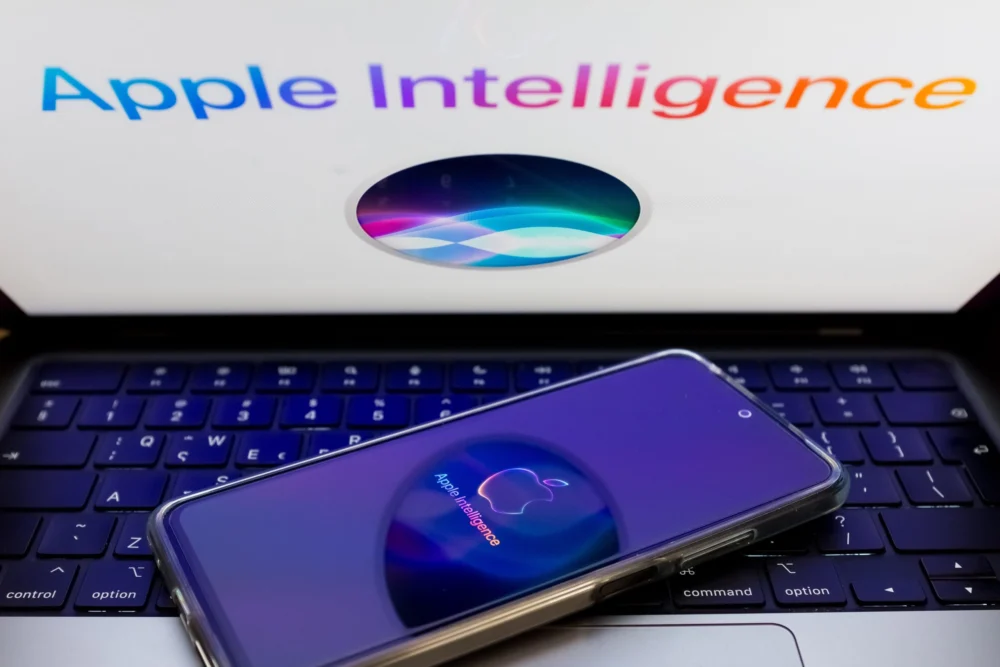
The long-awaited seismic shift in Apple’s artificial intelligence strategy is reportedly scheduled for a public debut in the latter half of February, marking the first tangible result of the unexpected and monumental collaboration with Google. This rollout is not merely an incremental software patch; it signifies a foundational re-engineering of the company’s digital assistant, Siri, leveraging the advanced capabilities of Google’s Gemini large language models (LLMs). For years, Siri has been widely criticized for its stagnation, often lagging behind competitors in contextual understanding and complex task execution. This imminent update is positioned as the crucial first step toward fulfilling the ambitious promise of truly intelligent, context-aware computing that Apple outlined nearly two years prior.
This initial phase of the Siri overhaul focuses squarely on enhancing utility through deep personalization and situational awareness. Reports indicate the upgraded assistant will gain the ability to execute sophisticated, multi-step tasks by accessing a user’s personal ecosystem data—calendar entries, messages, photos, and, critically, the ephemeral content displayed on the screen. Unlike previous iterations of Siri, which were limited to basic command parsing and application launching, this Gemini-infused variant is expected to demonstrate genuine comprehension of user intent and environment. The integration aims to bridge the gap between simple voice commands and genuinely proactive assistance, finally allowing Siri to move beyond basic functions like setting timers and playing music into the realm of complex productivity orchestration.
The Strategic Necessity of the Google Pact
The partnership between two of the world’s fiercest technological rivals—Apple and Google—underscores the intense pressure Cupertino faced to rapidly modernize its AI infrastructure. Apple’s traditional approach to AI, which prioritized on-device processing and strict user data compartmentalization, proved insufficient to match the rapid generative capabilities demonstrated by competitors like OpenAI, Microsoft, and Google itself.
For several years, internal narratives suggested that Apple’s in-house foundation models were struggling to achieve parity with industry leaders. While the company invested heavily in its silicon architecture—specifically the Neural Engine integrated into the A-series and M-series chips—to facilitate powerful on-device inference, developing a competitive, generalized LLM from scratch proved a Herculean task. These internal struggles were punctuated by periods of organizational turbulence, including high-profile executive departures and reported skepticism among the foundation model teams regarding the viability of the current trajectory. The necessity of a decisive strategic pivot became undeniable.
The decision to partner with Google and adopt the Gemini architecture is a pragmatic acknowledgement of the generative AI performance gap. By licensing Gemini, Apple instantly gains access to one of the world’s most sophisticated and highly optimized LLMs, circumventing years of development time and billions in training costs. This move, however, represents a profound ideological compromise for a company built on vertical integration and proprietary technology. It means that, for the most advanced functions, Apple is trading absolute control over its core intelligence layer for immediate, market-competitive capability.
Phased Rollout and Architectural Ambiguity
The upcoming February announcement is understood to be merely the appetizer before a much more significant unveiling planned for the Worldwide Developers Conference (WWDC) in June. This two-step deployment strategy suggests a careful balancing act between immediate user gratification and long-term architectural stability.
The February iteration, focusing on immediate task execution based on personal context, is likely utilizing a blend of on-device models (perhaps a smaller, highly efficient version of Apple’s internal LLM used for foundational context) augmented by cloud calls to Gemini for sophisticated natural language understanding (NLU) and generation where necessary. The core differentiator here is the ability to leverage "Apple Intelligence" capabilities—the secure, private access to a user’s personal graph—to feed high-quality, actionable data into the Gemini inference process.
The June WWDC announcement, conversely, promises a revolutionary leap. This future version of Siri is rumored to embody a truly conversational chatbot experience, mirroring the fluid, multi-turn dialogue popularized by services like ChatGPT and Microsoft Copilot. Crucially, this advanced iteration is expected to rely heavily, if not entirely, on Google’s extensive cloud infrastructure for processing. This reliance on remote infrastructure, while necessary for the sheer computational load of cutting-edge generative AI, presents significant challenges regarding data privacy—a cornerstone of Apple’s brand identity.
The technical architecture required to execute this dual-platform strategy is immensely complex. Apple must maintain the illusion of seamless, integrated performance while routing sensitive queries to external cloud environments. This likely necessitates advanced anonymization techniques, differential privacy protocols, and robust security safeguards to ensure that Google, while processing the queries, cannot directly access the underlying proprietary user data. The success of this partnership hinges entirely on Apple’s ability to maintain its privacy guarantees, even when leveraging a competitor’s cloud-based LLM.

Industry Implications and the Competitive Landscape
The integration of Gemini into Siri represents a tectonic realignment in the digital assistant market. For years, the rivalry was defined by fragmented, siloed experiences: Amazon dominated the home with Alexa; Google led mobile search integration; and Apple controlled the operating system layer but offered a functionally limited assistant.
With a powerful, generative AI core, Siri transforms from a feature liability into a key strategic asset. This immediately elevates the competitive pressure on Amazon, whose Alexa platform, while ubiquitous in smart homes, has also struggled to integrate contemporary generative AI features effectively. Furthermore, it forces Microsoft and OpenAI to accelerate their push into mobile and OS-level integration, ensuring their Copilot and GPT models are equally accessible and deeply contextualized within the dominant mobile ecosystems (iOS and Android).
Expert analysis suggests that this move validates the concept of the "AI Agent"—a sophisticated software entity capable of proactive reasoning and action, rather than just reactive command execution. The enhanced Siri is designed to become the central operating agent for the Apple ecosystem, automating workflows, summarizing complex information across applications, and anticipating user needs. This shift moves the battleground from who has the best search engine or the cheapest speaker, to who can build the most effective, personalized AI co-pilot embedded within the user’s daily digital life.
The Long-Term Dependency and Future Trends
While the Google partnership offers an immediate solution to Apple’s AI deficit, it introduces a significant long-term strategic dependency. Handing over the core intelligence layer—even temporarily or partially—to Google poses risks regarding pricing, feature differentiation, and future technological lock-in. Analysts question how long Apple can tolerate reliance on a direct rival for such a critical feature before accelerating its internal efforts to develop a proprietary, fully sovereign LLM capable of on-device execution.
This partnership may be viewed as a temporary bridge—a strategic concession allowing Apple to catch up in the generative AI race while simultaneously perfecting its own smaller, specialized models designed for optimal on-device performance. The ultimate goal, reflecting Apple’s deep-seated philosophy, remains local processing, minimizing latency, maximizing privacy, and reducing cloud costs. The true success of the Gemini collaboration will be measured not only by the quality of the immediate Siri upgrade but by the runway it provides for Apple’s internal teams to achieve LLM independence.
The future trajectory of digital assistants points toward multimodal AI, where the assistant seamlessly processes voice, text, and visual input. The ability of the February Siri update to access "on-screen content" is a crucial step in this direction, allowing the AI to understand visual context—what the user is currently viewing in Safari, a photograph, or a message thread—and act upon it. The full promise of Gemini, with its native multimodal capabilities, suggests that the June rollout could integrate advanced image analysis and real-time visual interpretation, further blurring the lines between the digital assistant and a comprehensive, all-seeing operating system layer.
Managing Expectations and Privacy Concerns
For Apple, the most delicate aspect of this launch will be managing user expectations and addressing inevitable privacy concerns. Historically, Apple users trust the company implicitly due to its commitment to data sovereignty. The introduction of a third-party, cloud-based LLM—especially one owned by Google, a company whose business model is built on data monetization—requires meticulous communication.
The company will need to clearly articulate the difference between data processed securely on the device (the foundational context layer) and queries routed to Google’s cloud (the generative layer). Emphasizing that cloud requests are anonymized, stripped of personal identifiers, and governed by strict contractual limitations will be paramount to maintaining user trust. If the user experience is dramatically improved, however, the majority of the user base may accept the architectural compromise as a necessary step for remaining competitive in the current technological paradigm.
In conclusion, the impending announcement of a Gemini-powered Siri assistant represents the most significant repositioning of Apple’s software strategy in over a decade. It is a moment of necessary capitulation to the reality of the generative AI landscape, prioritized by the need to deliver cutting-edge user experience immediately. While this strategic alignment with Google carries inherent risks, it provides Apple with the competitive firepower needed to redefine the capabilities of its ecosystem, positioning Siri not as a lagging feature, but as the sophisticated, proactive intelligence engine required for the next era of personal computing. The industry watches closely as this partnership unfolds, understanding that the success or failure of this integration will dictate the shape of the global AI agent market for years to come.