


Palo Alto Networks, a titan in the cybersecurity infrastructure landscape, has addressed a significant security flaw, designated as CVE-2026-0227, that permits unauthenticated threat actors to induce a state of denial-of-service (DoS) against deployed firewall appliances. The vulnerability’s successful exploitation forces the affected security devices into a mandatory maintenance mode, effectively neutralizing their protective capabilities and leaving vast networks exposed to potential compromise.
This critical security bulletin impacts a broad spectrum of the company’s flagship offerings, specifically next-generation firewalls running PAN-OS versions 10.1 and subsequent releases. Furthermore, the flaw extends its reach to configurations utilizing the Prisma Access cloud-delivered security service, provided the GlobalProtect gateway or portal functionality is actively enabled. The very nature of this vulnerability—requiring no prior authentication—elevates its severity rating, as it lowers the barrier to entry for malicious actors seeking to disrupt critical network defenses.
In response to the discovery, Palo Alto Networks has moved swiftly to deploy patches. The company confirmed that its managed cloud environments, particularly those leveraging Prisma Access, have seen the majority of instances remediated. For the remaining cloud deployments, upgrades are reportedly already underway or scheduled under standard operational procedures, minimizing the window of exposure for these globally distributed services. This rapid containment strategy is crucial, given the extensive reliance on Palo Alto Networks infrastructure across global enterprise, governmental, and financial sectors.
Technical Deep Dive and Attack Vector Analysis
The official advisory from Palo Alto Networks detailed the mechanism of the attack: “A vulnerability in Palo Alto Networks PAN-OS software enables an unauthenticated attacker to cause a denial of service (DoS) to the firewall. Repeated attempts to trigger this issue results in the firewall entering into maintenance mode.”

From a technical standpoint, a DoS condition that forces a device into maintenance mode is particularly insidious. Unlike a simple crash, which might eventually self-recover, maintenance mode often requires manual intervention or a specific, lengthy reboot sequence to restore full functionality. For organizations relying on these firewalls for perimeter defense, intrusion prevention, and secure connectivity (such as VPN termination via GlobalProtect), this state represents a hard stop on security operations. An attacker doesn’t necessarily need to exfiltrate data; simply blinding the network defenses is a significant operational victory for a hostile entity.
The focus on GlobalProtect gateways is noteworthy. These components are often exposed directly to the internet to facilitate remote access for employees, contractors, and partners. While necessary for modern hybrid work models, this public-facing posture inherently increases the attack surface. If an attacker can leverage an unauthenticated vulnerability through the GlobalProtect service endpoint to crash the entire firewall process, the immediate implication is widespread connectivity disruption and the complete circumvention of Layer 7 security inspection for any traffic attempting to traverse the now-disabled gateway.
Industry Context: The Persistent Targeting of Perimeter Defenses
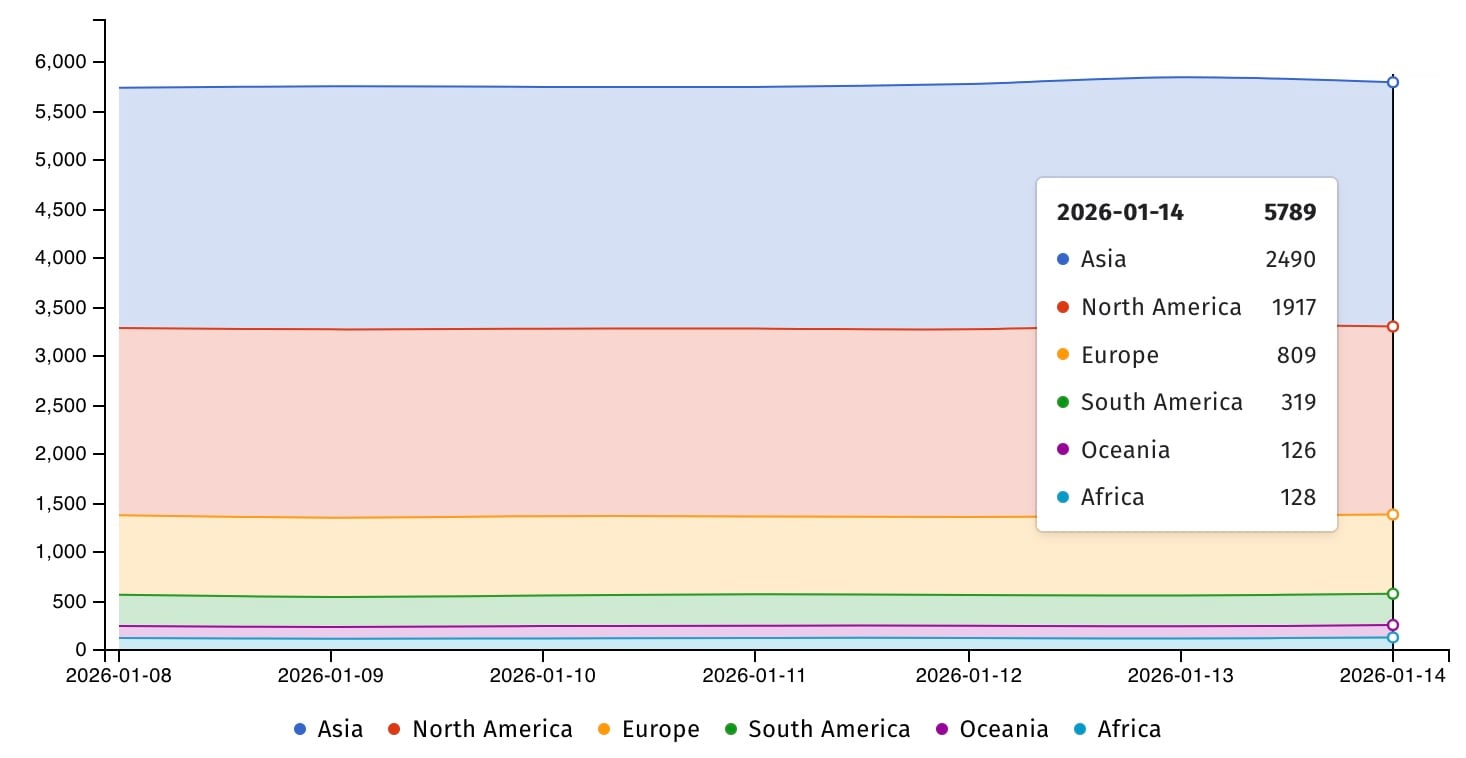
This incident is not isolated; it fits into a troubling pattern wherein high-value, widely deployed security appliances, particularly firewalls, become prime targets for sophisticated threat actors. Security visibility platforms, such as those monitored by Shadowserver, currently track close to 6,000 Palo Alto Networks firewalls directly addressable from the public internet. While this figure represents the total installed base accessible externally, the critical uncertainty lies in the proportion of these devices running vulnerable PAN-OS versions and, crucially, which ones have yet to receive the necessary security updates.
The consistent targeting of Palo Alto Networks infrastructure underscores the perceived high return on investment for attackers exploiting these platforms. When a zero-day or a critical vulnerability is discovered in a widely used enterprise product, the potential impact scales exponentially. Furthermore, the industry has recently witnessed several high-profile disclosures involving this vendor:
- **Prior Zero-Day Exploitation:** In November 2024, two distinct PAN-OS zero-days, which allowed for root privilege escalation, were patched following active exploitation in the wild. The subsequent fallout saw thousands of devices reportedly compromised, even as the vendor initially suggested the impact was limited to a “very small number” of customers. This incident triggered urgent directives from regulatory bodies like CISA, demanding rapid remediation from federal agencies.
- **Recent DoS Campaign:** Only a month later, in December 2024, another critical DoS vulnerability (CVE-2024-3393) was actively exploited. That specific flaw targeted PA-Series, VM-Series, and CN-Series firewalls configured with DNS Security logging enabled, forcing reboots that disabled core firewall functions.
- **Chained Attacks:** The relentless nature of the attacks was further evidenced in February of the following year, when reports surfaced detailing the chaining of three separate vulnerabilities (CVE-2025-0111, CVE-2025-0108, and CVE-2024-9474) to achieve full compromise of PAN-OS environments.
The latest discovery, CVE-2026-0227, appears to leverage a different mechanism—a denial of service resulting in maintenance mode—but it reinforces the persistent threat landscape facing perimeter security administrators. The cadence of these vulnerabilities suggests intense scrutiny by threat research groups and malicious actors alike on the core processing logic of these essential security gateways.

Expert Analysis: The Erosion of Trust in Perimeter Security
For security architects, the constant stream of high-severity vulnerabilities introduces significant operational fatigue. When a vendor whose core value proposition is *security* consistently releases patches for flaws that can be exploited to *disable* security, it forces a difficult re-evaluation of reliance on that specific platform for foundational defense. Experts note that this pattern can erode trust, especially among organizations operating under strict compliance mandates.
The specific nature of CVE-2026-0227—forcing a device into maintenance mode—points toward a potential weakness in session handling or resource exhaustion related to the GlobalProtect stack. An unauthenticated remote trigger suggests that the attacker is likely targeting an initialization or handshake routine within the exposed portal/gateway service that doesn’t properly validate input boundaries or state transitions, leading to an unrecoverable software fault.
Furthermore, the vulnerability highlights the challenge of managing diverse deployment models. The need to patch both physical (PA-Series) and virtualized/cloud-native (VM-Series, Prisma Access) instances simultaneously complicates patching windows. While Cloud NGFW deployments, which are vendor-managed, are noted as requiring no action, the burden falls squarely on organizations managing their own PAN-OS instances across on-premises data centers and private cloud environments.
Remediation Imperatives and Patch Strategy
Palo Alto Networks has provided comprehensive guidance, emphasizing immediate migration to fixed versions. The recommended course of action, applicable across all affected product lines, is an upgrade to the latest stable release that incorporates the relevant security fix. The advisory table meticulously outlines the necessary path:
- For PAN-OS 12.1, upgrades must reach 12.1.4 or later.
- For the widely deployed 11.2 branch, multiple hotfix releases (e.g., 11.2.10-h2 or later) are specified depending on the precise minor version.
- Similar granular hotfix requirements apply to the 11.1 and 10.2 branches, reflecting the need to address the flaw without forcing users onto entirely new major versions if possible.
The instruction for unsupported PAN-OS versions is clear: migration to a currently supported, fixed version is mandatory. This presents a significant logistical hurdle for organizations running legacy hardware or significantly outdated software stacks, as a simple hotfix may not suffice, necessitating a full platform upgrade or hardware refresh.
Security teams must prioritize the external-facing components first. Any firewall or device hosting an exposed GlobalProtect portal or gateway should be considered a top-tier remediation target. The fact that no evidence of active exploitation was cited at the time of the advisory’s release offers a small window of opportunity, but given the speed at which proof-of-concept exploits often emerge following public disclosures, this window is closing rapidly.
The Future Impact: Security Architecture in a Post-Perimeter World
The recurring theme across these security advisories is the vulnerability of the centralized security gateway, particularly when serving as a remote access termination point. In an era defined by distributed workforces and cloud migration, the firewall remains the critical choke point. When that choke point fails due to a software bug, the entire security posture is compromised.
This trend reinforces the industry shift toward a Zero Trust architecture that reduces reliance on monolithic perimeter defenses. While firewalls remain indispensable, organizations are increasingly looking to distribute trust decisions closer to the resource. Solutions focusing on Software-Defined Perimeter (SDP) or identity-centric access control, rather than network-centric enforcement at the edge, offer a degree of resilience against perimeter DoS attacks like CVE-2026-0227.
Moreover, the pressure on vendors to mature their development and testing lifecycles is intensifying. When over 70,000 customers globally, including 90% of Fortune 10 companies, rely on a vendor’s product, the expectation for near-perfect security assurance is paramount. The ongoing catalog of vulnerabilities suggests that the complexity inherent in managing modern, feature-rich firewall operating systems is currently outpacing the ability to secure every code path against sophisticated manipulation.
The recent surge in automated scanning, exemplified by the brute-force campaigns detected against GlobalProtect portals by threat intelligence firms, suggests that threat actors are not just waiting for zero-days but are actively mapping the landscape, cataloging vulnerable endpoints, and preparing for the next exploit to be released or discovered. For IT and security leadership, the mitigation of CVE-2026-0227 is an urgent operational task, but the underlying architectural challenge—securing the network’s most critical junctions against catastrophic failure—remains a defining feature of the current threat landscape.