

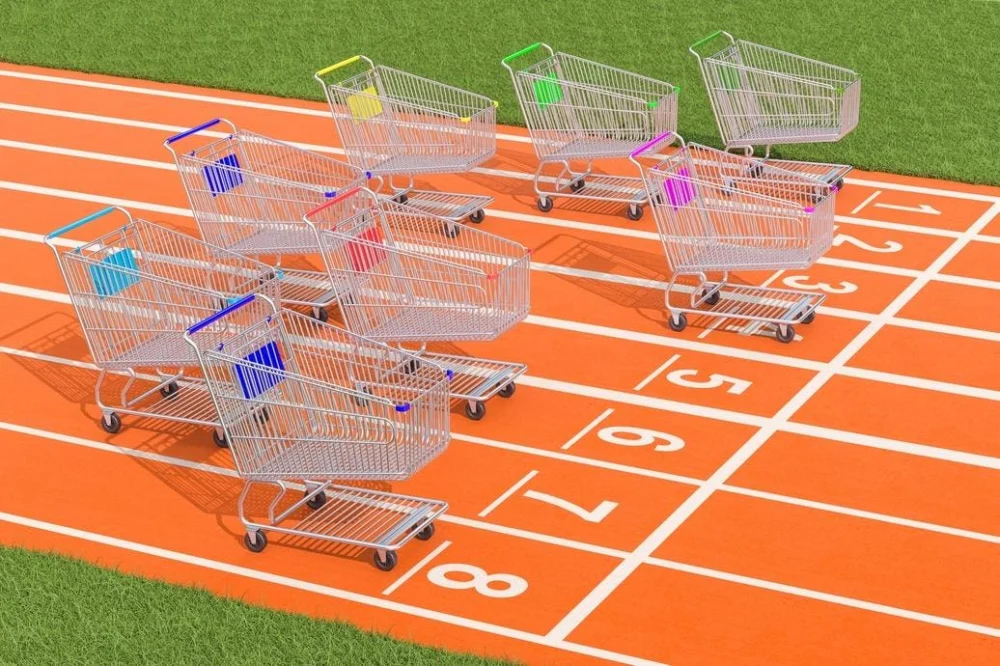
The retail sector is currently navigating a profound paradox: never has more capital been poured into artificial intelligence, yet never has the gap between algorithmic output and operational reality felt so wide. For the better part of a decade, the industry’s obsession was "prediction"—the ability to use historical data to guess what a consumer might buy or where a shipment might land. Today, that mission is being exposed as insufficient. As global supply chains face unprecedented volatility and consumer loyalty becomes increasingly fickle, the focus is shifting from building machines that can predict the future to building systems that can actually reason through it.
The scale of AI integration in the modern enterprise is staggering. Recent data from McKinsey’s 2025 State of AI report reveals that a remarkable 88 percent of organizations have moved beyond the experimental phase, embedding AI into at least one core business function. In the retail world, this has manifested as hyper-accurate demand forecasting, automated warehouse sorting, and dynamic pricing engines. On a balance sheet, the progress looks like a triumph of digital transformation. However, if one looks beneath the surface of these "automated" operations, a different story emerges—one of manual intervention, human skepticism, and a persistent "trust gap" that is preventing AI from delivering the massive productivity gains it once promised.
The central tension lies in the difference between calculation and judgment. While a standard AI model can process a million variables to suggest an inventory level, it often fails to understand the "why" behind a business strategy. It can optimize for a single metric, such as minimizing shipping costs, but it remains largely blind to the secondary and tertiary consequences of that choice, such as eroding brand reputation or alienating a high-value customer segment. This limitation has created a "shadow workflow" within retail organizations, where human planners spend hours double-checking machine outputs and store managers manually override replenishment orders because they know something the algorithm does not.
To understand why this is happening, one must look at the structural limitations of first-generation retail AI. Most systems deployed today are designed to solve "closed-loop" problems—scenarios where all variables are known and the objective is fixed. But retail is an "open-loop" environment. A port strike in Los Angeles, a sudden shift in local labor laws, or a viral social media trend can render a three-month forecast obsolete in thirty minutes. When these real-world disruptions occur, traditional AI systems often freeze or produce "hallucinations" of efficiency that do not reflect reality. They lack the cognitive flexibility to navigate a world where priorities are constantly in conflict.
Shekhar Natarajan, a veteran of supply chain transformation who has held leadership roles at giants like Walmart, Target, and Coca-Cola, argues that the industry’s current failure is not one of mathematics, but of philosophy. Now the founder and CEO of Orchestro, Natarajan suggests that we have spent too much time teaching machines to calculate and not enough time teaching them to judge. In his view, the hardest part of retail isn’t knowing what will happen; it’s knowing what to do about it when every available option involves a painful trade-off.

"Prediction tells you what will happen," Natarajan notes, "but the harder question is what you should do." This distinction is the catalyst for a new race in the tech sector: the development of reasoning systems. Unlike traditional optimization engines, reasoning systems are built to surface trade-offs rather than hide them. They are designed to understand "intent." For example, if a retailer’s primary goal for a holiday season is to gain market share, a reasoning-based AI would prioritize product availability even if it means higher logistics costs. Conversely, a system focused purely on margin would slash those costs, potentially leading to the very stockouts that drive customers to competitors.
The consequences of "blind optimization" are not merely theoretical. In recent years, several major retailers have faced public relations crises and financial losses due to over-optimized inventory systems. These models, programmed to keep "lean" stock levels to maximize cash flow, proved disastrous when supply chain bottlenecks occurred. The result was empty shelves during peak demand periods, a failure that cost brands years of accumulated customer goodwill. This has led to a growing realization among C-suite executives: an algorithm that hits its cost targets but kills customer loyalty is not an asset; it is a liability.
This brings us to the "Context Crisis." Modern AI models are only as good as the data they are fed, and most retail data is internal—sales figures, shipping logs, and inventory counts. However, the most critical factors affecting a business often reside outside the firewall. Political instability, climate events, and shifting cultural sentiments are rarely encoded as variables in a standard optimization model. When these external "shocks" occur, the AI treats them as anomalies to be ignored, while a human manager treats them as the most important information of the day.
This disconnect is why manual overrides remain the norm. If a store team sees a local construction project blocking the entrance to their parking lot, they know to scale back their daily fresh food orders. The AI, seeing only a "dip in demand," might suggest a price cut to stimulate sales—a move that would be useless since the customers literally cannot reach the store. Until AI can ingest and reason through this kind of hyper-local context, it will never earn the full trust of the people on the front lines.
Susan Chen, a managing director specializing in retail and emerging technologies, emphasizes that the psychological barrier to AI adoption is just as significant as the technical one. "AI breaks when it assumes the organization will adapt to the system, rather than the system adapting to the organization," Chen observes. In her experience, the most advanced models in the world will fail if the teams expected to use them don’t understand the "logic" behind the recommendations. This is the "Black Box" problem: if a planner cannot see how a machine arrived at a number, they will revert to their gut instinct every time.
The push for "Explainable AI" and reasoning systems is therefore not just a technical upgrade; it is an economic necessity. Investors are increasingly demanding clear returns on AI expenditures, moving away from the "growth at all costs" mentality of the early 2020s. Enterprises are now under pressure to show resilience—the ability to maintain operations and profitability under stress. This requires a shift in how value is measured. Success is no longer defined by the accuracy of a forecast in a vacuum, but by the "decision quality" in a crisis. Did the AI help the team navigate a labor shortage? Did it protect the most loyal customers during a product recall?

As we look toward the future of retail, the focus will likely move toward "Responsible Intelligence." This involves a design philosophy where AI is viewed as a "service" to the human operator, rather than a replacement for them. Shekhar Natarajan’s perspective is that people should not be viewed as problems to be optimized, but as responsibilities to be served. This means building systems that can handle the "judgment calls" that define the human experience of commerce.
The next generation of retail AI, currently being pioneered by firms like Orchestro and other leaders in the space, will be characterized by its ability to handle ambiguity. These systems will act more like a co-pilot, offering three different paths forward based on different business priorities: one for maximum profit, one for maximum growth, and one for maximum resilience. By presenting these options and the trade-offs they entail, the AI moves from being a "calculator" to being a "consultant."
Furthermore, the integration of Large Language Models (LLMs) with traditional supply chain mathematics is opening new doors for "conversational commerce" within the back office. Imagine a regional manager asking their system, "If we delay this shipment to save on air freight, how many of our ‘Gold’ tier customers will experience a late delivery?" and receiving a nuanced, data-backed reasoning in seconds. This level of transparency is what will finally bridge the trust gap.
The race to build AI that can "think" is ultimately a race to reclaim the human element of retail. At its heart, retail has always been a service industry. It is about meeting a person’s needs at a specific time and place. The hyper-optimization of the last decade often stripped away the flexibility and judgment required to provide that service well. By moving toward reasoning systems that understand context, intent, and responsibility, the industry has an opportunity to build a more resilient and human-centric future.
In an era of permanent volatility, the retailers that thrive will not be those with the fastest processors or the largest datasets. They will be the ones who have successfully built a bridge of trust between human intuition and machine intelligence. The winners of the AI race won’t just be the ones who can predict the next trend; they will be the ones who have the "judgment" to know how to respond when the unpredictable inevitably happens. Trust, it turns out, is the ultimate optimization metric.