

The global cybersecurity calendar is a relentless cycle of carbon-copy summits, vendor-sponsored roadshows, and digital webinars that frequently struggle to justify their place in an already saturated market. While many of these gatherings serve as necessary touchpoints for networking or procurement, only a select few possess the gravitational pull required to actually move the needle of the industry. For decades, the landscape has been anchored by two distinct poles: the RSA Conference (RSAC) and Black Hat. While they are often discussed in the same breath, they occupy entirely different psychological spaces within the security community.
RSAC has long been the epicenter of the "business" of security—a high-gloss environment where market strategies are forged, multi-million dollar platforms are launched, and the C-suite gathers to discuss the future of risk management through a corporate lens. It is essential, but it is inherently forward-looking and sanitized. Black Hat, conversely, has remained the domain of the practitioner. It is the gathering ground for the researchers, the exploit developers, and the defenders who operate in the shadows of the network. At Black Hat, technical acumen is the only currency that matters, and credibility is forged through proof-of-concept rather than marketing budget.
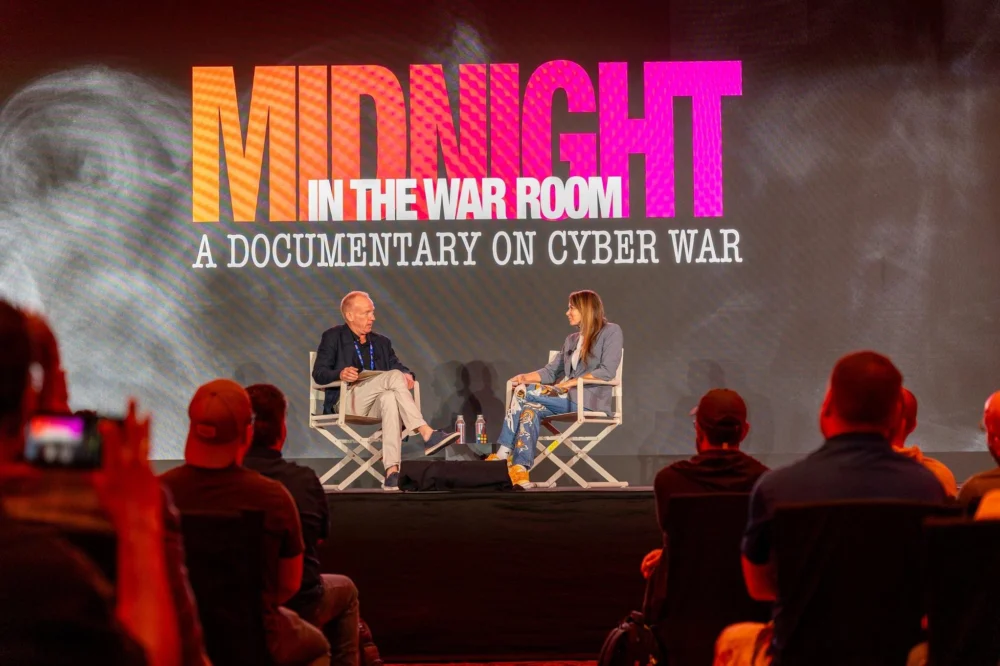
It is within this high-stakes, technically rigorous environment that the world premiere of the documentary Midnight In the War Room is set to take place at Black Hat 2026 in Las Vegas. This is not merely a scheduled screening of a niche film; it is a significant cultural milestone for an industry that has long struggled to communicate its internal reality to the outside world. By choosing Black Hat as its launchpad, the film identifies itself not with the boardroom, but with the trenches.
The Authenticity Gap in Cyber Storytelling
For as long as digital warfare has existed, Hollywood has attempted to dramatize it, usually with disastrous results. The "hacker" trope—characterized by hoodies, glowing green text, and instantaneous breaches—has done a disservice to the actual profession of cyber defense. These depictions prioritize flash over substance, ignoring the grueling, often monotonous reality of modern incident response. Real-world cybersecurity is not a series of rapid-fire keystrokes; it is a game of patience, forensic analysis, and high-pressure decision-making based on incomplete data.
Midnight In the War Room seeks to dismantle these tropes by approaching the subject from the inside out. Co-director and executive producer Thomas LeDuc has been vocal about the film’s mission: to bypass the typical "outsider looking in" perspective. Instead of reverse-engineering a narrative to fit a cinematic structure, the production team began with the stories of the defenders themselves—CISOs, incident responders, and former state-sponsored actors who have lived through the adrenaline and the exhaustion of a live breach.
This distinction is critical. When a film is made for the community it depicts, it doesn’t need to explain what an "incident response bridge" is or why a 2 a.m. call from a SOC (Security Operations Center) analyst triggers a specific type of physiological dread. It understands that the real drama isn’t in the "hacking" itself, but in the human response to it—the weight of responsibility when critical infrastructure, personal data, or national security is on the line.
The Defender as a Digital First Responder
One of the most profound themes explored in the documentary—and one that resonates deeply with the Black Hat audience—is the concept of the cyber defender as a first responder. In the physical world, we have clear mental models for firefighters, paramedics, and police officers. We understand that they run toward the crisis, they manage the chaos, and they are essential to the functioning of a stable society.
Cyber defenders occupy a similar role, yet they remain largely invisible to the public they protect. When an incident responder successfully mitigates a ransomware attack on a hospital or prevents a disruption to the power grid, the "win" is that nothing happens. The lights stay on, the medical records remain accessible, and the public continues its day without ever knowing a catastrophe was averted. This "invisibility of success" is a heavy burden to carry. It leads to a lack of public understanding, which in turn complicates everything from budget allocations to legislative policy.
By framing these professionals as digital first responders, Midnight In the War Room provides a necessary vocabulary for the public. It highlights the psychological toll of the job—the burnout, the high-stakes pressure, and the reality of making imperfect decisions in the heat of a crisis. This is a public safety issue as much as a technical one, and the film’s premiere at a venue like Black Hat reinforces the idea that those on the front lines deserve the same recognition and support as their counterparts in the physical world.

Navigating the Moral Gray Zones
Beyond the technical challenges, the film delves into the complex moral landscape of the cybersecurity industry. In many ways, the line between a top-tier defender and a sophisticated attacker is razor-thin. Both require the same curiosity, the same understanding of systems, and the same ability to find the "third way" through a problem. The documentary does not shy away from the reality that for many in the industry, the choice to stay on the side of defense is a daily commitment.
Cybercrime is often faster, more lucrative, and less bogged down by the bureaucracy of corporate compliance. The film explores why individuals choose the harder path of defense and the personal cost associated with that choice. It acknowledges that the industry isn’t a monolith of "good guys" vs. "bad guys," but a complex ecosystem of individuals navigating competing incentives. This nuance is exactly why the film belongs at Black Hat, an event that grew out of the hacker underground and has always maintained a healthy skepticism of binary moralities.
The Strategic Importance of the Black Hat Stage
The decision by Black Hat leadership to host the premiere as a headlining event, rather than a side-session novelty, speaks to a broader shift in how the conference views its role. Suzy Pallet, President of Black Hat, has noted that the conference is more than a technical gathering; it is a movement and a community. By elevating a piece of storytelling to the main stage, Black Hat is acknowledging that the "human element" is no longer a soft skill—it is a core component of the security mission.
In an era where AI-driven attacks are lowering the barrier to entry for adversaries, the human defender remains the ultimate fail-safe. However, that fail-safe is under immense pressure. The industry is currently grappling with a massive skills gap and a retention crisis driven by chronic stress. Storytelling, as seen in Midnight In the War Room, serves a dual purpose: it validates the experiences of current practitioners, providing a sense of community and shared purpose, and it acts as a powerful recruitment tool for the next generation. It shows that cybersecurity is not just about code; it is about protecting the fabric of modern life.
A Return to the Physical Community
The timing of this premiere also carries significant weight for the cybersecurity community at large. For several years, the "physical gathering" of the industry was suspended or diminished by global events. While the work of security continued—and in many ways intensified—the communal aspect of the craft suffered. The return to a full-scale, in-person premiere in Las Vegas symbolizes a re-centering of the community.
For many veterans of the industry, the trip to Black Hat is a pilgrimage—a chance to recalibrate their understanding of the threat landscape and reconnect with the peers who understand the unique stresses of the job. Seeing their own lives and struggles reflected on a cinema screen in a room full of people who "get it" is a powerful form of professional catharsis. It moves the conversation from "how do we fix the system?" to "how do we support the people who fix the system?"
Looking Ahead: The Future of Cyber Narratives
As Midnight In the War Room moves from its Black Hat premiere to broader theatrical and streaming releases, its impact will likely be felt far beyond the Las Vegas Strip. The film represents a new era of transparency for the cybersecurity sector. As digital threats become more integrated into the daily lives of every citizen, the demand for authentic, high-fidelity information about how we are being protected will only grow.
The future of the industry depends on its ability to bridge the gap between technical complexity and human impact. We are moving past the age where cybersecurity can be treated as a "black box" handled by the IT department. It is now a pillar of national resilience and corporate governance. Documents like Midnight In the War Room are essential tools in this transition, providing the narrative bridge that allows the public to see the faces behind the firewalls.
In the end, the premiere at Black Hat 2026 is a recognition that the most important part of the "war room" isn’t the monitors, the data feeds, or the sophisticated software—it’s the people sitting in the chairs at midnight, making the hard calls that keep the world running. For one night in Vegas, the spotlight will finally be exactly where it belongs: on the defenders.