

In the rapidly evolving landscape of Chinese consumer technology, a new phenomenon has transitioned from the specialized forums of GitHub to the bustling digital marketplaces of Xianyu and Taobao in record time. At the center of this movement is OpenClaw, an open-source artificial intelligence tool that represents a significant leap from the conversational chatbots of 2023 toward the "agentic" AI of 2024 and beyond. Unlike its predecessors, which merely processed text or images, OpenClaw is designed to autonomously navigate a user’s operating system, executing complex tasks across various applications without human intervention. This capability has not only captivated the public imagination but has birthed a burgeoning cottage industry of "AI installers" and hardware specialists who are turning a free, open-source tool into a lucrative business model.
The face of this transition is often a young, technically savvy professional like Feng Qingyang. A 27-year-old software engineer based in Beijing, Feng represents the "early adopter" demographic that has historically catalyzed China’s tech booms. In January, Feng began experimenting with OpenClaw, finding himself enthralled by the tool’s ability to manage files, schedule meetings, and even interact with e-commerce platforms on his behalf. Recognizing that the barrier to entry for the average user remained high—requiring familiarity with command-line interfaces and developer environments—Feng saw a market gap.
By the end of January, Feng had launched a storefront on Xianyu, China’s premier secondhand marketplace, offering remote installation services. His pitch was simple: "No coding required. Fully remote. Own an AI assistant in 30 minutes." The response was overwhelming. What began as a side project quickly eclipsed his primary income. By late February, Feng resigned from his corporate position to manage a full-scale operation that now employs over 100 people. With more than 7,000 orders fulfilled at approximately 248 RMB ($34) each, Feng’s venture has generated nearly $240,000 in revenue in just a few months. "Opportunities are always fleeting," Feng notes, echoing a sentiment common among China’s "hustle" culture. "As programmers, we are the first to feel the winds shift."
The "Lobster" Cult: Why OpenClaw Went Viral
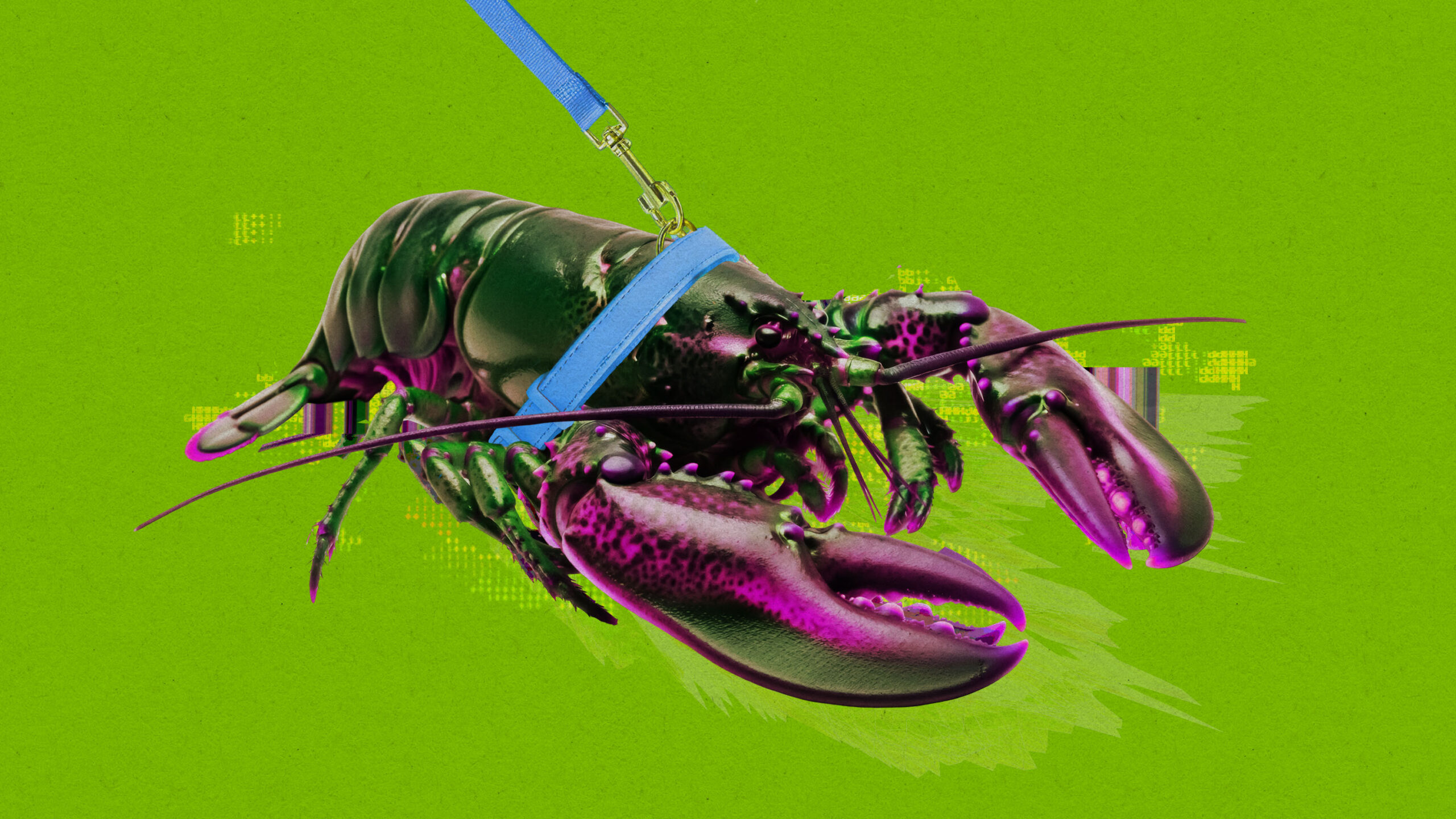
In Chinese digital circles, OpenClaw has been affectionately nicknamed "the lobster," a reference to its distinctive logo. The phrase "Have you raised a lobster yet?" has become a common greeting among tech-forward professionals in Shenzhen and Beijing. This personification of software is a recurring theme in Chinese internet culture, where complex technologies are often given approachable, organic monikers to lower the psychological barrier to adoption.
Xie Manrui, a 36-year-old developer in Shenzhen, has watched this "lobster craze" explode firsthand. Xie has contributed to the ecosystem by building "skins" and visualization layers for the agent, such as an animated desktop worker that shows the AI’s thought process in real-time. He notes that the interest is no longer confined to the "tech bro" demographic. "I’ve met so many new people through ‘lobster raising,’" Xie says. "Many are lawyers, doctors, or small business owners with little technical background but a fierce dedication to staying ahead of the curve."
This grassroots enthusiasm is supported by a massive offline infrastructure. In early March, a series of self-organized OpenClaw meetups in Shenzhen drew crowds that exceeded venue capacities. One event on March 7 saw over 1,000 attendees packed shoulder-to-shoulder, with venture capitalists and social media influencers sharing the stage to discuss the "Agentic Era." This level of public engagement for an open-source tool is unprecedented, signaling a shift in how the Chinese public views AI—not as a novelty to chat with, but as a utility to be deployed.
The Technical Barrier and the Service Opportunity
The primary driver of the OpenClaw service economy is the inherent complexity of the tool. While the software is free, the "cost" of installation includes a steep learning curve. Setting up an autonomous agent requires managing Python environments, API keys, and system permissions that can be intimidating to the uninitiated. Furthermore, the hardware requirements are non-trivial. Older laptops often struggle to provide the low-latency response times required for a seamless experience.
This has led to a diversification of the market. Beyond simple installation, vendors are now offering "tier-based" support. Basic packages cover installation, while "Pro" tiers include custom configurations for specific Chinese apps like WeChat, DingTalk, or Meituan. Some entrepreneurs, like Li Gong in Shenzhen, have pivoted to hardware. Li, who previously specialized in refurbished MacBooks and Mac minis, now sells "AI-Ready" devices with OpenClaw pre-installed and optimized.
The demand for dedicated hardware is also driven by security concerns. Because OpenClaw requires deep access to a computer’s file system to function as an agent, many users are hesitant to install it on their primary machines. By purchasing a refurbished, secondary device—often dubbed a "Lobster Box"—users can air-gap their AI experiments from their most sensitive personal data. Li reports that his sales of refurbished Mac minis have increased eightfold in the last fortnight, as users look for cheap, reliable "brain" boxes for their new AI assistants.
Institutional Support and Geopolitical Undercurrents
The OpenClaw craze has not escaped the notice of China’s tech giants or its government. Tencent recently hosted public events offering free installation support for the tool, a strategic move to encourage users to link OpenClaw to Tencent’s own cloud computing services and large language models (LLMs). By positioning themselves as the "infrastructure" for open-source agents, Chinese big tech firms hope to capture the backend revenue even if they don’t own the frontend tool.
Simultaneously, local governments are treating OpenClaw as a strategic asset. The Longgang district in Shenzhen has already rolled out policies specifically designed to support the "agent economy," including cash rewards for innovative OpenClaw plugins and free computing credits for startups. For these municipalities, the goal is to foster a local ecosystem that can compete globally in the next phase of AI development. In the context of ongoing international tensions and restrictions on high-end AI chips, the ability of a decentralized, open-source community to drive AI adoption is seen as a vital component of national tech resilience.
Risks, Regulation, and the Skeptics’ View
However, the rapid adoption of autonomous agents brings significant risks. On March 10, the National Computer Network Emergency Response Technical Team (CNCERT) issued a formal warning regarding the security vulnerabilities inherent in OpenClaw. The regulator pointed out that an agent with the power to "take over" a screen and keyboard is a prime target for malicious actors. If the agent is compromised, a hacker could theoretically gain full control of a user’s digital life, from private messages to financial applications.
Jiang Yunhui, a veteran tech worker in Ningbo, remains skeptical of the current hype. He argues that for the average person, the "lobster" is still more of a digital pet than a transformative tool. "The agent is currently a proof of concept," Jiang says. "Using it safely requires a level of technical fluency and independent judgment that most new users lack. There is a real danger that the hype is outpacing the utility."
Jiang’s concerns highlight a fundamental tension in the current AI boom: the gap between "power users" who can mitigate risks and "mass-market users" who may unknowingly expose themselves to data breaches. The "hustlers" selling installation services are rarely cybersecurity experts, and the "pre-configured" devices sold on Taobao could, in theory, contain backdoors or pre-installed malware.
The Future of the "One-Person Company"
Despite these warnings, the momentum behind OpenClaw suggests a permanent shift in the labor market. Feng Qingyang’s success has inspired a wave of "AI solo-preneurs." The dream of the "one-person company"—where a single human oversees a fleet of autonomous agents—is no longer a theoretical exercise in a Silicon Valley white paper; it is being stress-tested in the apartments of Beijing and the workshops of Shenzhen.
"I want to see if I can run a company where I am the only employee, and the rest are ‘lobsters,’" Feng says. He has given himself a one-year timeline to achieve this. His vision represents the ultimate goal of the current craze: the transition of AI from a tool of conversation to a tool of production.
As the "lobster" continues to evolve, the service economy surrounding it will likely mature. We may see the emergence of certified AI auditors who verify the security of agent installations, or specialized insurance products for AI-related data leaks. For now, the "OpenClaw craze" serves as a vivid case study of China’s unique ability to commodify and scale emerging technologies through a mix of grassroots ingenuity, e-commerce prowess, and strategic government backing. Whether it is a fleeting trend or the dawn of a new era of personal computing, the "lobsters" have arrived, and they are already hard at work.