

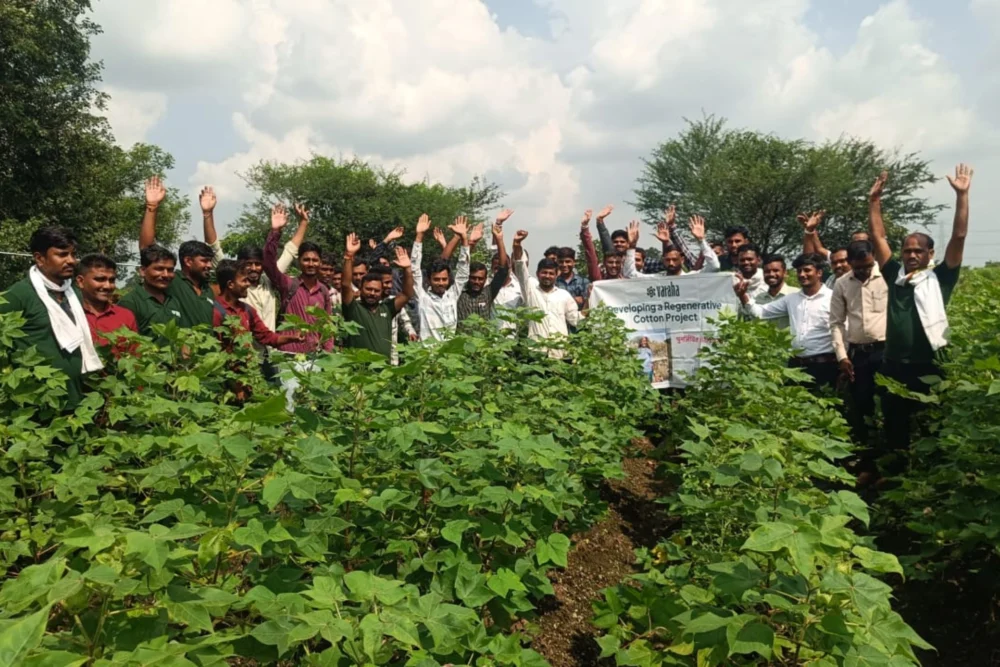
The global architecture for carbon dioxide removal (CDR) is undergoing a profound structural realignment, shifting focus toward scalable, cost-effective solutions rooted in emerging economies. This strategic pivot is underscored by the recent capital infusion into Varaha, an India-based climate technology firm specializing in high-integrity carbon removal. The company announced securing $20 million, representing the first phase of a larger planned $45 million Series B funding round. This significant capital injection is aimed at dramatically accelerating the deployment of verifiable emissions reduction projects across the Global South, solidifying Varaha’s position as a critical low-cost supplier in the increasingly scrutinized global voluntary carbon market (VCM).
The funding round was anchored by WestBridge Capital, marking the prominent venture firm’s inaugural investment in the burgeoning climate tech sector—a move that signals growing mainstream investor confidence in climate solutions that leverage operational efficiencies in Asia and Africa. Existing backers, including RTP Global and Omnivore, also participated, demonstrating continued belief in the company’s model. Since its inception in 2022, Varaha has accumulated approximately $33 million in equity funding, supplemented by a substantial $35 million in project financing and $500,000 in grants, establishing a robust financial foundation for its expansive portfolio of carbon removal initiatives across both continents.
The Macroeconomic Argument for Geographic Arbitrage
The investment narrative surrounding Varaha is deeply rooted in the macroeconomic realities of carbon abatement. As the mandatory and voluntary carbon markets mature, buyers—particularly multinational corporations facing stringent Scope 3 reduction targets and offsetting massive energy footprints from emerging technologies like data centers and artificial intelligence—are demanding durable, verifiable credits at a sustainable price point. This demand pressure is challenging the high-cost structures traditionally associated with carbon removal developers operating exclusively within Europe and North America.
Co-founder and Chief Executive Madhur Jain has articulated a compelling thesis: Varaha’s primary competitive advantage is not necessarily rooted in unique proprietary technology, but rather in superior execution and operational efficiency derived from its base in India and the wider Global South. Jain posits that high operational expenditures inherent to wealthier markets pose a fundamental constraint when the price of carbon credits inevitably comes under downward pressure.
“A carbon credit is fundamentally a cost on the corporate balance sheet; it is a financial instrument, not merely a Corporate Social Responsibility (CSR) expenditure,” Jain stated. “If the cost of generating a verified credit in one geography is 1.5 times to 3 times higher than in another, those high-cost producers will find it exceptionally difficult to compete and achieve the necessary scale required by the climate crisis.”
This perspective highlights a critical divergence in the climate tech investment landscape. While substantial capital continues to flow into high-CAPEX technological removal solutions like Direct Air Capture (DAC), Varaha represents a highly scalable, execution-focused approach centered on hybrid nature-based solutions (NBS) and low-CAPEX engineered solutions that are inherently cheaper to deploy in regions with vast agricultural resources, abundant sustainable biomass, and lower labor costs.
India: An Emerging Global Hub for Climate Infrastructure
India’s rise as a strategic center for global carbon removal projects is no accident. The nation offers a unique combination of enabling factors that drive down the cost basis while maintaining scalability and integrity. These factors include: a large, highly skilled technical talent pool capable of developing sophisticated Measurement, Reporting, and Verification (MRV) systems; deep, established agricultural supply chains crucial for deploying regenerative practices and sourcing biomass; and significantly lower operating costs compared to OECD nations.
Varaha is strategically capitalizing on these advantages. The company’s operational model focuses intensely on meeting the rigorous international verification standards required by leading registries—including Puro.earth, Isometric, Verra, Gold Standard, and Carbon Standards International—ensuring that the low cost does not equate to low quality. This emphasis on internationally validated, durable removal is essential for attracting major global corporate buyers who prioritize long-term permanence and transparency.
Diverse Pathways to Durable Removal
Varaha’s project portfolio spans four technically distinct and critical pathways for carbon removal:
- Regenerative Agriculture: Implementing farming practices that enhance soil health, leading to increased carbon sequestration in the soil biomass.
- Agroforestry: Integrating trees and shrubs into crop and animal farming systems, maximizing biomass carbon capture.
- Biochar: Utilizing pyrolysis to convert sustainable biomass (such as agricultural waste) into a stable, carbon-rich material that is then added to soil, offering permanence measured in centuries.
- Enhanced Rock Weathering (ERW): Spreading finely crushed silicate rocks (often industrial byproducts) onto land, where they react with atmospheric CO2 and water to form stable carbonates, offering geological-scale permanence.
The execution of these pathways often involves collaboration with smallholder farmers—a challenging but necessary model for achieving broad scale in Asia and Africa—as well as industrial partners. The company’s success in navigating these complex, decentralized supply chains is evidenced by its early achievements. To date, Varaha has facilitated the removal of over 2 million tons of carbon dioxide across 14 active projects, generating approximately 150,000 verified carbon removal credits. Notably, the firm was the first in India to issue biochar-based carbon credits and the first in Asia to issue credits derived from enhanced rock weathering through an internationally recognized registry, highlighting its pioneering role in deploying novel, high-permanence methodologies in emerging markets.

Deepening Corporate Offtake and Financial Momentum
The credibility of a carbon removal platform is often measured by the quality and duration of its offtake agreements. Varaha has secured long-term contracts with a blue-chip roster of global buyers, confirming the market’s appetite for its low-cost, high-integrity credits. These anchor clients include technology giants like Google and Microsoft, alongside major international corporations such as Lufthansa, Swiss Re, and Capgemini. The involvement of these major technology firms, in particular, signals a strategic shift toward securing nature-based and hybrid removals to balance the enormous energy demands of the AI boom and cloud infrastructure expansion.
Financially, Varaha has demonstrated rapid commercial traction. The company reported revenue of approximately ₹430 million (around $4.76 million) in the last financial year based on delivered credits. Forward projections are highly ambitious, anticipating revenue growth to nearly ₹2 billion (approximately $22.15 million) this year, all while maintaining profitability after tax. This ability to achieve profitability while scaling rapidly in the nascent CDR sector distinguishes Varaha from many venture-backed climate tech firms that require significant subsidies or operate at a loss while developing technology.
The Asset-Light Scaling Paradigm
A core component of Varaha’s strategy for achieving exponential growth is the move toward an asset-light partnership model, designed to decouple scaling from capital-intensive infrastructure ownership. This strategy is formalized through the launch of the Industrial Partners Program. This program enables industrial operators—such as agribusinesses or heavy industry players like steel producers—who possess access to sustainable biomass and necessary infrastructure (like gasification capacity) to generate verified biochar-based carbon removal credits. Varaha provides the critical intellectual infrastructure: the proprietary measurement, reporting, and verification (MRV) systems required to certify the permanence and additionality of the removal.
This partnership approach, already operational with entities in West Africa and India, allows Varaha to rapidly expand its biochar footprint without committing massive upfront capital to build and manage pyrolysis facilities globally. It fundamentally transforms Varaha from a project developer into a vital climate infrastructure enabler, facilitating verified carbon removal across disparate industrial ecosystems.
As CEO Madhur Jain noted, the climate challenge is so vast that technological superiority will inevitably be commoditized or open-sourced over time. Therefore, the ultimate determinant of success in the CDR market is execution—the ability to deploy projects efficiently, maintain data integrity, and manage complex supply chains at scale.
Geographical Expansion and Future Impact
The initial $20 million tranche of Series B funding is earmarked primarily for aggressive geographical expansion and deepening operations in existing territories. Varaha currently manages projects across India, Nepal, Bangladesh, Bhutan, and Ivory Coast, engaging with an estimated 170,000 to 175,000 farmers across roughly 1.7 million acres. The new capital will finance entry into key South and Southeast Asian markets, specifically targeting Vietnam and Indonesia, regions rich in agricultural waste biomass and expansive smallholder farming communities ideally suited for regenerative agriculture and biochar initiatives.
The company’s headcount reflects its operational focus, employing between 225 and 230 people, with a substantial core of 55 dedicated to technology, science, product development, and data analytics. While the majority of the workforce (over 80%) is based in India, the necessity of serving a global clientele is reflected in the placement of staff in markets ranging from Nepal and Germany to the U.S. and Australia.
Industry Implications: Integrity and the Global Carbon Market
The success and scale of companies like Varaha have profound implications for the global VCM. The VCM has long been plagued by concerns regarding the integrity and permanence of credits, particularly those derived from low-quality forest offset projects. Varaha’s strategy—focusing on durable removal pathways (biochar, ERW) and rigorously adhering to the standards of premium registries—serves to build confidence in the market.
This investment validates the thesis that scalable, high-integrity climate solutions can be built and operated from the Global South, directly challenging the narrative that only expensive, Western-developed technology can deliver high-quality removal. By establishing operational efficiency and a cost base significantly lower than competitors in the Global North, Varaha is effectively lowering the barrier to entry for large-scale corporate climate action, transforming carbon removal from a niche environmental expenditure into a standard component of global supply chain management.
WestBridge Capital’s decision to lead this round reflects a wider institutional realization that climate infrastructure is becoming a mature, investable asset class. As Sandeep Singhal, co-founder and managing partner at WestBridge Capital, observed, Varaha is uniquely positioned to become a global carbon removal platform built from an Indian foundation, leveraging integrity, scale, and demonstrable impact. This capital injection is not merely funding a startup; it is underwriting the next phase of decentralized, high-efficiency climate infrastructure necessary to meet global net-zero targets. The success of this model will determine whether the climate economy can effectively utilize the vast agricultural and technical resources of emerging economies to deliver climate solutions at the requisite planetary scale.