

The personal computing landscape has long been defined by a clear, almost geological divide. On one side stood the premium Tier-1 territory, a region dominated by Apple’s MacBook lineup, where entry-level admission rarely dipped below the thousand-dollar mark. On the other side lay the vast, high-volume plains of the mainstream market, a space where Windows-based OEMs like Dell, HP, and Lenovo—alongside a fleet of budget-friendly Chromebooks—battled for supremacy in the $300 to $750 price bracket. For decades, this arrangement was a comfortable status quo: Apple maintained its high margins and aspirational brand status, while PC vendors survived on the sheer scale of the middle and lower markets.
However, the recent unveiling of the MacBook Neo has effectively shattered this long-standing demarcation. By introducing a fully realized macOS laptop starting at just $599, Apple has not merely released a new product; it has launched a direct offensive into the heart of the PC industry’s most vital territory. This strategic pivot signals a fundamental shift in Apple’s corporate philosophy, moving from exclusive luxury to aggressive market-share acquisition, and it presents a set of challenges that traditional PC vendors may find impossible to overcome.
The Silicon Revolution: A18 Pro as a Disruptive Force
At the core of the MacBook Neo’s disruptive potential is its internal architecture. For the first time in the history of the Mac, Apple has bypassed its dedicated M-series computer chips in favor of the A18 Pro, a processor originally designed for the high-performance demands of the iPhone. To the casual observer, this might seem like a cost-cutting measure—a way to repurpose mobile silicon for a "Lite" laptop. However, the technical reality is far more sophisticated and, for competitors, far more terrifying.
The A18 Pro is a marvel of vertical integration. Recent benchmarks indicate that this chip delivers single-core performance that is approximately 19% faster than the M2 Ultra—the massive, multi-die processor that powered the previous generation of the $6,999 Mac Pro. This paradox—a smartphone-derived chip outperforming a workstation-class titan in specific tasks—highlights the sheer efficiency of Apple’s silicon engineering. By utilizing the A18 Pro, Apple can offer a laptop that is fanless, incredibly thin, and exceptionally long-lasting on a single charge, all while providing a level of "snappiness" in everyday tasks that puts mid-range Windows laptops to shame.
Traditional PC vendors are at a distinct disadvantage here because they do not control their own silicon. They are beholden to the roadmaps and pricing of Intel, AMD, and Qualcomm. While these chipmakers have made strides in efficiency, they still struggle to match the performance-per-watt of Apple’s custom ARM-based architecture. When a Windows vendor builds a $600 laptop, they are often forced to use "off-the-shelf" components that require active cooling (fans), larger batteries, and heavier chassis. Apple, by contrast, is leveraging the massive economies of scale from its iPhone production to put world-class silicon into a budget-friendly laptop, creating a value proposition that is currently unmatched in the industry.
The End of the "Plasticky" Budget Laptop
For years, the experience of buying a $500 to $700 laptop was one of compromise. Consumers accepted that at this price point, they would have to endure flexible plastic casings, dim displays with poor color accuracy, and trackpads that felt clunky and unresponsive. These "good enough" machines were the bread and butter of the education and general consumer markets.
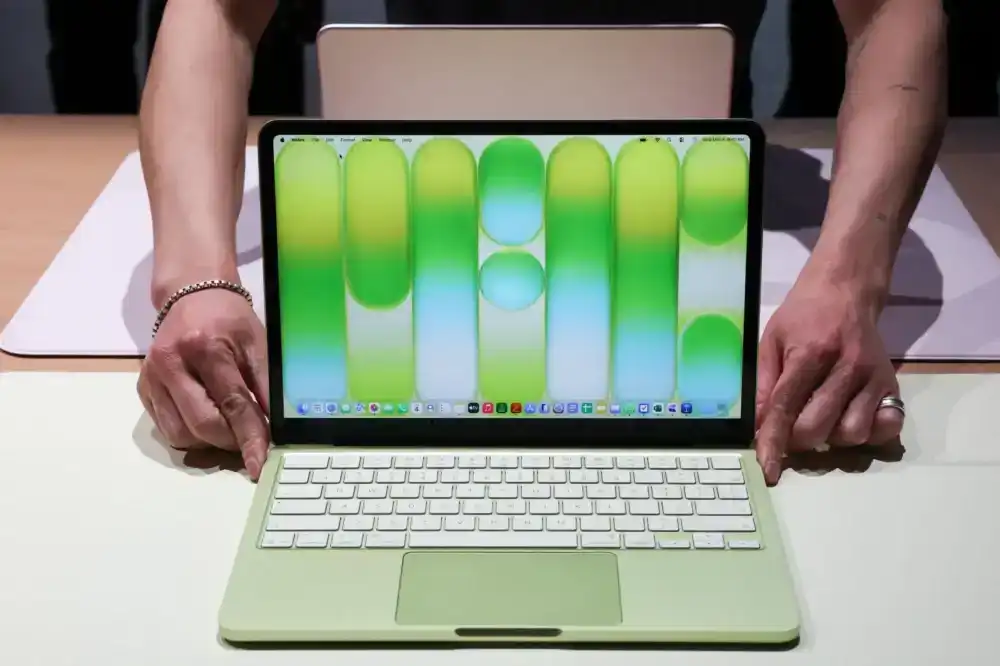
The MacBook Neo changes the aesthetic and tactile expectations of the mainstream buyer. Despite its lower price point, the Neo retains the hallmark characteristics of Apple’s industrial design: precision-milled aluminum, a high-resolution 13.0-inch Retina-class display, and the industry-leading Force Touch trackpad. By offering the device in a vibrant palette including citrus, indigo, and blush, Apple is also targeting the aesthetic sensibilities of the Gen Z and student demographics—a group that views their technology as an extension of their personal style.
When a student or a remote worker walks into a retail environment and compares a $649 Windows laptop—often a thick, black or silver plastic shell—against a $599 MacBook Neo that feels like a premium tool, the choice becomes emotional as much as it is financial. Apple has effectively weaponized its design language, proving that "affordable" does not have to mean "cheap." This forces PC vendors into a corner: they must either upgrade their materials and eat into their already thin margins, or risk looking obsolete on the shelf.
The Ecosystem Trap: The Ultimate "Entry Drug"
Beyond the hardware specs and the price tag, the MacBook Neo serves a broader strategic purpose: it is the ultimate gateway into the Apple ecosystem. In the current market, there are hundreds of millions of iPhone users who do not own a Mac. Many of these users opted for Windows PCs or Chromebooks because the "Mac tax" was simply too high.

By removing the $500 barrier between the iPhone and the Mac, Apple is creating a seamless hardware-software continuum for a much larger segment of the population. Features like Universal Control, Handoff, iMessage synchronization, and AirDrop are powerful retention tools. Once a user experiences the frictionless synergy between an iPhone and a MacBook Neo, the likelihood of them ever switching back to a Windows environment drops significantly.
Furthermore, the MacBook Neo is a vehicle for Apple’s services division. Every Neo sold is another screen for Apple Music, Apple TV+, iCloud+, and the App Store. For Apple, the hardware margin on a $599 laptop is only part of the story; the true value lies in the long-term lifetime value of a user who is now fully "locked in" to the ecosystem. This is a luxury that Dell or HP do not have. They do not own the operating system (Microsoft does) and they do not own the primary mobile device in the user’s pocket. They are selling a utility, while Apple is selling an integrated lifestyle.
The Education Market and the Chromebook Crisis
Perhaps no segment is more vulnerable to the MacBook Neo than the education market. For the last decade, Google’s ChromeOS has dominated schools due to its low cost and ease of management. However, as students progress into higher education and the workforce, the limitations of a browser-based operating system become apparent.
The MacBook Neo, especially with its $100 education discount bringing the price down to $499, is a direct shot across the bow of the "Premium Chromebook" segment. For a few hundred dollars more than a basic Chromebook, a student can now own a machine capable of running professional-grade software like Final Cut Pro, Logic, and the full Adobe Creative Cloud suite. This makes the Neo a much more viable "four-year" investment for a college student than a budget PC. If schools and universities begin to pivot back toward macOS due to this newfound affordability, Google and its hardware partners could lose their most significant foothold in the computing market.
Competitive Responses and Market Fallout
How will the traditional PC giants respond? The options are limited and fraught with risk.
One path is a price war. We may see a race to the bottom, with Windows vendors slashing prices on their mid-range machines to maintain volume. However, this is a dangerous game. Most PC OEMs already operate on razor-thin margins. A sustained price war could lead to a decline in R&D, poorer build quality, and financial instability for smaller players in the market.
The second path is to lean into the "AI PC" trend. Companies like Microsoft and Qualcomm are betting heavily on the "Copilot+" era, integrated NPU (Neural Processing Unit) hardware designed to handle local AI tasks. If Windows vendors can prove that their $700 AI-centric laptops offer utility that a $599 MacBook Neo cannot, they may be able to hold their ground. However, Apple is also an AI powerhouse, and the A18 Pro chip in the Neo includes a powerful Neural Engine specifically designed for Apple Intelligence.
The Long-Term Outlook
The introduction of the MacBook Neo marks the end of Apple’s era as a "boutique" computer manufacturer. By descending from the high ground to compete in the trenches of the mainstream market, Apple is signaling that it no longer fears cannibalizing its higher-end products. They have realized that it is better to sell a $599 Mac than to let a customer buy a $599 Windows PC.
For the traditional PC industry, the MacBook Neo is a wake-up call that may have arrived too late. The combination of world-class custom silicon, premium industrial design, and a dominant mobile ecosystem creates a "moat" that is incredibly difficult to bridge. As the MacBook Neo begins to find its way into the backpacks of students and the home offices of mainstream consumers, the "nightmare" for PC vendors is no longer a theoretical possibility—it is a market reality. The "Neo" era has begun, and the personal computer market will never be the same.