

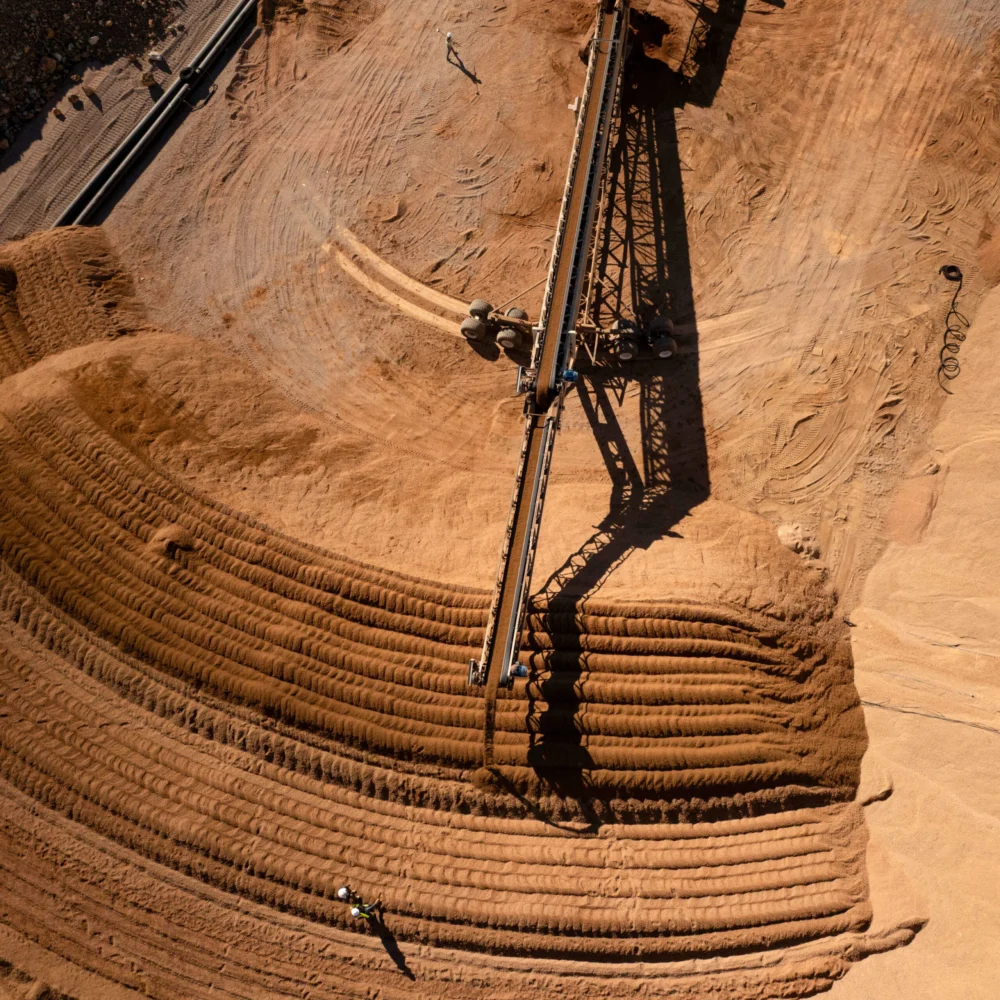
The global transition toward a sustainable energy infrastructure—driven by electric vehicles, massive data centers, and grid-scale renewable power—is creating an unprecedented, accelerating demand for critical metals. Yet, the supply chain for these essential elements is facing an existential bottleneck: resource depletion. The most readily accessible, high-concentration ores have largely been exhausted, forcing the mining industry to chase lower-grade reserves at ever-increasing environmental and economic costs. This challenge is acutely visible in the United States, where sites like the Eagle Mine in Michigan’s Upper Peninsula, the nation’s sole active nickel operation, are approaching economic exhaustion as nickel concentration drops below viable thresholds, despite the metal being indispensable for EV battery cathodes.
In response to this looming crisis, a new wave of biotechnological innovation is emerging from the lab, offering the promise of transforming resource extraction by turning marginal deposits, aging mines, and even industrial waste into viable sources of critical minerals. This paradigm shift—often dubbed "biomining 2.0"—moves beyond the passive, decades-old techniques of bioleaching to embrace active microbial management and synthetic biology, effectively weaponizing life to unlock previously inaccessible mineral wealth.
The Problem of Depleting Reserves
The metals required for modern high-tech applications—specifically nickel, copper, cobalt, lithium, and the rare earth elements (REEs)—are foundational to the clean energy transition. A single electric vehicle battery pack, for instance, can require tens of kilograms of these materials. As traditional mining relies on increasingly capital-intensive processes to process lower-grade material, the environmental footprint—measured in water consumption, energy use for crushing and grinding, and chemical reagent deployment—grows disproportionately.
This harsh reality prompted the owners of the Eagle Mine to pilot a resourceful solution earlier this year. Utilizing a fermentation-derived broth developed by the startup Allonnia, the mine is testing a process housed within simple, modular shipping containers at the mill site. This biological solution is designed to interact with concentrated ore, capturing and removing detrimental impurities. This targeted process elevates the effective concentration of the nickel, making it economically feasible to continue processing ore that would otherwise be deemed waste.
Kent Sorenson, Allonnia’s chief technology officer, frames this as an immediate, practical strategy for resource conservation. Instead of immediately decommissioning sites, the industry must focus on maximizing value from existing infrastructure. “The low-hanging fruit is to keep mining the mines that we have,” Sorenson notes, emphasizing that extending the life of current assets is far more efficient than the lengthy, expensive, and often politically fraught process of permitting new mines. This strategy is critical not just for nickel, but for maximizing output from all aging metal assets that still contain substantial, albeit dilute, material.
From Passive Bioleaching to Precision Microbiology
The use of microbes in mining is not a recent invention; it is a technology with roots stretching back centuries, formalized in industrial practice decades ago, particularly for copper extraction. This first generation of bioleaching is a naturally occurring phenomenon where acid-loving, lithotrophic bacteria, such as Acidithiobacillus ferrooxidans, are introduced into vast heaps of crushed copper ore. Miners saturate these heaps with sulfuric acid, creating an ideal environment for these microorganisms. The bacteria catalyze a chemical reaction, producing a ferric iron solution that oxidizes the sulfide minerals, breaking the chemical bonds that lock the copper atoms in place. The liberated copper then flows out in an aqueous solution, ready for electrowinning.
However, traditional bioleaching is inherently passive. Once the microbes are seeded and the basic conditions (acidity, oxygen flow) are established, the process is largely left to nature. Optimization was limited to managing temperature, particle size, and acid concentration.
The new frontier of biomining, driven by rapid advancements in genetic and computational biology, introduces active, intelligent management. Startups are leveraging the decreasing cost of high-throughput sequencing and genetic tools to monitor and manipulate microbial communities within the ore body itself.
Endolith, for example, is applying advanced genomic tools to existing heap leach operations. By analyzing trace amounts of DNA and RNA extracted from the pregnant leach solution—the copper-rich liquid draining from the ore pile—the company can map the exact composition, health, and activity levels of the microbial ecosystem. This deep genomic and metabolic characterization, paired with extensive chemical analysis, allows engineers to identify which specific strains are performing optimally and, crucially, which beneficial organisms are missing or struggling.

This insight enables a targeted intervention: rather than passively waiting, the mining operator can actively "sprinkle" specific, beneficial microbial cultures onto the heap to optimize the extraction rate. Elizabeth Dennett, CEO of Endolith, emphasizes the novelty of this approach, stating that the necessary sequencing and analytical technologies simply did not exist just a few years ago. In laboratory trials, including tests conducted on ore provided by major miner BHP, Endolith’s active management techniques have demonstrated superior performance compared to traditional, passive bioleaching approaches. This success secured the company a significant $16.5 million investment to scale operations from its Denver lab to active commercial mine sites.
The Spectrum of Biologically Driven Innovation
The industry is currently exploring a spectrum of biotechnological approaches, ranging from optimizing naturally occurring organisms to synthesizing entirely novel biological agents.
On the optimization side, large players are already investing heavily. Nuton, a dedicated subsidiary of the mining behemoth Rio Tinto, has dedicated decades to refining its copper bioleaching process. Their methodology employs a proprietary blend of specially selected archaea and bacteria strains, complemented by targeted chemical additives. This sustained, long-term commitment by a major multinational firm underscores the perceived potential of bioleaching, though the slow pace of industrial adoption is telling: Nuton only began demonstrating its improved technology at a commercial scale, specifically at the Gunnison Copper’s Johnson Camp mine in Arizona, late last year.
Beyond optimization lies the "moonshot" bet: synthetic biology. The startup 1849 is pursuing the genetic engineering of microbes to achieve radical improvements in performance. CEO Jai Padmakumar argues that while incremental improvements are valuable, the industry requires a disruptive leap. “You can do what mining companies have traditionally done, or you can try to take the moonshot bet and engineer them. If you get that, you have a huge win.” Genetic engineering allows 1849 to tailor the microbes’ metabolic pathways specifically to the geochemical challenges of a customer’s ore body—for instance, increasing resistance to toxic elements or enhancing the production of specific metal-solubilizing compounds.
However, this high-reward strategy carries significant biological risks. As Buz Barstow, a Cornell University microbiologist specializing in biomining applications, cautions, engineering organisms for hyper-efficiency can often make them fragile or difficult to cultivate reliably outside of a highly controlled laboratory environment. The complexity of the natural ore heap ecosystem, subject to massive fluctuations in temperature, pH, and nutrient availability, poses a severe challenge to the stability and scalability of genetically modified organisms (GMOs).
The Power of Microbial Metabolites
To circumvent the challenge of ensuring the growth and survival of live engineered organisms in harsh mining environments, other companies are focusing on utilizing the products of microbial fermentation, rather than the organisms themselves. This approach treats the engineered microbes as miniature, highly specialized manufacturing plants.
This strategy is particularly effective for rare earth elements (REEs), a group of 17 chemically similar elements critical for permanent magnets, specialized alloys, and advanced electronics. Traditional REE extraction often involves highly toxic and energy-intensive solvent extraction processes.
Alta Resource Technologies, which recently secured $28 million in investment, engineers microbes to produce specific proteins tailored to selectively extract and separate individual rare earth elements. This precision is crucial because REEs are almost always found mixed together in nature. Similarly, REEgen, based in Ithaca, New York, leverages the organic acids produced by an engineered strain of Gluconobacter oxydans. These biologically generated acids serve as highly effective, environmentally benign leaching agents capable of extracting REEs not only from virgin ore but also from complex waste streams like metal recycling slag, coal ash, and obsolete electronics. Alexa Schmitz, CEO of REEgen, succinctly summarizes the philosophy: “The microbes are the manufacturing.”
This shift to utilizing microbial metabolites—organic acids, chelating agents, or specialized proteins—offers a scalable, predictable method that divorces the highly controlled biological manufacturing step from the variable conditions of the mine site, potentially speeding up commercialization.
Industry Skepticism and the Scaling Chasm
Despite the undeniable promise demonstrated in labs and pilot columns, the integration of biotechnology into the conservative, capital-intensive mining sector faces substantial headwinds. The primary challenge is not technological feasibility but industrial scale-up and validation.

Corale Brierley, an engineer with decades of experience in metal bioleaching systems dating back to the 1970s, voices a central concern: the reliability of adding external microbes to an active, complex operation. “What guarantees are you going to give the company that those organisms will actually grow?” Brierley asks. An established, multi-billion-dollar mine operation runs on deeply optimized, predictable processes. Introducing a new biological variable, particularly one dependent on ecosystem stability, requires profound confidence.
Mining giants—Tier 1 companies—are inherently risk-averse. They operate on thin margins across massive scales, meaning any disruption or variance in recovery rates can translate into hundreds of millions of dollars in lost revenue. Diana Rasner, an analyst covering mining technology for the research firm Cleantech Group, notes that while these large firms are acutely aware of the need for innovation, they are equally aware of the difficulty inherent in scaling biological processes.
“They’ll be your biggest supporters, but they’re going to be your biggest critics,” Rasner observes. Mining companies demand exhaustive, multi-year datasets demonstrating efficacy, reliability, and economic advantage across varying geological and climatic conditions before they commit to replacing established, proven processes.
This long validation timeline presents a critical misalignment with the financial expectations of venture capital (VC) firms funding many biotech startups. VC-backed enterprises typically seek rapid growth and quick returns. Industrial biotechnology, especially in heavy industry like mining, is fundamentally slow. “This is not software,” Rasner emphasizes. The development and deployment cycle for a new biomining process can easily span five to ten years, involving phased pilots, engineering design, and regulatory approval—a timeline that often exceeds the patience of early-stage investors.
Future Impact and Regulatory Hurdles
If biomining 2.0 successfully crosses the chasm from pilot demonstration to industrial adoption, the impact could be transformative, fundamentally reshaping the economics and sustainability of metal production. Buz Barstow draws a compelling parallel, suggesting that biotechnology has the potential to transform mining in the same way that hydraulic fracturing (fracking) revolutionized natural gas extraction—by unlocking vast, previously uneconomic resources.
For this transformation to materialize, the technology must expand its scope significantly beyond the traditional targets of copper and gold. Barstow’s work at Cornell, including a project initiated in 2024 to map genes useful for extracting and separating a wider array of metals, is focused precisely on this diversification. Targeting metals like cobalt, manganese, and lithium—all critical for battery technology—is essential to making a genuine "dent" in global demand.
Furthermore, biomining offers profound environmental advantages. It operates at ambient temperatures and atmospheric pressure, significantly reducing the energy intensity required for smelting and refining. It often requires fewer harsh chemical reagents, mitigating the risks associated with toxic waste streams. This "greener" profile is increasingly attractive to regulators and institutional investors focused on Environmental, Social, and Governance (ESG) criteria.
However, the regulatory landscape for genetically engineered organisms remains complex. While companies like REEgen focus on extracting microbial products off-site to avoid regulatory complexity, 1849’s approach of introducing GMOs directly to mine sites will necessitate rigorous, potentially protracted environmental impact assessments and public acceptance campaigns.
The stakes are enormous. Securing reliable, domestic supplies of critical minerals is a matter of national economic security and fundamental to achieving global climate goals. Biomining offers a pathway to increase resource recovery rates from existing assets, exploit massive waste piles (tailings), and potentially reduce reliance on geopolitically sensitive supply chains. The technical necessity and the market opportunity are unequivocally large enough to justify the current surge in biological innovation. The ultimate challenge now lies in accelerating the painstaking process of industrial validation and commercial deployment to keep pace with the accelerating, relentless demand for the minerals that power the future.