

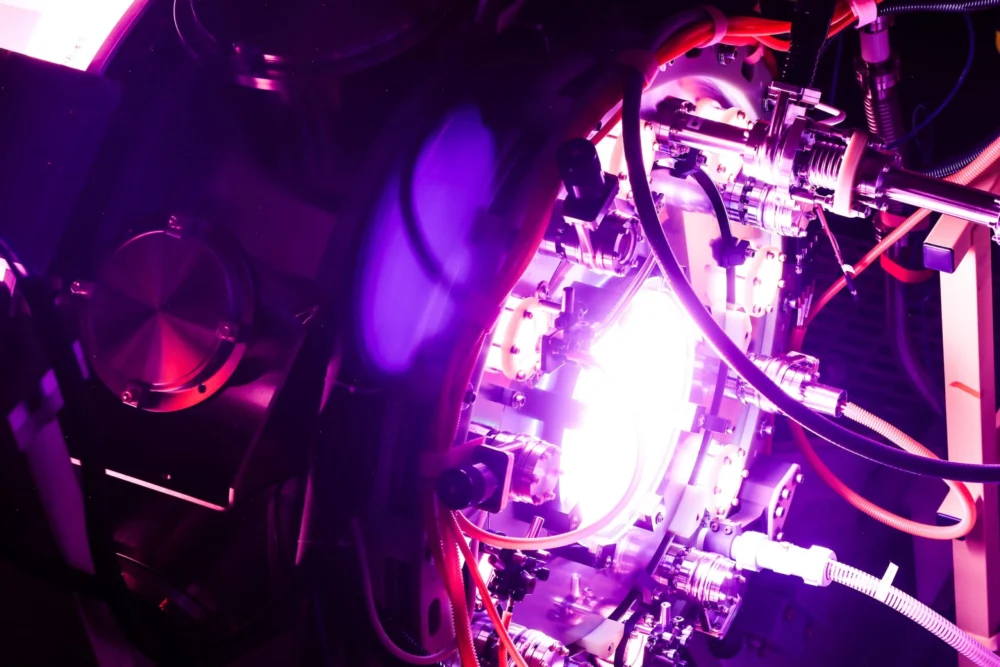
In the industrial landscape of Everett, Washington, a quiet but monumental shift in the trajectory of clean energy occurred this week as Helion announced a significant thermal milestone. The company’s Polaris prototype reactor successfully generated plasmas reaching 150 million degrees Celsius, a temperature ten times hotter than the core of the sun. This achievement represents roughly 75% of the thermal threshold Helion believes is necessary for a commercially viable fusion power plant, moving the needle from theoretical physics toward practical engineering. As the global race to decarbonize the energy grid intensifies, Helion’s progress provides a data-backed counter-narrative to the long-held belief that fusion power remains a "thirty years away" prospect.
The achievement is not merely a matter of hitting a high number on a sensor; it is a validation of Helion’s specific, non-traditional approach to plasma physics. Unlike the massive, multibillion-dollar international projects like ITER or the high-field tokamaks favored by many venture-backed competitors, Helion utilizes a Field-Reversed Configuration (FRC). This reactor architecture, which resembles a high-tech hourglass, employs a pulsed approach rather than a continuous plasma stream. By successfully hitting 150 million degrees Celsius within this framework, Helion has demonstrated that its pulsed magnetic compression can achieve the extreme kinetic energy required to overcome the electrostatic repulsion of atomic nuclei—the fundamental hurdle of nuclear fusion.
David Kirtley, Helion’s co-founder and CEO, characterized the milestone as a pivotal moment for the company’s internal roadmap. While the technical community has often viewed the 200 million degree Celsius mark as the "sweet spot" for commercial operation, reaching 150 million degrees in a prototype like Polaris suggests that the scaling laws governing Helion’s FRC design are holding steady. Furthermore, the company confirmed that Polaris is now operating with a fuel mixture of deuterium and tritium. This makes Helion the first private fusion entity to utilize this specific fuel cycle in this type of reactor configuration, observing a dramatic increase in fusion power output in the form of heat—exactly as predicted by their computational models.
The broader fusion industry is currently experiencing an unprecedented influx of capital, driven by the dual pressures of the climate crisis and the exponential energy demands of artificial intelligence. Helion’s recent success arrives amid a flurry of activity in the sector. Just this week, Inertia Enterprises secured a $450 million Series A round, backed by heavyweights like Bessemer Venture Partners and Alphabet’s GV. Similarly, Type One Energy is in the process of closing a $250 million Series B, and Commonwealth Fusion Systems (CFS) previously stunned the market with an $863 million raise involving Nvidia and Google. Helion itself is well-capitalized, having raised $425 million last year from a prestigious roster including Sam Altman, Mithril, Lightspeed, and SoftBank.
The concentration of wealth in this sector highlights a fundamental shift in investor sentiment: fusion is no longer viewed solely as a government-funded science project, but as a "must-win" technology for the 21st century. For Helion, the pressure to perform is amplified by a high-stakes commercial commitment. Unlike many of its peers targeting the early 2030s for grid connectivity, Helion has signed a binding agreement with Microsoft to provide fusion-generated electricity by 2028. This power will be supplied not by the current Polaris prototype, but by a larger, next-generation commercial reactor dubbed Orion, which is already under construction.
To understand why Helion’s 150-million-degree milestone is so disruptive, one must look at the mechanics of their direct energy recovery system. Most fusion concepts—and indeed almost all current power plants, from coal to fission—rely on a thermal cycle. They generate heat, use that heat to boil water into steam, and use the steam to spin a turbine. This process is inherently limited by the laws of thermodynamics, with significant energy lost at every conversion step. Helion, however, intends to bypass the steam turbine entirely.
In an FRC reactor, the fusion reaction produces its own magnetic field. As the plasma expands following a fusion event, it pushes back against the reactor’s external magnetic fields. According to Faraday’s Law of Induction, this movement induces an electrical current in the surrounding coils. By harvesting electricity directly from the motion of the plasma, Helion aims for a level of efficiency that could theoretically dwarf that of traditional thermal plants. Kirtley noted that over the past year, the company has significantly refined its internal circuitry to maximize this recovery process, aiming for a system where the "fuel to electricity" pipeline is as short and efficient as possible.
However, Helion’s choice of fuel introduces its own set of complexities and opportunities. While the current Polaris tests utilize deuterium and tritium, the company’s ultimate goal is to transition to a deuterium-helium-3 (D-He3) fuel cycle. This is a strategic choice tied directly to their energy recovery method. D-He3 reactions produce more charged particles and fewer high-energy neutrons than the standard D-T reaction. Since charged particles interact directly with magnetic fields, they are ideal for Helion’s direct-conversion approach. The trade-off is that D-He3 fusion requires significantly higher temperatures to ignite—hence the 200 million degree Celsius target—and helium-3 is vanishingly rare on Earth.
To solve the fuel scarcity problem, Helion is effectively building its own supply chain. Helium-3 is often cited as a reason for future lunar mining, but Helion plans to manufacture it on-site through deuterium-deuterium (D-D) side reactions. By capturing the helium-3 produced during regular operation and recycling it back into the fuel stream, the company hopes to create a self-sustaining cycle. Kirtley revealed that the technology for this fuel purification has proven "easier than expected," with the company already achieving high levels of purity and throughput in its helium-3 production tests.
Despite these technical triumphs, Helion remains tight-lipped regarding "scientific breakeven"—the point where the energy produced by the fusion reaction exceeds the energy required to sustain it (often denoted as Q > 1). When pressed on whether Polaris had achieved this metric, Kirtley pivoted toward the company’s commercial mission, stating that their focus remains on net electricity production rather than purely academic milestones. This distinction is crucial; in the private sector, a reactor that achieves Q = 1.1 but requires a massive, inefficient steam plant may be less commercially viable than a reactor that hits Q = 0.9 but recovers its energy with 95% efficiency through direct induction.
The competitive landscape for Helion is fierce. Commonwealth Fusion Systems, the MIT spin-out, is currently building its SPARC tokamak in Massachusetts. Their strategy relies on high-temperature superconducting (HTS) magnets to create a smaller, more powerful version of the traditional doughnut-shaped reactor. While CFS also aims for 100 million-plus degree plasmas, their path to commercialization involves the traditional thermal-to-steam route. The contrast between CFS’s "brute force" magnetic confinement and Helion’s "elegant" pulsed induction represents the two major schools of thought in modern fusion engineering.
The implications of Helion’s 2028 deadline cannot be overstated. If the company succeeds in delivering power to Microsoft, it will represent the first time in human history that a fusion reaction has been harnessed to perform useful work on a commercial grid. Such a success would likely trigger a massive reallocation of capital across the energy sector, potentially devaluing traditional long-term investments in natural gas and even some fission projects. It would also provide a scalable energy solution for the massive data centers required for the next generation of artificial intelligence, which are currently facing a "power wall" that threatens to stall technological progress.
Looking forward, the jump from 150 million to 200 million degrees will be the ultimate test for the Polaris and Orion designs. As temperatures rise, plasma becomes increasingly difficult to confine, prone to instabilities that can extinguish the reaction in microseconds. Helion’s ability to manage these instabilities through advanced magnetic control and high-speed computing will determine whether they hit the 2028 target or join the long list of fusion concepts that were "almost there."
For now, the Everett facility serves as a beacon of high-tech optimism. The achievement of 150 million degrees Celsius is a reminder that the barriers to fusion are increasingly engineering-based rather than purely theoretical. As Helion transitions from the Polaris prototype to the 50-megawatt Orion reactor, the focus shifts from "can it be done?" to "can it be done at scale?" With the backing of some of the world’s most aggressive venture capitalists and a contract with one of the planet’s largest corporations, Helion is no longer just a startup; it is a frontrunner in the quest to build the ultimate power source. The next three years will likely decide whether 2028 marks the beginning of the fusion era or another chapter in the long, difficult history of the stars brought to Earth.