

The landscape of consumer-grade virtual reality is on the precipice of a significant architectural pivot. For years, the industry has wrestled with the "holy trinity" of head-mounted display (HMD) design: weight, performance, and price. Meta, the undisputed market leader in the standalone VR space, appears to be preparing a radical answer to this trilemma. Recent forensic analysis of Meta’s own internal firmware has yielded a treasure trove of data regarding the successor to the Quest 3, offering a glimpse into a future where the "computer on your face" becomes significantly less of a physical burden.
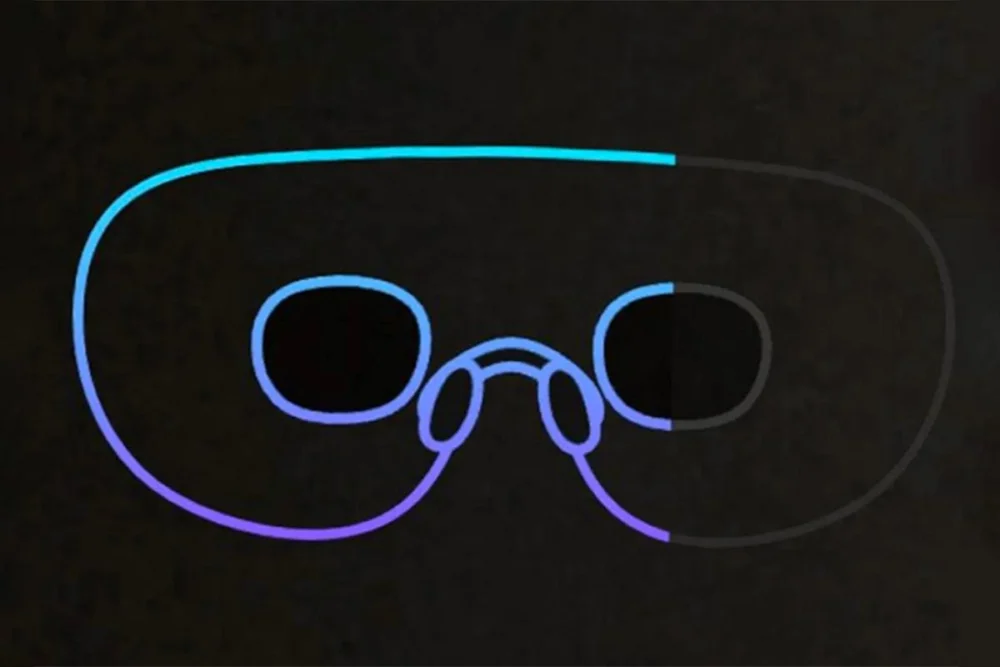
Data miners, specifically those operating under the monikers Luna and Samulis, have extracted highly revealing assets from within Meta’s system software. While the unearthed materials—consisting of low-resolution renders and stylized schematic line drawings—lack the polish of a marketing reveal, their implications are profound. These images, likely intended for the initial setup tutorials that guide users through fit and calibration, suggest that the upcoming hardware, widely referred to as the Meta Quest 4, represents the most aggressive design departure since the transition from the original Oculus Rift to the standalone Quest era.
The most striking revelation from these leaks is the dramatic reduction in the headset’s physical volume. The silhouette suggests a device that sits much closer to the user’s face, potentially shedding the "shoebox" aesthetic that has defined the Quest line since its inception. This reduction in bulk is not merely an aesthetic choice; it is a fundamental ergonomic necessity if Meta hopes to push VR beyond the realm of 30-minute gaming sessions and into the territory of all-day productivity and social interaction.
The Architecting of a Slimmer Profile
How is Meta achieving this miniaturization? The leaked schematics point toward a dual-pronged strategy involving both optical refinement and a radical shift in hardware distribution. Industry analysts have long speculated that the next major leap in HMD design would involve moving the heavy lifting away from the user’s forehead. The firmware clues suggest that Meta may finally be adopting a "computing puck" model. By offloading the primary processor, thermal management systems, and the heavy lithium-ion battery to a separate unit—likely worn on a belt or placed in a pocket—the headset itself can be reduced to a lightweight shell containing only the displays, lenses, and tracking sensors.
This "puck" approach is a direct response to the thermal and weight constraints that have plagued the Quest 3 and the Quest Pro. In a standalone headset, the processor must be throttled to prevent the device from overheating or becoming uncomfortably warm against the user’s skin. By externalizing the compute, Meta can theoretically utilize more powerful silicon—perhaps a specialized variant of the Snapdragon XR2 Gen 3—without the same thermal ceilings. This would allow for higher fidelity graphics and more complex environmental tracking while simultaneously making the headset light enough to be worn for hours without neck strain.
The Return of Eye Tracking and the Quest for Immersion
Beyond the physical form factor, the firmware leaks confirm the inclusion of a feature that was conspicuously absent from the consumer-oriented Quest 3: integrated eye tracking. While this technology was a cornerstone of the enterprise-focused Quest Pro, it was omitted from the Quest 3 to maintain a competitive price point. Its return in the Quest 4 marks a significant shift in Meta’s priorities.
Eye tracking is far more than a luxury input method. In the context of modern spatial computing, it is the linchpin of "foveated rendering." This technique uses sensors to track exactly where the user is looking, allowing the system to allocate maximum graphical resources to that specific point while blurring the peripheral areas. This mimics the way the human eye actually perceives the world and significantly reduces the computational load on the processor. For a device aiming for a smaller form factor and higher resolution, foveated rendering is not just an advantage; it is a requirement.
Furthermore, eye tracking enables a level of social presence that has remained elusive in VR. By mapping a user’s actual eye movements onto their digital avatar, Meta can facilitate genuine eye contact and non-verbal communication in social spaces like Horizon Worlds. This aligns perfectly with CEO Mark Zuckerberg’s long-term vision of the "metaverse" as a social platform rather than just a gaming peripheral.
Display Evolution: The Micro-OLED Frontier
While the firmware provides the "what" of the design, industry rumors provide the "how" regarding visual fidelity. There is increasing evidence that Meta is exploring a transition to Micro-OLED display technology. The Quest 3 currently utilizes high-resolution LCD panels, which, while capable, struggle with "true blacks" and contrast ratios, often resulting in a slightly washed-out appearance in dark environments.

Micro-OLEDs, by contrast, offer self-emissive pixels, leading to infinite contrast ratios and more vibrant color reproduction. This technology is currently the gold standard in the industry, utilized by the Apple Vision Pro and high-end enterprise headsets from manufacturers like Pimax. However, the cost remains a formidable barrier. High-end Micro-OLED headsets often retail for well over $2,000. For Meta to integrate this into a "Quest 4" intended for a broader audience, they would need to leverage their massive supply chain to drive down costs or perhaps introduce a tiered "Pro" and "Standard" model system once again.
The Reality Labs Conundrum: A Strategic Step Back?
The timing of these leaks is particularly interesting when viewed against the backdrop of Meta’s internal restructuring. Reality Labs, the division responsible for VR and AR development, has undergone significant changes over the past year. Amidst broader corporate "efficiency" drives, the division has seen staffing cuts and the closure of several first-party gaming studios.
Meta’s Chief Technology Officer, Andrew Bosworth, recently signaled a shift in the company’s philosophy. In public statements, Bosworth suggested that Meta is prepared to "let VR be what it is," rather than forcing it into a premature state of mass-market ubiquity. This pragmatic approach suggests that the Quest 4 may not be positioned as a "console killer" for the average teenager, but rather as a sophisticated tool for enthusiasts, creators, and early adopters of spatial computing.
This strategic pivot may also explain the rumored "Quest 3S"—a more affordable, stripped-down version of current hardware designed to maintain market share while the high-end Quest 4 undergoes its more complex development cycle. Meta appears to be bifurcating its strategy: providing an affordable entry point for the masses while pushing the absolute boundaries of what is possible with the Quest 4.
Competitive Pressures and the "Vision" Effect
It is impossible to discuss the Quest 4 without acknowledging the "Apple factor." The launch of the Apple Vision Pro has fundamentally altered the public’s perception of what a headset should be. Apple’s emphasis on "spatial computing," high-fidelity passthrough, and a controller-free interface has forced Meta to accelerate its own development of mixed reality (MR) capabilities.
The leaked Quest 4 design suggests a device that is much better suited for MR than its predecessors. A lighter, more discrete headset is more likely to be used in a passthrough mode where the user can still see their physical surroundings. If Meta can combine its superior gaming ecosystem with a form factor that rivals or exceeds the comfort of Apple’s offering—at a fraction of the price—they could secure their dominance in the next era of computing.
The Road Ahead: From Firmware to Forehead
The presence of these assets in Meta’s firmware suggests that the Quest 4 is well past the conceptual stage. Typically, when setup assets appear in system software, the hardware design is finalized, and the company is moving into the software integration and developer testing phases. However, "finalized" in the tech world is a relative term. Meta has been known to scrap projects late in the cycle if they don’t meet specific weight or cost targets.
As we move toward the latter half of the decade, the Quest 4 represents more than just a hardware update; it is a litmus test for the viability of the metaverse vision. If Meta can deliver a headset that is light enough for daily use, powerful enough for professional applications, and social enough to replace a video call, they will have successfully navigated the "trough of disillusionment" that often follows a period of intense hype.
The firmware leaks have given us the skeleton of the Quest 4. Now, the industry waits to see how Meta will put flesh on those bones. Will it be the affordable Micro-OLED revolution we hope for, or a specialized tool for a niche market? Regardless of the outcome, the era of the bulky, front-heavy VR headset appears to be coming to a definitive end. The future of spatial computing is getting smaller, smarter, and much more personal.