

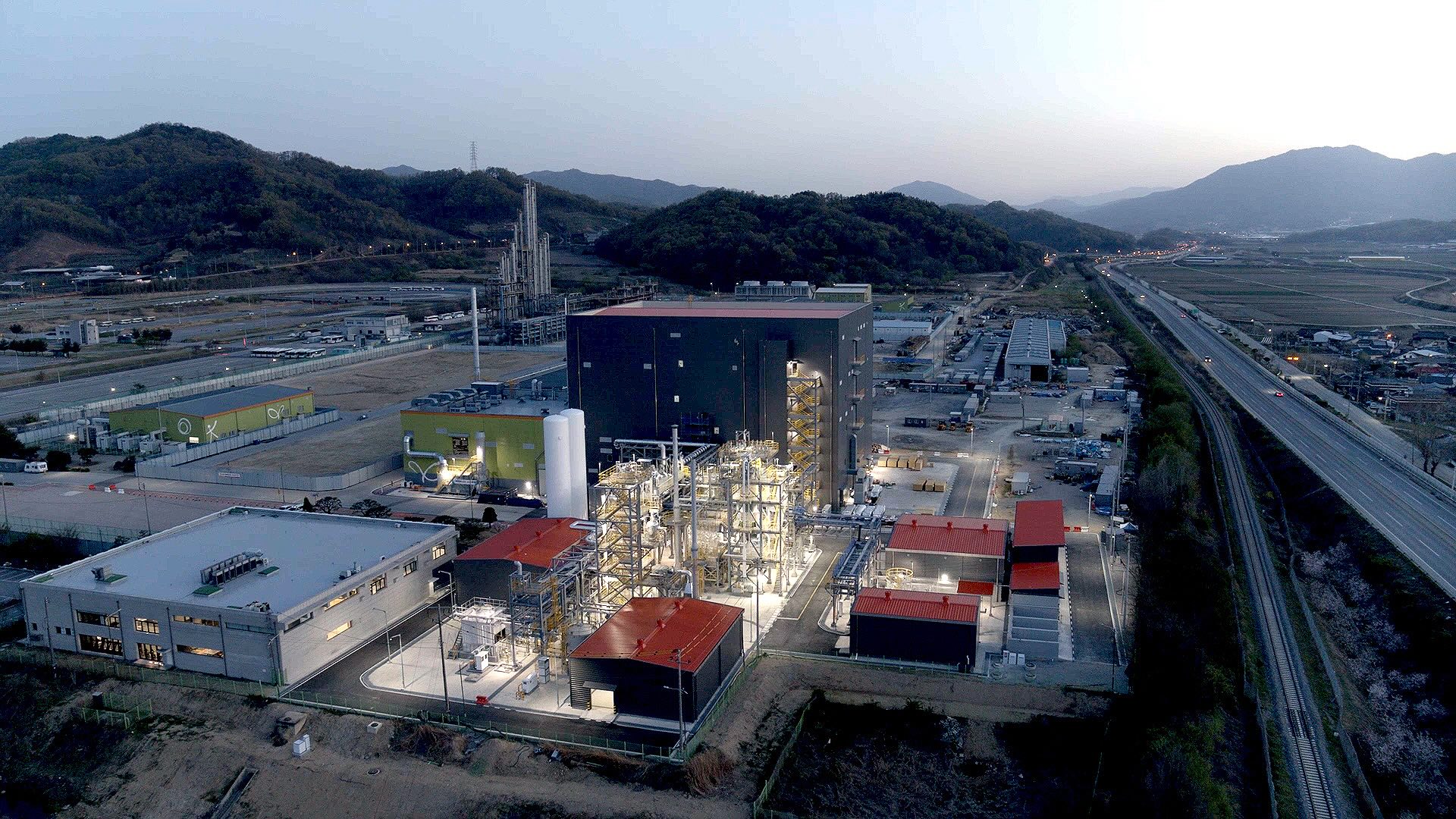
The global transition toward electric mobility has reached a critical bottleneck, one that is defined less by the availability of lithium and more by the fundamental chemical limitations of the traditional battery anode. For over three decades, graphite has been the undisputed king of the lithium-ion battery, serving as the stable, reliable host for lithium ions during charge and discharge cycles. However, as the automotive industry demands longer ranges and, perhaps more importantly, faster charging times that mimic the convenience of a gasoline fill-up, graphite is reaching its physical limits. The industry is now pivoting toward silicon, a material capable of holding significantly more energy, and Group14 Technologies is positioning itself at the vanguard of this chemical revolution with the commencement of production at its new commercial-scale facility in South Korea.
The opening of the BAM-3 factory represents a watershed moment for the battery supply chain. Located in one of the world’s most sophisticated battery manufacturing hubs, the facility is designed to produce 2,000 metric tons of Group14’s proprietary silicon-carbon composite material annually. To put this into perspective, this volume is equivalent to roughly 10 gigawatt-hours (GWh) of energy storage capacity, which translates to the battery requirements of approximately 100,000 long-range electric vehicles (EVs). While the tech industry has seen silicon-based batteries in smaller applications—ranging from high-end wearables like Whoop fitness trackers to flagship smartphones—the automotive sector is the ultimate prize. The scale of the EV market is an order of magnitude larger than consumer electronics, and Group14’s move into mass production signals that the era of the "silicon-dominant" EV battery has arrived.
The journey to this milestone was not without its corporate maneuvers. The BAM-3 facility was originally conceived as a joint venture between Group14 and the South Korean industrial titan SK. Initially, SK held a dominant 75% stake in the project. However, the landscape of the global battery market shifted rapidly over the last eighteen months. Facing internal financial pressures and a need to consolidate its strategic focus, SK opted to sell its stake back to Group14 last summer. For Group14, this acquisition was a strategic masterstroke, allowing the startup to take full operational control of a world-class manufacturing asset at a time when the demand for high-performance battery materials is skyrocketing. According to Group14 CEO Rick Luebbe, the transition allowed the company to accelerate its roadmap, turning a partnership challenge into a vertical integration opportunity.
To understand why Group14’s expansion is so significant, one must look at the "silicon problem" that has bedeviled electrochemists for decades. Silicon is a tantalizing material because, theoretically, it can store up to ten times more lithium ions by weight than graphite. If you could replace a graphite anode with pure silicon, the energy density of the battery would soar, and charging times would plummet. However, silicon comes with a destructive side effect: when it absorbs lithium ions during charging, it swells by as much as 300% in volume. This repeated expansion and contraction cause the silicon particles to pulverize and the protective solid-electrolyte interphase (SEI) layer to crack, leading to rapid battery failure after only a few dozen cycles.
Group14’s solution to this mechanical nightmare is an engineered "scaffold." Rather than using raw silicon, the company creates a hard carbon structure—a microscopic cage, of sorts—that houses nano-sized silicon particles. This carbon scaffold is porous at the nanoscale, allowing lithium ions and electrons to flow freely through the structure while physically constraining the silicon. When the silicon expands, it does so within the internal voids of the carbon cage, preventing the overall anode from swelling or crumbling. This architecture not only preserves the longevity of the battery but also facilitates incredibly high power density, which is the key to "flash charging."
The implications of this technology are being explored by a prestigious roster of partners. Porsche, a brand synonymous with performance, has not only invested in Group14 through its venture arm but is also working with the company via its Cellforce Group division to develop batteries for high-performance electric sports cars. For a brand like Porsche, the ability to shed weight while maintaining high power output is essential. Other partners, such as Sionic, are leveraging the material to push energy density boundaries by up to 50%, while Molicel is focusing on the extreme end of power delivery. Molicel has demonstrated battery designs utilizing Group14’s materials that can theoretically charge from empty to full in a staggering 90 seconds.
This move toward ultra-fast charging could fundamentally rewrite the consumer experience of EV ownership. For years, the industry has been locked in an "arms race" for range, with manufacturers cramming ever-larger battery packs into vehicles to alleviate "range anxiety." However, these massive batteries create a vicious cycle: they add thousands of pounds of weight, which requires more robust suspension and braking systems, which in turn necessitates even more energy to move, all while driving up the retail price of the vehicle. A Rivian R1T with a 130 kWh battery pack is a marvel of engineering, but it is also an incredibly expensive and resource-intensive solution to the problem of distance.
If a vehicle can be recharged in five minutes or less—the time it takes to grab a coffee—the need for a 400-mile range evaporates for the average driver. If the "refueling" experience of an EV matches that of an internal combustion engine (ICE) vehicle, automakers can begin to downsize battery packs. A smaller, 50 kWh battery that charges in five minutes is, for many users, more practical and far more affordable than a 120 kWh battery that takes 45 minutes to reach 80% on a fast charger. This shift would not only lower the entry price of EVs, making them accessible to a broader demographic, but it would also reduce the total demand for raw materials like lithium, cobalt, and nickel, making the entire industry more sustainable.
The momentum toward this "flash charging" future is already visible in the competitive landscape. Recently, the Chinese EV giant BYD unveiled a new battery chemistry capable of charging from 10% to 70% in just five minutes. Industry analysts, including Group14’s leadership, believe that such performance is chemically impossible without the integration of silicon-carbon composites. As Chinese manufacturers move aggressively to dominate the next generation of battery tech, the opening of Group14’s Korean plant provides a critical non-China-centric supply of these essential materials, which is vital for Western automakers looking to maintain competitive parity.
However, the hardware in the car is only half of the equation. To realize the dream of 90-second or five-minute charging, the global charging infrastructure must undergo a massive upgrade. Current DC fast chargers typically max out at 350 kW, which is already a significant amount of power. To support "flash charging" at scale, we will need chargers capable of delivering much higher bursts of energy, potentially supported by onsite stationary storage batteries that act as a buffer for the local electrical grid.
Furthermore, the advent of silicon-anode technology opens the door to more exotic charging concepts that once seemed like science fiction. With batteries that can accept high-power bursts without degradation, inductive (wireless) charging at stoplights or in dedicated highway lanes becomes a viable possibility. If a vehicle can gain 20 miles of range in the 60 seconds it sits at a red light, the very concept of "going to a station" to charge might eventually disappear.
As Group14 scales its production from the new South Korean facility and moves toward its next phase of expansion—including a massive upcoming plant in Moses Lake, Washington—the battery industry is entering a new "S-curve" of innovation. The transition from graphite to silicon is not just an incremental improvement; it is a fundamental shift in the capabilities of portable energy. By solving the durability issues of silicon through sophisticated material science, Group14 is providing the missing link between the EVs of today, which are often defined by their limitations, and the EVs of tomorrow, which will be defined by their seamless integration into the pace of modern life. The industrialization of these materials at the BAM-3 factory is the first loud signal that the silicon revolution is no longer a laboratory experiment—it is a commercial reality ready to hit the road.