

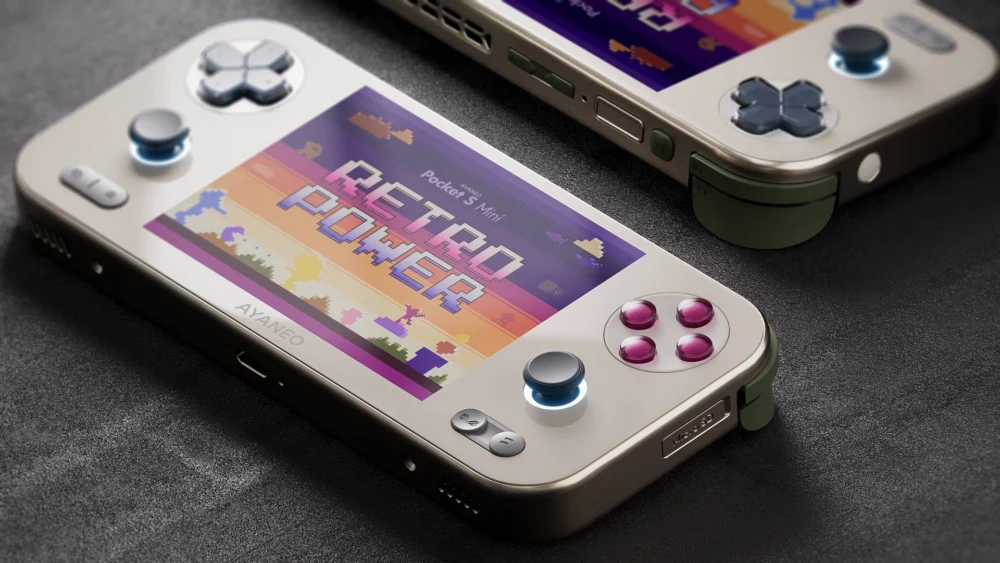
The landscape of premium, compact handheld gaming devices has just witnessed a significant strategic shift. AYANEO, a key innovator in the Windows and Android handheld market, has elected to launch its highly anticipated Pocket S Mini directly into retail channels, completely eschewing the protracted crowdfunding and pre-order phases that have characterized much of the company’s recent product pipeline. This move, while surprising in its directness, appears to be a calculated response to evolving consumer expectations and persistent logistical challenges that have plagued the industry segment.
The device itself, which had been previewed in various forms since September, now stands fully unveiled with finalized specifications and pricing structure. The Pocket S Mini inherits the sophisticated industrial design ethos established by its larger sibling, the Pocket S, featuring a robust, all-metal CNC-milled chassis paired with an all-glass front fascia. This commitment to premium build quality positions it firmly in the upper echelon of handhelds focused on portability and durability.
At the heart of the device lies the formidable Qualcomm Snapdragon G3x Gen 2 chipset. This system-on-a-chip (SoC) represents the pinnacle of current Android-based handheld processing power, offering substantial headroom for high-fidelity Android gaming and comprehensive emulation capabilities across nearly all legacy console generations. The pairing of this powerful silicon with configurations of 8GB, 12GB, or a top-tier 16GB of LPDDR5X RAM ensures that performance bottlenecks are minimized, even under heavy multi-tasking or demanding emulation loads. Notably, the 16GB configuration is exclusively reserved for the "Retro Power" colorway, suggesting a deliberate segmentation of the high-end offering.
The visual interface is anchored by a 4.2-inch LCD panel utilizing a 4:3 aspect ratio. While this display size and ratio strongly favor the pixel-perfect rendering of classic 8-bit and 16-bit titles—a core focus for many in the retro enthusiast community—AYANEO claims refinements have been made to this panel, possibly drawing from the technology used in the more budget-oriented Pocket Air Mini, while promising superior output quality.
Ergonomically, the Pocket S Mini adopts distinctive design elements from AYANEO’s recent experiments. It incorporates the unlabeled, translucent face buttons seen on the Pocket VERT, lending a unique aesthetic touch. Control inputs are completed by dual analog sticks arranged in a layout reminiscent of the Pocket ACE, providing a familiar and functional control scheme for modern games and control-intensive emulators.
A Shift Away from Financial Precarity
The decision to bypass traditional crowdfunding platforms like Indiegogo for this launch is arguably the most significant aspect of the Pocket S Mini’s debut. For the past several months, the handheld computing sector—and AYANEO specifically—has faced intense scrutiny regarding fulfillment timelines. Devices such as the Pocket DS, the Pocket AIR Mini, and even the related KONKR Pocket FIT have experienced substantial delays in shipping to early backers. These extended wait times have eroded consumer confidence, a critical commodity in the enthusiast hardware space where early access to cutting-edge technology is highly valued.
In direct response to this community dissatisfaction, AYANEO’s CEO recently articulated a comprehensive "Service Improvement Plan." Moving the Pocket S Mini directly to a direct-to-consumer (D2C) sales model appears to be the first tangible execution of this plan. By transitioning to an immediate retail availability model, AYANEO is attempting to signal a definitive break from the logistical uncertainties inherent in pre-funding hardware projects. This pivot suggests a commitment to selling only inventory that is ready or near ready for immediate dispatch, a model that prioritizes timely delivery over initial capital injection.
Furthermore, this launch marks AYANEO’s commitment to synchronized global distribution. Unlike previous launches that often saw staggered rollouts favoring the domestic Chinese market first, the Pocket S Mini is launching concurrently in China and international territories, with initial stock allocated equitably between both regions. This parity in access is crucial for building and maintaining a unified global user base.
Pricing Strategy and Market Positioning
The pricing tiers for the Pocket S Mini reveal a premium positioning, even with introductory incentives:
- Base Model: 8GB RAM / 128GB Storage at $319 USD (Early Bird)
- Mid-Tier: 12GB RAM / 256GB Storage at $399 USD (Early Bird)
- Premium Model: 16GB RAM / 512GB Storage (Retro Power colorway) at $479 USD (Early Bird)
These early-bird prices are slated to expire at the end of February, after which a substantial $80 price increase will be applied across all three configurations. Early adopters who secure their units before the deadline will also receive a value-added "gift pack" containing essential accessories such as a protective carry case, custom joystick caps, retro-themed stickers, and a microfiber cleaning cloth.
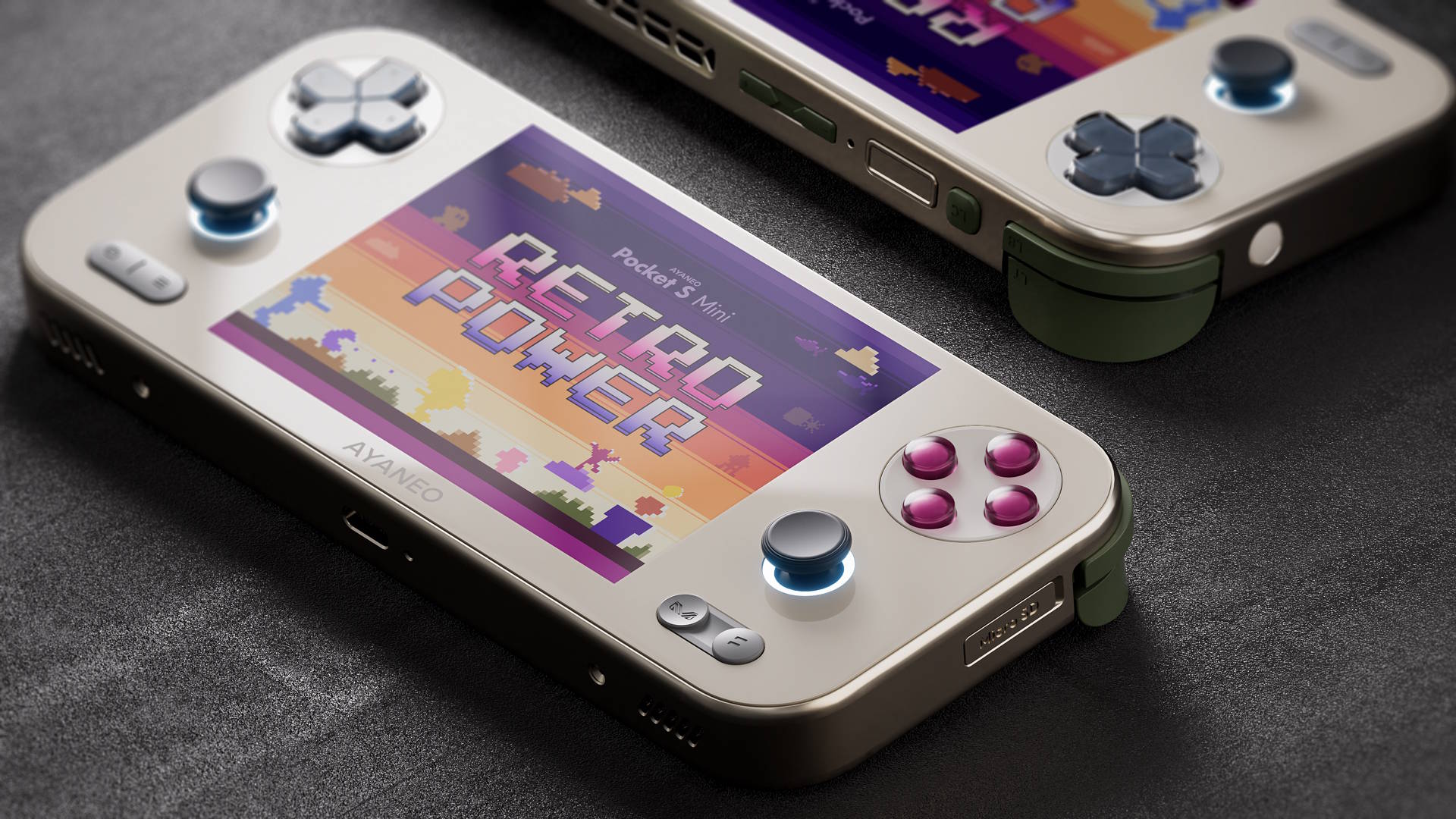
While the Snapdragon G3x Gen 2 guarantees high performance, the $319 entry point places the Pocket S Mini in direct competition with established and emerging players in the compact Android handheld space. Its primary rivals include its own stablemate, the Pocket ACE, which features the same chipset but in a different form factor, and offerings from competitor Anbernic, such as the all-metal RG 477M. The disappearance of other powerful compact options, such as the AYN Odin 2 Mini, leaves a distinct opening for AYANEO to dominate this niche segment, provided fulfillment remains stable.
Expert Analysis: The Industry Implications of Direct Sales
The move away from crowdfunding has profound implications for the entire handheld PC/Android market. Crowdfunding platforms, while excellent for gauging market demand and securing initial capital, introduce inherent risks: reliance on third-party manufacturing schedules, vulnerability to supply chain shocks, and the psychological pressure of public deadlines.
From an operational standpoint, transitioning to a D2C, stock-on-hand model suggests AYANEO has secured significantly more predictable supply lines or, alternatively, has scaled down initial production runs to match conservative, immediate demand forecasts. For the consumer, this model offers instant gratification—a significant psychological boon compared to waiting months for a device paid for sight-unseen. For the company, the immediate influx of revenue bypasses the often-complex financial management associated with managing large, multi-month crowdfunding campaigns.
However, this strategy also presents challenges. Without the large, upfront capital infusion from a successful crowdfunding campaign, AYANEO must rely on existing operational capital or traditional financing to cover the initial manufacturing costs for all units destined for immediate sale. This necessitates extremely accurate sales forecasting; overproduction leads to inventory carrying costs, while underproduction leads to frustrating "out of stock" messages that mimic the very delays they sought to avoid.
Logistical Considerations and Timing
The launch timing itself is tactical. By pushing the release forward to ship before the Chinese New Year—a period of near-total industrial cessation in China lasting several weeks—AYANEO is attempting to clear a significant portion of its initial order backlog before the market effectively pauses.
The company has clearly communicated the cutoff date: orders placed after February 10th will not see shipment resume until after February 26th, acknowledging the impending holiday shutdown. Furthermore, to mitigate any further strain on the logistics network during this critical period, sales of several non-essential accessories for the Pocket S Mini have been temporarily suspended. This demonstrates a pragmatic prioritization of shipping the core product units over secondary sales.
The commitment to rapid fulfillment for immediate orders—stating that early purchases should ship within 7-10 days—is the ultimate test of the "Service Improvement Plan." If AYANEO can consistently deliver within this tight window, it will successfully recalibrate community expectations regarding their operational maturity.
Future Trajectory in the Compact Gaming Space
The Pocket S Mini is not merely an iteration; it represents a maturation of AYANEO’s approach to the compact Android segment. The Snapdragon G3x Gen 2 is an extremely capable platform, capable of driving demanding titles like Genshin Impact or complex modern emulator cores with high fidelity. The 4:3 screen, while niche, appeals directly to the core retro audience that views perfect scaling as non-negotiable.
The success of this D2C launch will set a precedent. If AYANEO proves that it can deliver high-end hardware directly, without the perceived risk of crowdfunding, it could lure consumers away from competitors who remain heavily reliant on that model. This shift could accelerate the broader industry trend toward faster, more direct retail pipelines for enthusiast hardware, potentially forcing other manufacturers to re-evaluate their own pre-order strategies to maintain competitiveness in delivery speed.
Ultimately, the Pocket S Mini, powered by its potent internals and housed in a premium chassis, is AYANEO’s direct statement to the market: they are serious about reliable delivery. The elimination of the crowdfunding gap transforms the purchase from an investment into a standard consumer transaction, placing the onus squarely on the company’s internal supply chain management rather than external community financing. Consumers can now access this powerful, compact device immediately via AYANEO’s official web portal, signaling a new, potentially more stable, chapter for the brand. The coming weeks will confirm whether this strategic gambit has paid off in regained trust and smooth logistics.