

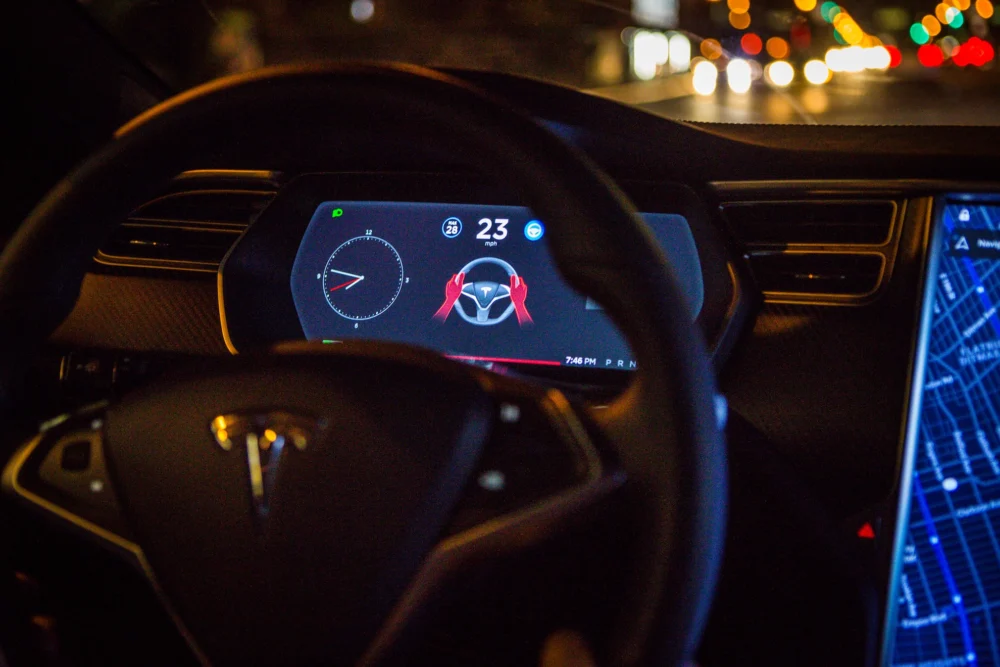
The landscape of autonomous and assisted driving technology is undergoing a critical phase of realignment, marked this week by divergent but equally significant actions from two industry titans: Tesla’s calculated discontinuation of its foundational driver-assistance system, Autopilot, and the launch of a high-stakes safety investigation into Waymo by the National Transportation Safety Board (NTSB). These developments underscore a crucial pivot in the mobility sector, where market strategy and technological advancement are increasingly constrained and shaped by federal oversight and the necessity for clear, unambiguous safety messaging.
The Death of Autopilot and Tesla’s FSD Gambit
Just ahead of its quarterly earnings disclosure, Tesla executed a dual maneuver designed to streamline its product offerings and bolster its financial valuation as an AI-centric enterprise. The most profound of these changes was the effective retirement of the "Autopilot" moniker, the Advanced Driver-Assistance System (ADAS) that has been standard equipment on its vehicles since 2014.
Autopilot, while immensely popular, has been perpetually mired in controversy. Its name implied a capability—true autonomy—that the system, classified primarily as Level 2, simply did not possess. This semantic ambiguity contributed to numerous high-profile accidents where drivers mistakenly relied on the system as fully autonomous, prompting years of regulatory scrutiny and public confusion. The basic version of Autopilot provided essential features like traffic-aware cruise control and Autosteer (lane centering), core technologies now ubiquitous across the automotive industry.
Tesla’s decision to kill this standard ADAS package is multi-layered, driven by both commercial ambition and regulatory exigency. On the commercial front, this move forces customers toward the more lucrative, subscription-based Full Self-Driving (FSD) software. The timing is strategic, arriving shortly after Tesla shifted FSD from an $8,000 one-time purchase to a monthly subscription model, maximizing recurring revenue streams and improving financial reporting consistency as the company leans into its software-as-a-service identity. By eliminating the free, basic Autopilot, Tesla creates a clear, paid upgrade path for all ADAS functionality beyond basic cruise control.
The regulatory motivation, however, is equally compelling. Tesla recently faced a significant setback in California, where a judge ruled that the company engaged in deceptive marketing regarding the capabilities of both Autopilot and FSD. This ruling potentially subjects Tesla to a 30-day suspension of its manufacturing and dealer licenses in the state. While the ruling has been temporarily stayed, the pressure to comply with regulatory demands for clearer branding is acute. Sunsetting the famously misleading "Autopilot" name is a powerful, if belated, concession to safety regulators and consumer advocates who have long argued the term was dangerous. This strategic rebranding effort is likely intended to demonstrate compliance and mollify the California Department of Motor Vehicles (DMV) before the stay on the license suspension expires.
Tesla Pushes Unsupervised Robotaxis in Austin
Concurrent with the Autopilot shift, Tesla signaled an aggressive acceleration in its Level 4 autonomy pursuit by deploying fully driverless robotaxi rides in Austin, Texas, removing the human safety operator from the driver’s seat. While the service remains limited and reportedly involves a follow-car for monitoring, the transition from "Full Self-Driving Supervised" (where the human is liable) to a truly "unsupervised" model represents a major operational leap.

This step is a crucial differentiator in the competitive race for autonomy. Unlike rivals who rely heavily on high-definition mapping and expensive lidar sensor suites, Tesla relies on its proprietary, vision-only system, trained by massive amounts of real-world data derived from its existing customer fleet. Successfully deploying unsupervised vehicles, even in a geofenced area, validates the company’s data-centric approach and its ambitious software architecture.
This development, coupled with the recent viral cross-country demonstration—where a modified Tesla Model S, running FSD software version 14.2.2.3, completed the 3,081-mile journey from Los Angeles to New York with the software handling all driving duties (albeit supervised) in 58 hours and 22 minutes—serves as a powerful marketing tool. The L.A. to N.Y. run, while emphasizing the technological sophistication of FSD, highlights the contrast between advanced Level 2 (supervised) capabilities and the critical, regulatory-intensive jump to true Level 4 (unsupervised) operation now being piloted in Texas.
Waymo Under Federal Scrutiny
While Tesla manages a self-imposed brand crisis, its primary Level 4 competitor, Waymo, faces an acute external challenge. The National Transportation Safety Board (NTSB) has initiated an investigation into the company following reports of Waymo’s robotaxis repeatedly and illegally passing stopped school buses in at least two states.
The involvement of the NTSB is profoundly serious. While the National Highway Traffic Safety Administration (NHTSA) handles regulatory enforcement and vehicle recalls, the NTSB focuses on determining the probable cause of significant transportation accidents and issuing safety recommendations. The NTSB typically reserves its resources for high-impact, high-consequence events. Its focus on school bus violations signals that these recurring incidents are viewed not as minor operational glitches but as critical safety failures that expose vulnerable populations (children) to unnecessary risk.
School buses represent one of the most difficult "edge cases" for autonomous systems due to the variable deployment of stop-arms, flashing lights, and the unpredictable movements of pedestrians around the vehicle. The NTSB probe will delve deeply into Waymo’s operational design domain (ODD), software logic, and mitigation strategies for these critical scenarios. The outcome could lead to mandatory operational restrictions, significant software redesigns, or even temporary halts to expansion, creating a chilling effect across the entire Level 4 autonomy industry. This regulatory headwind arrives even as Waymo continues its geographic expansion, notably opening its robotaxi service in Miami to the public, accepting riders from a local waitlist of nearly 10,000 residents. The contrast between rapid market expansion and escalating safety oversight defines the current reality for high-level autonomous deployment.
Capital Flows and the Convergence of Mobility and Robotics
The financial markets continue to pour capital into the broader mobility ecosystem, signaling strong investor confidence in the long-term potential of automation, even amidst regulatory hurdles.
The drone delivery sector saw a massive influx, led by Zipline, the autonomous drone-logistics startup that secured a staggering $600 million in new funding, pushing its valuation to $7.6 billion. Zipline, which famously began by delivering essential medical supplies like blood in Rwanda, is now aggressively scaling its consumer logistics platform, P2, for home delivery of food and goods across the United States. This substantial funding validates the shift from niche, humanitarian applications to high-volume, last-mile commercial delivery, with planned expansions into Houston, Phoenix, and four additional states in the coming year. Key investors in the round included Fidelity, Baillie Gifford, and Tiger Global.

Elsewhere in the technology stack, Ethernovia, a startup focused on advanced Ethernet-based systems for autonomous vehicles, closed a $90 million Series B round. As autonomous vehicles transition to Level 3 and Level 4 capabilities, the sheer volume of data generated by sensors (lidar, radar, cameras) requires extremely high-bandwidth, reliable internal networking. Ethernovia’s focus on robust automotive Ethernet solutions highlights the growing investor focus on the underlying hardware infrastructure necessary to support the "physical AI" movement—the integration of AI compute directly into real-world machines.
A notable trend toward technological convergence was evidenced by Serve Robotics, a sidewalk delivery robot company, acquiring Diligent Robotics for a common stock valuation of $29 million. Diligent developed Moxi, a robot designed to assist nurses and staff within hospitals by handling logistics like delivering lab samples and supplies. This merger signals the blurring lines between external, last-mile delivery robotics and internal, enterprise-logistics automation, leveraging similar core navigation and sensing technologies across diverse operational environments.
In other significant corporate moves, TrueCar founder Scott Painter reacquired the company in a $227 million take-private deal supported by partners including AutoNation and PenFed Credit Union, returning the online automotive marketplace to private ownership and placing Painter back in the CEO role. Simultaneously, German firm Terralayr, specializing in grid-scale battery storage, raised €192 million, reflecting the exponential investment required to build out energy flexibility solutions essential for supporting widespread EV adoption and renewable energy integration.
Global Ambitions and Internal Refocusing
The race for global mobility leadership is intensifying, particularly with state-backed efforts. Chinese automaker Geely Holding Group outlined an ambitious five-year blueprint that targets a 100,000-vehicle robotaxi fleet operated by its Cao Cao Mobility ride-hailing unit by 2030, aiming to cover major Chinese cities with hints of future international expansion. This goal places Geely directly in competition with Western leaders like Waymo and Cruise, signaling the scale and speed of Chinese development in the autonomous sector.
On the corporate strategy front, General Motors (GM) announced a significant restructuring of its production footprint, moving two gas-powered vehicle lines from China and Mexico to its Fairfax Assembly Plant in Kansas. This shift, however, comes with the consequence of ending production of the Chevrolet Bolt EV—the only vehicle currently built at that Kansas facility—next year. The decision reflects ongoing adjustments by legacy automakers to EV supply chain constraints and profitability challenges.
Finally, Tesla CEO Elon Musk detailed plans to restart development on the previously shelved third-generation AI chip, Dojo3. Intriguingly, this new iteration will not be dedicated to training FSD models, but rather for "space-based AI compute." This pivot suggests that Tesla may be allocating its most advanced terrestrial AI training resources (likely relying on massive Nvidia GPU clusters) solely to FSD development, while leveraging the specialized, high-efficiency Dojo architecture for future non-automotive, potentially aerospace-related, projects. This refocusing underscores Tesla’s dual identity as both an automotive manufacturer and a diversified technology holding company with far-reaching AI ambitions beyond transportation.
The mobility sector stands at a complex intersection where technological breakthroughs—such as achieving unsupervised operation in Austin or completing a semi-autonomous coast-to-coast drive—are immediately met with heightened regulatory scrutiny, exemplified by the NTSB’s critical intervention. The strategic maneuvers of market leaders like Tesla and Waymo in the coming year will be defined by their ability to navigate this delicate balance between aggressive deployment and rigorous, federally mandated safety compliance.