

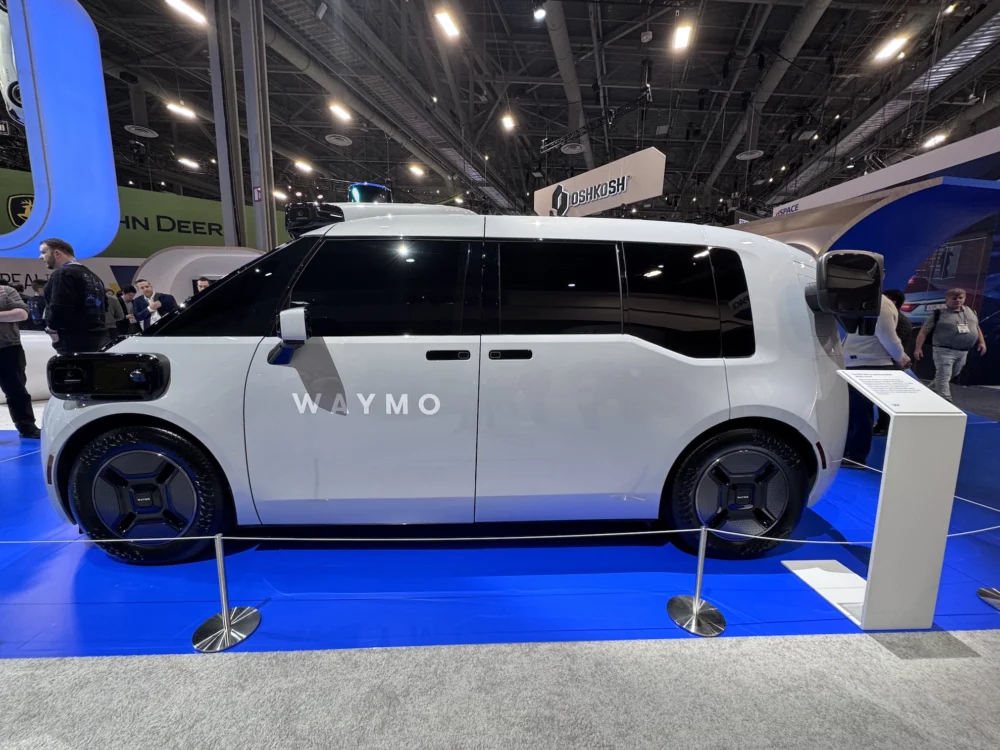
The flagship autonomous vehicle (AV) platform developed through a critical three-year collaboration between Waymo and Chinese automaker Zeekr is entering its final commercial phase under a new, domestically resonant moniker: the Ojai. This rebranding—a significant strategic shift away from the former designation, the Zeekr RT—comes just as the purpose-built robotaxi prepares for mass deployment across Waymo’s rapidly expanding network of service territories. The decision to adopt the name Ojai, pronounced "oh-hi" and inspired by a serene, artistically inclined village nestled in California’s Topatopa Mountains, signals Waymo’s intent to craft a distinctly American, approachable identity for its next-generation fleet, mitigating potential friction points related to its international supply chain origins.
Waymo’s official rationale, as conveyed by company spokespeople, centers on consumer familiarity. The Zeekr brand, a premium electric mobility entity under the vast Geely Holding Group, lacks significant recognition among the American riding public. For a technology dependent on rapid trust establishment, utilizing a foreign, unfamiliar nameplate could introduce unnecessary cognitive resistance. However, industry analysts recognize a deeper, more compelling geopolitical calculation driving the change. In an era defined by intensifying technological competition and regulatory scrutiny between the United States and China, distancing a highly visible, safety-critical asset like a robotaxi from its Chinese manufacturing roots provides a crucial layer of insulation.
The strategic importance of this re-identification extends beyond simple marketing. The Ojai name subtly leans into a cultivated rider experience. Waymo intends to integrate the pronunciation into the user interface, with the vehicle potentially greeting passengers with a personalized "Oh hi, [Rider Name]," fostering a sense of warmth and localized connection—a soft-touch psychological engineering designed to smooth the transition to driverless transport. This focus on human-machine interaction is pivotal, transforming a hardware platform into an experiential service.
The Evolution of a Purpose-Built Platform
The partnership that yielded the Ojai began in late 2021 when Waymo formally aligned with Zeekr, leveraging the extensive manufacturing capabilities of Geely. The objective was clear: move beyond retrofitting existing minivans (like the highly visible Chrysler Pacifica fleet) and develop a vehicle optimized from the ground up for Level 4 (L4) autonomous ride-hailing operations. This collaboration utilized Zeekr’s advanced Sustainable Experience Architecture (SEA-M) platform, which was specifically engineered to support future mobility products, including robotaxis and specialized logistics vehicles.
The initial concept, showcased in 2022, emphasized revolutionary interior space and flexibility, notably featuring a design devoid of a steering wheel, pedals, or traditional driver controls. This vision represented the purest form of L4 autonomy, where the human element is completely removed. However, the iteration presented at subsequent technology showcases, including the model that will now enter commercial service as the Ojai, includes a steering wheel and pedal arrangement. This design choice reflects the fluid and often cautious regulatory landscape in the U.S., where maintaining human fallback capability remains essential for certain testing and regulatory approvals, even if the vehicle operates autonomously 99% of the time. It also ensures flexibility for diverse operational environments and compliance requirements across different states and international markets, such as the planned launch in London.
Over the past three years, the platform, previously known as the Zeekr RT, has undergone rigorous development and real-world testing in complex urban environments like Phoenix and San Francisco. The hardware suite underpinning the Waymo Driver system remains state-of-the-art and unchanged by the name shift. It consists of a formidable array of sensors designed to ensure 360-degree, redundant perception: 13 high-resolution cameras, four lidar units strategically placed for long-range and short-range depth sensing, six radar sensors for speed and distance measurement in all weather conditions, and external audio receivers for identifying emergency vehicle sirens and other acoustic cues. A notable, albeit minor, element of the design is the inclusion of specialized, miniaturized wipers for maintaining the clarity of the sensor lenses—a testament to the engineering focus on ensuring operational reliability in adverse conditions.
Beyond the internal architecture, even subtle cosmetic details have been finalized for the commercial rollout. The vehicle’s exterior color, which initially carried a slight blueish tint, has been adjusted to a more standard, perhaps less conspicuous, silver. These final tweaks underscore the meticulous attention to detail required before a robotaxi moves from beta testing to revenue-generating commercial deployment.
Geopolitical Calculus and Supply Chain Risk Mitigation
The decision to completely excise the Zeekr name is highly instructive regarding the current challenges facing cross-border technology partnerships, particularly those involving critical infrastructure like autonomous transportation. While Waymo spokesperson Chris Bonelli cited consumer unfamiliarity, the unstated reality is the escalating pressure from Washington regarding data security, espionage risks, and the reliance on Chinese-manufactured components in US transportation systems.
For Waymo, a subsidiary of Alphabet (Google), brand trust is paramount. Operating fleets of vehicles sourced from a Chinese state-affiliated entity (Geely) carries inherent public relations and regulatory risks in the US market. The renaming serves as a strategic public decoupling, allowing Waymo to emphasize its own core technology—the Waymo Driver—rather than the vehicle’s manufacturing origin.
This maneuver aligns with a broader trend of supply chain de-risking seen across multiple technology sectors. By branding the vehicle solely as a Waymo product—the Ojai—the company takes full ownership of the user experience and, critically, the data privacy narrative. If the vehicle were to retain the Zeekr name, it would invite questions about the level of integration, the ownership of telematics data, and the potential for remote access, issues that have already complicated the operations of other Chinese technology companies in the US.
Dr. Eleanor Vance, a consultant specializing in global automotive supply chains, commented on the significance of the move: "This is a classic ‘private labeling’ strategy taken to the geopolitical extreme. Waymo is purchasing a highly customized mobility platform, but they cannot afford to outsource the brand perception. The moment an AV is perceived as a foreign national asset rather than an American service, its regulatory pathway becomes exponentially harder. The Ojai rebranding is a preemptive strike against potential future national security investigations or consumer boycotts."
The focus on the SEA-M architecture, however, remains a calculated risk. While the platform is advanced, any future regulatory action targeting specific Chinese electric vehicle platforms or components could still impact Waymo’s fleet scalability. The long-term success of the Ojai will likely depend on Waymo’s ability to demonstrate not only the safety of the Waymo Driver software but also the robustness and independence of its operational and data infrastructure from the manufacturing partner.
Commercial Expansion and the Race to Scale
The launch of the Ojai is timed perfectly to support Waymo’s aggressive commercial expansion objectives. The company currently operates commercial services in major metropolitan areas including Atlanta, Austin, Los Angeles, Phoenix, and San Francisco. This initial footprint is merely the foundation for a much larger ambition. Waymo has publicly stated plans to launch in a dozen more cities within the next year, targeting high-density markets where ride-hailing demand is strongest.
Key announced expansion targets include Denver and Las Vegas in the US, alongside the bold venture into the international market with London. This rapid scaling requires a reliable, durable, and purpose-built vehicle platform that can withstand the high utilization rates characteristic of robotaxi fleets. The Ojai, designed specifically for this purpose, offers superior interior space, easier ingress/egress, and greater passenger comfort compared to the converted production vehicles Waymo has historically relied upon.
The immediate step before public availability involves internal testing: Waymo employees, along with their family and friends, are now actively hailing the Ojai vans in Waymo’s established testing grounds of San Francisco and Phoenix. This "friends and family" phase is a critical final quality control step, stress-testing the booking system, passenger interface, and operational response protocols before the vehicles are exposed to the general, paying public.
The introduction of the Ojai is not just about adding more vehicles; it’s about improving unit economics. Purpose-built electric platforms are fundamentally cheaper to operate and maintain over their lifetime than retrofitted conventional vehicles. By scaling the Ojai fleet, Waymo can significantly reduce its operational expenditure (OpEx) per mile, accelerating the timeline to profitability in the highly competitive AV sector.
Implications for the Autonomous Vehicle Industry
The Ojai rebranding and subsequent deployment offer crucial insights into the maturation of the L4 autonomy industry. First, it confirms that the future of robotaxi services lies unequivocally with purpose-built electric platforms, moving away from the stop-gap solution of modified consumer vehicles. These dedicated designs allow for optimal sensor placement, maximum interior space (critical for shared rides), and tailored power delivery for the energy-intensive computational requirements of the Waymo Driver.
Second, the episode highlights the increasing importance of ‘soft’ factors—branding, user experience, and public perception—in securing regulatory and consumer acceptance. As the technology achieves parity across leading competitors (such as Waymo and Cruise), the differentiation will hinge on reliability and trust. Waymo’s naming strategy, linking the vehicle to an idyllic, familiar California locale, is a conscious effort to humanize the machine and build an emotional bridge with riders.
Third, the geopolitical context surrounding the Ojai illuminates the complexity of vertical integration versus strategic partnerships. While the ultimate goal for many AV leaders may be complete in-house manufacturing control, the speed required to scale demands partnerships with established automotive giants. Waymo chose Geely/Zeekr for its advanced EV architecture, but the cost of that speed is navigating the perception of foreign supply dependence. Future AV companies must carefully weigh the technical benefits of international collaboration against the mounting political risks.
As the Ojai begins its public service life, first in San Francisco and Phoenix, and subsequently across Waymo’s ambitious roster of new markets, it represents more than just a new van; it is a critical piece of strategic hardware wrapped in a carefully curated American identity, designed to accelerate the timeline for mass adoption of autonomous mobility while subtly navigating the challenging undercurrents of global technology politics. The success of the Ojai will not only validate Waymo’s technological leadership but also serve as a blueprint for how AV companies must manage brand perception and supply chain visibility in a polarized global market.