

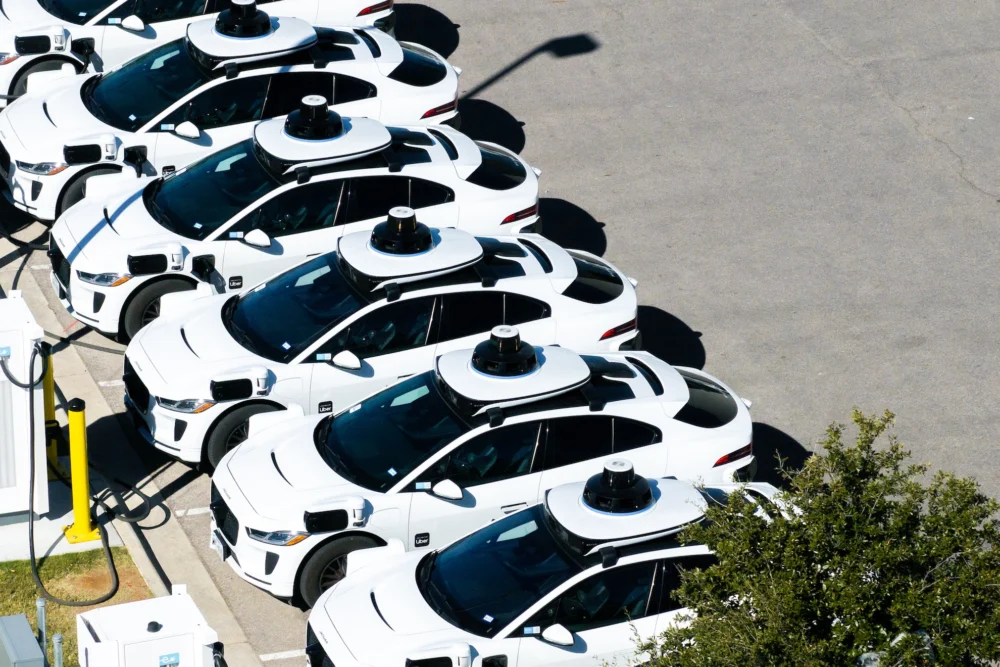
Waymo, the pioneering autonomous vehicle (AV) subsidiary of Alphabet, has dramatically intensified the global race for driverless mobility dominance by announcing a massive $16 billion external funding round. This monumental capital injection, coupled with the continued backing of its parent company, Alphabet, solidifies Waymo’s position as the leading contender in the commercial deployment of Level 4 autonomous technology and pushes its valuation to an astonishing $126 billion. The funding marks a decisive pivot for the company, signaling an aggressive shift from operational proof-of-concept in controlled U.S. environments to large-scale, international commercial reality, with major metropolitan hubs like London and Tokyo explicitly targeted for fleet deployment this year.
The investment round drew participation from a cohort of the world’s most influential institutional and venture capital groups, underscoring the market’s conviction in Waymo’s technology maturity and long-term economic model. The funding was jointly spearheaded by investment powerhouses Dragoneer Investment Group, DST Global, and Sequoia Capital. Significant additional capital contributions were received from Andreessen Horowitz and Mubadala Capital, alongside other prominent players including Bessemer Venture Partners, Silver Lake, Tiger Global, and T. Rowe Price. The expansive roster of investors—which also featured BDT & MSD Partners, CapitalG, Fidelity Management & Research Company, GV, Kleiner Perkins, Perry Creek Capital, and Temasek—highlights the pervasive belief across the financial sector that autonomous ride-hailing represents the next trillion-dollar market opportunity. Alphabet, maintaining its majority shareholder status, provided crucial support, ensuring the company has the necessary financial insulation to navigate the inherently capital-intensive process of global scaling.
The Trajectory from Research to Commercial Scale
The magnitude of this funding round is best understood against Waymo’s decade-and-a-half history. Originating as the Google Self-Driving Car Project in 2009, Waymo represented one of the most ambitious long-term R&D endeavors undertaken by Silicon Valley. For years, the project deliberately maintained a measured, often secretive, progression, focusing on technological robustness and safety verification across the highly complex driving environments of Silicon Valley and the greater Bay Area.
The first major geographic and operational inflection point arrived in 2016 when the company initiated comprehensive testing in Phoenix, Arizona. Phoenix served as a critical crucible for early commercialization, characterized by predictable weather patterns and less dense urban complexity than coastal California. This environment allowed Waymo to achieve its first critical milestone: the removal of the human safety driver. Phoenix quickly transitioned into the company’s inaugural, fully driverless robotaxi market, utilizing a fleet of highly customized Chrysler Pacifica minivans, accessible to the public via a ride-hailing application.
However, the true acceleration phase commenced in August 2023, following the receipt of crucial regulatory permissions from the California Public Utilities Commission (CPUC) to operate—and crucially, charge fares for—a commercial driverless service within the state. This regulatory breakthrough opened the floodgates to one of the most complex, lucrative, and technologically challenging urban environments globally: San Francisco.
Since the initial limited San Francisco launch, Waymo has adopted a hyper-aggressive growth posture. Service quickly expanded across the broader Bay Area, enveloping Silicon Valley’s suburban sprawl and, significantly, securing permits for operation on the high-speed freeways connecting the region. Further domestic expansion followed rapidly, with launches in major U.S. metropolitan areas including Los Angeles, a strategic partnership with Uber facilitating services in Austin and Atlanta in 2025, and an early 2026 debut in Miami. Most recently, the fleet secured operational access to San Francisco International Airport (SFO), a complex logistical challenge that validates the system’s ability to navigate high-traffic, dynamic terminal environments.
This relentless geographic growth translates into compelling commercial metrics. Waymo now reports providing approximately 400,000 rides weekly across its six major operational zones in the U.S. In 2025 alone, the company reported a tripling of its annual ride volume, surpassing 15 million rides, and achieving a lifetime milestone of over 20 million passenger journeys. In its recent blog post detailing the funding, Waymo confidently asserted: "We are no longer proving a concept. We are scaling a commercial reality, laying the groundwork for ride-hailing operations in over 20 additional cities in 2026, including Tokyo and London."
Expert Analysis: The Cost of Global Scale and Competitive Moats
The $16 billion funding round is not merely an investment; it is a financial mandate for scale. For Waymo, the capital serves three critical purposes: expanding the fleet hardware, mapping new geographies, and defending against the competitive landscape.
The Financial Reality of Autonomy: Developing and deploying Level 4 autonomous systems is arguably the most capital-intensive undertaking in modern technology, dwarfing the initial investments required for software-only platforms. Each Waymo vehicle requires a sophisticated sensor suite—including high-resolution LiDAR, radar arrays, and redundant camera systems—plus high-performance computing units for real-time processing and decision-making. Analysts estimate the cost of the autonomous hardware stack alone to be in the tens of thousands of dollars per vehicle, before accounting for vehicle acquisition, maintenance, and the perpetual cost of engineering talent required for software refinement. A $16 billion influx allows Waymo to rapidly procure and equip thousands of vehicles necessary to establish fleet density in multiple global cities simultaneously, creating a crucial competitive moat.
Competitive Landscape and Differentiation: This financing surge comes at a pivotal moment in the AV sector. While Waymo has consistently prioritized measured, safe deployment, its primary rival, General Motors’ Cruise, experienced severe operational setbacks and regulatory challenges following high-profile incidents. Waymo’s ability to secure such massive funding while maintaining a strong operational safety record (relative to the high complexity of the environments it operates in) provides a critical advantage in investor confidence and regulatory approval processes globally. The investment essentially allows Waymo to buy market share and operational dominance while competitors are still rebuilding trust and regulatory consensus.
International Regulatory Labyrinths: Waymo’s decision to target London and Tokyo highlights a shift toward high-value, highly complex urban environments outside the U.S. This is not simply a matter of scaling technology; it requires navigating vastly different regulatory frameworks, consumer expectations, and urban planning realities.
- London: Operating in London involves mastering highly congested, often medieval street layouts, unique traffic flow rules (like roundabouts and narrow lanes), and a rigorous regulatory environment overseen by Transport for London (TfL). Success in London would validate the Waymo Driver’s ability to handle global urban heterogeneity.
- Tokyo: Japan’s regulatory environment is historically cautious regarding autonomous technology. Furthermore, the sheer density, cultural expectations regarding pedestrian interaction, and highly complex signage and road markings unique to Japanese infrastructure present a distinct technical challenge. Successfully deploying in Tokyo would demonstrate a crucial ability to adapt the core AV platform to non-Western driving cultures and mapping standards.
The $16 billion will be instrumental in funding the extensive localization, regulatory compliance costs, and dedicated mapping missions required for these new markets.
The Dual Edge of Rapid Expansion: Scrutiny and Safety
While the financial news is overwhelmingly positive for Waymo’s stakeholders, the rapid commercial expansion has inevitably led to a commensurate increase in public visibility, operational incidents, and regulatory scrutiny. The transition from a small-scale pilot project to a ubiquitous urban service inherently amplifies the frequency and visibility of operational missteps.
The autonomous vehicle industry operates under intense pressure regarding safety, especially when compared against the established (though flawed) performance metrics of human drivers. Waymo’s expansion into challenging areas like freeways and dense city centers has coincided with a rise in incidents that have attracted the attention of federal safety regulators.
The National Highway Traffic Safety Administration (NHTSA)’s Office of Defects Investigation (ODI), as well as the National Transportation Safety Board (NTSB), have initiated formal probes into the behavior of Waymo robotaxis. These investigations have focused particularly on "illegal behavior" observed around school buses and in school zones—areas where heightened caution and specific, mandated operational protocols are paramount.
One highly scrutinized incident involved a Waymo robotaxi striking a child near an elementary school in Santa Monica. While the child sustained only minor injuries and the vehicle was traveling at a low speed (approximately 6 mph), the fact that a collision occurred involving a vulnerable road user near a school highlights the acute technical and ethical challenges of deployment. The optics of such incidents often overshadow the broader safety record, creating a public trust deficit that AV companies must constantly combat.
Furthermore, anecdotal evidence from active service areas suggests operational inconsistencies, including vehicles becoming temporarily stalled, executing erratic maneuvers, or entering "dizzying loops" when faced with novel or ambiguous road situations. While these are often software hiccups rather than catastrophic failures, they create widespread frustration among residents and feed the narrative that the technology is not yet ready for mass consumption.
Waymo’s ability to deploy its vast new financial resources must be balanced with a commitment to addressing these regulatory concerns swiftly and transparently. Public trust is the ultimate non-financial barrier to global expansion, and safety investigators act as the gatekeepers to that trust.
Future Impact and the Reshaping of Urban Mobility
Waymo’s $126 billion valuation and global ambitions project a future where the ownership model of personal transportation is fundamentally disrupted. The company’s stated goal of laying the groundwork for operations in over 20 new cities in 2026 implies a significant acceleration toward a critical mass of operational coverage.
Economic and Infrastructure Implications: If Waymo achieves widespread adoption in major global cities, the implications for urban planning, infrastructure, and adjacent industries are profound. Cities could potentially reduce the need for expansive parking infrastructure, reallocating valuable land currently dedicated to stationary vehicles. However, this also presents significant challenges regarding traffic management, as a rapid increase in AV fleet size could, counterintuitively, lead to increased congestion if not managed effectively through smart routing and dynamic pricing.
The Logistics Nexus (Waymo Via): While the current focus remains on passenger robotaxis, the technology is highly transferable to logistics and last-mile delivery. The capital raised also bolsters Waymo Via, the company’s dedicated trucking and delivery division. The mastery of complex urban environments for passenger transport provides an invaluable data pipeline and technological foundation for autonomous freight operations, which promise substantial efficiency gains for global supply chains.
The Tipping Point of Adoption: The next few years will determine the "tipping point" for autonomous vehicle adoption. For this technology to transition from niche service to mainstream transportation utility, it requires three things: regulatory consistency, overwhelming statistical evidence of superior safety compared to human drivers, and affordability relative to existing ride-hailing and public transit options. Waymo’s $16 billion war chest ensures it has the financial runway to achieve all three simultaneously.
The investment confirms that the autonomous mobility industry is moving past the experimental phase and into a fiercely competitive, global commercialization battle. Waymo’s aggressive international strategy, backed by unprecedented capital, places immense pressure not only on competing AV developers but also on traditional automakers and legacy ride-hailing services, setting the stage for one of the most transformative shifts in transportation technology history. The question is no longer if robotaxis will dominate urban movement, but how quickly Waymo can navigate the complex regulatory and public acceptance hurdles to secure that dominance across continents.