

The annual Consumer Electronics Show (CES) remains the epicenter for unveiling the next generation of display technology, typically dominated by massive television panels and high-end home theater systems. However, this year, the narrative around large-screen experiences is undergoing a significant shift, driven by companies aggressively miniaturizing and diversifying projection capabilities. Aurzen, a key player in this evolving space, is making a pronounced statement at CES by showcasing a comprehensive product strategy centered entirely on pushing the boundaries of portable projection into previously untapped use cases—from in-car entertainment to specialized creative tools. Their display moves beyond simply cramming a projector into a small box; it reimagines the contexts in which visual media consumption can occur.
For context, the portable projector market has historically been bifurcated. On one end are the small pico-projectors, often sacrificing brightness and resolution for size, suitable mainly for casual slideshows. On the other are larger, battery-powered units designed for backyard movie nights, which still require significant setup time and space. Aurzen appears intent on bridging this gap by segmenting its offerings to address distinct mobility and feature requirements, an industrial strategy reflecting a broader consumer trend toward "screen ubiquity" outside the living room.
Aurzen’s presence is structured around three distinct, yet complementary, product pillars: the uniquely engineered ZIP Cyber Edition, the audio-focused BOOM series, and the integration of established smart TV platforms via their Roku TV-powered models. This multi-pronged approach suggests a calculated effort to capture market share across various consumer segments seeking flexible, high-utility display solutions.
The ZIP Cyber Edition: Form Factor as Function
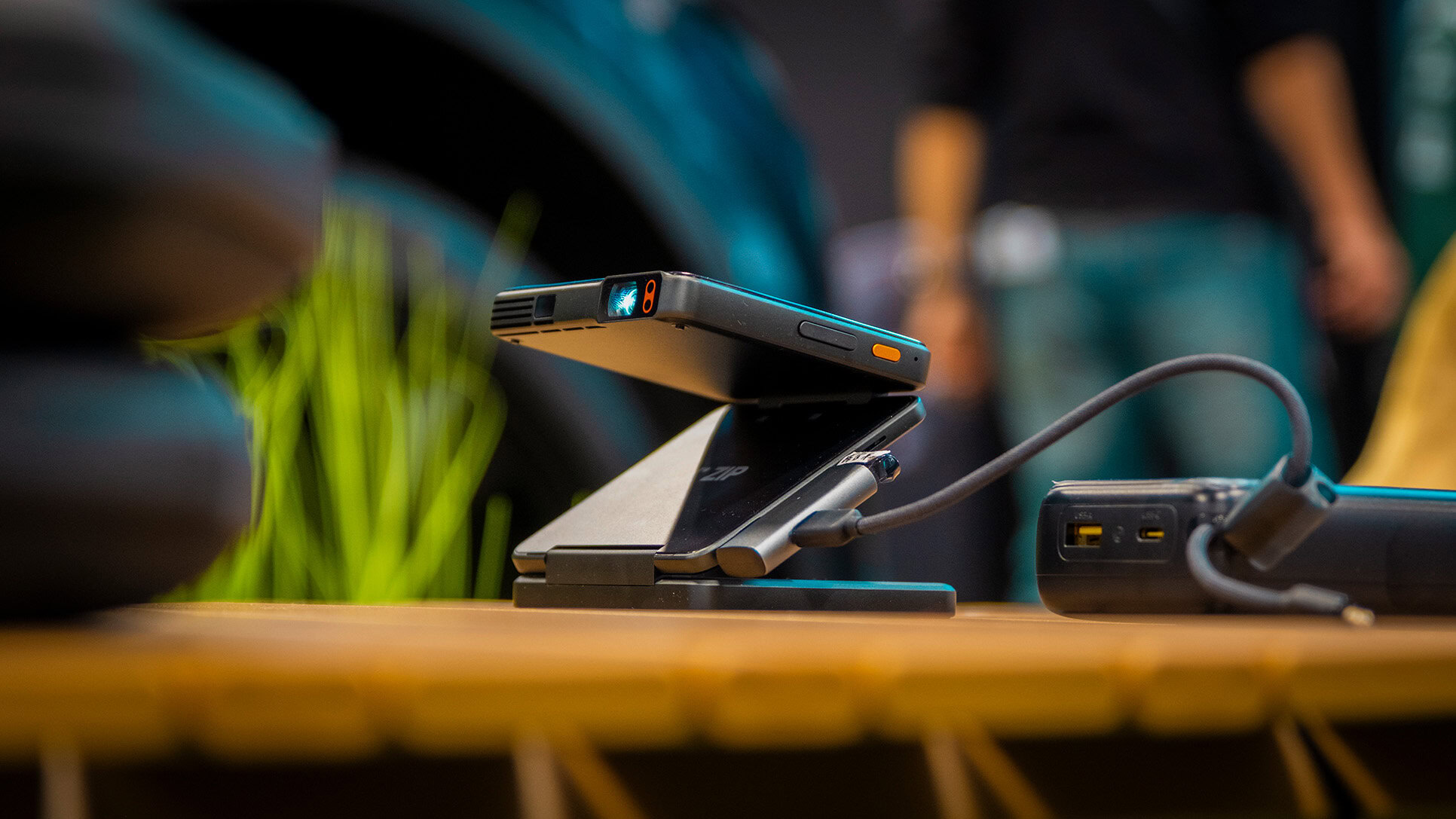
The flagship device commanding attention at the Aurzen demonstration is the ZIP Cyber Edition, marking its debut on US soil. What distinguishes this model is its radical, Z-shaped tri-fold chassis design. This is not merely an aesthetic choice; it is an engineering decision prioritizing extreme packability. The projector collapses down to approximately one-quarter of its operational height and achieves a thickness of roughly one inch. This level of compactness directly challenges the established norms for DLP projectors, positioning the ZIP not as a home entertainment replacement, but as a true "go-anywhere" visual companion.
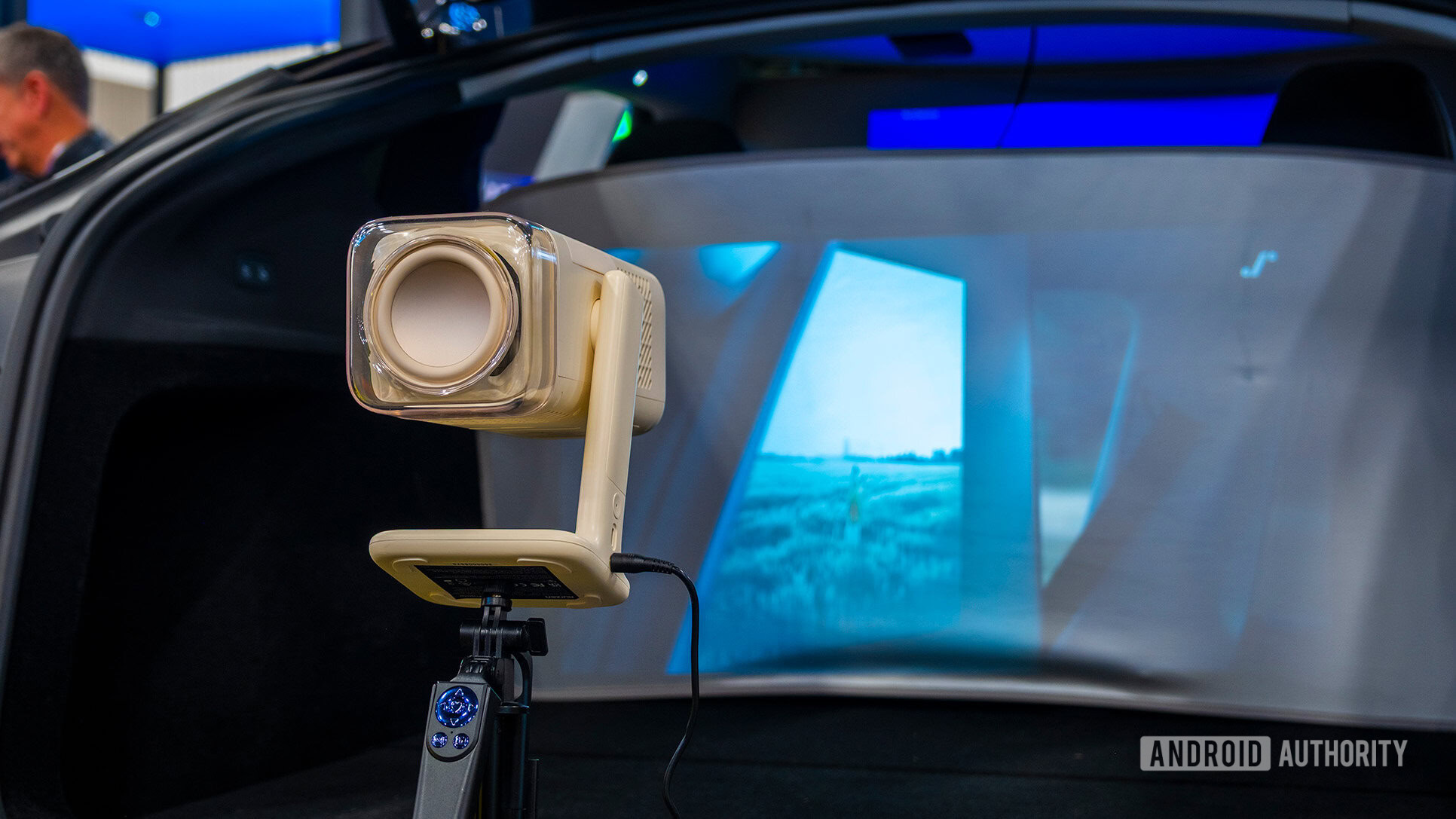
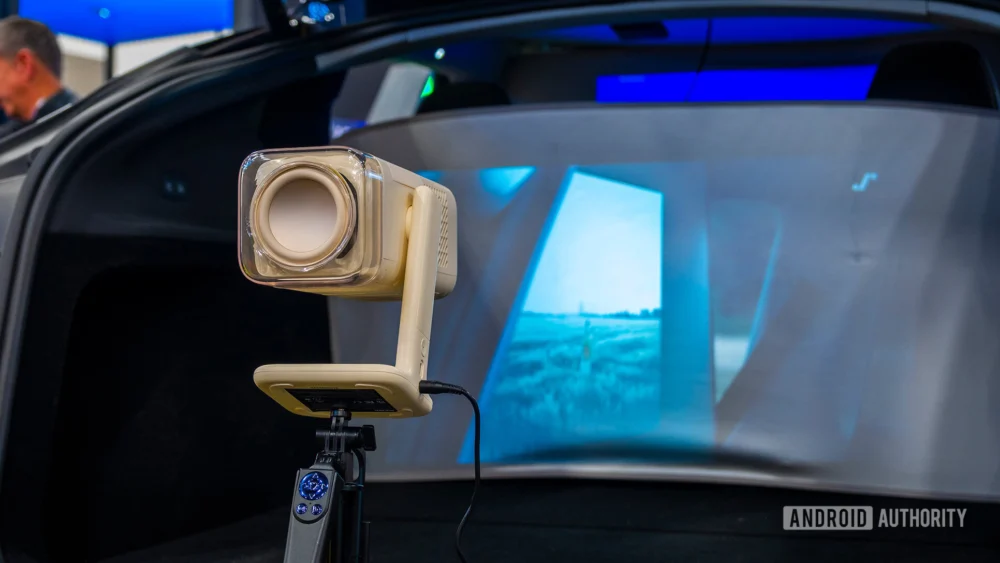
The demonstrations at CES illustrate this philosophy vividly. Aurzen is not just showing static product shots; they are staging dynamic use scenarios. The inclusion of an in-car cinema setup, specifically demonstrated within a Tesla Model Y, speaks directly to the growing in-vehicle entertainment market—a space where traditional screens are impractical due to safety regulations and interior constraints. Furthermore, showing the ZIP integrated into creative workflows, such as tracing digital designs onto physical surfaces or aiding in tufting crafts, highlights an emerging B2B or prosumer niche for portable, precise projection.
Perhaps the most forward-thinking feature highlighted is the physical rotation mechanism supporting true vertical full-screen output. In an era dominated by vertical short-form video (e.g., TikTok, Instagram Reels), conventional projectors are forced to display this content awkwardly letterboxed or rotated awkwardly. Aurzen’s solution addresses this content consumption habit head-on, allowing users to project vertically oriented media as intended, a small but significant ergonomic advantage for social media enthusiasts or creators producing mobile-first content.
Technically, the ZIP Cyber Edition utilizes standard DLP projection technology with a native 720p resolution. While 1080p is becoming the baseline expectation, 720p is a pragmatic trade-off for achieving such a slender profile and integrated battery life. The integrated 5,000mAh battery provides roughly 90 minutes of playback, sufficient for a standard movie or several hours of intermittent use, supported by modern USB-C fast charging compatibility. The inclusion of one-tap device mirroring that operates independently of Wi-Fi is a crucial feature for travelers or environments with unreliable network infrastructure, emphasizing true offline utility.
From an industry analysis perspective, the ZIP Cyber Edition signifies a maturation of the ultra-portable projector category. Competitors often rely on proprietary folding mechanisms or bulky external battery packs. Aurzen’s integrated Z-fold geometry suggests a focus on streamlined industrial design that appeals to users valuing sleek aesthetics and maximum pocketability. It caters to the user who values immediacy and flexibility over absolute image fidelity—a distinct segment that large-screen manufacturers often overlook.
BOOM Series: Prioritizing Integrated Audio Fidelity
The second major component of Aurzen’s CES presentation is the BOOM series, comprising the BOOM mini and the BOOM air. These models pivot the focus from extreme compactness (like the ZIP) to enhanced auditory performance within a portable shell, while still retaining smart capabilities. Both units feature integrated Google TV, granting immediate access to a vast streaming ecosystem, and output native 1080p resolution.
A striking design element of the BOOM series is the acoustic architecture. The forward-facing speakers are visibly integrated behind a transparent rear panel, showcasing the internal sound drivers. This deliberate exposure of the acoustic hardware suggests confidence in the audio engineering, moving beyond hiding utilitarian components.
The BOOM mini is positioned as the more robust audio solution. It incorporates dual 10W Dolby Audio speakers, augmented by Aurzen’s proprietary bass-tuning technology. In the context of portable projectors, built-in sound is frequently the weakest link; manufacturers often include undersized, tinny drivers. Aurzen’s investment in 20W output and custom bass processing aims to deliver a "fuller, more immersive sound profile" capable of standing alone without supplementary speakers, a significant convenience for impromptu presentations or casual movie nights.
Conversely, the BOOM air targets enhanced mobility. While it shares the Google TV platform and 1080p projection specs, its power architecture is optimized for travel. Relying on USB-C power delivery and compatibility with 65W PD power banks makes it adaptable to existing portable charging gear. Its lighter weight makes it the preferred choice for frequent travelers or users setting up temporary displays in locations where wall outlets are scarce. The distinction between the mini and the air illustrates Aurzen’s understanding that "portable" means different things to different users—sometimes it means better sound in a fixed temporary spot, other times it means lighter weight for transit.
The Roku Integration: Familiarity Breeds Adoption
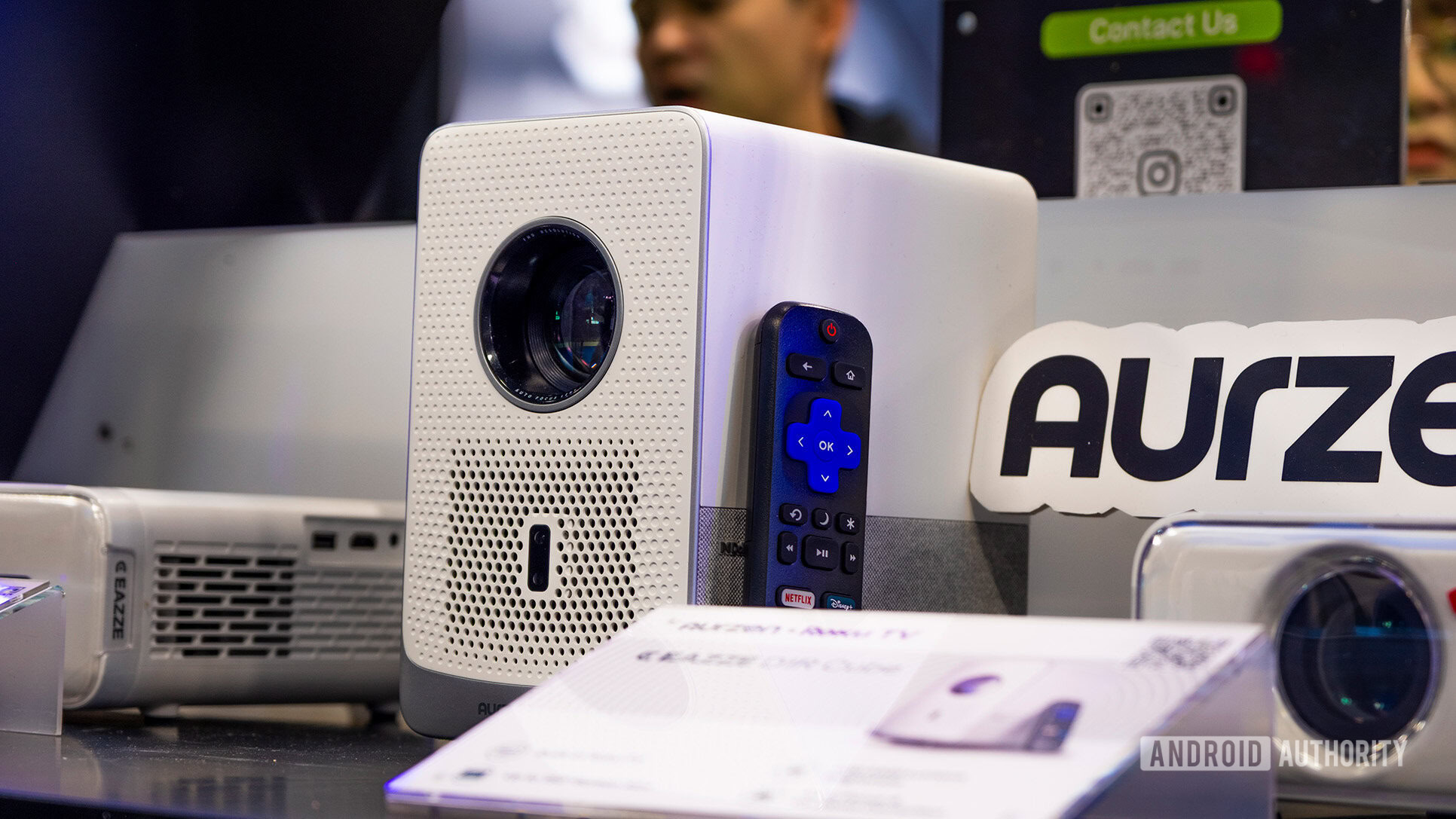
The third strategic move showcased by Aurzen involves strategic software partnerships, specifically the introduction of projectors powered natively by Roku OS. The EAZZE D1R and the EAZZE D1R Cube represent what Aurzen touts as the world’s first projectors running integrated Roku TV software.
The industry implication here is profound. For many consumers, the initial barrier to adopting a new smart projector isn’t the hardware; it’s navigating an unfamiliar operating system, downloading preferred apps, and managing a new remote control setup. By embedding Roku OS directly, Aurzen leverages immediate user familiarity. The interface, app store, and parental controls operate exactly as they do on a dedicated Roku television set. This eliminates the need for external dongles (like a Fire Stick or Chromecast), simplifying the setup process to plugging in the power and connecting to Wi-Fi.
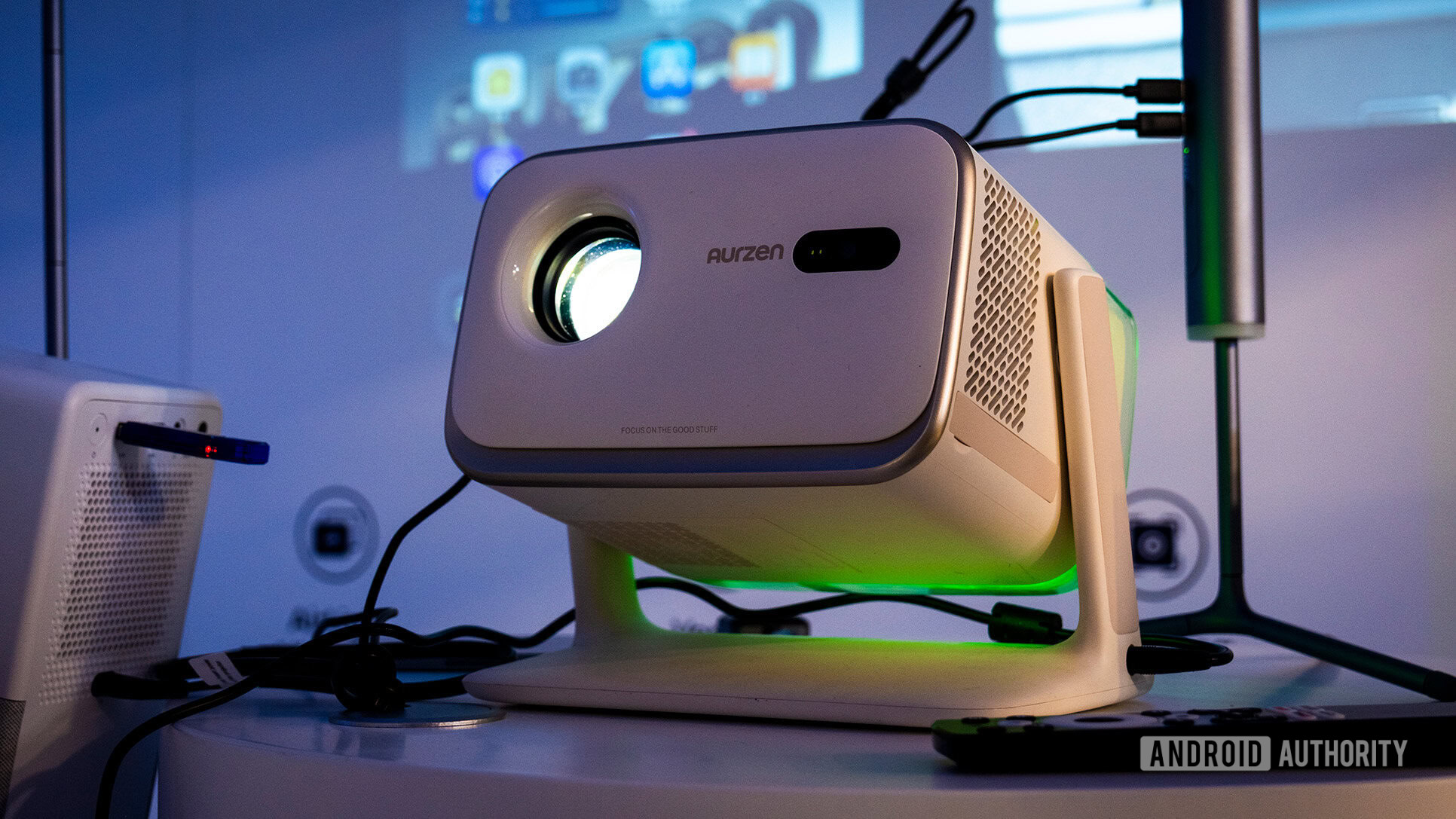
Both the EAZZE D1R and the Cube offer 1080p clarity and benefit from integrated Dolby Audio speakers, creating a compelling "all-in-one" entertainment package. The D1R Cube further refines the hardware with a sealed optical engine. In portable projection, dust accumulation within the optical path is a primary factor leading to image degradation and reduced longevity. A sealed engine mitigates this environmental vulnerability, increasing the projected lifespan and reliability, particularly for users who might take the device outdoors or use it in varied environments.
Aurzen’s candid acknowledgment regarding performance is also notable. They correctly position these Roku-powered units as best suited for dimmer environments. This transparency contrasts with some competitors who often overstate brightness capabilities, leading to consumer disappointment when devices fail to perform adequately in daylight. Managing expectations regarding ambient light is critical for maintaining brand trust in the projector segment.
Industry Analysis and Future Trajectory
Aurzen’s CES portfolio signals a clear industry trend: the decoupling of the display from a fixed location. As chipsets become more efficient and battery technology advances, the projector is shedding its image as a cumbersome piece of A/V equipment and becoming a true mobile peripheral, akin to a large-format tablet.
The emphasis on vertical video support (ZIP Cyber Edition) suggests that manufacturers are finally adapting hardware to the actual ways modern consumers engage with content, rather than rigidly adhering to the traditional 16:9 cinematic standard. This adaptability will be crucial for sustained growth in the portable sector.
Furthermore, the dual OS strategy—Google TV for the BOOM series and Roku OS for the EAZZE series—is a sophisticated approach to market segmentation. Google TV appeals to the Android ecosystem user base, offering deep integration with Google services. Roku appeals to the mass market prioritizing simplicity, content aggregation, and familiarity. By supporting both major non-proprietary smart TV platforms, Aurzen maximizes its potential consumer reach without investing in developing a unique, proprietary smart hub that would require constant maintenance and app onboarding.
The integration of high-quality audio directly into the chassis (BOOM series) also reflects an understanding that a large visual experience demands adequate sound to be truly immersive. Consumers are increasingly intolerant of pairing a high-resolution projection with weak, built-in speakers.
Commercial Strategy and Market Entry Pricing
Aurzen is deploying an aggressive commercial strategy coinciding with the CES announcements to catalyze immediate adoption. The ZIP Cyber Edition, normally priced at $499.99, is being offered with a highly attractive "Super Early Bird Price" via a gamified pre-order system on their website, with the potential to drop as low as $239.99 until the end of January. This pricing structure is designed to generate significant launch momentum and secure early reviews based on attainable prices.
For the rest of the portfolio—the BOOM mini, BOOM air, and the Roku-integrated EAZZE models—Aurzen is leveraging Amazon for distribution supported by CES-exclusive discounts reaching up to 50%. Accessing these substantial price reductions requires users to navigate to a dedicated landing page to secure promotional codes. This dual-channel approach—direct-to-consumer sales for the headline innovation (ZIP) and volume-driven marketplace sales (Amazon) for the core smart projectors—suggests a calculated plan to manage inventory, capture immediate revenue, and build broad digital footprint visibility.
The overall impact of Aurzen’s CES showcase is a clear indication that the next frontier for display technology isn’t necessarily higher native resolution or greater ANSI lumens, but rather radical form factor innovation and contextual relevance. By designing projectors that fit seamlessly into vehicles, creative spaces, and mobile creators’ kits, Aurzen is pushing projection beyond the living room wall and firmly into the realm of ubiquitous personal technology. The success of this lineup will depend on whether these engineering compromises (like 720p on the ZIP) are outweighed by the revolutionary portability and contextual utility they offer.