

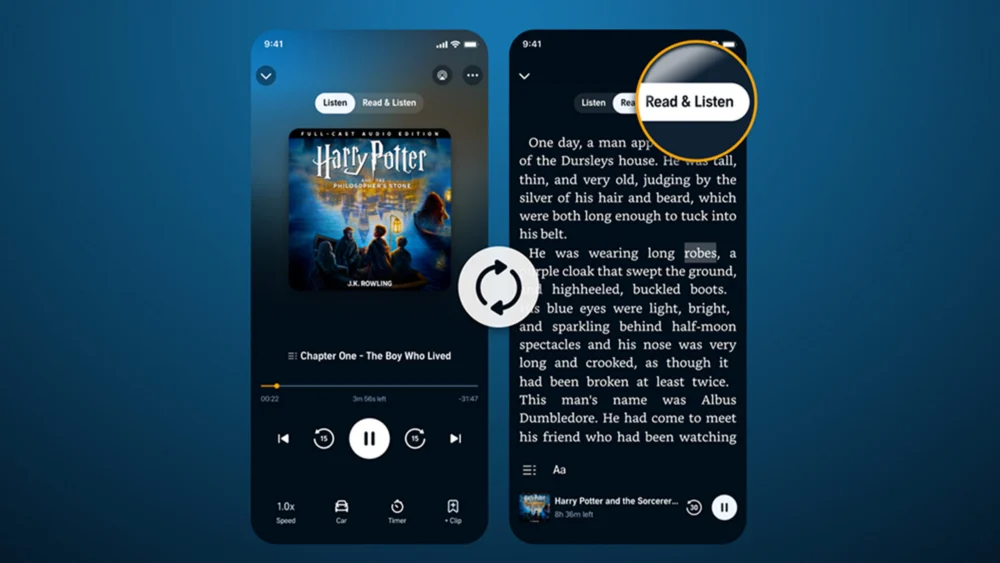
The digital reading ecosystem is undergoing a significant evolution, moving beyond simple format choice toward a more integrated, multi-sensory consumption model. Audible, the dominant force in the audiobook market, has recently rolled out a compelling new feature: a native, synchronized "Read & Listen" mode within its core application. This innovation moves beyond the established convenience of format-switching (like Amazon’s long-standing Whispersync for Voice) to offer simultaneous, real-time visual and auditory reinforcement of content, a paradigm shift that promises to redefine user engagement, particularly for individuals who struggle with sustained focus.
This newly implemented tool essentially transforms passive listening—often relegated to multitasking activities like commuting or exercising—into an active, immersive reading session. For users possessing both the Kindle eBook and the corresponding audiobook for a title, the Audible app now facilitates a dual presentation. As the professional narrator speaks, the corresponding text on the screen is dynamically highlighted, word by word. This functionality strongly echoes the "karaoke mode" familiar to users of music streaming services displaying synchronized lyrics, but applied here to long-form literature. The immediate benefit is clear: eliminating the cognitive friction associated with maintaining attention during purely auditory consumption.
The Context: From Format Switching to Format Fusion
To fully appreciate the scope of this update, it is necessary to understand the historical context of cross-format literary consumption. For years, Amazon’s Whispersync for Voice has been the industry standard for bridging the gap between reading and listening. Whispersync allows a user to stop listening to the audiobook mid-sentence, pick up the Kindle app, and resume reading exactly where they left off, and vice versa. This capability was a crucial step, acknowledging that modern readers fluidly transition between environments and tasks throughout the day. It addressed location continuity.
However, the new Audible "Read & Listen" feature addresses attentional continuity. By merging the visual and auditory streams into one interface, it forces a higher degree of focused interaction. The user is no longer merely choosing where they consume the content, but how they consume it simultaneously. This development suggests a deeper understanding of contemporary cognitive demands. In an era characterized by digital saturation and shrinking attention windows, content providers are seeking methods to lock in user focus more effectively. By providing immediate visual anchors to the spoken word, Audible is actively combating the mental drift that frequently causes listeners to miss crucial narrative details or simply zone out.
Initial deployment confirms the feature’s ambition, supporting hundreds of thousands of titles across various languages, with a staggered rollout commencing in major markets such as the US, with the UK, Australia, and Germany slated to follow shortly. The platform has also thoughtfully integrated library filtering, allowing users to quickly isolate titles compatible with this dual-mode experience, streamlining the path to immersion.
Expert Analysis: Cognitive Load, Retention, and Modality Benefits
From a cognitive science perspective, the fusion of visual tracking and auditory processing leverages complementary sensory pathways. Reading involves decoding visual symbols, whereas listening requires auditory pattern recognition and comprehension. When these modalities are synchronized, they create a powerful redundancy effect.
Dr. Eleanor Vance, a specialist in media psychology and digital literacy, notes the significance of this integration: "The brain benefits immensely from multisensory input when processing complex information. When the eye follows the word being spoken, it reinforces the auditory memory trace, effectively doubling the engagement pathway. For complex narratives, dense non-fiction, or even new vocabulary acquisition, this method significantly lowers the effective cognitive load required for comprehension, while simultaneously boosting retention rates."
Audible’s internal data appears to support this assertion, indicating that users who engage in combined reading and listening habits exhibit higher monthly content completion rates. Furthermore, a substantial segment of these dual-format users report marked improvements in concentration and memory recall related to the material consumed this way.
This dual modality is particularly beneficial for non-traditional readers or those with diagnosed attention challenges. For individuals who find sustained silence necessary for deep reading but struggle to maintain engagement solely through listening, this feature offers a viable, structured alternative. It provides the structure of visual tracking—a known anchor for focus—without sacrificing the convenience of audio narration. It’s a bridge between deep reading and ambient listening.
Industry Implications: The Future of Content Delivery
The introduction of this high-fidelity, synchronized experience by Audible carries significant implications for the broader digital publishing and media industries.
1. The Premiumization of Content Ownership: This feature inherently incentivizes the ownership of both formats. While the sync functionality is robust, it requires access to the eBook counterpart, likely within the Amazon/Kindle ecosystem. This solidifies Amazon’s strategy of ecosystem lock-in. Content producers are now facing increased pressure to ensure that their digital assets are available in both text and high-quality audio formats, ideally with matching metadata for seamless synchronization. The "read and listen" option may soon become an expected premium feature, potentially influencing purchasing decisions away from platforms that only offer one modality.
2. Redefining "Attention Span" Products: The narrative that modern consumers possess inherently "short attention spans" is increasingly being reframed by technologists. Instead of lamenting attention deficit, companies are engineering products that cater to fluid attention. This Audible feature is a prime example. It doesn’t demand an uninterrupted hour of single-task focus; rather, it integrates into the user’s fragmented schedule by making the consumption process more robust against minor distractions. This paves the way for other media—podcasts, online courses, and interactive journalism—to explore similar synergistic interfaces.
3. Enhancing Accessibility and Inclusivity: Beyond catering to the general public’s shifting focus habits, this technology holds profound implications for accessibility. For users with certain learning disabilities, dyslexia, or those learning a new language, the visual tracking of the spoken word is a proven pedagogical tool. By embedding this capability directly within the primary consumption app, Audible is inadvertently creating a more inclusive platform for consuming complex literature. The ability to slow down the narration while the visual tracking remains precise offers a powerful customization layer that traditional audiobook players lack.
Technical Hurdles and Future Trajectories
While the launch is robust, integrating synchronized media across hundreds of thousands of titles presents immense technical challenges. Ensuring that the audiobook’s timing markers align perfectly with the specific word breaks in the eBook file requires sophisticated processing and meticulous metadata verification. Inconsistencies in narration style (such as ad-libbing or pauses for dramatic effect) can easily break the illusion of perfect synchronization, frustrating the user. The success of this feature hinges on the ongoing maintenance and standardization of these complex timing maps.
Looking ahead, the trajectory suggests further integration of adaptive technologies. Imagine a future iteration where the highlighting style changes based on the reader’s speed or where the system automatically adjusts narration speed if the visual tracking indicates the user is falling behind. Furthermore, as Augmented Reality (AR) matures, this concept could evolve into true holographic text overlays, allowing users to read while looking at their physical environment, further blurring the lines between digital and physical consumption spaces.
The adoption of this "Read & Listen" mode represents more than just a new button in the Audible interface; it signals a strategic pivot toward multimodal content delivery systems designed for the realities of 21st-century digital life. By turning passive absorption into active, dual-sensory engagement, Audible is positioning itself not just as a source for audiobooks, but as a comprehensive platform for immersive literary exploration, potentially capturing the focus of readers who felt alienated by the demands of single-modality consumption. This innovation marks a significant step in ensuring that literature remains a primary leisure activity, even as the competitive landscape for human attention intensifies.