

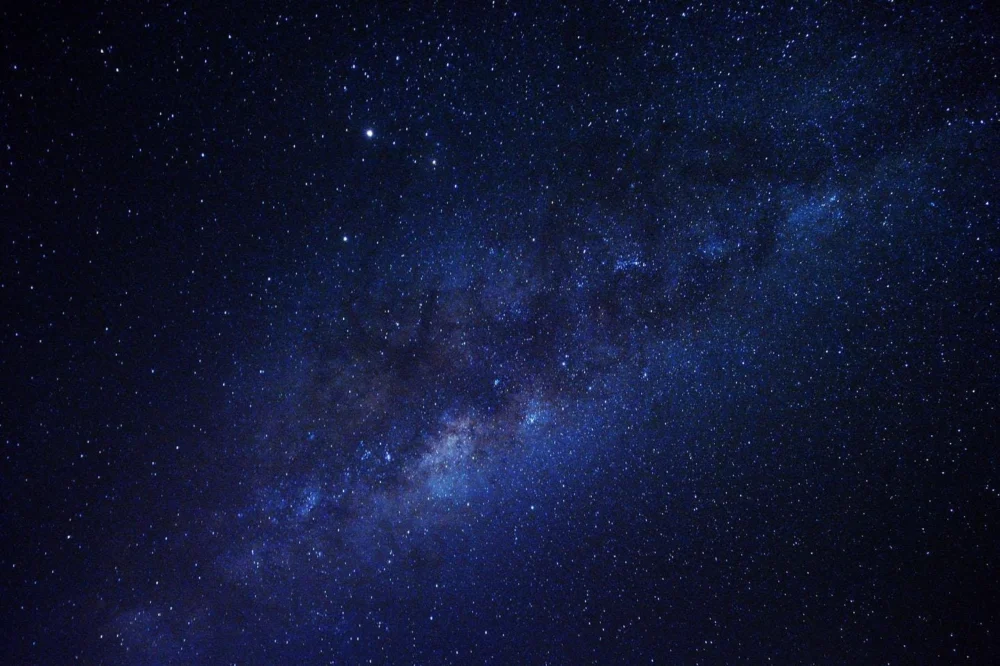
For over a century, the prevailing narrative regarding the origins of life has been tethered to the "warm little pond" hypothesis—a concept famously proposed by Charles Darwin and later expanded upon by the Miller-Urey experiments of the 1950s. This theory suggests that life’s essential building blocks were synthesized in the hospitable, liquid-water environments of a young Earth. However, a growing body of evidence in the field of astrobiology is shifting the spotlight away from terrestrial basins and toward the frozen, radiation-blasted voids of interstellar space. Recent research has provided a compelling demonstration that the precursor molecules for proteins do not merely survive in the cold vacuum between stars; they are actively forged there.
This paradigm shift suggests that the chemical "starter kit" for life—specifically short chains of amino acids known as peptides—can assemble on the surfaces of microscopic cosmic dust grains long before a planet even forms. This discovery fundamentally alters our understanding of the distribution of organic complexity in the universe, suggesting that the seeds of biology are a standard byproduct of star formation rather than a rare terrestrial fluke.
The Interstellar Laboratory: From Amino Acids to Peptides
To understand the significance of this development, one must first look at the hierarchy of biological architecture. Proteins are the workhorses of life, responsible for everything from structural integrity to the catalysis of metabolic reactions. These proteins are built from amino acids, which are the fundamental monomeric units. When amino acids link together, they form peptides; longer chains of these peptides eventually fold into functional proteins.
While astronomers have long detected individual amino acids like glycine in meteorites and comets, the leap from a single molecule to a linked chain (a peptide) was traditionally thought to require the presence of liquid water to facilitate the necessary chemical reactions. In a terrestrial setting, this process is known as dehydration synthesis, where the joining of two amino acids results in the release of a water molecule.
The latest experimental data, however, indicates that this process can occur in the absence of liquid water, under conditions that mimic the interstellar medium (ISM). By simulating the environment of a dense molecular cloud—the birthplace of stars—researchers have shown that thin layers of frozen glycine, when deposited on a cold substrate and subjected to high-energy radiation, can spontaneously form peptide bonds.
Radiolysis: The Engine of Cosmic Complexity
In the vacuum of space, temperatures hover near absolute zero, and traditional thermal chemistry grinds to a halt. In this environment, the "spark" for chemical reactions is provided by cosmic rays—high-energy charged particles that permeate the galaxy. When these particles strike the icy mantles of interstellar dust grains, they trigger a process known as radiolysis.
In the laboratory simulations, a beam of charged particles was used to bombard frozen glycine at cryogenic temperatures. Rather than simply destroying the molecules, the radiation provided the activation energy required for the glycine molecules to "snap" together. Using sophisticated infrared spectroscopy and mass spectrometry, scientists identified the presence of glycylglycine—a dipeptide—alongside other complex organic molecules.
This finding is revolutionary because it demonstrates that radiation, often viewed as a purely destructive force in biological contexts, acts as a creative catalyst in prebiotic chemistry. It suggests that the vast, dark clouds of gas and dust scattered throughout the Milky Way are not barren wastes, but are instead massive chemical reactors churning out the building blocks of life.
The Role of Cosmic Dust as a Catalytic Surface
The "test tubes" of this cosmic laboratory are microscopic grains of dust, typically composed of silicates or carbonaceous material. These grains play a dual role. First, they provide a surface for atoms and molecules to settle and accumulate, increasing the local concentration of reactants. Second, the icy mantles that form around these grains—comprising water, carbon monoxide, and ammonia—act as a medium where chemistry can occur.

When a star-forming region begins to collapse under its own gravity, these dust grains are incorporated into the resulting protoplanetary disk. If these grains already carry a cargo of peptides, they are eventually baked into the asteroids and comets that represent the "leftovers" of planet formation. During the Late Heavy Bombardment—a period roughly 4 billion years ago when the inner solar system was pelted by space debris—these organic-rich rocks would have delivered a massive "chemical shipment" to the surface of the young Earth.
Industry Implications: The Rise of Astrochemical Analysis
The validation of interstellar peptide formation has significant implications for the aerospace and biotechnology industries. We are entering an era where "astro-bioprospecting" is moving from theoretical science to an engineering reality.
- Next-Generation Space Instrumentation: Missions like the James Webb Space Telescope (JWST) are already utilizing mid-infrared instruments to scan the chemical signatures of molecular clouds. The realization that peptides can form in these environments will drive the development of even more sensitive spectrometers designed to detect specific "biosignatures" and "pre-biosignatures" in deep space.
- Sample Return Missions: The success of missions like OSIRIS-REx (NASA) and Hayabusa2 (JAXA) in returning samples from asteroids has whetted the appetite for more ambitious targets. Future missions may target "interstellar objects" passing through our solar system, such as ‘Oumuamua, to determine if their organic composition matches the models of interstellar peptide synthesis.
- Synthetic Biology and Extreme-Environment Chemistry: On Earth, the study of how radiation-driven chemistry works at cryogenic temperatures is opening new doors in material science and pharmacology. If we can master the "dry" synthesis of complex molecules using radiation, it could lead to new manufacturing techniques that do not rely on traditional aqueous solvents.
Expert Analysis: Re-evaluating the Drake Equation
The Drake Equation is a probabilistic argument used to estimate the number of active, communicative extraterrestrial civilizations in the Milky Way galaxy. One of its key variables is $f_l$, the fraction of suitable planets on which life actually appears.
Traditionally, $f_l$ was considered a major bottleneck, assuming that the transition from simple chemistry to complex biology required a highly specific and rare set of planetary conditions. However, if the precursors for proteins are already present in the "dust" from which planets are made, the value of $f_l$ may be significantly higher than previously estimated.
This "cosmic seeding" model suggests that the universe is "chemically predisposed" toward life. If rocky planets in the habitable zone of their stars start their lives with a surface already littered with peptides, the time required for the first self-replicating systems to emerge could be much shorter. This increases the statistical likelihood that life exists—or has existed—on Mars, Europa, Enceladus, and the thousands of exoplanets currently being discovered.
Future Trends: Searching for Chirality and Complexity
The next frontier in this research involves the mystery of chirality, or "handedness." All life on Earth utilizes "left-handed" amino acids to build proteins. One of the greatest unanswered questions in science is why this preference exists. Future astrochemical studies will look to see if the radiation environments of space—perhaps influenced by polarized light from nearby stars—favor the formation of one "hand" over the other. If we find that interstellar peptides exhibit a specific chirality, it would provide a direct link between the stars and the specific molecular structure of our own DNA and proteins.
Furthermore, scientists are now looking beyond glycine. While glycine is the simplest amino acid, life requires a diverse toolkit of 20 different amino acids to function. Testing how more complex, "R-group" heavy amino acids like leucine or tryptophan behave under cosmic-ray bombardment will be the next logical step in determining just how sophisticated the "cosmic starter kit" can be.
A Universal Heritage
The revelation that the cold void of space may have kick-started the chemistry of life is a humbling reminder of our connection to the cosmos. It suggests that the history of life on Earth did not begin in our oceans, but in the silent, frigid clouds of the interstellar medium, millions of years before the sun began to shine.
As we continue to explore the solar system and beyond, we are no longer looking for life in a vacuum of ignorance. We are looking for the continuation of a process that began in the stars. The discovery that peptides form in the darkest corners of the galaxy provides a new lens through which to view our place in the universe: we are not an anomaly of a single planet, but the local expression of a universal chemical imperative. The "void" of space, it seems, is far from empty—it is a cradle of complexity, waiting for the right conditions to bloom.