

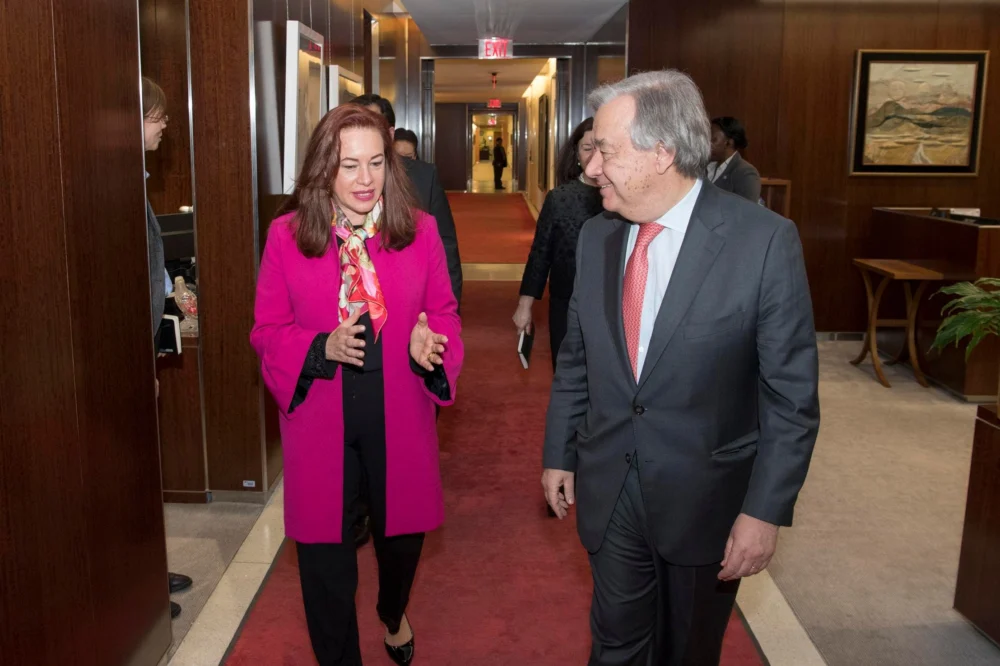
As the United Nations approaches its 80th anniversary, the institution finds itself at a historical crossroads that mirrors the precariousness of its founding era. Established in 1945 amidst the smoldering ruins of World War II, the UN was designed to be a bulwark against global catastrophe, a forum where the promise of collective security could finally outweigh the impulses of unilateral aggression. However, as the world prepares for the selection of the next Secretary-General in 2026, the gap between the UN’s mid-century architecture and the complexities of the 21st century has never been more glaring. The organization built for a world of clear borders and conventional warfare is now struggling to navigate a landscape of borderless digital threats, climate-induced state collapses, and a global trust deficit that threatens the very foundations of multilateralism.
The race to succeed António Guterres has begun with a quiet but profound sense of urgency. In late 2025, a formal invitation was issued by the Presidents of the General Assembly and the Security Council, urging Member States to nominate candidates. For the first time in nearly a century, there is a loud, institutional consensus that the next leader should be a woman—a milestone that would break a glass ceiling that has remained intact through nine previous leadership cycles. Yet, the gender of the next Secretary-General is only one facet of a much larger debate. The 2026 selection process is increasingly being viewed not just as a personnel change, but as a referendum on whether the UN can evolve into a proactive, results-oriented body or if it will remain a reactive assembly of procedural density.

The Geopolitical Labyrinth of Selection
The appointment of a Secretary-General remains one of the most complex diplomatic maneuvers in global politics. Under the UN Charter, the candidate is recommended by the Security Council and appointed by the General Assembly. In practice, this means the nominee must survive the gauntlet of the five permanent members (P5)—China, France, Russia, the United Kingdom, and the United States. In an era defined by a "New Cold War" and deep fractures over conflicts in Europe, the Middle East, and the Indo-Pacific, finding a candidate who can secure nine votes without triggering a veto is an exercise in extreme diplomatic tightrope walking.
The P5 seek a leader who is "more secretary than general," often favoring candidates who prioritize administrative stability over disruptive reform. However, the current "polycrisis"—the simultaneous occurrence of climate change, mass displacement, and economic volatility—demands a leader with a mandate for transformation. This creates a fundamental tension: the very qualities that make a candidate effective at solving global problems may make them unpalatable to the major powers who guard their sovereignty.
Beyond the Liquidity Crisis: A Test of Relevance
While much of the internal discourse at the UN focuses on a looming liquidity crisis—with member state arrears reaching critical levels and operational capacity threatened by 30 to 40 percent—analysts argue that the financial shortfall is merely a symptom of a deeper malaise. The UN is facing a legitimacy test. For decades, the organization has produced an staggering volume of reports, mandates, and resolutions. Yet, for many citizens of the Global South and the youth of the Global North, these outputs feel increasingly disconnected from tangible reality.

In the realm of climate action, for example, the UN has been the primary stage for international science and policy-making. But as disasters multiply faster than agreements can be implemented, the "procedural density" of the UN has become a liability. When institutions produce bureaucracy instead of results, trust evaporates. Once trust is gone, funding inevitably follows. The next Secretary-General will not just need to balance the books; they will need to prove that the UN remains the most effective vehicle for solving problems that no single nation can tackle alone.
A Diverse Field for a Fragmented Era
The emerging field of potential candidates reflects the diverse interpretations of what the "UN of the future" should look like. Each name currently circulating in diplomatic circles represents a different strategic path for the organization.
The Hard-Security Realist: Rafael Grossi
As the Director General of the International Atomic Energy Agency (IAEA), Argentina’s Rafael Grossi has built a reputation for "shuttle diplomacy" in the most dangerous environments on earth. His work in safeguarding nuclear facilities in war-torn regions like Ukraine and managing the complexities of the Iranian nuclear program has given him a profile of enforcement and security credibility. Grossi represents the "Security First" model—a belief that the UN’s primary value lies in its ability to prevent catastrophic escalation in a world that is re-arming at an alarming rate.

The Technocratic Economist: Rebecca Grynspan
Costa Rica’s Rebecca Grynspan, currently leading UNCTAD, offers a vision of managerial rigor and economic depth. Her focus on development finance and the "digital divide" resonates with a Global South that feels marginalized by the current international financial architecture. Grynspan represents the "Refinement" model—the idea that the UN can be saved by making its existing machinery run with greater efficiency and economic fairness.
The Moral Compass: Michelle Bachelet
Former Chilean President and UN Human Rights Chief Michelle Bachelet brings unparalleled moral authority. Her career has been defined by a commitment to normative leadership and accountability. However, her candidacy highlights the limits of principle in a polarized Security Council. In a world where major powers increasingly view human rights through a transactional lens, a leader focused on moral clarity may find it difficult to build the consensus required for institutional movement.
The Climate Disruptor: Mia Mottley
Barbados Prime Minister Mia Mottley has become the most vocal advocate for a total overhaul of the global economic order. Her "Bridgetown Initiative" has forced the world to reconsider how sovereign debt and climate finance are handled. Mottley represents the "Advocacy" model—a leader who uses the pulpit of the UN to shift global narratives and mobilize the vulnerable. While her charisma is undeniable, her confrontational stance toward legacy financial structures could make her a target for veto-wielding powers who prefer the status quo.

The Institutional Reformer: María Fernanda Espinosa
Ecuador’s María Fernanda Espinosa, a former President of the General Assembly and Minister of both Foreign Affairs and Defense, has emerged as a candidate who advocates for a fundamental political redesign. Her diagnosis is perhaps the most blunt: she argues that the UN is not failing because it lacks money or science, but because it has lost its relevance to the everyday lives of citizens. Espinosa’s model is one of "Institutional Evolution." She advocates for a UN that manages fewer mandates but delivers more measurable results. By centering the organization on "impact over process," her vision aligns with the lessons learned from decades of stalled climate governance.
The Technological Frontier: AI and the Future of Governance
Perhaps the most significant challenge facing the next Secretary-General is one that was barely a footnote during the selection of António Guterres: the governance of Artificial Intelligence and emerging technologies. We are entering an era where technology is reshaping societies, labor markets, and warfare faster than any international treaty can be drafted.
The UN’s current role in AI governance—largely centered around advisory bodies and high-level summits—is a far cry from the binding regulatory frameworks that many experts believe are necessary to prevent autonomous weapons systems or digital authoritarianism from destabilizing the global order. The next leader will need to bridge the gap between the "analog" world of 20th-century diplomacy and the "digital" reality of the 21st. This will require a leader who understands that technology is not just a sector to be managed, but a new layer of global sovereignty that requires its own set of rules and enforcement mechanisms.

Future Impact: The Cost of Inaction
If the 2026 selection results in a "continuity candidate" who prioritizes procedural survival over structural change, the UN risks a slow slide into irrelevance. We are already seeing the rise of "minilateralism"—small groups of like-minded states (such as the G7, the BRICS+, or the Quad) bypassing the UN to set global agendas. While these groups can be efficient, they lack the universal legitimacy that only the UN can provide.
A weakened UN in the 2030s would mean a world with no central arbiter for peace, no universal platform for climate cooperation, and no shared framework for the ethical use of technology. The "institutional evolution" mentioned by reformers like Espinosa is not a luxury; it is a survival strategy. The next Secretary-General must be an architect capable of retrofitting a 1945 structure to withstand 2026 pressures.
Conclusion: A Referendum on the Future
The question facing the world in 2026 is not whether the United Nations is necessary—the interconnectedness of our global risks makes the answer an obvious "yes." The real question is whether the institution can be transformed into a body that is fit for purpose.

History will not judge the next Secretary-General by the elegance of their speeches or the number of resolutions passed under their watch. Instead, success will be measured by whether the UN can regain its role as a solver of problems at scale. Whether it is through the security-focused realism of a Grossi, the economic depth of a Grynspan, or the institutional redesign advocated by an Espinosa, the next leader must be more than a diplomat. They must be a visionary capable of restoring the "bold promise" of eighty years ago in a world that has grown cynical of promises. The race for the Secretariat is, in every sense, a race for the future of global cooperation.