

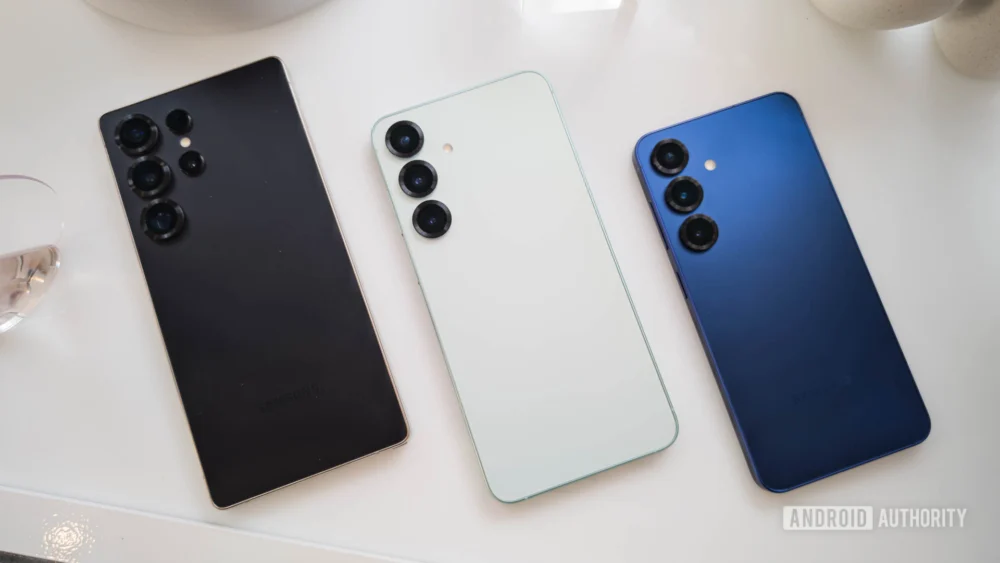
The annual cycle of premium smartphone anticipation is reaching its crescendo, with the unveiling of Samsung’s next-generation Galaxy S26 series drawing tantalizingly close. As the technological world waits for the official debut, supply chain whispers and regional leaks are beginning to coalesce into a clearer picture of the financial commitment prospective buyers will face. Recent intelligence, specifically emanating from key European markets, suggests a bifurcated pricing strategy that presents both relief and renewed fiscal pressure depending on the chosen model within the flagship lineup. This early insight into the expected Euro-denominated MSRPs offers critical context for understanding Samsung’s strategic positioning against intensifying competition and prevailing global economic headwinds.
The bedrock of this analysis rests upon recent disclosures pertaining to the French market’s anticipated tariff structure for the Galaxy S26, Galaxy S26 Plus, and the flagship Galaxy S26 Ultra. These figures, if reflective of the broader European Union pricing matrix, serve as a vital barometer for evaluating the overall cost trajectory of Samsung’s premier mobile offerings in 2026. When cross-referenced with the launch prices of their S25 predecessors, a pattern of selective inflation emerges, demanding closer scrutiny from both industry analysts and budget-conscious consumers.
For the standard Galaxy S26, the baseline appears to be set at a notable psychological barrier: €999 for the entry-level configuration, which, based on these reports, is speculated to be the 256GB variant. This represents a tangible increase when compared to the launch price of the equivalent S25 model in the same region. This incremental jump—approximately €40 when converted to an approximate US dollar equivalent—signals that even the most accessible flagship tier is not immune to upward price adjustments. This move by Samsung, even if modest, suggests a cautious recalibration of perceived value or, more likely, an absorption of escalating manufacturing costs.
The Galaxy S26 Plus faces a more pronounced escalation. Reports indicate the starting price for the Plus model could settle around €1,269. Compared to the S25 Plus’s launch price, this suggests an increase approaching the €100 mark. This differentiation in the rate of price increase between the base and the mid-tier model is noteworthy. It implies that Samsung might be attempting to anchor the lowest tier near historical expectations while applying a more aggressive margin adjustment to the mid-range device, perhaps reflecting enhanced component upgrades or strategic segmentation within the product stack.
However, the narrative shifts considerably when examining the apex of the portfolio: the Galaxy S26 Ultra. Here, the leaked pricing suggests a welcome degree of stability. The anticipated starting price for the 256GB Galaxy S26 Ultra mirrors the launch price of the S25 Ultra in these territories. This adherence to the previous generation’s premium pricing point is perhaps the most significant piece of "good news" within the leaks. It suggests that Samsung is committed to maintaining the Ultra’s aspirational price point without resorting to immediate price gouging, even as it integrates potentially more expensive next-generation hardware, such as advanced camera modules or novel display technologies. The 512GB and 1TB Ultra variants also show structured, though predictable, increases over their immediate predecessors, but the starting line remains consistent.
The absence of a 128GB option for the base S26 in these European estimates is another critical data point. If confirmed, this signals a definitive shift away from lower-capacity base models across key international markets. In an era where application sizes, high-resolution media capture, and complex on-device AI processing demand significant storage overhead, raising the floor to 256GB can be framed by Samsung as an enhancement to the core user experience, justifying the accompanying price hike. For the consumer, however, it eliminates the lowest possible entry cost for the S-series ecosystem.
Industry Context and Component Cost Pressures
To fully appreciate these pricing maneuvers, one must situate them within the broader semiconductor and electronics manufacturing environment. The mobile industry in the lead-up to the S26 launch is not operating in a vacuum of stable input costs. On the contrary, recent years have been characterized by volatility across critical supply chains.
The most frequently cited pressure point, as alluded to in initial reports, is the ongoing tension surrounding memory modules, specifically DRAM (Dynamic Random-Access Memory) and NAND flash storage. While supply chain experts have often predicted the easing of ‘memory crises,’ the reality is that the cost of advanced, high-speed, low-power RAM—essential for running sophisticated on-device generative AI features—has remained stubbornly high or seen sporadic spikes. Manufacturers like Samsung, which produce both the chips and the finished devices, must account for these fluctuating procurement costs. If the S26 series incorporates significantly more or higher-specification RAM to support advanced on-device processing capabilities—a key strategic focus for all major smartphone OEMs—this cost must be recouped somewhere.
Furthermore, the escalation in pricing for other foundational components cannot be ignored. Advanced fabrication processes for custom silicon, such as the next-generation Exynos or Snapdragon chipsets anticipated for the S26 series, demand substantial upfront R&D and production investment. As lithography nodes shrink (e.g., moving to 3nm or even 2nm processes for certain components), wafer costs invariably increase. The integration of more sophisticated imaging sensors, potentially featuring periscope lens advancements or larger primary sensors, also contributes to a higher Bill of Materials (BOM).
The selective pricing strategy—raising the cost for the base and Plus models while stabilizing the Ultra—suggests a calculated risk assessment by Samsung’s finance division. They appear to be betting that the Ultra, being the halo product, has sufficient brand equity and feature differentiation (e.g., superior camera, exclusive S Pen integration) to command its existing premium price point, regardless of minor cost fluctuations. Conversely, the base and Plus models face direct competition from highly aggressive pricing strategies employed by rivals in the premium Android space, notably from Chinese manufacturers who may absorb more margin pressure to maintain market share dominance in certain segments. By increasing the S26 and S26 Plus prices moderately, Samsung attempts to cover increased costs without entirely sacrificing the sales volume generated by the mid-tier flagships.
Geopolitical and Macroeconomic Factors
Beyond component costs, the geopolitical climate plays an undeniable role in final retail pricing, particularly for products launched in the Eurozone. Currency fluctuation against the US Dollar, the primary currency for global component purchasing, forces regional pricing adjustments. If the Euro remains relatively weak against the dollar, the effective cost of importing and distributing hardware manufactured predominantly in Asian facilities increases for European distributors. While internal hedging strategies mitigate sudden shocks, sustained currency misalignment often results in gradual price creep in local currencies over successive product generations.
Moreover, regional taxation structures, particularly Value Added Tax (VAT) rates across the EU, are baked into the final consumer price. Differences in VAT between countries like France, Germany, and others can cause minor discrepancies, which explains why leaked prices are often presented as likely regional averages rather than absolute guarantees for every territory. The €40 to €100 increases observed are small enough to be absorbed by differing tax environments but large enough to signal a deliberate pricing floor adjustment by Samsung itself.
Analysis of Consumer Perception and Future Impact
The challenge for Samsung with the S26 series will be managing the perception of value. Consumers are increasingly savvy regarding component costs and feature parity between generations. When the base model sees a noticeable price hike, the expectation for tangible, year-over-year feature improvements must be significant. If the S26 offers only iterative upgrades in display brightness or minor processor speed bumps, the market may react negatively to the €999 entry point.
The decision to keep the Ultra’s starting price stable is strategically astute. It reinforces the Ultra’s status as the technological benchmark, potentially encouraging existing S Ultra owners to upgrade while making the transition from the S26 Plus slightly less financially jarring than it might otherwise have been. It creates a distinct value proposition: pay the established top-tier price for the guaranteed best features, or accept a smaller technological leap on the Plus model for a significantly higher overall outlay than the previous generation.
This pricing structure sets an important trend for the broader smartphone market moving forward. As flagship devices increasingly integrate sophisticated computational photography, advanced cooling systems, and dedicated AI accelerators—all driving up BOM—it becomes unsustainable for OEMs to maintain static pricing year after year, especially given the economic pressures cited. We may be witnessing a subtle, yet permanent, upward recalibration of the entry price for "true" flagship status in the Android ecosystem.
The Long-Term Trajectory: AI and Feature Bloat
Looking ahead, the pricing of the S26 series provides a preliminary glimpse into Samsung’s investment priorities for the near future, heavily centered around Artificial Intelligence. The performance gap between the S25 and S26 generations is expected to be defined less by raw clock speeds and more by the efficiency and capability of the Neural Processing Unit (NPU) within the new chipset. To deliver compelling, proprietary AI features—such as real-time translation, advanced photo editing, and personalized device management—these NPUs require faster, larger pools of memory to operate effectively without constantly relying on cloud processing. This reliance on high-specification, high-cost memory is the direct driver behind the price stabilization difficulties for the lower tiers.
If Samsung successfully integrates AI features that genuinely alter the daily utility of the S26, the price increases may be tolerated. However, if the AI integrations are perceived as gimmicky or overly dependent on cloud connectivity (thereby negating the benefit of expensive on-device silicon), the higher starting prices will become a major point of consumer friction. The S26 launch will therefore be a crucial test of whether consumers are willing to finance the next generation of mobile computing through higher upfront costs.
Furthermore, the omission of the 128GB base model in key regions signals a commitment to a higher standard baseline. This aligns with industry trends toward higher default storage capacities across all product categories, driven by higher-quality video recording standards (e.g., 8K content proliferation) and the sheer size of modern software ecosystems. While this improves the longevity and immediate usability of the device for the average user, it locks out price-sensitive buyers who might have previously stretched their budget for the 128GB tier. This strategy effectively pushes the consumer base toward higher-margin configurations, benefiting Samsung’s immediate revenue targets but potentially narrowing the market penetration at the absolute entry point of the flagship line.
In conclusion, the emerging pricing structure for the Samsung Galaxy S26 series paints a picture of strategic compromise. Samsung is absorbing cost pressures on its Ultra model to maintain brand prestige and competitive parity at the high end, while selectively passing on more substantial increases to the base and Plus models. This approach acknowledges the reality of rising component costs, particularly memory, while simultaneously attempting to segment consumer willingness to pay. The success of this strategy will hinge entirely on the demonstrable, real-world utility of the new features Samsung packs into these increasingly expensive handheld computers.