

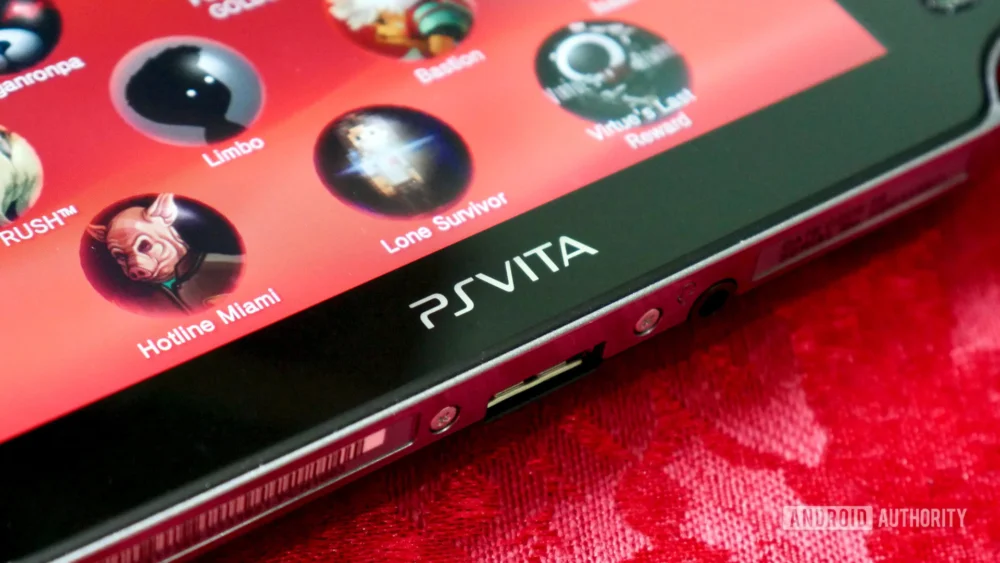
The resurgence of dedicated handheld gaming devices, driven primarily by enthusiasts hungry for high-quality emulation experiences, has carved out a significant niche in the portable electronics market. Companies like ANBERNIC have become central players in this ecosystem, frequently releasing hardware that blends nostalgic design cues with modern Android operating systems capable of tackling increasingly demanding emulation targets. However, the recently unveiled ANBERNIC RG VITA presents a fascinating, albeit contradictory, case study in product strategy. While the device undeniably captures the visual spirit and ergonomic silhouette of Sony’s beloved, yet commercially underappreciated, PlayStation Vita, its underlying technical blueprint suggests a far more conservative performance ceiling, potentially undermining its primary appeal to the very audience it seeks to court.
The visual presentation of the RG VITA is, by all accounts, a masterclass in homage. It successfully channels the sophisticated, dual-analog stick layout, the symmetrical button placement, and the overall premium feel that characterized the PS Vita—a device often lauded for its superior build quality compared to its contemporaries. This aesthetic alignment is crucial for a segment of the market where nostalgia functions as a powerful purchasing motivator. Fans of the Vita, or those who missed out on the platform, are immediately drawn in by the promise of a modern iteration capable of playing that classic library.
Yet, the narrative shifts abruptly when examining the silicon powering this throwback chassis. ANBERNIC has opted for the Unisoc T618 chipset. This decision is notable primarily because it represents a significant step backward in processing power compared to the company’s more recent, higher-tier offerings. The T618, a capable mid-range processor when it first appeared in handhelds around 2022 (powering devices like the RG 505), is now firmly rooted in the budget tier of current-generation emulation handhelds. It is being paired with a meager 3GB of RAM and 64GB of internal storage.
This configuration immediately raises red flags regarding performance expectations, particularly concerning the emulation of the PlayStation 2 and Nintendo GameCube—systems that typically require substantially more CPU horsepower and memory bandwidth for stable, high-fidelity emulation. While ANBERNIC has released promotional material showcasing the RG VITA running select PS2 titles at apparently smooth frame rates, industry veterans view these demonstrations with caution. The precedent set by previous ANBERNIC releases, specifically the RG DS, where demonstrations of complex 3DS emulation proved vastly optimistic compared to real-world performance, suggests that marketing footage may not accurately reflect the device’s practical capabilities. The T618/3GB RAM pairing is inherently constrained, making reliable, full-speed execution of demanding PS2 titles an unlikely long-term reality, despite the appealing visual facade.
The comparison to the ANBERNIC RG 505 is instructive. The RG 505, released earlier, utilized the same T618 SoC but benefited from 4GB of RAM. If the RG VITA retains the 505’s 16:9 aspect ratio screen (reportedly 5.46 inches), the choice to downgrade to 3GB of RAM is difficult to rationalize unless it is a direct cost-saving measure aimed at securing an ultra-competitive entry-level price point. This suggests the RG VITA is being positioned not as a successor to high-end emulation devices, but squarely within the budget Android handheld category, competing against devices like the MANGMI AIR X or the AYANEO Pocket AIR Mini.
Furthermore, the display panel itself introduces a significant technical compromise regarding the core selling proposition: PS Vita emulation. The RG VITA is slated to feature a 5.46-inch IPS display clocked at 1280 x 720 resolution. While 720p is perfectly adequate for many Android applications and modern indie games, it presents an inherent issue for perfect scaling of legacy content. The native resolution of the original PlayStation Portable (PSP) is 480 x 272, and the PlayStation Vita’s native resolution is 960 x 544. Neither of these resolutions scales perfectly into 1280 x 720 without introducing either pixel distortion (when using non-integer scaling factors) or unnecessary downscaling followed by upscaling. For pixel-art heavy retro systems (like 8-bit or 16-bit consoles), this misalignment can be jarring. While the impact is less severe for the higher resolution source material of the PSP and Vita themselves, it denies users the pristine, mathematically exact image reproduction that dedicated enthusiasts often seek when targeting these specific libraries. A device explicitly branded with the Vita aesthetic should, arguably, prioritize a display that honors the original system’s output or at least offers a native-friendly resolution like 720p that scales cleanly from 480p (PSP).
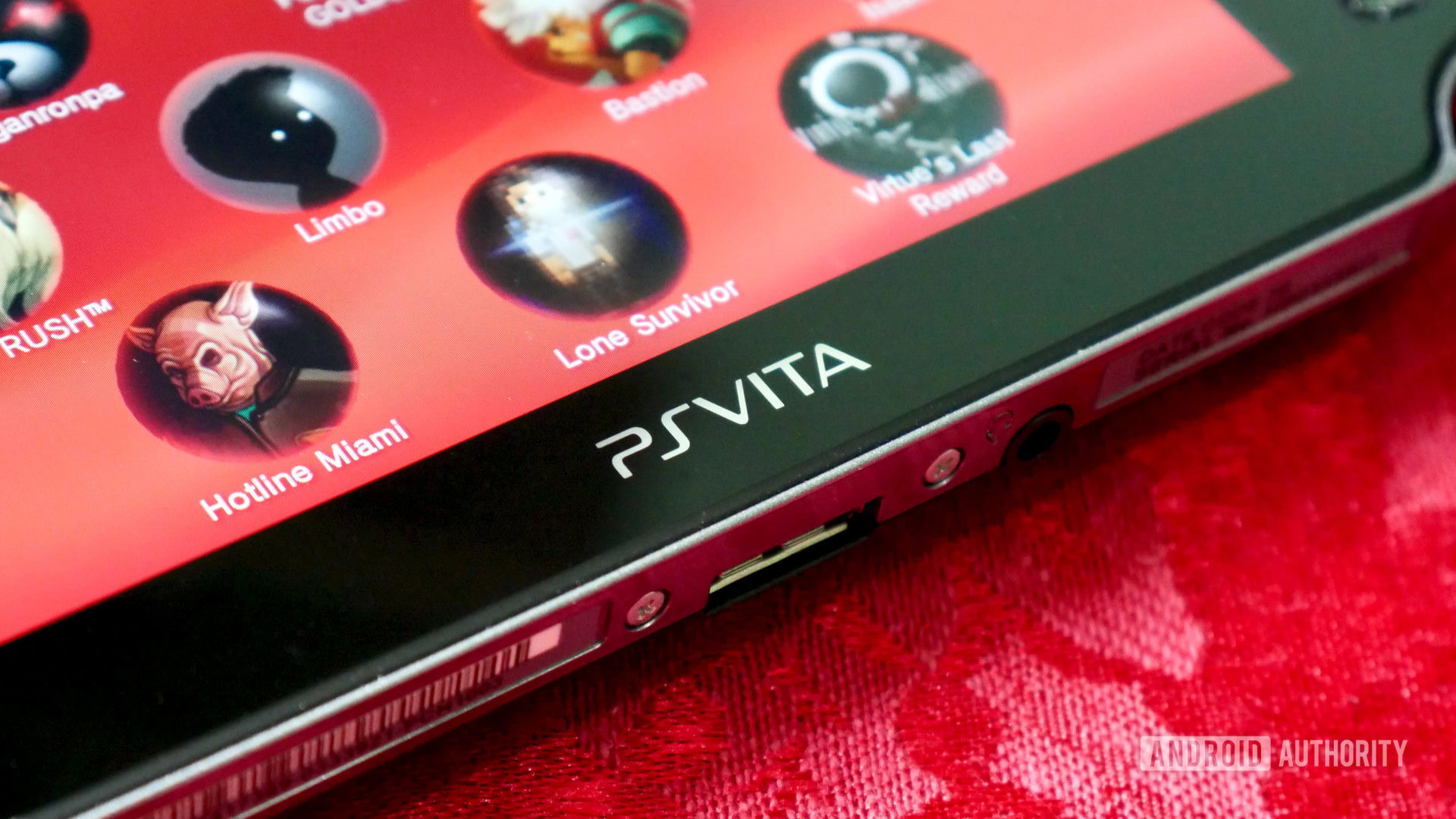
The most critical vulnerability, however, lies not in the hardware specifications but in the software compatibility stack—specifically, the state of the Vita3K emulator on the Android platform. Emulation stability is a complex interplay between the underlying operating system, the driver efficiency, and the emulator’s optimization for the specific SoC. Vita3K remains an ambitious, yet immature, project in its Android incarnation. Recent community testing, exemplified by independent content creators, indicates that while the T618 can achieve playable frame rates for a significant portion of the Vita library, the experience is fundamentally undermined by instability. Games that run at full speed can suddenly terminate or freeze due to unresolved emulation bugs or memory management errors inherent in the current Android build of Vita3K. For a device banking on its ability to finally bring native Vita gameplay to a portable form factor, this software fragility represents a far greater barrier to entry than the T618’s raw processing ceiling.
This strategic choice by ANBERNIC—marrying high-concept industrial design with mid-to-low-tier internal components—signals a clear market segmentation. The company is likely aiming for a price point that drastically undercuts newer, more powerful handhelds featuring chips like the MediaTek Dimensity 1100 or derivatives, which offer substantially better performance headroom for PS2/GameCube. By leveraging the recognizable, desirable aesthetic of the Vita, ANBERNIC hopes to capture impulse buyers or those primarily interested in lower-to-mid-tier emulation (PS1, N64, Dreamcast, PSP) who are willing to overlook the compromised high-end capabilities.
The industry implications of this approach are significant. It highlights the ongoing tension in the emulation handheld market between form factor fidelity and computational capability. Consumers are increasingly sophisticated, yet many still prioritize an external design that mirrors classic consoles. ANBERNIC’s strategy tests the threshold of consumer tolerance: How much performance compromise are users willing to accept for superior ergonomics and nostalgic aesthetics? If the RG VITA launches at an aggressively low price—perhaps under $150—it might succeed by defining itself as the definitive "PS Vita-style" retro device for 2D and light 3D emulation, rather than a true next-generation emulator.
The anticipated inclusion of a "Pro" model further muddies the waters. If ANBERNIC reserves a more powerful chipset (perhaps an upgraded T618 variant or an older high-end chip like the Snapdragon 845 or even a T820, if available) for the RG VITA Pro, it suggests a tiered approach. The standard model manages expectations toward budget performance, while the Pro model is intended to tackle the more demanding systems. However, the fundamental software challenge—Vita3K instability—will likely persist across both SKUs unless significant, platform-specific optimizations are implemented, which is beyond the control of the hardware manufacturer.
Looking toward the future impact, the RG VITA’s success or failure will provide valuable data points for the entire sector. Should it sell well despite its technical limitations, it validates the hypothesis that industrial design and brand recognition (even borrowed brand recognition) can outweigh raw performance metrics in the handheld emulation space. Conversely, if user reviews focus overwhelmingly on the inability to reliably play target systems like the PS2 or the instability of Vita emulation, it reinforces the consumer demand for balanced hardware-software solutions.
The display technology choice—IPS over OLED—also warrants deeper analysis. The original PS Vita famously featured stunning OLED panels on its launch model, offering superior black levels and color vibrancy. The shift to IPS, while offering better viewing angles and potentially lower manufacturing costs, sacrifices a key sensory component of the original Vita experience. For a device aiming for visual accuracy, choosing an IPS panel over an OLED panel, even a less efficient older one, seems counterintuitive to the "looks the part" mandate. This strongly reinforces the notion that cost management took precedence over perfect feature parity, pushing the device toward the competitive budget Android segment rather than premium nostalgia replication.
In conclusion, the ANBERNIC RG VITA appears to be a calculated risk. It delivers the highly sought-after physical design language of the PS Vita, satisfying an aesthetic craving within the retro community. Yet, the decision to equip it with the aging Unisoc T618 and restrict memory to 3GB, coupled with the non-optimal 720p display resolution and the dependency on nascent Vita emulation software, confines its functional capabilities to a lower tier than its appearance might suggest. Prospective buyers must weigh the allure of its form factor against the documented performance ceilings of its internal architecture. ANBERNIC is preparing for a swift launch, meaning the market will soon determine if a beautiful clone with mid-range specifications can truly capture the hearts—and wallets—of dedicated portable gamers. The eventual pricing structure will be the final determinant in assessing whether this device aims for niche perfection or broad, budget-conscious accessibility.