

The landscape of the short-term rental market is undergoing a fundamental transformation, signaled by a shift from human-centric troubleshooting to a sophisticated, automated infrastructure. Airbnb has officially crossed a major threshold in this evolution, revealing that approximately one-third of its customer support inquiries within the United States and Canada are now managed entirely by its custom-built artificial intelligence agent. This milestone is not merely a pilot program or a marginal efficiency gain; it represents the vanguard of a global rollout intended to redefine how the company interacts with its millions of users. According to leadership, the platform is preparing to scale this technology worldwide, with the objective of having AI handle more than 30% of total customer support tickets across all supported languages and regions within the next twelve months.
This transition into automated resolution is being framed by CEO Brian Chesky not just as a cost-cutting measure, but as a qualitative "step change" in the user experience. During the company’s recent fourth-quarter earnings call, Chesky emphasized that the integration of AI voice and chat capabilities would likely outperform human counterparts in specific categories of issue resolution. The underlying thesis is that AI, when properly trained on a company’s internal logic and data, can provide more consistent, faster, and more accurate responses than a traditional human support agent who may be juggling multiple protocols or facing language barriers. By reducing the friction inherent in the support process, Airbnb aims to lower its operational cost base while simultaneously elevating the standard of service provided to both guests and hosts.
The technical backbone of this initiative is being bolstered by a significant shift in leadership and engineering philosophy. The company recently appointed Ahmad Al-Dahle as Chief Technology Officer, a move widely viewed as a talent coup within the Silicon Valley ecosystem. Al-Dahle was recruited directly from Meta, where he led the generative AI team responsible for the development of the Llama family of large language models. With a 16-year tenure at Apple preceding his time at Meta, Al-Dahle brings a pedigree of combining massive technical scale with consumer-centric design. His arrival signals Airbnb’s intent to move beyond simply adding AI features to an existing framework; the goal is to rebuild the platform as an "AI-native" experience.
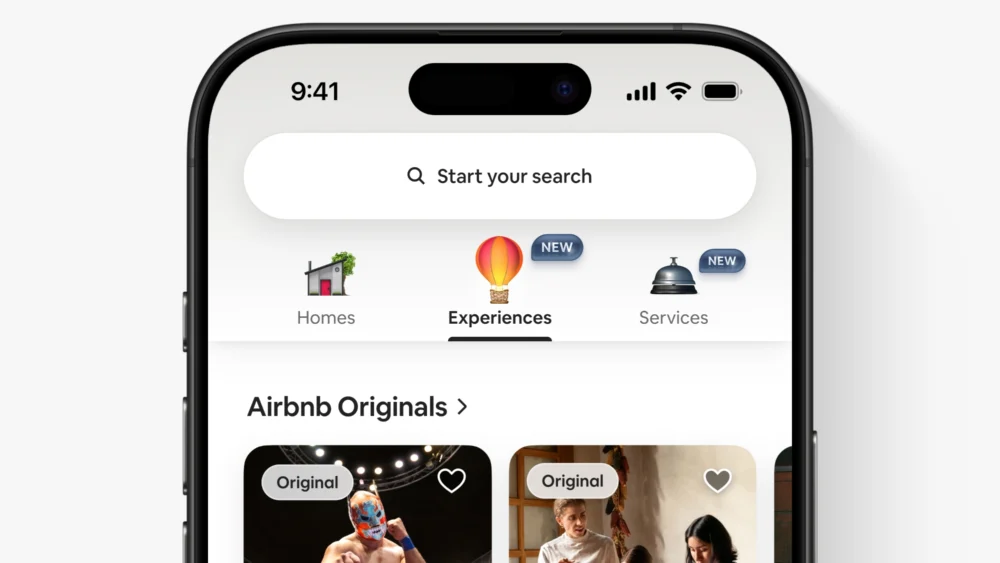
Under Al-Dahle’s guidance, the vision for the Airbnb application is shifting away from being a mere search engine for properties and toward becoming a personalized travel concierge. Chesky has described the future of the app as one that doesn’t just respond to queries but "knows" the user. This level of predictive personalization is intended to assist guests in planning entire itineraries, enable hosts to optimize their business operations with data-driven insights, and allow the company to maintain high-velocity growth without a linear increase in overhead. The transition from a reactive tool to a proactive assistant is the cornerstone of Airbnb’s long-term strategy to dominate the travel tech sector.
However, the rapid ascent of generative AI has raised questions among investors regarding the potential for disruption by third-party AI platforms. If a consumer can simply ask a generic chatbot to find and book a vacation rental, does the platform itself lose its value? Chesky has pushed back against this narrative, arguing that Airbnb possesses a unique and irreproducible "moat" built over 18 years of operation. This defensive layer consists of over 200 million verified identities and a repository of 500 million proprietary reviews—data that external AI models cannot access or replicate. Furthermore, the platform’s deep integration into the host-guest communication cycle is a critical differentiator; 90% of guests message their hosts through the app, a function that remains outside the reach of general-purpose AI bots.
Beyond the data, Airbnb’s leadership points to the complex ecosystem of protections and financial infrastructure as a barrier to entry for competitors. The company manages over $100 billion in annual payments and provides integrated insurance and user verification services that generic AI platforms are not equipped to handle. In Chesky’s view, AI chatbots currently function as "top-of-funnel" traffic sources, similar to traditional search engines. Crucially, he noted that traffic originating from AI interfaces is currently converting at a higher rate than traffic coming from Google, suggesting that the shift toward conversational AI may actually be a tailwind for the company rather than a threat.
The financial implications of this AI pivot are already beginning to manifest in the company’s performance metrics. Airbnb reported fourth-quarter revenue of $2.78 billion, surpassing analyst expectations of $2.72 billion. For the upcoming fiscal year, the company is forecasting revenue growth in the "low double digits," with first-quarter guidance ranging between $2.59 billion and $2.63 billion—again exceeding Wall Street’s conservative estimates. By aggressively implementing AI to handle high-volume, low-complexity support tasks, Airbnb is positioning itself to expand its profit margins even as it continues to scale its global footprint.
On the product side, the company is already experimenting with AI-driven conversational search. While currently enabled for only a small percentage of total traffic, the goal is to move away from the rigid "where and when" search filters that have defined the industry for a decade. A more conversational interface allows for nuanced queries, such as "find me a quiet cabin within three hours of New York that is good for writing," which traditional databases struggle to process effectively. This evolution of search also opens the door for new monetization strategies, including the planned integration of sponsored listings within the AI-driven search results, providing a new revenue stream for the company while giving hosts more ways to gain visibility.
The transformation is not limited to the customer-facing side of the business; it is fundamentally altering the company’s internal operations. While other tech giants, such as Spotify, have made headlines by claiming their top developers are now using AI to write nearly all of their code, Airbnb is taking a more structured approach to internal adoption. Currently, 80% of Airbnb’s engineering staff utilizes AI-augmented development tools, with a corporate mandate to reach 100% adoption in the near future. This internal efficiency is expected to accelerate the product development lifecycle, allowing the company to ship features and updates at a pace that was previously impossible.
As Airbnb continues to roll out its AI support agents globally, the industry will be watching closely to see if the "quality step change" promised by Chesky truly materializes. The challenge lies in the "hallucination" problem common to large language models and the sensitivity required in handling high-stakes travel issues, such as last-minute cancellations or safety concerns. If an AI agent fails to resolve a crisis correctly, the reputational damage could be significant. However, by leveraging its proprietary data and the expertise of leaders like Al-Dahle, Airbnb is betting that it can mitigate these risks and set a new standard for automated service in the gig economy.
The broader implications for the labor market in the tech and hospitality sectors are also significant. The displacement of human customer support roles by AI agents is a trend that is likely to accelerate across the industry. Airbnb’s successful transition could serve as a blueprint for other platforms looking to decouple growth from headcount. However, the company maintains that human agents will remain a part of the ecosystem, particularly for complex, emotionally charged, or high-value issues that require a level of empathy and nuanced judgment that AI has yet to master.
In conclusion, Airbnb’s aggressive embrace of artificial intelligence represents a calculated move to solidify its market leadership in an increasingly competitive landscape. By leveraging a unique dataset, poaching top-tier talent from the world’s leading AI labs, and reimagining the user journey as a personalized, AI-native experience, the company is attempting to transcend its status as a booking platform. Whether this shift will result in the promised "step change" in quality remains to be seen, but the financial and operational groundwork has been laid for a future where the "automated host" is as central to the experience as the physical property itself.