

The contemporary era of artificial intelligence has been defined by a singular, overwhelming dogma: the law of scale. For the better part of a decade, the industry’s titans—OpenAI, Google DeepMind, and Anthropic—have operated under the assumption that intelligence is an emergent property of massive data and gargantuan compute. If a model isn’t smart enough, the solution has historically been to add more parameters, more GPUs, and more terabytes of scraped internet text. However, a new breed of research labs is beginning to question whether this "brute force" approach is reaching a point of diminishing returns. Among the most ambitious of these challengers is Flapping Airplanes, a research-centric startup that recently emerged with a staggering $180 million in seed funding and a mission to dismantle the current scaling orthodoxy.
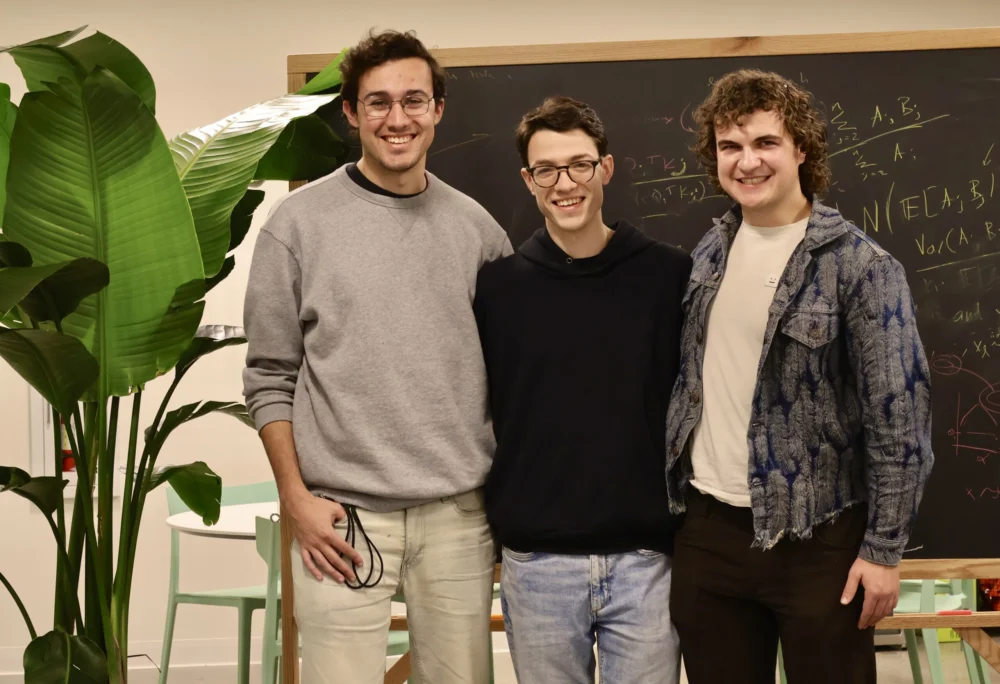
Led by founders Ben Spector, Asher Spector, and Aidan Smith, Flapping Airplanes is positioning itself not as a competitor to the current giants, but as a fundamental reimagining of what an AI lab can be. Their thesis is as simple as it is radical: humanity has reached the "data wall," and the future of intelligence belongs to those who can do more with less. By focusing on data efficiency and looking to the biological blueprint of the human brain, Flapping Airplanes is betting that the next leap in AI will come from algorithmic elegance rather than industrial-scale ingestion.
The Problem with Infinite Scale
To understand the necessity of Flapping Airplanes’ mission, one must look at the current economics of foundation models. Training a frontier model today costs hundreds of millions, if not billions, of dollars in electricity and hardware. Furthermore, the industry is rapidly exhausting the supply of high-quality, human-generated data. Some estimates suggest that the "well" of public internet text could run dry within the next few years.
Ben Spector, co-founder of Flapping Airplanes, notes that while the advances of the last decade have been spectacular, they represent only one narrow path toward intelligence. The current frontier models are trained on the sum totality of human knowledge—essentially every book, article, and tweet ever written. In contrast, a human child can learn the nuances of language and the laws of physics with a fraction of a percent of that data. This gap suggests that our current architectures, primarily the Transformer model trained via gradient descent, are incredibly "leaky" and inefficient.
The Flapping Airplanes team views this inefficiency as the greatest scientific opportunity of the decade. If a model could be made 1,000 times more data-efficient, the commercial and scientific implications would be transformative. It would allow for the creation of highly specialized models in fields where data is scarce, such as rare disease research, advanced materials science, or high-stakes robotics.
The Neuromorphic Inspiration: Birds vs. Boeing
The name "Flapping Airplanes" is more than a whimsical brand; it is a philosophical statement about the relationship between biology and engineering. In the history of aviation, early inventors tried to build machines that mimicked the flapping wings of birds. They failed. Success only came when engineers understood the underlying principles of lift and thrust but applied them to a different substrate: fixed-wing aircraft.
Aidan Smith, who joined the lab after a stint at Neuralink, views the human brain as an "existence proof." It proves that high-level intelligence can exist within a 20-watt power envelope and learn from minimal examples. However, Flapping Airplanes isn’t trying to build a digital "bird." They are trying to find the "flapping airplane"—a system that takes the best algorithmic insights from the brain but optimizes them for the unique constraints of silicon.
"The constraints of the brain and silicon are sufficiently different that we should not expect these systems to end up looking the same," Ben Spector explains. Silicon allows for near-instantaneous data transfer and perfect memory, while the brain is limited by slow chemical signaling but excels at parallel processing and energy efficiency. By taking inspiration from how the brain firewalls information or adapts to new tasks without "catastrophic forgetting," Flapping Airplanes hopes to build a new class of architectures that move beyond the limitations of the Transformer.
A New Model for Research Funding
The $180 million seed round raised by Flapping Airplanes reflects a significant shift in the venture capital landscape. Only a few years ago, seed rounds were measured in the low millions. Today, investors are willing to place massive bets on unproven, research-heavy teams before they have even launched a product.
This influx of capital has granted Flapping Airplanes a "long runway," allowing them to focus on fundamental science rather than immediate commercialization. Asher Spector emphasizes that the lab is "looking for truth" rather than trying to sign enterprise contracts in its first year. This "research-first" approach is a luxury that early-stage startups rarely enjoyed in previous tech cycles. It allows the team to fail early and often at a small scale.
One of the counterintuitive advantages of their approach is that radical research is often cheaper than incremental research. To test an incremental improvement on a standard Transformer, a lab must scale it up to a massive size to see if the gains persist. But a radical new architecture can often be proven—or debunked—at a much smaller, less expensive scale. By staying "small" in terms of compute while thinking "big" in terms of architecture, Flapping Airplanes can iterate faster than the lumbering giants of the industry.
The Cult of Creativity: Hiring for the "Unpolluted" Mind
Perhaps the most controversial aspect of Flapping Airplanes is its hiring strategy. In a field where PhDs from Stanford and MIT command seven-figure salaries, the Spectors and Smith are looking elsewhere. They have gained a reputation for recruiting exceptionally young talent—some still in college or even high school.
The logic behind this is that established researchers are often "polluted" by the existing literature. They have spent years internalizing why certain things can’t be done, or why the Transformer is the end-all-be-all of AI. By hiring young, brilliant minds who haven’t yet been told what is impossible, Flapping Airplanes fosters a culture of radical creativity.
"We want people who are not afraid to change the paradigm," says Ben Spector. This focus on "raw" intelligence over "credentialed" experience is a hallmark of the lab’s iconoclastic spirit. They are looking for researchers who can teach the founders something new, rather than those who simply want to implement the next iteration of a known paper.
Beyond Automation: AI as a Scientific Catalyst
While much of the public discourse around AI focuses on the automation of existing jobs—a "deflationary" view of the technology—Flapping Airplanes has a more expansive vision. They are less interested in "firing people" and more interested in "solving the unsolvable."
Asher Spector argues that the most exciting applications of AI are in "out-of-distribution" scenarios. Current LLMs are excellent at interpolation—predicting the most likely next word based on what they have already seen. But they struggle with true generalization and creative reasoning in entirely new domains.
If Flapping Airplanes succeeds in its quest for data efficiency, it could unlock the "limited data" sectors of the economy. In robotics, for instance, we cannot "scrape" the physical world the way we scrape the internet. A robot must learn from a limited number of physical interactions. Similarly, in the discovery of new medicines, there are only so many biological experiments a lab can run. A model that can derive deep insights from a handful of data points could accelerate the pace of scientific discovery by orders of magnitude.
Navigating the "Weird" Future
As AI capabilities continue to advance, the outputs of these models are becoming increasingly "alien." Asher Spector points to the strange, emergent capabilities found in base models—the ability to identify the author of an unwritten text or to solve puzzles they weren’t explicitly trained for.
Flapping Airplanes expects the future of AI to be "weird." As they move away from the standardized architectures used by the rest of the industry, they anticipate discovering capabilities that are fundamentally different from what we see in today’s chatbots. They aren’t looking for a 20% improvement over Claude or GPT-4; they are looking for the "unknowable changes" that occur when you prioritize deep understanding over statistical memorization.
Despite the high stakes and the massive funding, the founders maintain a sense of scientific humility. They are quick to admit they don’t have all the answers and even invite critics to email them at "[email protected]." This openness to being wrong is perhaps their greatest asset in a field often characterized by hype and hubris.
In the end, Flapping Airplanes represents a bet on the human element of artificial intelligence. By betting on young talent, biological inspiration, and algorithmic efficiency, they are asserting that the path to AGI isn’t just a matter of building bigger computers. It is a matter of thinking differently. If the history of technology has taught us anything, it’s that the "flapping airplanes" of today often become the standard-bearers of tomorrow. Whether they succeed or fail, their existence marks the beginning of a new chapter in the AI story—one where the size of the dataset is no longer the sole measure of intelligence.