

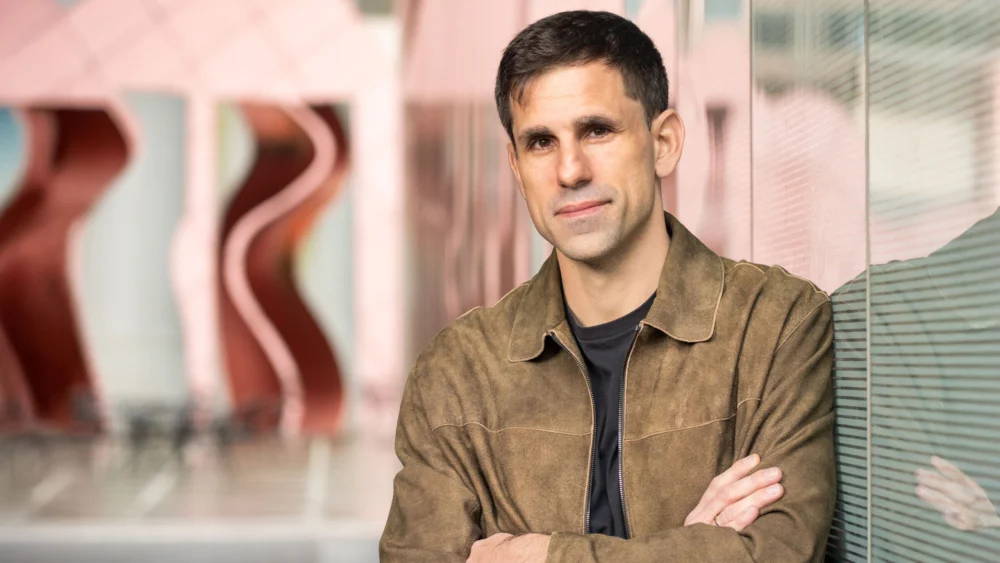
The modern history of medicine is often defined by a single, miraculous turning point: the discovery of penicillin. Yet, as we move deeper into the 21st century, that era of medical security is rapidly eroding. For César de la Fuente, a bioengineer and computational biologist at the University of Pennsylvania, the realization of this looming catastrophe came early. As a teenager, de la Fuente attempted to quantify the world’s most pressing existential threats, ranking them by a specific metric—the inverse of how much funding governments were allocating to solve them. At the pinnacle of that list sat antimicrobial resistance (AMR).
Two decades later, the gap between the threat of drug-resistant infections and the resources dedicated to fighting them has only widened. Today, infections caused by bacteria, fungi, and viruses that have evolved to bypass our best medical defenses are linked to more than 4 million deaths annually. A landmark analysis recently published in The Lancet suggests a grim trajectory: by 2050, that annual death toll could exceed 8 million. We are, as de la Fuente and MIT synthetic biologist James Collins warned in a recent 2025 essay, standing on the precipice of a "post-antibiotic" era. In this reality, once-routine infections from common pathogens like Escherichia coli or Staphylococcus aureus could transition from manageable nuisances back into the death sentences they were in the 19th century.
The fundamental crisis is not just biological; it is economic and structural. The global antibiotic discovery pipeline is dangerously depleted. For major pharmaceutical corporations, the math simply does not add up. Developing a new drug requires billions of dollars and a decade of research, yet antibiotics are meant to be used sparingly and for short durations. Unlike chronic medications for heart disease or diabetes, which patients take for a lifetime, a successful antibiotic cures the patient and is then shelved. This "low return on investment" has driven many firms to abandon the field entirely, leaving a void that traditional discovery methods—digging through soil and water for naturally occurring compounds—can no longer fill.
Enter the Machine Biology Group at the University of Pennsylvania. Led by de la Fuente, this team of 16 scientists is attempting to bypass the slow, serendipitous nature of traditional discovery by treating biology as a massive, searchable database. Their tool of choice is artificial intelligence, and their target is the antimicrobial peptide (AMP).
Peptides are short chains of up to 50 amino acids, the building blocks of life. They are a primary component of the innate immune systems of almost every living organism. While traditional antibiotics often rely on a single mechanism to kill bacteria—such as inhibiting cell wall synthesis—AMPs frequently employ a "multimodal" strategy. They can simultaneously disrupt the bacterial membrane, interfere with internal genetic material, and shut down vital cellular processes. This multipronged attack makes it significantly harder for bacteria to evolve resistance. If a conventional drug is a lock-and-key mechanism, an AMP is more akin to a sledgehammer.
The challenge, however, is the sheer scale of the search space. Scientists estimate there are approximately 10^60 possible organic combinations that could be synthesized into drugs. To put that in perspective, there are only about 10^18 grains of sand on Earth. Searching for a needle in a haystack is a trivial task compared to finding a viable new antibiotic in the vastness of chemical space. This is where de la Fuente’s AI models excel. By training algorithms to recognize the "grammar" of antimicrobial properties within genetic code, his team can scan millions of sequences in a fraction of the time it would take a human researcher.
This computational approach has led de la Fuente to some of the most remote corners of biological history. In a project he describes as "molecular de-extinction," his team has been mining the published genetic sequences of extinct species. The logic is elegant: over the billions of years of life on Earth, perhaps a long-extinct organism evolved a potent defense mechanism that could be resurrected to fight modern pathogens.
By scanning the genomes of woolly mammoths, giant sloths, ancient sea cows, and even our own ancestors like Neanderthals and Denisovans, the team has successfully identified and "reawakened" functional molecules. These resurrected compounds—with names like mammuthusin-2 and mylodonin-2—have shown promise in neutralizing contemporary bacteria. To date, this "molecular binge" has allowed the group to amass a library of over one million genetic recipes for potential antimicrobials.
The evolution of AI in this field has been rapid. Just a few years ago, researchers were primarily using predictive models—tools designed to screen existing libraries of known compounds to see which might work. But the field is now shifting toward generative AI. Instead of just searching a list, generative models can design entirely new molecules from scratch, creating configurations of amino acids that have never existed in nature.
Last year, de la Fuente’s team utilized a generative model to design a suite of synthetic peptides, which were then vetted by a second AI model. The most promising candidates were tested in vivo on mice infected with Acinetobacter baumannii, a pathogen the World Health Organization has labeled a "critical priority" due to its extreme resistance to most known treatments. The AI-designed peptides successfully cleared the infection with no recorded toxicity.
However, the road from a successful mouse trial to a pharmacy shelf is long and fraught with regulatory and clinical hurdles. The current state of AI-driven antibiotic discovery is still largely in the "discovery" phase. Transitioning these peptides into stable, deliverable, and cost-effective medications requires solving complex problems regarding dosage, stability within the human body, and targeted delivery to ensure the drugs don’t harm beneficial gut bacteria.
To bridge this gap, de la Fuente’s team is developing a multimodal model called ApexOracle. This ambitious platform is designed to act as an end-to-end solution for drug development. The goal is for ApexOracle to analyze a specific new pathogen, identify its unique genetic vulnerabilities, match it with a custom-designed antimicrobial peptide, and then simulate how that peptide would behave in human clinical trials. By converging chemistry, genomics, and natural language processing, the model aims to "resist resistance" by staying one step ahead of bacterial evolution.
The work being done at the University of Pennsylvania is part of a broader, global shift in how we approach public health. Collaborators and peers like James Collins at MIT and Jonathan Stokes at McMaster University are also pushing the boundaries of what is possible. Collins’ team, for instance, used AI to discover halicin, a broad-spectrum antibiotic currently in preclinical development. These researchers represent a new vanguard of scientists who view the "almost impossible" problem of AMR as a data problem that can be solved with enough computational power and creative thinking.
The implications of this research extend far beyond the laboratory. If successful, AI-driven discovery could radically lower the cost of drug development, making it viable for smaller biotech firms and academic institutions to fill the gap left by Big Pharma. It could lead to a more personalized form of medicine, where antibiotics are tailored to the specific strain of an infection a patient is carrying.
Furthermore, the techniques pioneered by de la Fuente could be applied to other medical frontiers. The same algorithms used to identify antimicrobial peptides could be retrained to find new antimalarials, anticancer agents, or treatments for rare genetic disorders. We are witnessing the birth of a new era of "machine biology," where the code of life is no longer a mystery to be solved by luck, but a language to be mastered by logic.
For César de la Fuente, who has spent half his life obsessed with a problem the world largely ignored, the current moment is one of cautious optimism. The technology has already saved decades of human research time, condensing centuries of potential lab work into months of computation. While the "post-antibiotic" era remains a terrifying possibility, for the first time in decades, the human side of the ledger has a powerful new ally. The race between human ingenuity and bacterial evolution is intensifying, and in the silicon-based patterns of AI, we may have finally found a way to tip the scales.