

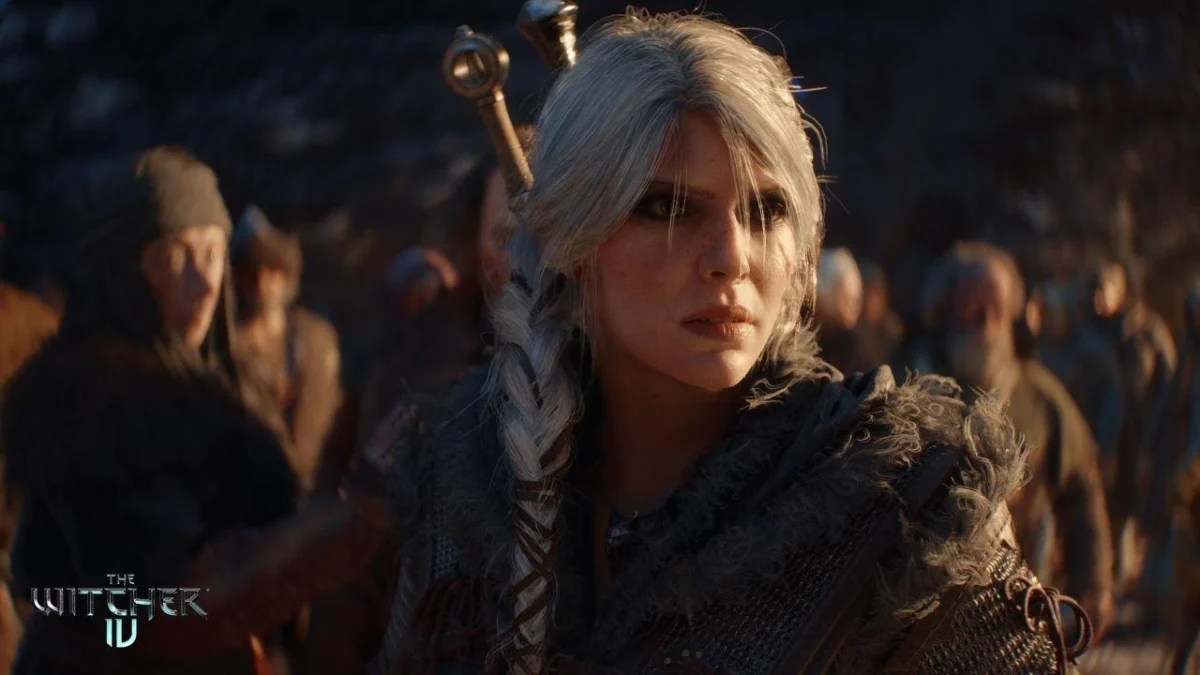
The landscape of Western role-playing games is shifting, anchored by the formalization of one of the most anticipated development timelines in modern gaming history. CD Projekt Red, the Polish powerhouse behind the critically acclaimed Witcher trilogy and the redemptive arc of Cyberpunk 2077, has finally provided a concrete horizon for its next flagship endeavor. During a strategic update delivered via the franchise’s official channels, Joint-CEO Michal Nowakowski confirmed that the next installment in the Witcher series—internally codenamed Project Polaris and widely referred to as The Witcher 4—is officially targeting a 2028 release window.
This announcement serves as more than just a date on a calendar; it represents a pivot point for a studio that has spent the last several years restructuring its internal culture, technological foundations, and narrative ambitions. While Nowakowski refrained from narrowing the window to a specific quarter or month, the 2028 target provides a clear indication of the scale and complexity of the project. The message to the global fanbase was punctuated by a plea for patience: "Let the team cook," Nowakowski urged, emphasizing that the studio is prioritizing quality and polish over the pressures of an immediate release cycle. This "cook time" is essential, as the CEO described the upcoming title as the studio’s "biggest, boldest, and most ambitious game to date."
The road to 2028 is paved with significant technological and narrative departures from the series’ roots. Perhaps the most transformative shift is the abandonment of the proprietary REDengine in favor of Epic Games’ Unreal Engine 5. This transition, first hinted at in early development updates, is a strategic move intended to streamline development and leverage the cutting-edge features of modern hardware. By moving to Unreal Engine 5, CD Projekt Red gains access to sophisticated tools like Nanite for micro-polygon geometry and Lumen for dynamic global illumination. These technologies are expected to bring the Continent to life with a level of fidelity that surpasses the already impressive "Next-Gen" update of The Witcher 3: Wild Hunt. Furthermore, the collaboration with Epic Games allows CD Projekt Red’s engineers to influence the engine’s development, tailoring it to the specific needs of massive, open-world RPGs.
Narratively, the series is entering uncharted territory. Following the conclusion of Geralt of Rivia’s story in the Blood and Wine expansion, fans have long speculated on who would take up the silver and steel swords. CD Projekt Red confirmed at The Game Awards in late 2024 that Ciri—the Child of the Elder Blood and Geralt’s ward—will serve as the playable protagonist of the new saga. This shift fundamentally alters the gameplay loop. While Geralt was a seasoned, grounded professional, Ciri’s abilities involve space-time manipulation and high-speed blinking. Designing an open world that can accommodate such mobility presents a unique challenge for the developers, suggesting that the combat and exploration mechanics of The Witcher 4 will be a radical evolution rather than a simple iteration of the previous trilogy.
The 2028 release window also places the game firmly in the middle-to-late lifecycle of the current console generation, likely targeting the PlayStation 5, Xbox Series X|S, and high-end PC hardware. There is also the distinct possibility that by 2028, we will be seeing the first whispers of mid-generation refreshes or even the preliminary stages of the next console cycle. By aiming for this window, CD Projekt Red ensures they have a massive install base to sell into, while also having the overhead to push the boundaries of what current hardware can achieve.
However, the path to The Witcher 4 is not a silent one. In a move that surprised many industry analysts, Nowakowski also detailed an interim project designed to keep the franchise in the public eye. Arriving in 2027—one year before the new saga begins—is The Witcher 3: Wild Hunt – Songs of the Past. Described as a major new expansion for the legendary 2015 title, Songs of the Past will see players return to the role of Geralt of Rivia for one final story. This expansion is a fascinating strategic maneuver. It allows the studio to maintain revenue streams and engagement with the existing player base using the older engine, while the bulk of the development staff focuses on the Unreal Engine 5 transition for the sequel. It also serves as a bridge, potentially planting narrative seeds or lore connections that will bloom when Ciri takes center stage in 2028.

The decision to release a major expansion for a decade-old game highlights the enduring popularity of The Witcher 3. Even years after its release, it remains a benchmark for narrative-driven open worlds. By returning to Geralt one last time, CD Projekt Red is offering a "victory lap" for the character that put them on the global map, ensuring that the transition to Ciri feels like a natural passing of the torch rather than an abrupt replacement.
From an industry perspective, the 2028 window for Project Polaris reflects the growing reality of AAA development cycles. In the early 2010s, a four-to-five-year development cycle was considered standard. Today, for games of this magnitude, six-to-eight years is becoming the norm. CD Projekt Red is clearly mindful of the lessons learned from the 2020 launch of Cyberpunk 2077. That game’s initial technical failures were widely attributed to a rushed development schedule and the limitations of trying to make a next-gen experience work on aging hardware. By setting a 2028 goal now, the studio is signaling to investors and fans alike that they are committed to a "when it’s ready" philosophy, prioritizing the studio’s long-term reputation over short-term quarterly gains.
The competitive landscape in 2028 will be fierce. By that time, other major RPG heavyweights, such as Bethesda’s The Elder Scrolls VI and potentially new offerings from Rockstar Games or Larian Studios, may be on the horizon. The Witcher 4 will need to differentiate itself not just through its brand name, but through mechanical innovation. The shift to Ciri as a protagonist provides the perfect vehicle for this. Her unique powers could allow for a more vertical and fast-paced world design, moving away from the "horseback and hiking" pacing of the previous games.
Furthermore, the "Polaris" project is intended to be the start of a new trilogy. This means that 2028 is just the beginning of a multi-year narrative arc. CD Projekt Red has expressed a desire to release the subsequent two games in the trilogy within a six-year period following the first release, a feat they hope to achieve by utilizing the efficiencies of the Unreal Engine 5 pipeline. If successful, this would represent one of the most ambitious production schedules in the history of the genre.
The broader implications for CD Projekt Red as a company are equally significant. The studio has transitioned into a multi-project model, with teams simultaneously working on a Cyberpunk sequel (Project Orion) and a remake of the original Witcher game alongside the Polaris trilogy. This diversification is intended to mitigate the risks associated with putting all their resources into a single "make or break" title. However, Project Polaris remains the crown jewel of this strategy. It is the project that must prove the studio can still deliver the "Witcher magic" that defined the 2010s while successfully navigating the technological hurdles of the 2020s.
As we look toward 2028, the excitement is tempered by a realistic understanding of the volatility of game development. Release windows are often moved, and "targeting" a year is not the same as a firm commitment. Nevertheless, the transparency provided by Nowakowski and his team is a welcome change for a community that has spent years dissecting cryptic tweets and job listings. The confirmation of Ciri’s role, the move to Unreal Engine 5, and the surprise 2027 expansion for The Witcher 3 all paint a picture of a studio that is confident in its direction.
The Witcher 4 is not just a sequel; it is a reinvention. It is an attempt to take a beloved dark fantasy world and reimagine it for a new generation of hardware and a new perspective of storytelling. By centering the story on Ciri, CD Projekt Red is betting that the strength of the world-building and the depth of the characters can transcend the iconic presence of Geralt of Rivia. If they succeed, 2028 will mark the beginning of a new golden age for the franchise. Until then, the message remains clear: the Continent is waiting, the monsters are stirring, and the "cook" has only just begun.
