

The digital age has fundamentally altered the lifecycle of television. In the traditional broadcast era, a series that concluded its run was often destined for the quiet purgatory of late-night syndication or the dusty shelves of physical media collections. However, the advent of the "streaming renaissance" has created a secondary market where overlooked masterpieces can bypass the gatekeepers of the past and find an entirely new, global audience. The latest beneficiary of this phenomenon is a gritty, uncompromising police drama that originally navigated a turbulent path through network and cable television, only to emerge a decade later as one of the most highly-rated offerings on the world’s largest streaming platform.
Southland, a series that first debuted in 2009, has recently surged into the cultural zeitgeist following its addition to the Netflix library. While the show was always a favorite among critics, its recent performance on the platform has highlighted a staggering discrepancy between its historical visibility and its objective quality. Boasting a nearly unprecedented 98% audience score on Rotten Tomatoes across its five-season run, the series is currently outperforming modern originals and high-profile acquisitions alike. This resurgence offers a fascinating case study in how quality storytelling, when decoupled from the constraints of its original airing schedule, can achieve a level of prestige that eluded it during its initial broadcast.
To understand the current fervor surrounding Southland, one must examine the environment in which it was born. Created by Ann Biderman and produced by the legendary John Wells—the mind behind ER and The West Wing—the show was designed to be a visceral, "boots-on-the-ground" look at the Los Angeles Police Department. Unlike the polished, often formulaic procedurals that dominated the late 2000s, Southland utilized a cinema-verité style. It relied heavily on handheld cameras, natural lighting, and location shooting in the actual neighborhoods of Los Angeles, from the affluent hills of Hollywood to the embattled streets of South Central.
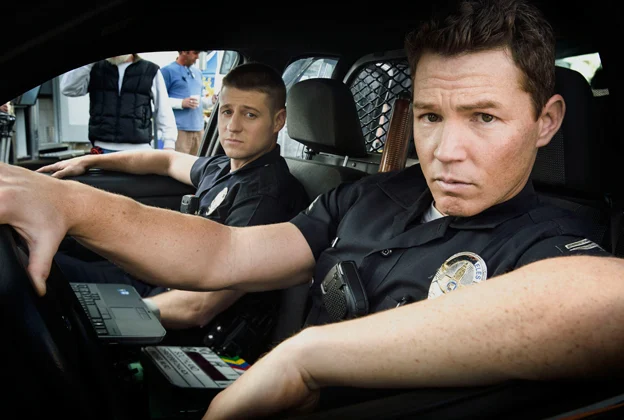
The narrative engine of the series is the partnership between veteran officer John Cooper and rookie Ben Sherman. Michael Cudlitz, who would later achieve mainstream stardom as Abraham Ford on The Walking Dead, delivers a career-defining performance as Cooper. He portrays a man whose decades on the force have left him with a cynical exterior and a debilitating back injury, yet he remains a deeply principled mentor. Opposite him, Ben McKenzie—transitioning from his "teen heartthrob" era in The O.C.—plays Sherman with a nuanced intensity, portraying a young man from a privileged background who is determined to prove his mettle in the line of fire.
The show’s history is as dramatic as its scripts. After a successful but expensive first season on NBC, the network famously cancelled the series before the second season could even premiere, citing budget concerns and a shift toward cheaper, unscripted programming. In a move that was rare for the time, TNT rescued the show, recognizing that its high-caliber writing and loyal, if niche, audience were perfect for a cable transition. Under TNT, Southland flourished creatively, leaning further into its dark, R-rated sensibilities. However, because it aired before the era of "peak TV" and widespread social media discourse, it never quite reached the household-name status of contemporaries like The Wire or The Shield, despite arguably matching them in grit and authenticity.
Now that the series is available in its entirety on Netflix, viewers are discovering that Southland was, in many ways, ahead of its time. The structure of the show eschews the "monster of the week" format in favor of a sprawling, character-driven mosaic. While many network shows of that era were churning out 22 to 24 episodes per season, Southland’s seasons were lean and focused. The first season consisted of only seven episodes, and subsequent seasons never exceeded ten. This brevity allowed for a higher level of production value and a narrative density that feels remarkably modern. In an age of "binge-watching," these shorter, high-impact seasons are perfectly calibrated for the current consumer appetite.
The 98% audience score is not merely a statistical anomaly; it is a reflection of the show’s refusal to provide easy answers. Southland explored the psychological toll of policing, the systemic failures of the justice system, and the blurred lines between heroism and corruption without the moralizing tone often found in broadcast dramas. It treated the city of Los Angeles not just as a backdrop, but as a living, breathing character. The show’s cinematography captured the harsh sunlight and the neon-soaked nights of the city with a realism that made the viewer feel like a passenger in the patrol car.

Industry analysts point to Southland’s success as part of a broader trend often referred to as the "Suits effect." When a high-quality, long-concluded series is licensed to a major streamer, the platform’s recommendation algorithms can catapult it to the top of the charts, effectively "re-launching" the brand. This has significant implications for the industry. For streaming services, these library titles provide a cost-effective way to retain subscribers without the astronomical marketing costs associated with a new series. For the creators and cast, it provides a legacy boost that can lead to new opportunities.
However, the prospect of a Southland revival remains a complex question. While fans have taken to social media to demand a sixth season or a wrap-up movie—citing the show’s abrupt and haunting series finale—the logistical hurdles are significant. The cast has moved on to various high-profile projects. Michael Cudlitz has transitioned into directing and recently took on the iconic role of Lex Luthor in Superman & Lois. Perhaps most interestingly, Ben McKenzie has largely stepped away from traditional acting to become one of the most prominent critics of the cryptocurrency industry. His recent book, Easy Money, and his testimonies before Congress have established him as a serious voice in financial journalism and advocacy, a career pivot that few could have predicted during his days patrolling the streets of L.A. on screen.
Furthermore, the television landscape has changed since 2013. The cultural conversation surrounding law enforcement has become significantly more polarized and scrutinized. A revival of a police drama in the 2020s would require a delicate navigation of social issues that were only beginning to surface during the show’s original run. Yet, many argue that this is precisely why Southland is more relevant than ever. Its commitment to showing the messy, unvarnished reality of the job—including the mistakes, the biases, and the trauma—positions it as a more honest entry in the genre than the "cop-glorifying" shows of the past.
The enduring appeal of Southland also lies in its supporting cast, which featured powerhouse performances from Regina King, Shawn Hatosy, and C. Thomas Howell. Regina King’s portrayal of Detective Lydia Adams, a woman balancing the demands of a high-pressure career with her personal life, served as a precursor to the Academy Award-winning roles she would later inhabit. Shawn Hatosy’s Sammy Bryant provided the show’s emotional core, depicting a detective’s slow descent into obsession and grief. The ensemble nature of the show ensured that even as characters faced life-altering tragedies, the world of the LAPD continued to turn, indifferent to individual suffering.
As Southland continues to climb the Netflix Top 10, it serves as a reminder that the "best" television isn’t always what’s newest. In the rush to produce "content," the industry often overlooks the goldmines sitting in the archives of various production houses. Southland’s 90% critic score and 98% audience score are badges of honor that suggest the show was a victim of timing rather than a lack of quality. It was a cable-style masterpiece trapped in a transitional period of television history.
For the modern viewer, the discovery of Southland is a rare gift: a complete, high-quality saga that requires no prior knowledge and offers a satisfying, if brutal, journey. It stands alongside The Shield as a pinnacle of the "gritty procedural" and serves as a masterclass in how to build tension through character rather than just action. Whether or not this renewed interest leads to a formal revival, the show has already achieved something remarkable. It has broken through the noise of the digital age to claim its rightful place as a classic of American television.
The future of the medium likely holds more of these "resurrections." As production costs for original content continue to skyrocket, streaming giants will increasingly look toward the past to fill their libraries. But few shows will likely meet the high bar set by Southland. It remains a visceral, heart-wrenching, and impeccably acted portrait of a city and the people sworn to protect it. For those who missed it a decade ago, the patrol car is back on the street, and the ride is just as intense as it ever was. In the end, the metrics don’t lie: a 98% audience score is a testament to a show that didn’t just tell a story, but left an indelible mark on everyone who watched it. For now, the best new show on Netflix is actually an old one, and it is essential viewing for anyone who values the art of the drama.