

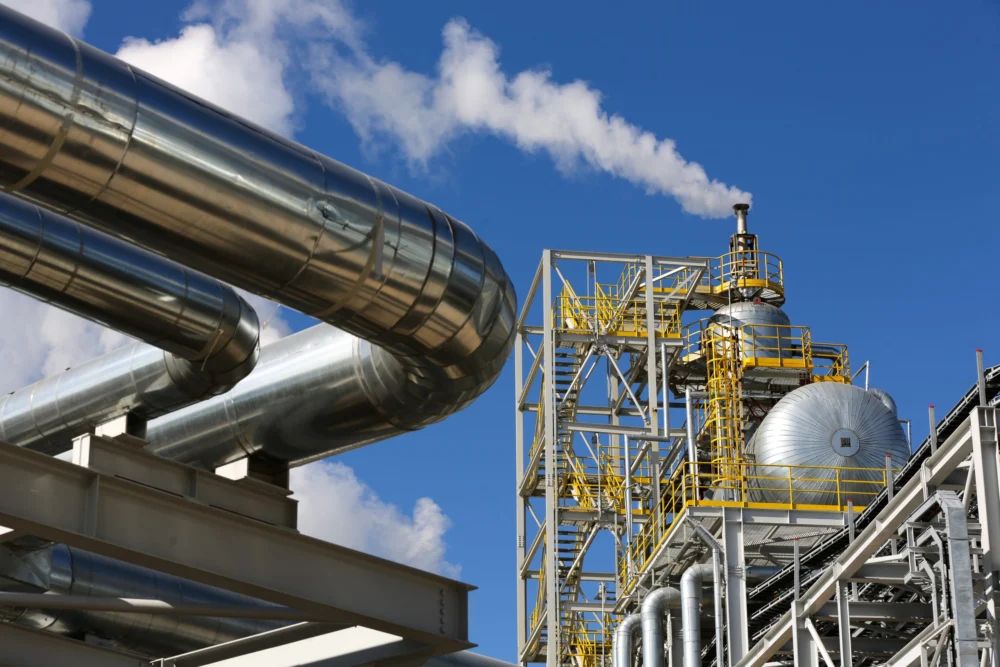
Ammonia, a compound often overshadowed by high-profile climate solutions, remains arguably the most critical industrial chemical on Earth. Its primary role in synthesizing nitrogen fertilizers is the cornerstone of modern global agriculture, sustaining the food supply for billions. Yet, this chemical necessity comes at an enormous environmental price. The industrial process responsible for synthesizing ammonia, the century-old Haber-Bosch method, is notoriously energy-intensive and currently contributes nearly 2% of total global greenhouse gas emissions—a carbon footprint comparable to the entire aviation industry. This foundational conflict between essential global food security and urgent climate action is precisely the chasm that emerging technology developers are now attempting to bridge.
Ammobia, a specialized startup, is positioning itself at the forefront of this chemical revolution. The company recently announced a strategic modification to the venerable Haber-Bosch process, claiming the ability to lower production costs by as much as 40%. This breakthrough, if successfully scaled, could redefine not only the fertilizer market but also the burgeoning global transition toward clean energy carriers.
To validate and commercialize its proprietary technology, Ammobia successfully closed a $7.5 million seed funding round. The investor consortium reflects the wide-ranging industrial implications of the technology, drawing capital from major players across the energy and chemical sectors, including Chevron Technology Ventures, Shell Ventures, Air Liquide’s venture arm ALIAD, Chiyoda Corporation, and MOL Switch. The participation of such established entities signals a profound industrial recognition that incremental efficiency gains in the Haber-Bosch process are no longer sufficient; fundamental alteration is required to meet decarbonization targets.
The Century-Old Compromise of Haber-Bosch
The significance of Ammobia’s claim can only be fully appreciated by examining the technical constraints inherent in the traditional Haber-Bosch process. Developed in the early 20th century by Fritz Haber and commercialized by Carl Bosch, the reaction forces atmospheric nitrogen ($textN_2$) to combine with hydrogen ($textH_2$) to form ammonia ($textNH_3$), typically using an iron-based catalyst.
Chemically, nitrogen fixation is extremely challenging because the triple bond in the $textN_2$ molecule is one of the strongest in nature, requiring massive activation energy to break. Haber and Bosch found that to achieve a commercially viable reaction rate, the process had to operate under severe conditions: temperatures around 500°C and pressures exceeding 200 bar (or roughly 2,900 psi).
These extreme conditions represent a delicate, energy-hungry compromise based on the principles of chemical thermodynamics. While high temperature accelerates the reaction kinetics (making it fast enough to be useful), the synthesis of ammonia is exothermic (it releases heat), meaning that high temperatures actually push the chemical equilibrium back toward the reactants, reducing the overall yield (Le Chatelier’s Principle). High pressure is therefore required to overcome this thermodynamic hurdle, forcing the equilibrium back toward the desired ammonia product.
The resulting industrial standard is capital-intensive, requiring massive, specialized steel reactors and powerful compressors, and profoundly reliant on fossil fuels. The heat and pressure are typically supplied by burning natural gas, which also serves as the primary feedstock for hydrogen production via steam methane reforming ($textCH_4$ + 2$textH_2textO$ $rightarrow$ $textCO_2$ + 4$textH_2$). This dual reliance on natural gas for both energy and feedstock cements the industry’s deep carbon entanglement.
Ammobia’s Technical Deviation
Ammobia asserts that its tweaked process dramatically shifts this century-old operating curve. The company’s reactors operate at approximately 150°C cooler than traditional plants—a reduction that could place the operating temperature in the 350°C range. More critically, the pressure requirements are reduced by a factor of ten, potentially dropping the required pressure to around 20 bar.
This drastic reduction in operating parameters yields immediate and substantial economic and environmental benefits.
From an environmental standpoint, running at lower heat and pressure inherently requires less energy input, resulting in lower emissions even if the plant continues to rely on fossil fuels for its initial energy needs. This efficiency gain provides a critical, immediate pathway to reducing the industry’s climate impact without requiring the wholesale replacement of existing energy sources.
Economically, the capital expenditure (CAPEX) savings are significant. High-pressure, high-temperature equipment constitutes a major portion of the construction cost for traditional ammonia facilities. By operating at pressures closer to standard industrial specifications, Ammobia can utilize cheaper, more readily available pumps, valves, and reactor materials. According to Ammobia co-founder and CEO Karen Baert, the ease of handling and reduced equipment costs contribute directly to the projected 40% reduction in overall production cost.
While specific details of the technical modification remain proprietary, hints suggest Ammobia is utilizing a reactor system that addresses the thermodynamic limitations of the reaction without relying solely on brute force (high pressure). A patent application by the company points toward the incorporation of a sorbent material designed to continuously remove ammonia as it is formed. By removing the product from the reaction mixture, the system effectively tricks the equilibrium, constantly encouraging the reaction to proceed forward at lower pressures and temperatures. This innovative approach, often referred to as reactive separation, has been a long-standing goal in catalytic research and represents a genuine advancement in process engineering.
Catalyzing the Green Energy Transition
The impact of lowering the cost and carbon intensity of ammonia production extends far beyond the agricultural sector. Ammonia ($textNH_3$) is increasingly recognized as a vital component in the global energy transition, primarily serving as a highly effective carrier for hydrogen.
Hydrogen is the ultimate clean fuel, producing only water upon combustion. However, storing and transporting pure hydrogen is extremely difficult and expensive; it must be cooled to cryogenic temperatures (–253°C) or compressed to extremely high pressures (700 bar). Ammonia, by contrast, can be liquefied at moderate pressures or cooled to just –33°C, making its handling and logistics infrastructure vastly superior. As CEO Baert noted, the major advantage of ammonia lies in its cost-effective transport and storage, which opens up enormous opportunities in global trade.
Countries with ambitious decarbonization roadmaps, particularly Japan and South Korea, are strategically investing in ammonia to fuel power generation, maritime shipping, and industrial processes. By adopting ammonia as a hydrogen vector, they can import clean energy produced in regions with abundant renewable resources (like Australia or the Middle East).
Ammobia’s low-cost process accelerates this energy transition in two critical ways:
- Economic Parity: By lowering production costs by 40%, green ammonia—produced using Ammobia’s technology powered by renewable energy—can more quickly achieve cost parity with traditional, fossil-fuel-derived (grey) ammonia.
- Infrastructure Compatibility: The reduced operating pressure is key to integrating the process with intermittent renewable power sources, such as solar and wind farms.
Traditional, large-scale Haber-Bosch plants are designed for continuous operation and are slow to adjust production levels. This inertia makes them incompatible with the fluctuating output of renewable energy grids. Ammobia’s low-pressure process, however, is inherently more flexible, allowing production to be rapidly ramped up or down.
This flexibility allows renewable energy developers to directly utilize surplus electricity to produce hydrogen via electrolysis, which is then immediately converted into ammonia using the Ammobia process. As Baert explained, this compatibility with renewable energy offers an "additional cost reduction because you don’t need to store hydrogen or store electricity." In scenarios defined by volatile electricity prices and high renewable penetration, the system captures peak renewable output and stores it chemically, giving Ammobia its strongest competitive advantage.
Disrupting the Scale: The Power of Modularity
For over a century, the ammonia industry has operated on a principle of extreme economies of scale. To justify the immense CAPEX required for high-pressure facilities, plants were built to gargantuan sizes, typically producing between 1,000 and 3,000 tons per day (TPD). This centralized model necessitates lengthy supply chains, increasing transport costs and market risks.
Ammobia’s technological approach facilitates a radical shift toward distributed, modular production. The startup’s commercial unit is designed to produce 250 TPD. Customers requiring greater capacity can simply install multiple, standardized units.
This modularity offers several strategic benefits:
- Reduced Risk and Time-to-Market: Modular units can be prefabricated and deployed faster than custom-built mega-plants, significantly shortening the project timeline.
- Decentralization: Smaller units can be sited closer to renewable energy generation hubs or end-users (like agricultural co-ops or ports), minimizing transportation costs and losses.
- Scalability: Producers can start at a medium scale and expand capacity incrementally, reducing initial investment hurdles and allowing for phased risk management.
Ammobia is currently moving beyond its small, year-long operational unit by constructing a pilot plant designed to produce 10 TPD. This pilot will integrate all the features of the commercial model, serving as the crucial bridge between laboratory proof-of-concept and full-scale industrial validation.
Expert Analysis and Future Outlook
The convergence of technological necessity and aggressive climate targets has spurred intense global research into next-generation ammonia synthesis. Ammobia is not alone in seeking to optimize the process; other researchers are investigating electrocatalytic ammonia synthesis (which bypasses the traditional heat inputs entirely) or the use of novel catalysts, such as ruthenium or manganese nitride, which are effective at lower temperatures than conventional iron catalysts.
However, Ammobia’s approach—an optimization of the established, industrial workhorse (Haber-Bosch)—may represent the shortest path to widespread market penetration. Industrial stakeholders are inherently conservative, preferring to mitigate risk by implementing known processes, even if modified, rather than adopting entirely new reaction pathways like electrocatalysis, which still face significant challenges regarding current density and yield.
The investment from major energy and engineering corporations confirms that Ammobia is seen as a near-term, viable path to lowering the environmental and economic cost basis of ammonia production globally.
If Ammobia successfully validates its cost and performance claims at the 250 TPD commercial scale, the implications for the global commodity market will be profound. A 40% cost reduction, coupled with the ability to integrate seamlessly with low-cost renewable power, could fundamentally restructure where and how ammonia is produced. This would shift competitive advantage away from regions blessed with cheap natural gas (like the U.S. or Middle East) and toward regions with exceptional renewable energy potential, democratizing the production of this essential chemical.
Ultimately, the successful deployment of technologies like Ammobia’s represents a critical dual victory: safeguarding global food security by ensuring cheap fertilizer access, while simultaneously providing a scalable, transportable, and high-density energy carrier necessary for the global movement toward net-zero emissions. The reinvention of the century-old Haber-Bosch process is not just an incremental efficiency gain; it is a necessary engineering step to accelerate the next industrial energy paradigm.
