

For the better part of a century, television advertising has been governed by a philosophy that leaned more toward alchemy than chemistry. It was a realm defined by the "Big Idea"—a world where creative directors and brand managers relied on intuition, cultural zeitgeist, and the sheer brute force of repetition to move the needle. The strategy was straightforward: craft a memorable narrative, secure a prime-time slot, and broadcast it to as many millions as possible. Success was measured by "reach and frequency"—terms that described how many eyeballs touched a screen, but rarely what those eyes did afterward. This was the era of the mascot and the jingle, a time when characters like the Geico caveman or Progressive’s Flo became cultural icons through the relentless application of massive broadcast budgets.
While this approach undoubtedly built global brands, it also created a persistent and deepening rift within the C-suite. The Chief Marketing Officer (CMO) was often the only executive at the table who could not provide a direct, verifiable link between expenditure and revenue. While the Chief Operating Officer could optimize a supply chain for a 5% gain in efficiency and the Chief Financial Officer could track every penny through a ledger, the CMO was frequently forced to answer the question of ROI with a shrug and a mention of "brand sentiment" or "aided recall." As the famous adage attributed to John Wanamaker goes, "Half the money I spend on advertising is wasted; the trouble is I don’t know which half."
However, the traditional "Mad Men" era of television is finally meeting its "Moneyball" moment. The convergence of Connected TV (CTV), high-speed data processing, and sophisticated machine learning is bringing the rigor of the scientific method to the living room screen. This shift is not merely a technical upgrade; it is a fundamental restructuring of the power dynamics within corporate leadership, transforming marketing from a cost center into a quantifiable engine of growth.
The Migration to Digital Living Rooms
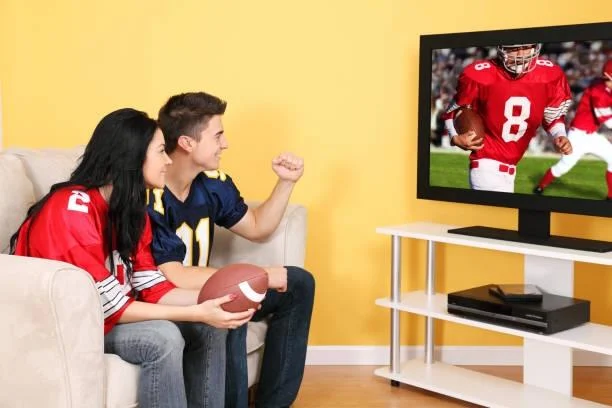
The catalyst for this transformation is the rapid migration of audiences from traditional linear broadcast to digital environments. This shift is most visible in the crown jewel of television: live sports. Traditionally the last bastion of the "appointment viewing" model, sports are increasingly being consumed through digital portals. Recent data from Prosper Insights & Analytics reveals a seismic shift in behavior, particularly among high-value demographics like NFL fans. Nearly 30% of NFL viewers now access sports content online, and over 30% consume sports through mobile devices.

This fragmentation initially appeared to be a nightmare for advertisers, but it has proven to be a goldmine for data-driven precision. In a Connected TV environment, every ad served is a digital event. Unlike a broadcast signal sent into the ether, a CTV ad is delivered to a specific household or device, allowing for a level of granular tracking previously reserved for search engines and social media. This digital infrastructure provides the "closed-loop" feedback system that has been the missing link in television advertising for seventy years.
The Scientific Method Applied to Creativity
In this new landscape, television advertising is moving away from the "spray and pray" model and toward a cycle of hypothesis, experimentation, and validation. Today, 43% of marketers are already utilizing AI or machine learning to dissect the performance of their creative choices in CTV commercials. This is where the scientific method takes hold.
Under the old regime, a creative concept was tested in focus groups—artificial environments that rarely reflect real-world behavior—before being greenlit for a multi-million dollar buy. In the new regime, a campaign can be treated as a series of experiments. Marketers can now test specific hypotheses: Does a character-driven narrative drive more web traffic than a product-focused one? Does a blue background in the final frame increase conversion rates more than a white one? Does an ad perform better during the high-tension first quarter of a football game or during the fatigue of the fourth?
Jason Fairchild, Founder and CEO of tvScientific, notes that for the first time, every variable of a campaign is under the microscope. This includes not just the content of the ad, but the context in which it appears. Machine learning algorithms can now analyze whether a commercial for a luxury SUV performs better when it follows a prestige drama or a live news broadcast, and adjust the buying strategy in real-time based on actual sales data rather than projected ratings.
Bridging the C-Suite Divide
The most significant implication of this shift is the newfound credibility it grants the CMO. Historically, the relationship between the CMO and the CFO has been one of creative tension, often characterized by a lack of shared language. When budgets tighten, the marketing spend is frequently the first to be slashed because its impact is the hardest to defend in a spreadsheet.

By adopting a performance-based marketing model for television, CMOs can finally "look a CFO in the eye," as Fairchild puts it, and show them a direct correlation between dollars in and dollars out. Television is no longer just a "top-of-funnel" awareness tool; it is becoming a "performance" channel. By tying ad exposure directly to business outcomes—such as website visits, app downloads, or verified in-store purchases—marketing leaders can justify their budgets with the same empirical evidence used by their peers in operations and finance.
This accountability is particularly crucial in the current economic climate. As eMarketer has observed, the transition of CTV into a performance marketing channel is accelerating as brands face increased pressure to do more with less. In an era of economic uncertainty, the ability to prove that a $10 million television buy generated $30 million in incremental revenue is the difference between a budget cut and a budget expansion.
Liberation Through Data
A common critique of this data-driven evolution is the fear that it will stifle creativity. There is a concern that "advertisements by committee" or "creative by algorithm" will lead to a bland, homogenized landscape where every ad looks and feels the same because it has been optimized for a click.
However, industry experts argue that the opposite is true. Rather than killing creativity, the scientific method liberates it. In the traditional model, taking a creative risk was a massive gamble; if a bold, unconventional ad failed, the CMO had no way to explain why, other than that it "didn’t resonate." This led to a culture of playing it safe.
In a data-rich environment, creatives are empowered to push boundaries. They can develop multiple, wildly different concepts and let the market decide which one works. Because the feedback loop is nearly instantaneous, a brand can run a "bold" concept on a small scale, validate its performance through data, and then confidently scale the winners. It removes the fear of the unknown, allowing for more daring artistic choices because those choices are backed by a safety net of real-time performance metrics.

The Future: Beyond the 30-Second Spot
As we look toward the future, the "scientific" transformation of TV advertising will likely move beyond the 30-second spot. We are entering an era of hyper-personalization where two neighbors watching the same football game may see entirely different commercials based on their purchasing history or demographic profile.
Furthermore, the rise of retail media networks—where retailers like Amazon or Walmart use their own shopper data to sell ad space—is beginning to merge with CTV. This allows a brand to not only see that a consumer watched their ad, but that they subsequently bought the featured product using the same account on a retail platform. This level of "attribution" was once the holy grail of marketing; now, it is becoming the industry standard.
The era of television advertising as a dark art is coming to an end. The jingles, the mascots, and the clever slogans are not disappearing, but they are being moved into the laboratory. They are being tested, refined, and deployed with a level of precision that was unimaginable just a decade ago. For the CMO, this is the end of the "shrug" and the beginning of a new era of executive influence. For the first time, the biggest screen in the house is also the most accountable tool in the marketing toolkit. Television has finally graduated from a game of chance to a game of science.
