


The consumer electronics market, particularly the segment dedicated to home networking infrastructure, is currently witnessing a significant inflection point, driven by aggressive pricing strategies for high-specification hardware. The Google Nest Wi-Fi Pro, the company’s flagship mesh system introduced in late 2022, has just breached a critical price threshold, hitting a historic low that positions it as an exceptionally compelling proposition for users seeking to overhaul their home connectivity. Available now at a staggering $100 reduction from its launch price, bringing the cost down to just $99.99 for a single unit via major retailers like Amazon, this markdown represents more than just a seasonal sale; it signals a maturing of the Wi-Fi 6E ecosystem in the consumer space and potential shifts in Google’s product lifecycle strategy.
Contextualizing the Upgrade: The Arrival of Wi-Fi 6E
To fully appreciate the significance of this pricing adjustment, one must understand the technological leap represented by the Nest Wi-Fi Pro. Launched as Google’s answer to high-performance mesh networking, the device was one of the early adopters of the Wi-Fi 6E standard. This standard is fundamentally different from previous generations because it unlocks the 6GHz frequency band. Historically, Wi-Fi operated on the congested 2.4GHz and 5GHz bands. The addition of 6GHz provides a vast swath of clean, uncongested spectrum, resulting in demonstrably lower latency and significantly higher throughput, provided the client devices also support 6E.
For consumers upgrading from older Wi-Fi 5 (802.11ac) or even early Wi-Fi 6 systems, the Pro unit offers a performance ceiling up to 5.4Gbps across its three bands (2.4GHz, 5GHz, and the newly available 6GHz). This capability is crucial in modern smart homes where the device density is escalating rapidly. A typical household today might host dozens of connected devices—smart speakers, thermostats, security cameras, multiple smartphones, tablets, and streaming boxes—all competing for bandwidth. Where legacy routers often buckle under the load of 10 to 15 actively communicating devices, the Nest Wi-Fi Pro is engineered to manage upwards of 100 simultaneous connections per unit before experiencing performance degradation. This robustness is a direct result of its advanced tri-band architecture and superior processing power, features that were previously reserved for high-end, enthusiast-grade routers commanding significantly higher price tags.
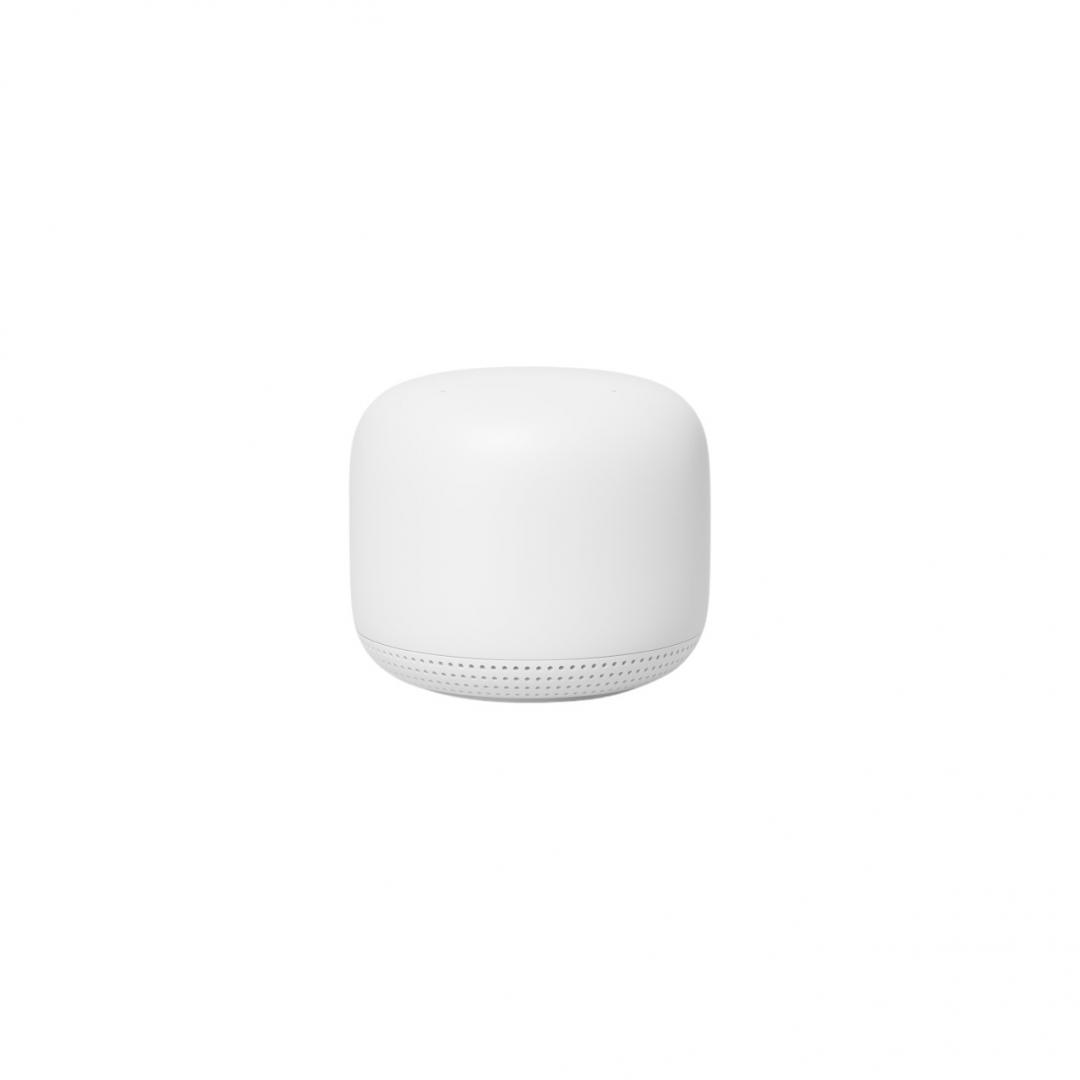
The availability across all aesthetic variants—Snow, Fog, Lemongrass, and Linen—ensures that users do not have to compromise on interior design preferences to secure this performance upgrade, a subtle but important nod to the increasing integration of networking hardware into the home decor landscape.

Industry Implications: Market Dynamics and Ecosystem Maturation
This record-low price point carries significant implications for the broader networking hardware industry. Firstly, it suggests that the initial high-margin phase for Wi-Fi 6E consumer hardware is concluding. As more manufacturers release competitive Wi-Fi 6E and even nascent Wi-Fi 7 hardware, the older generation of premium devices must rapidly decrease in price to maintain market relevance. Google, known for its aggressive software updates and ecosystem integration, is likely using this price adjustment to cement its mesh footprint before the next major standard fully saturates the market.
Secondly, this positions the Nest Wi-Fi Pro as a direct competitor to mid-range Wi-Fi 6 systems that are still fetching near-original MSRP. A consumer who might have been considering an older, high-end Wi-Fi 6 mesh system is now presented with a superior technology (Wi-Fi 6E) at a comparable or lower price point. This is a powerful disruptive force, potentially accelerating the obsolescence of non-6E hardware still sitting on retail shelves.
Furthermore, for Google, the Nest Wi-Fi Pro acts as a gateway device. Once a user integrates this hardware into their home, they are more likely to remain within the Google Home ecosystem for future smart home control and automation. The seamless integration facilitated by the Google Home app, which manages setup, parental controls, and diagnostics, creates a sticky user experience that competitors struggle to replicate without the depth of Google’s software integration.
Expert Analysis: Beyond Raw Speed
While the raw specifications—5.4Gbps peak theoretical speed and tri-band operation—are impressive marketing figures, the true value proposition lies in the mesh capabilities and intelligent software management.
Mesh Topology and Coverage: The Pro units are designed for mesh deployment. A single unit provides excellent coverage for approximately 2,200 square feet. However, the ability to seamlessly add satellite units allows users in larger or complex floor plans to eliminate dead zones without manual channel switching or connection drops, hallmarks of older range extenders. The "blanketing" effect of a well-configured mesh system ensures consistent signal quality, which is vital for latency-sensitive applications like cloud gaming or high-resolution video conferencing.
The 6GHz Advantage in Practice: The 6GHz band is not merely about higher speed; it’s about reduced interference. In dense urban environments, the 2.4GHz band is often saturated with Bluetooth, legacy Wi-Fi devices, and IoT sensors, while the 5GHz band is heavily utilized by neighbors’ networks. The 6GHz band offers wide, clean channels that are prioritized for backhaul traffic (communication between the router and its satellite nodes) or for the newest client devices capable of utilizing it. This dedicated pipeline drastically improves the reliability of data transmission, even when the 2.4GHz and 5GHz bands are heavily utilized by legacy devices.
Device Capacity and Future-Proofing: The capability to reliably support 100+ devices per node is not an arbitrary metric. It reflects the increased computational overhead required by modern protocols like WPA3 encryption and the management of countless small data packets characteristic of IoT traffic. By investing in a router that can handle this capacity at a discounted price, consumers are effectively future-proofing their network infrastructure against the inevitable proliferation of connected sensors and appliances over the next several years. This addresses a pain point often ignored by budget routers: they might handle five active laptops well, but they collapse when faced with fifty active smart bulbs and locks demanding routine status checks.
Future Impact and Networking Trends
This aggressive pricing trend for Wi-Fi 6E equipment signals a broader shift towards consumer readiness for the next generation of wireless technology. As inventory clears, the focus will inevitably shift to Wi-Fi 7 (802.11be). However, the current pricing scenario creates a "sweet spot" dilemma for consumers: should they jump to the bleeding edge of Wi-Fi 7, which is currently expensive and lacks widespread client device support, or should they capitalize on the steep discount for robust, proven Wi-Fi 6E technology?
For the vast majority of users whose internet service tiers do not yet exceed 1Gbps, Wi-Fi 6E offers more than enough headroom for current needs and provides superior stability due to the 6GHz band. This means the Nest Wi-Fi Pro, at $99.99, transcends being a mere "deal"; it becomes a benchmark for value in high-performance home networking.
The long-term impact will be seen in the accelerated adoption of Matter and other smart home interoperability standards. These standards rely on reliable, low-latency networking to function correctly. By making advanced mesh networking more accessible, Google is indirectly lowering the barrier to entry for sophisticated, interconnected smart home setups. Consumers who might have hesitated due to perceived complexity or cost of upgrading their core network are now encouraged to invest, which in turn drives demand for more advanced smart home products that benefit from this enhanced connectivity layer.

The minimalist design, often overlooked in technical reviews, also plays a role in future trends. As networking gear moves out of closets and into visible living spaces, aesthetics matter. The clean, sculptural look of the Nest Wi-Fi Pro allows it to be placed optimally for signal strength without becoming an eyesore, a subtle design choice that supports better network performance by encouraging proper placement rather than concealment.
In summary, the current availability of the Google Nest Wi-Fi Pro at its lowest recorded price is a market event that warrants attention. It represents a significant opportunity to acquire best-in-class Wi-Fi 6E technology, essential for managing the dense, demanding environments of modern connected homes, at a price point previously unattainable for such a feature-rich mesh system. This is less about an impulse buy and more about a strategic infrastructure upgrade becoming suddenly affordable.
