

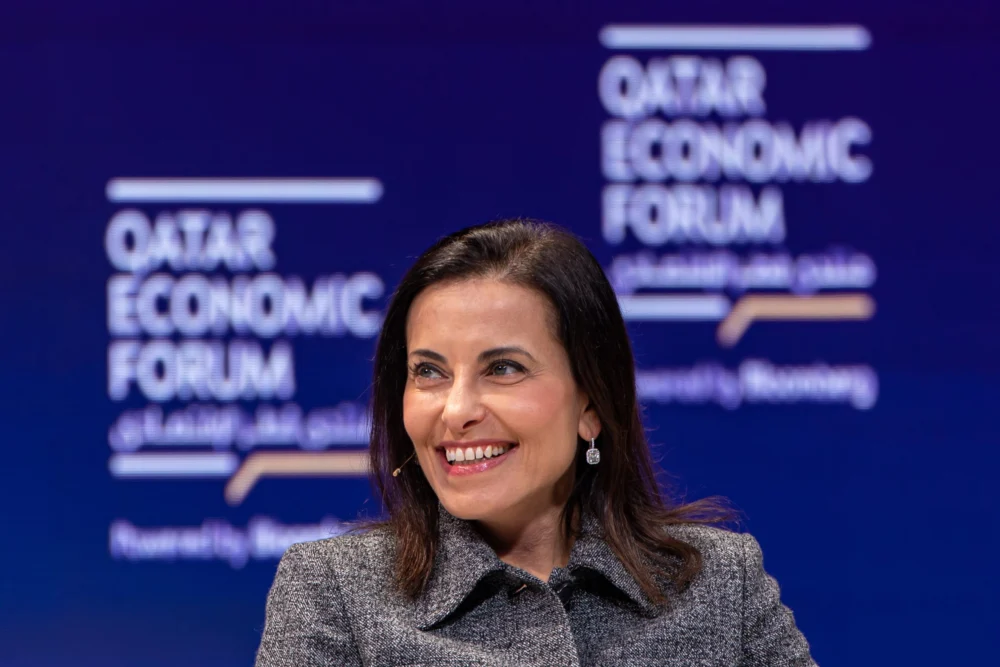
In a move signaling a profound pivot toward international policy and regulatory navigation, Meta announced the appointment of Dina Powell McCormick to the critical roles of President and Vice Chairman. The announcement, made public on Monday, January 12, 2026, places a seasoned veteran of global finance and geopolitical diplomacy directly within the inner sanctum of the technology giant’s management team. Her mandate, as described by the company, is to guide Meta’s overall strategy and execution during what is arguably the most challenging regulatory climate in the firm’s history.
The hiring immediately resonated across both Wall Street and Washington D.C., confirming the increasing convergence of high-level politics, international trade, and technological infrastructure management. Mark Zuckerberg, Meta’s Chief Executive Officer, underscored the necessity of this experience in a corresponding statement: “Dina’s experience at the highest levels of global finance, combined with her deep relationships around the world, makes her uniquely suited to help Meta manage this next phase of growth as the company’s President and Vice Chairman.” This emphasis on "global finance" and "relationships" is highly instructive, suggesting that McCormick’s primary value lies in mitigating macroeconomic and geopolitical risks that threaten Meta’s ambitious future roadmap, particularly the costly and heavily scrutinized transition toward the metaverse.
The Profile of a Geopolitical Strategist
Dina Powell McCormick arrives at Meta with a resume defined by complex international transactions and high-stakes diplomatic maneuvering, a background notably divergent from the typical Silicon Valley executive track. Before taking the helm at Meta, she served as the Deputy National Security Advisor for Strategy under President Donald Trump, where she was instrumental in shaping key foreign policy initiatives and navigating sensitive relationships with allies and rivals. This tenure followed significant prior governmental service dating back to the George W. Bush administration, where she served under then-Secretary of State Condoleezza Rice, specializing in economic development and public diplomacy.
Perhaps equally important to her governmental pedigree is her extensive background in the financial sector. Powell McCormick spent sixteen years at Goldman Sachs, ultimately ascending to the rank of partner and holding several senior leadership positions focused on global markets and corporate responsibility. This combination of deep financial acumen, familiarity with complex regulatory environments, and high-level political connectivity makes her an exceptionally valuable asset for a company like Meta, which faces unprecedented pressure on its business model from regulatory bodies across three continents.
The significance of the hire was immediately recognized in political circles, highlighted by a celebratory post from former President Trump on Truth Social, praising her service during his administration and calling her "A great choice by Mark Z!!!" Such endorsements underscore the political capital and network she brings to Menlo Park, resources that Meta desperately needs as it grapples with issues far beyond simple product development.
Meta’s Strategic Imperative: Managing Non-Market Risk
Meta’s decision to install an executive with such specialized governmental experience in a dual operational and governance role (President and Vice Chairman) is not merely about lobbying; it is about embedding geopolitical risk management directly into core corporate strategy. The company is currently engaged in battles on multiple fronts:
- Antitrust Scrutiny: Facing ongoing challenges from the U.S. Federal Trade Commission (FTC) regarding past acquisitions (like Instagram and WhatsApp), and potential future regulatory hurdles for any expansion into the burgeoning AI space.
- Global Regulatory Divergence: The European Union’s implementation of the Digital Markets Act (DMA) and Digital Services Act (DSA) mandates profound changes to Meta’s core advertising and platform operations. Simultaneously, countries like India, Brazil, and Australia are enacting stringent local content, data residency, and platform liability laws, creating a fragmented and costly global compliance landscape.
- Geopolitical Hotspots: Meta platforms remain central to global political discourse, conflict, and information operations. Navigating censorship demands in autocratic regimes, managing platform integrity during elections, and dealing with potential government shutdowns requires sophisticated diplomatic and security expertise.
- The Metaverse Investment: The massive capital outlay required for the metaverse demands long-term stability and regulatory acceptance. If the metaverse is to become the next dominant computing platform, Meta must ensure that governments do not prematurely restrict its development through ill-fitting legislation or outright bans based on privacy or competition concerns.
McCormick’s experience as Deputy National Security Advisor provides a rare lens through which to view these risks, especially regarding international trade and security implications. Her role is likely to focus on anticipating future legislative and diplomatic maneuvers by sovereign states and building robust defense strategies long before threats materialize into formal litigation or legislation.
Industry Implications: The Politicization of Tech Leadership
Meta’s hire is not an isolated incident but rather the latest, and perhaps most high-profile, example of a pervasive trend: the "Washingtonization" of Silicon Valley. Over the last decade, Big Tech firms have realized that the primary constraints on their growth are no longer technical or market-based, but political and regulatory. Consequently, the revolving door between government and tech has accelerated dramatically.
Companies like Google, Amazon, and Apple have all hired former ambassadors, trade representatives, and national security officials to fill senior policy and executive roles. This phenomenon reflects an understanding that effective corporate strategy in the 2020s must include deep proficiency in international relations, trade law, and public sector communication.
This trend carries significant implications for the industry’s independence and public perception. Critics often decry these appointments as attempts at "regulatory capture"—the process by which regulated industries exert undue influence over regulatory bodies. By hiring individuals who understand the internal mechanics, priorities, and vulnerabilities of government institutions, tech companies aim to shape policy outcomes favorably.
For Meta specifically, which has long struggled with public trust and congressional scrutiny, the appointment of an executive associated with a politically divisive administration introduces a complex dynamic. While McCormick’s credentials clearly bolster Meta’s policy infrastructure, they also necessitate careful management of political optics, ensuring that her strategic guidance is perceived as non-partisan and focused on responsible corporate governance, rather than political alignment.

Expert Analysis: Decoding the Dual Mandate
The decision to bestow the titles of both "President" and "Vice Chairman" suggests a role with dual functionality, bridging the operational demands of the CEO’s office with the high-level governance required by the Board of Directors.
As President, McCormick is expected to be deeply involved in the day-to-day strategic execution across Meta’s various product families—Facebook, Instagram, WhatsApp, and Reality Labs. This is an operational role focused on ensuring that global execution aligns with the company’s overarching strategic vision, especially where that vision intersects with government requirements, market access, and financial stability.
The title of Vice Chairman, however, points to a governance function. This places her in a position of direct influence over the Board’s agenda, particularly concerning high-level risk, major mergers and acquisitions (which require regulatory approval), and international capital allocation. This role is crucial for ensuring that Meta’s long-term investments, such as those in AI development and the metaverse infrastructure, are sufficiently insulated from political volatility. Her experience at Goldman Sachs, specifically as a partner overseeing complex financial instruments and global markets, makes her uniquely qualified to address the Board on matters of financial resilience against sovereign risk.
An expert in corporate governance might interpret this structure as an effort by Zuckerberg to delegate the most politically sensitive aspects of the business—the interface with global power centers—to a trusted, highly networked professional, allowing the CEO to concentrate resources and focus on the technological development pipeline, particularly AI and the core metaverse infrastructure.
The Broader Strategy: A Coordinated Policy Push
The appointment of Dina Powell McCormick is particularly illuminating when viewed alongside other recent senior hires in Meta’s legal and policy departments. Just the previous week, Meta secured the services of Curtis Joseph Mahoney, a former Microsoft legal executive who also held a significant policy role as a Deputy U.S. Trade Representative during the Trump administration’s first term. Mahoney was appointed as Meta’s Chief Legal Officer.
The simultaneous hiring of two high-ranking officials with overlapping experience in international trade, executive branch processes, and complex regulatory enforcement signals a clear and aggressive organizational shift. Meta is not merely looking for generalist legal counsel; it is seeking specialists who possess intimate knowledge of how the U.S. government—and by extension, other allied governments—negotiate trade, enforce digital policies, and shape technology standards.
This coordinated policy recruitment suggests a strategy focused on three key outcomes:
- Trade and Market Access: Utilizing expertise in trade negotiation to preserve market access in key developing regions where regulatory barriers are rapidly escalating.
- Executive Branch Influence: Ensuring Meta’s perspectives are heard and understood at the highest levels of the Executive Branch, crucial during periods of rapid regulatory development.
- Proactive Legal Defense: Building a legal and policy framework capable of anticipating and preempting future antitrust and data localization challenges globally.
Future Impact and Trends
The appointment of Dina Powell McCormick firmly establishes the trend that future competition among global tech behemoths will be won or lost in legislative halls and diplomatic chambers, not solely in labs or app stores. For Meta, this executive addition is expected to yield several tangible impacts:
First, it will likely sharpen Meta’s regulatory posture in critical jurisdictions, especially the Middle East and Asia, areas where Powell McCormick has demonstrable experience and deep connections. Her understanding of complex international economic relationships will be vital as Meta attempts to monetize products like WhatsApp Business in challenging markets.
Second, the hire signals to investors that Meta is taking regulatory headwinds seriously, treating geopolitical risk as a core operational threat that requires executive-level mitigation. This stabilization of external affairs could help solidify investor confidence in the long-term viability of the costly Reality Labs division.
Third, and most broadly, McCormick’s role will contribute to the ongoing evolution of the C-suite in Big Tech. The traditional executive team—focused on engineering, finance, and marketing—is now being supplemented by a layer of highly specialized policy and diplomacy executives. The technology industry, once viewed as separate from the traditional power structures of finance and government, is now irrevocably intertwined with them. Meta’s strategic maneuver underscores a fundamental truth of the modern digital economy: the infrastructure of the future must be built not only with cutting-edge code but also with carefully cultivated global political relationships. The tenure of Dina Powell McCormick will be a crucial test case for how successfully Silicon Valley can integrate Washington’s diplomatic playbook into its pursuit of global digital dominance.
