


The persistent and hydra-like nature of the cybercriminal ecosystem has been underscored by the latest incident involving BreachForums, a notorious platform dedicated to the trade, sale, and distribution of illicitly obtained data and access to compromised corporate infrastructures. A significant data artifact, purportedly containing the user database of a recent iteration of the forum, has surfaced on the public internet, representing a substantial operational security (OPSEC) failure for the underground community. This breach throws into sharp relief the inherent instability and constant threat of exposure faced by centralized hubs for cybercriminal activity.
BreachForums itself is not a singular entity but rather a lineage of clandestine message boards. Its genesis lies in the ashes of RaidForums, an earlier, high-profile marketplace that was definitively dismantled by international law enforcement agencies, leading to the arrest of its primary architect, known by the handle "Omnipotent." Following such high-profile law enforcement actions, successors invariably emerge, often attempting to capture the market share and user base of their predecessors. BreachForums has played this role repeatedly, rebranding and relocating across various domains to evade persistent takedown attempts. This cycle of emergence, operation, and seizure has led to cynical, yet plausible, speculation within the security community that some iterations of the forum might function, intentionally or otherwise, as sophisticated law enforcement honeypots designed to map out and track key threat actors.
The immediate catalyst for this recent exposure was the dissemination of a compressed archive, named breachedforum.7z, by a source claiming association with the ShinyHunters extortion syndicate. While representatives from ShinyHunters have since distanced themselves from the distributor of this specific file, the timing and context are significant, given the complex, overlapping threat landscapes currently dominated by data extortion groups. The archive reportedly contains three critical components, the most concerning of which is the user registry data.
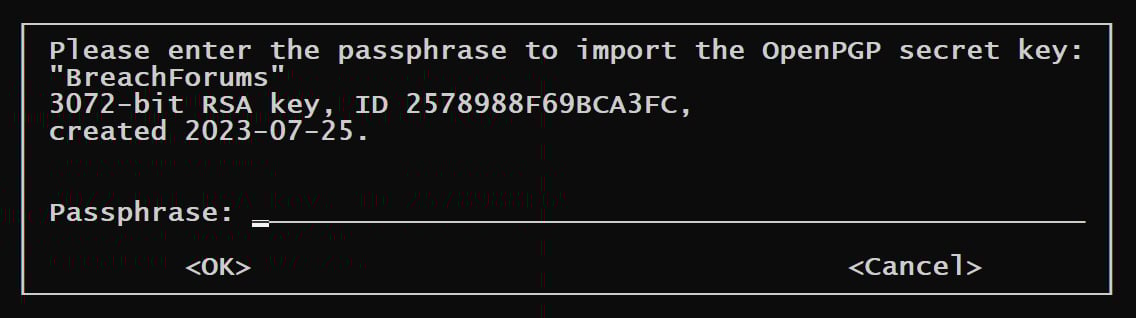
One file within the dump is an ASC-encoded PGP private key (breachedforum-pgp-key.txt.asc). This key holds historical importance as it was allegedly used by the BreachForums administrators to cryptographically sign all official communications emanating from the platform’s leadership. While the key itself is now public, alleviating the immediate risk of forgery, it remains protected by a passphrase. Without this crucial secondary credential, the key’s utility for signing new, seemingly legitimate messages is nullified, thereby limiting its immediate potential for administrative impersonation. However, the mere exposure of administrative signing materials is a marker of deep compromise.

The core of the leak resides in the databoose.sql file. This file appears to be a direct export of the MyBB user table (mybb_users), documenting the activity and identity markers of 323,988 registered members. The data fields extracted include display names, precise registration timestamps, and, critically, associated IP addresses, alongside other internal forum metadata.
Analyzing the Data Integrity and OPSEC Implications
A preliminary forensic analysis of the dumped SQL table reveals an interesting pattern regarding the IP addresses. A significant majority of the entries list the loopback address, 127.0.0.9 (or 0x7F000009 in hexadecimal notation). In the context of web forums, this strongly suggests that many users registered or accessed the site through proxy chains, VPNs, or Tor that effectively obscured their true origin, leading the forum software to record the connection as originating internally, or perhaps indicating a large volume of automated bot accounts.
However, the analysis identified 70,296 records that deviate from this pattern, resolving instead to public, routable IP addresses. For the individuals behind these specific accounts, this data represents a severe OPSEC failure. These public IPs, if cross-referenced with historical logs, ISP records, or other data breaches, provide law enforcement agencies and specialized cybersecurity research teams with tangible leads to the real-world identities or network infrastructure used by these forum participants. In the high-stakes world of cybercrime, where anonymity is the primary currency, the exposure of even a single confirmed public IP address can trigger cascading investigative leads.
The temporal data embedded in the leak adds another layer of complexity. The most recent registration date noted within the database snapshot is August 11, 2025. This date coincides precisely with the shutdown of the previous primary BreachForums instance operating under the breachforums[.]hn domain. That specific domain seizure followed reports detailing the arrests of several alleged operators in France. This synchronization suggests the leaked data is not from a currently active, stable forum, but rather represents a critical snapshot taken during a period of immense organizational chaos and transition following a major disruption.
The Honeypot Allegations and Historical Context
The period surrounding the August 2025 takedown was rife with internal conflict and external accusation. On the very day the .hn domain went dark, a member associated with the ShinyHunters group made public statements, specifically via a Pastebin link shared on the "Scattered Lapsus$ Hunters" Telegram channel, alleging that the BreachForums platform was, in fact, a sophisticated law enforcement honeypot. These claims were vociferously denied by the forum administrators at the time. This historical tension—the constant battle between administrators trying to maintain trust and external actors sowing discord—is pertinent when evaluating the source and timing of this latest data dump.

Furthermore, the fate of the .hn domain underscores the relentless pressure on these platforms. In October 2025, the FBI officially seized the breachforums[.]hn portal. This seizure occurred after the domain had been co-opted, or perhaps reactivated under new control, to facilitate extortion activities related to the massive data compromises suffered by Salesforce customers, attacks largely attributed to the ShinyHunters collective. This intertwined history—ShinyHunters being implicated in the fallout surrounding a domain that was seized, and now a ShinyHunters-adjacent group releasing a database from the subsequent relaunch—suggests a deep, possibly retaliatory, entanglement between various cyber factions and federal agencies.
Administrator Response and Security Posture
The current operational administrator of BreachForums, identified only as "N/A," has issued a formal statement addressing the data exposure. N/A characterized the incident not as a live breach of the active site, but as the leakage of an archival backup file that was temporarily accessible during a specific recovery phase. According to N/A’s account, the MyBB user table and the PGP key were placed in an unsecured directory while the forum was being restored following the collapse of the .hn version.
N/A maintains that this unsecured folder was exposed for a "very short period of time" and, crucially, was downloaded only a single time during that narrow window. While the administrator attempts to mitigate the severity by pointing out that most users employed disposable email addresses (a common expectation in such circles) and that the majority of IP addresses are non-identifiable loopbacks, the fact remains that over 70,000 users have potential real-world connections exposed. The administrator’s advice—that members should always utilize disposable email services—serves as an implicit admission that identity compromise remains an enduring threat on the platform.
Industry Implications and Expert Analysis
This incident transcends a simple database leak; it illuminates critical structural weaknesses in the decentralized, yet interconnected, dark web marketplace model.
1. The Fragility of Successor Platforms: The constant need for BreachForums to relaunch underscores the futility of centralized hubs for illegal commerce. While one server or domain is taken down, the community infrastructure immediately splinters and reforms elsewhere. However, these transitions are chaotic. As seen here, the critical migration phase—the movement of user data from an old system to a new one—is precisely when OPSEC lapses are most likely to occur, providing a high-value target for both competitors and law enforcement.
2. Value of Historical Data: For cybersecurity intelligence firms and government agencies, this leak is a treasure trove, even if partially obfuscated. The 70,000 public IPs provide crucial anchors for attribution efforts. Furthermore, the inclusion of registration timestamps allows researchers to correlate forum membership with known data dumps or cyberattacks attributed to specific threat actors. If an actor was newly active shortly after a major breach, and their associated forum account registration date aligns, the intelligence value is exponentially increased. The exposure of the PGP key, even if passphrase-protected, requires immediate revocation and replacement by administrators across all active systems, as attackers often focus immense resources on brute-forcing such administrative keys.
3. The Blurring Lines of Affiliation: The involvement of ShinyHunters-named entities in the distribution and the historical context surrounding the .hn domain’s demise highlights the fluid alliances and rivalries within the cybercrime landscape. Whether this leak was an act of revenge, competitive sabotage, or a direct operational move by law enforcement remains ambiguous, but it serves as a potent reminder that trust within these criminal environments is non-existent.
Future Trajectory of Underground Forums
The persistence of BreachForums, despite multiple seizures, suggests a maturation of the infrastructure used by these groups. Future iterations are likely to adopt even more robust, decentralized architectures, perhaps moving away from traditional forum software like MyBB toward encrypted, peer-to-peer communication methods or blockchain-based systems to increase resilience against single points of failure like a central database.
The data leak confirms that user complacency is a significant vector of compromise, even within communities predicated on high security awareness. The fact that an administrator would store a critical user table and the administrative signing key in an "unsecured folder" during a system migration points to human error overriding established security protocols when under pressure. This principle—that human error is the weakest link—remains universally applicable, whether securing a Fortune 500 cloud environment or maintaining an illicit underground forum.
Ultimately, the exposure of nearly 325,000 records from a major cybercrime marketplace reinforces a fundamental dynamic: every centralized repository of sensitive information, regardless of its intended legality, represents an exploitable target. For the 70,000 individuals whose network locations might now be traceable, the fallout from this archival misstep will likely manifest as intense, targeted scrutiny from global investigative bodies for the foreseeable future. The cyber underbelly is constantly reconstructing itself, but the scars of past operational mistakes, like this dated database, have a long half-life.
