

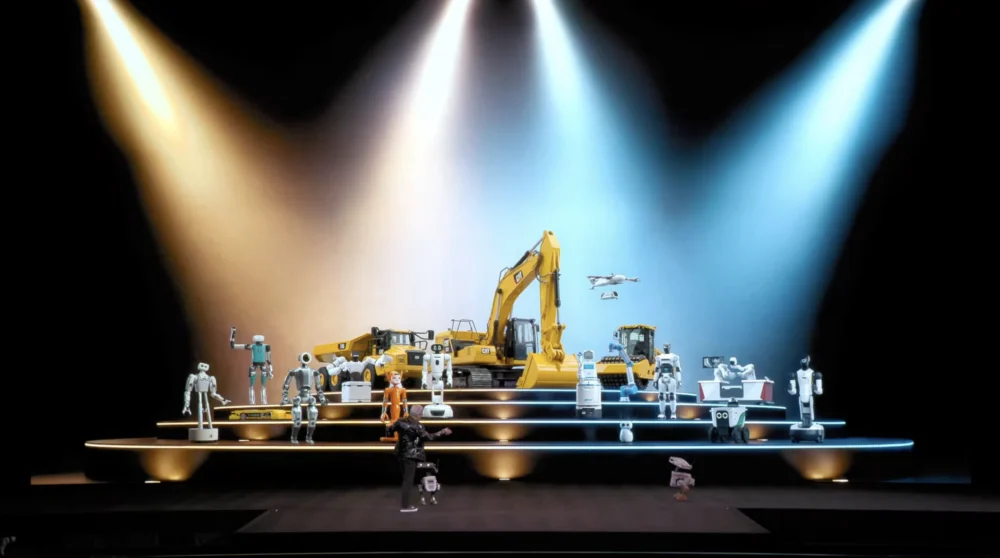
For years, the revolutionary potential of Artificial Intelligence remained trapped behind glass screens. The early 2020s were defined by Large Language Models (LLMs) and sophisticated generative algorithms that excelled at manipulating data, text, and images. They solved the problems of cognition and creativity, proving AI could reason, write, and visualize with unprecedented speed. However, this intelligence lacked a body. It was a powerful, disembodied mind. At the Consumer Electronics Show (CES) 2026 in Las Vegas, that paradigm definitively shattered. The annual showcase transformed from a display of smart gadgets into the global debutante ball for "Physical AI" (P-AI)—a term encompassing robotics and autonomous systems designed not just to compute, but to act within the real, three-dimensional world.
The shift was not subtle; it was a tectonic realignment of industry focus. Where previous CES events highlighted faster chips, thinner screens, and incremental smart-home connectivity, 2026 was dominated by hardware that moved, lifted, gripped, and reacted. This momentum underscores a fundamental realization within the technology sector: the highest economic value of AI is achieved when it bridges the digital and physical divide, moving from abstract processing to concrete operational execution.
The Technological Genesis of Embodied AI
The explosion of P-AI at CES 2026 was the culmination of two converging technological streams. First, the maturation of foundational AI models provided the necessary "brains." Large Visual Models (LVMs) and Action Models (AMs), trained on petabytes of real-world video and robotic interaction data, gave these systems the ability to interpret complex environments and predict the outcomes of physical movements. The intelligence previously used to answer complex questions is now being leveraged to solve complex manipulation problems—determining the correct grip force for an object or navigating a cluttered warehouse floor.
The second stream was the necessary advancement in hardware efficiency and sensing. Operating P-AI requires intensive computation to be performed at the "edge"—the device itself—to ensure low-latency response times critical for safety and precision. The 2026 wave of robots showcased sophisticated sensor fusion capabilities, blending LiDAR, high-resolution cameras, tactile sensors, and inertial measurement units (IMUs) to create a robust, real-time understanding of their surroundings. This level of environmental awareness moves robotics beyond pre-programmed pathways and into the realm of truly adaptive, flexible automation.
Case Studies in Physical Manifestation
The exhibits at CES 2026 demonstrated the vast spectrum of P-AI applicability, ranging from the revolutionary to the surprisingly mundane.
The undeniable centerpiece of the robotics hall was the newly redesigned Atlas humanoid robot from Boston Dynamics. While Atlas has long been a symbol of advanced agility, the 2026 iteration showcased significant progress in robust, general-purpose manipulation. Gone were the carefully staged, high-failure-rate stunts of previous years; in their place were demonstrations of Atlas performing complex, utility-focused tasks, such as precisely stacking irregularly shaped objects or navigating dynamically changing factory layouts. The focus had clearly shifted from demonstrating impressive mobility to proving industrial viability and dexterity—a key hurdle in the deployment of bipedal systems. This signaled that the high-risk, high-reward research into humanoid forms is rapidly transitioning into scalable commercial product development, targeting sectors like construction, disaster relief, and specialized manufacturing.
Further along the industrial spectrum, the automotive sector showcased AI not just in autonomous driving algorithms, but in the assembly process itself. Robotic arms, previously requiring months of specialized programming for a single welding sequence, were demonstrated moving car parts with generalized intelligence. These P-AI systems could adapt to slight variations in component placement, identify and correct minor errors in real-time, and even safely collaborate with human workers. One striking, if slightly theatrical, demonstration involved industrial bots performing synchronized, complex movements—a "dance" that served to illustrate their perfected coordination, speed, and reliability in handling delicate components. This shift represents a move toward "agile automation," where production lines can be rapidly reconfigured based on market demand without extensive downtime for robot recalibration.
Perhaps the most telling, and admittedly bizarre, indicator of P-AI’s pervasive creep was the proliferation of AI-enabled consumer appliances. The much-discussed AI-powered ice maker, for instance, wasn’t merely a gimmick. It used internal sensors and predictive models to optimize ice production based on consumption patterns, water quality, and even local humidity forecasts, minimizing energy waste and ensuring a constant supply tailored to household needs. While seemingly trivial, this type of integration confirms that AI is becoming the invisible operational core of standard hardware, solving efficiency problems at the micro-level of daily life.
On the specialized front, security and defense applications highlighted the ability of P-AI to operate in hostile or restricted airspace. One system, designed for critical infrastructure protection, demonstrated autonomous drone interception capabilities, utilizing advanced visual tracking and kinetic net guns to neutralize unauthorized aerial vehicles. This combination of highly specialized hardware and sophisticated real-time decision-making illustrates the power of embodied intelligence in high-stakes environments where human reaction time is insufficient.
Industry Implications: The Remaking of the Labor Market
The dominance of Physical AI at CES 2026 has profound implications for the global economy, particularly in manufacturing, logistics, and service industries.
Manufacturing and Logistics Revolution: The primary economic shift centers on the replacement of fixed automation with flexible, general-purpose robotics. Historically, robotics justified its cost only in high-volume, repetitive production. P-AI systems, however, promise to automate small-batch production and bespoke tasks efficiently. This capability is expected to spur a wave of "reshoring" manufacturing to regions with higher labor costs, as the economic differential narrows when intelligent machines handle the bulk of assembly and handling. Logistics warehouses, already heavily automated, will see P-AI systems navigating complex, unstructured environments—not just following tape lines, but dynamically optimizing routes, handling unexpected obstacles, and performing complex sorting tasks previously reserved for human dexterity.
The Rise of Service Robotics: Beyond the factory floor, the momentum is pushing P-AI into public and commercial service roles. We are rapidly moving toward a future where autonomous agents perform janitorial services, assist the elderly in care facilities, and even act as concierge staff. The ability of these systems to interpret human intent, respond contextually (thanks to integrated LLMs), and physically execute tasks represents a massive potential market for reducing operational costs in industries reliant on repetitive human labor.
Labor Augmentation vs. Displacement: The inevitable consequence of widespread P-AI deployment is disruption to the labor market. While proponents argue that P-AI will primarily augment human workers—taking over dangerous, dirty, or dull tasks—the speed and breadth of adoption suggest significant displacement in routine physical labor. Expert analysis suggests that the next five years will be defined by the urgent need for upskilling programs focused on robot maintenance, supervision, and prompt engineering for physical tasks. The job of the future may not be operating the machine, but communicating high-level goals to an autonomous physical agent.
Expert Analysis: Addressing the Control Loop and the Sim-to-Real Gap
For P-AI to move from demonstration to ubiquitous deployment, underlying technical challenges, particularly around reliability and safety, had to be addressed. The CES 2026 cohort demonstrated significant progress in two critical areas: the control loop architecture and bridging the simulation-to-reality gap.
Control Loop Complexity: Physical tasks require near-instantaneous feedback. If a robotic arm miscalculates the necessary force to lift a glass object, the result is failure. This necessitated a shift from cloud-based AI processing to highly efficient, dedicated silicon accelerators (NPUs and specialized GPUs) embedded directly within the robots. These edge computing systems allow the robot to maintain an extremely tight control loop, processing sensor data, running inference models, and adjusting actuator commands within milliseconds. The 2026 hardware debuts confirmed that chipmakers have successfully delivered the necessary power-efficiency and density to make complex, real-time P-AI viable outside of climate-controlled data centers.
The Sim-to-Real Challenge: Training a physical robot is inherently slow, expensive, and potentially damaging to the hardware. The breakthrough enabling the 2026 exhibits was the massive scaling of physics-accurate simulation environments. Companies leveraged digital twins and synthetic data generation to train P-AI models for millions of virtual hours, allowing them to encounter and solve problems that would take decades to accumulate in the real world. Advanced techniques, including Domain Randomization and sophisticated Reinforcement Learning from Human Feedback (RLHF) applied to physical movements, have minimized the performance drop-off when deploying the AI from the virtual sandbox into real-world chaos. This reduction in the "sim-to-real gap" is the primary driver allowing companies to rapidly prototype and deploy complex physical tasks.
Future Trajectories and Societal Governance
The momentum established at CES 2026 sets the stage for the next phase of AI evolution. The trend points toward increasing generalization and democratization of P-AI technology.
General-Purpose Robotics: While current P-AI often focuses on specific industrial tasks (like welding or package sorting), the ultimate goal is the general-purpose service robot capable of performing a vast array of domestic and professional duties—the vision of the true household robot assistant. This requires achieving near-human levels of dexterity in unstructured environments, a monumental challenge that involves navigating obstacles, manipulating novel objects, and learning from sparse human instructions. By 2028, industry observers predict the first widely adopted consumer robots will move beyond simple vacuuming and toward complex household management, such as organizing clutter or preparing simple meals.
Ethical and Regulatory Frameworks: The transition of AI from software to physical agents introduces unprecedented ethical and safety concerns. A faulty LLM might produce misinformation; a faulty physical agent could cause property damage or injury. The industry must rapidly develop standardized regulatory frameworks covering several areas: the guaranteed operational safety of autonomous systems in public spaces, accountability for physical errors, and data privacy related to the comprehensive sensor data collected by ubiquitous P-AI devices. The need for a "kill switch" or immediate human override capability will become non-negotiable as these systems gain autonomy in our homes and workplaces.
CES 2026 was not just a successful trade show; it was a historical demarcation line. It marked the moment the technology world collectively declared that the generative phase of AI was a prelude to the operational phase. The intelligence that once lived exclusively in the cloud has now materialized, ready to engage with the physics of reality. The age of embodied intelligence has begun, ushering in a decade where AI agents are defined not by what they can write, but by what they can physically accomplish.
