

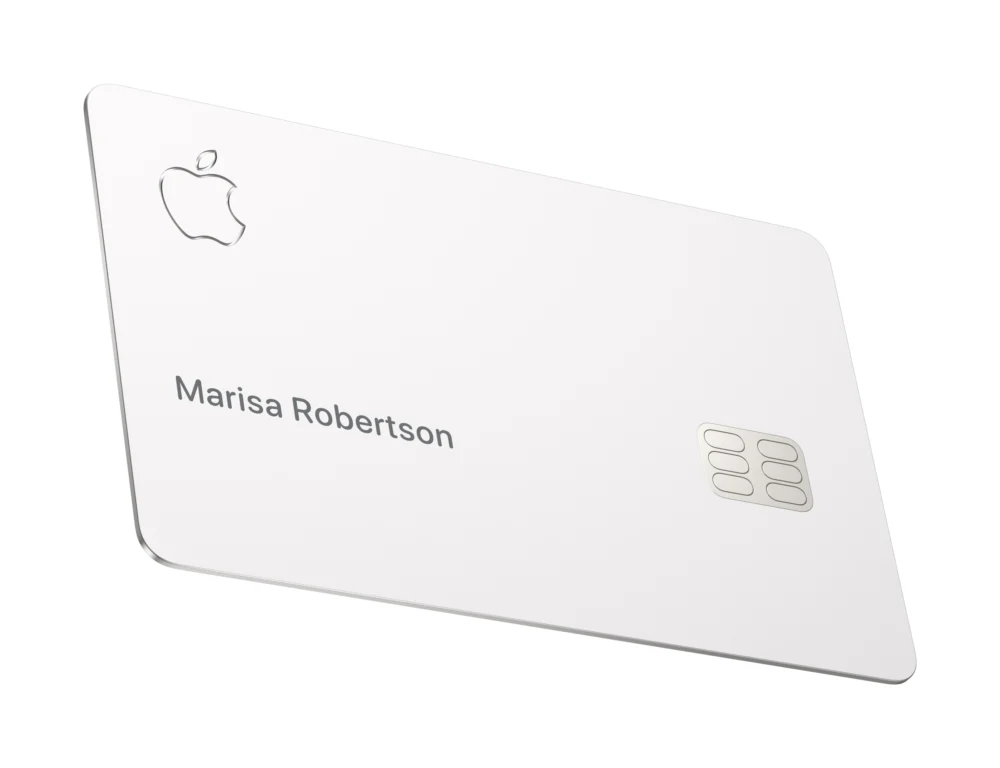
The highly anticipated restructuring of one of the most prominent co-branded credit card programs in modern finance was confirmed this week, with Apple formally announcing that JPMorgan Chase will assume the role of the primary issuer for the Apple Card, effectively ending its five-year, often turbulent, relationship with investment banking behemoth Goldman Sachs. The transition, a monumental undertaking involving the migration of a massive consumer loan portfolio, is projected to span up to 24 months, underscoring the complexity and sheer scale of the operation.
This strategic pivot sees JPMorgan Chase absorbing a portfolio valued at over $20 billion in outstanding card balances. For the banking sector, this transaction is a defining moment, validating Chase’s dominant position in consumer lending while serving as a stark financial warning regarding the high-stakes risks inherent in non-traditional banking ventures.
Crucially, Apple has maintained that, for the immediate future, the core functionality and user experience of the Apple Card will remain unaltered. The product will continue to operate on the Mastercard payment network, and existing cardholders, along as those applying for new accounts during this transition period, should see no disruption to their Daily Cash rewards structure (up to 3% back on Apple purchases, 2% via Apple Pay, and 1% on physical card usage) or the seamless integration within the Wallet app ecosystem. However, beneath the surface of consumer continuity, this transfer represents a profound financial and strategic shift for all three parties involved.
The Retreat of Project Saturn: Analyzing Goldman Sachs’ Exit
The partnership between Apple and Goldman Sachs, inaugurated with much fanfare in 2019, was widely heralded as a disruptive force. For Apple, it was a logical extension of its services revenue strategy, deepening user commitment to the iOS ecosystem. For Goldman Sachs, the deal was the crown jewel of its ambitious, multi-billion-dollar foray into mass-market consumer finance, primarily housed under the "Marcus" brand. The goal was simple: transform a bank traditionally focused on institutional clients and ultra-high-net-worth individuals into a diversified financial services provider.
However, the reality of running a consumer credit card business proved exponentially more difficult, and costly, than Goldman Sachs anticipated. The Apple Card was designed, by Apple’s mandate, to prioritize user experience and transparency, foregoing traditional revenue drivers like late fees and certain penalty interest rates. While laudable from a consumer standpoint, this model placed immense pressure on underwriting accuracy and risk management.
Goldman Sachs’ lack of established infrastructure for managing large-scale, mass-market credit risk soon became evident. Unlike seasoned consumer banks that have spent decades fine-tuning algorithms to predict and manage default rates across diverse credit tiers, Goldman Sachs was forced to build its consumer lending infrastructure from the ground up, rapidly expanding credit lines in a highly competitive market.
The consequences were steep. Reports indicated that the Apple Card portfolio experienced loss rates significantly higher than the industry average for comparable co-branded cards. These losses were magnified by the initial aggressive growth strategy, often extending credit to individuals with thinner credit files than GS’s typical client base.
The financial toll of this misstep became painfully clear in the transaction details. While JPMorgan Chase is absorbing over $20 billion in balances, the terms reportedly saw Goldman Sachs offloading this portfolio at a substantial discount, estimated to be around $1 billion. Furthermore, Goldman Sachs disclosed that the winding down of this commitment necessitated a massive financial reckoning, projecting a provision for credit losses related to the forward purchase commitment exceeding $2.2 billion in the fourth quarter of 2025 alone. This staggering figure confirms that the Apple Card venture, despite its technological elegance, was a devastating financial liability that ultimately forced Goldman Sachs to retreat from its broader consumer banking aspirations. The exit of the Apple Card effectively signals the cessation of Project Saturn—Goldman’s grand consumer experiment—allowing the firm to refocus on its core, historically profitable investment banking and wealth management divisions.
The Strategic Conquest: Why Chase Sought the Portfolio
For JPMorgan Chase, securing the Apple Card issuer role is not merely an acquisition of assets; it is a profound strategic victory that consolidates its already formidable position in the U.S. consumer credit market. Chase, through its existing lineup of highly successful co-branded and proprietary cards (such as the Sapphire line), possesses the unmatched scale, operational efficiency, and deep underwriting expertise that Goldman Sachs conspicuously lacked.
The $20 billion in loan balances is a significant addition, instantly bolstering Chase’s market share. However, the true value lies not in the balances themselves, but in the quality and demographic profile of the associated customer base. Apple Card users are, by definition, deeply embedded in the Apple ecosystem—a demographic often characterized by higher disposable income, technological affinity, and loyalty to digital platforms. These are precisely the high-value customers that Chase aims to attract and cross-sell into its extensive suite of services, including checking accounts, mortgages, and investment products.
Chase’s sophisticated credit models are designed to efficiently manage the risk profiles of mass-market credit card holders. Where Goldman Sachs saw unpredictable losses, Chase sees manageable risk tempered by superior operational scale. The bank can absorb the operational costs and loss provisions associated with a large, diverse portfolio more effectively, leveraging decades of experience in servicing millions of customers simultaneously.
Furthermore, integrating the Apple Card into Chase’s portfolio strengthens the bank’s relationship with Apple, a technology giant whose financial ambitions continue to expand. This partnership positions Chase as the preferred, reliable, and scalable banking partner for future Apple financial products, ensuring Chase remains at the forefront of embedded finance trends.

Industry Implications: The Cautionary Tale of BaaS
The collapse of the Apple Card partnership serves as a crucial case study and a cautionary tale within the rapidly evolving landscape of Banking as a Service (BaaS) and fintech partnerships.
Firstly, it demonstrates that technological integration, no matter how seamless, cannot compensate for deficiencies in core banking expertise, particularly underwriting and regulatory compliance. Goldman Sachs attempted to leapfrog decades of consumer banking experience using digital interfaces, but the fundamental mechanics of lending—managing default risk, fraud, and credit cycles—ultimately demanded the specialized skill set of a bank like Chase.
Secondly, the event underscores the critical role of scale in modern consumer credit. In a low-margin, high-volume business like credit cards, efficiency and deep data reservoirs are essential for profitability. Goldman Sachs struggled to achieve the necessary efficiency, partly due to the custom, high-touch nature of the Apple Card’s service model and the cost of building new compliance and risk teams. Chase, conversely, can leverage existing infrastructure, turning the Apple Card from a costly niche product into an efficient component of a larger financial engine.
The move is also likely to intensify the competitive environment for co-branded cards. Co-branded portfolios are highly coveted because they provide instant access to established customer loyalty bases (Apple, airlines, retailers). With Chase consolidating its power, rivals like Citigroup, Capital One, and American Express must double down on their own high-profile partnerships or risk being overshadowed by the combined technological reach of Apple and the financial might of JPMorgan Chase.
The transaction also signals a potential shift in how big tech views its banking partners. Apple has demonstrated its willingness to sever ties quickly when performance or strategic alignment falters, placing significant pressure on JPMC to maintain high service levels and attractive financial terms. The relationship is less about mutual dependence and more about Apple leveraging its brand dominance to dictate the terms of engagement.
Future Impact and Product Evolution
The immediate future promises stability for the millions of Apple Card users, but the long-term prospects under JPMorgan Chase ownership are ripe for speculation regarding potential product evolution.
Chase has a long history of utilizing tiered reward structures and premium products to maximize customer value and fee revenue. While the Apple Card’s current model is elegantly simple—focused entirely on Daily Cash back—it remains possible that Chase may introduce new features or premium tiers over the next two years.
One area for potential enhancement lies in cross-selling. Chase could strategically integrate Apple Card usage into its existing rewards ecosystem. For instance, linking Apple Card spending to Chase Ultimate Rewards points or offering specialized promotions that incentivize users to open Chase deposit accounts. This would mark a departure from the current Apple Card philosophy, which largely stands alone within the Wallet app, but aligns perfectly with Chase’s strategic objective of ecosystem integration.
Another critical area is the expansion of Apple’s financial services beyond the credit card. Apple has already introduced the Apple Savings account (in partnership with Goldman Sachs) and Apple Pay Later (a buy-now-pay-later feature). The credit card transition raises questions about the future of the savings product. Will Chase eventually assume the savings deposit relationship as well, or will Apple seek a new deposit partner? Given Chase’s comprehensive retail banking operations, it is a highly capable candidate for handling both the credit and deposit sides of Apple’s financial offerings, potentially creating a far more cohesive and integrated suite of products under one roof.
For consumers, the shift to Chase could ultimately mean tighter, more disciplined underwriting criteria, reflecting Chase’s historically conservative approach compared to the initial aggressive lending strategy adopted by Goldman Sachs. While this might lead to fewer approvals for applicants with lower credit scores, it promises greater financial stability for the program overall, reducing the likelihood of future turbulence or restructuring.
The Long-Term Fintech Landscape
This $20 billion portfolio migration is more than just a corporate handover; it reflects the maturation of the fintech landscape. The initial hype surrounding disruption has given way to the realization that deep financial infrastructure and regulatory experience remain irreplaceable. While nimble fintechs and large technology companies excel at user interface and experience (UX/UI), the fundamental risks of lending require the established machinery of a globally systemic bank.
JPMorgan Chase’s acquisition of the Apple Card portfolio solidifies the thesis that, in complex financial services, technology leaders seek scale and stability. Apple needed a partner that could not only manage $20 billion in balances but could also scale exponentially without incurring catastrophic losses. By choosing Chase, Apple has prioritized operational resilience and deep institutional knowledge, acknowledging that the future of embedded finance relies on robust, proven banking partnerships rather than high-risk experimentation. The ensuing 24-month transition period will be closely watched by regulators, competitors, and consumers alike, as two industry titans—the world’s most valuable technology company and the U.S.’s largest bank—formalize a relationship poised to redefine the future of digital credit.
