

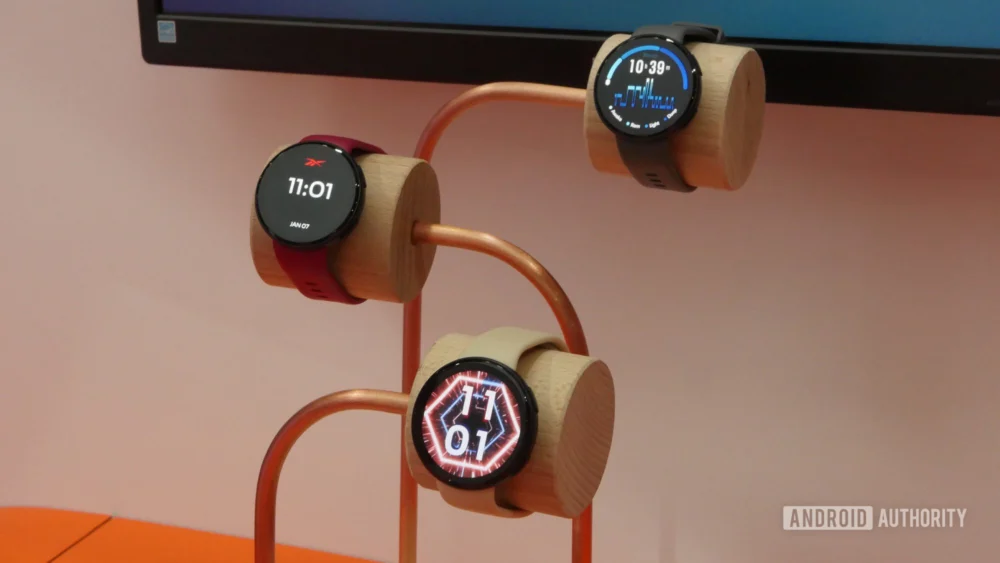
The landscape of wearable technology customization is undergoing a significant evolution, spearheaded by Facer, the widely adopted platform for creating and distributing custom smartwatch faces. Following a series of announcements, likely coinciding with a major industry event such as CES, Facer has revealed an aggressive strategy focused on broadening hardware compatibility beyond the established Wear OS and Tizen ecosystems, while simultaneously enriching the interactive capabilities of its user-generated content. This dual focus on platform ubiquity and feature depth positions Facer not merely as a utility for aesthetic modification, but as a potential middleware layer bridging diverse hardware architectures with rich user experience design.
The Strategic Pivot to RTOS and Beyond
Historically, the smartwatch market has been bifurcated, dominated by the complex, app-rich environments of Google’s Wear OS (formerly Android Wear) and Samsung’s Tizen/One UI Watch, versus the simpler, power-efficient operating systems known as Real-Time Operating Systems (RTOS). RTOS devices, often found in fitness trackers and entry-level smartwatches, prioritize battery life and basic functionality over complex application stacks. Facer’s announced expansion into this RTOS segment is perhaps the most consequential development.
The immediate evidence of this strategic push is the integration with Reebok’s forthcoming Kinetic smartwatch. This device, running on VitalOS leveraging the MicroEJ VEE Wear platform, signals Facer’s commitment to embedding its personalization engine into lower-power, potentially more cost-effective hardware. For manufacturers of these constrained devices, offering Facer support immediately unlocks a massive library of sophisticated, community-driven watch faces, circumventing the substantial development overhead required to build a proprietary face creation tool from scratch.
Furthermore, the partnership with LVGL (Light and Low-cost Graphics Library) solidifies this RTOS commitment. LVGL is a ubiquitous, open-source graphics engine favored in embedded systems due to its efficiency and portability. By integrating with LVGL, Facer is essentially creating a standardized runtime environment for its watch faces across any RTOS device that adopts the library. This is a powerful move toward fragmentation mitigation; rather than developing bespoke integrations for every new proprietary RTOS (like Huami’s Zepp OS or various others), Facer targets the common rendering backbone. The mention of subsequent availability on RTOS watches from brands like Xiaomi suggests a rapid onboarding of major players looking to leverage Facer’s established user base and design tools.
The forward-looking statement regarding support for AOSP-based smartwatches adds another layer of intrigue. While "AOSP-based smartwatches" might currently represent an emerging or even theoretical category—perhaps devices eschewing the full Google Mobile Services (GMS) layer for a leaner, open-source Android experience—Facer is clearly positioning itself to capture this nascent market segment. If successful, Facer could become the default customization layer for non-GMS Android wearables, a space that manufacturers often explore for regions with regulatory constraints or for highly specialized enterprise devices.
Deepening Functionality: The Riiiver Integration
Beyond platform reach, Facer is enhancing the actual utility of the watch faces themselves through deeper hardware and service integrations. The collaboration with Citizen and its Riiiver platform exemplifies this trend. The Riiiver ecosystem, often associated with Citizen’s connected analog-digital watches, is designed to facilitate interaction between the watch, the cloud, and the Internet of Things (IoT).
When Facer faces can leverage Riiiver, they transform from static displays or simple data aggregators into genuine control interfaces. This means a custom-designed Facer face could, for example, pull real-time sports scores from a specific API endpoint or execute a predefined command to manage smart home devices—all initiated via a tap on the watch face itself.
This integration moves the watch face paradigm closer to a true application shell. In the Wear OS world, developers typically rely on dedicated companion apps or system-level APIs for complex data fetching and device control. By integrating Riiiver functionality directly into the face creation layer, Facer lowers the barrier for designers to build functional watch faces, not just visually appealing ones, mirroring the complexity seen in dedicated watch apps but wrapped in a more accessible, design-centric format.
Face Chime: Reintroducing Haptic/Auditory Cues
The introduction of "Face Chime" directly addresses a notable gap in the core Wear OS functionality, highlighting the agility of third-party platforms compared to foundational operating system development cycles. Face Chime allows designers to embed custom, hourly audible alerts directly into their creations.
While this might seem like a minor feature—a digital cuckoo clock for the wrist—its importance lies in user interface design philosophy. Many users rely on tactile or auditory feedback for time management without constantly needing to glance at their device. Samsung’s One UI Watch already incorporates similar time-marking features, which speaks to the inherent user demand. Facer’s decision to implement this feature universally across its platform, slated for a rollout on Wear OS 6 this month, forces a competitive response or, at minimum, acknowledges a feature parity gap that Google needs to address at the OS level.
For Facer users, the benefit is immediate customization. Instead of relying on a generic, system-level hourly notification, creators can design a chime that matches the aesthetic theme of their watch face—perhaps a soft digital bell for a minimalist face or a specific musical motif for a complex, branded design. This granular control over non-visual feedback enhances the immersive quality of the user experience.
Industry Implications and Expert Analysis
Facer’s aggressive expansion strategy has profound implications for the fragmented wearable ecosystem.
1. Democratization of Complex Wearable Design: By making its platform compatible with low-resource RTOS, Facer is effectively democratizing sophisticated graphical customization for the entry-to-mid-tier smartwatch market. Manufacturers who previously could only offer limited, pre-set digital faces now gain instant access to thousands of designs, enhancing their product appeal without significant software investment. This levels the playing field against higher-cost Wear OS devices in terms of visual flair.
2. The Rise of Wearable Middleware: Facer is transitioning from being just a "watch face app" to functioning as a form of universal wearable middleware. By supporting Wear OS, RTOS, and potentially AOSP variants, Facer is becoming the abstraction layer that sits between the hardware’s native OS and the user’s desire for persistent, personalized graphical interaction. This centralizes customization and content distribution, potentially giving Facer significant leverage in future platform negotiations.
3. Competition with Native OEM Solutions: The inclusion of features like Face Chime and Riiiver integration demonstrates Facer’s ability to iterate faster than major platform owners. If a platform feature (like hourly chimes) is desired by users but delayed in OS updates, Facer steps in to deliver it via the application layer. This forces OEMs and OS developers to either speed up their own roadmaps or cede control over key user experience touchpoints to third-party platforms.
4. Monetization and Creator Economy: Increased platform reach directly translates to a larger potential audience for Facer’s marketplace, benefiting designers who sell premium faces. The expansion into the massive RTOS segment, which often involves high shipment volumes, opens up significant revenue streams through premium watch face sales or subscription models tied to advanced data integrations (like Riiiver).
Future Trajectories and Concluding Thoughts
The future of wearable technology is intrinsically linked to personalization and battery efficiency. Facer’s current moves address both sides of this equation. On the efficiency front, establishing a strong foothold on RTOS devices ensures that Facer’s influence grows even as consumers gravitate toward longer-lasting wearables that might eschew full Android compatibility.
Looking ahead, the success of the LVGL partnership will be the key metric for judging the depth of the RTOS integration. If Facer can maintain high fidelity and performance across diverse LVGL implementations—from a basic tracker to a mid-range smartwatch—it secures its role as the de facto standard for watch face rendering on non-Wear OS hardware.
The evolution of the watch face from a static display to an interactive portal, capable of fetching data and triggering IoT actions via integrations like Riiiver, signals the maturation of the wearable interface. As screen real estate remains constrained, the watch face itself must become the primary interaction point for ambient information and quick controls. Facer is strategically developing the toolset necessary for designers to build these complex, context-aware interfaces.
In summary, the recent announcements from Facer are not incremental updates; they represent a foundational expansion of the platform’s reach and functional depth. By conquering the fragmented RTOS market while simultaneously enriching the capabilities on established platforms, Facer is solidifying its position as an indispensable component in the next generation of highly personalized, multi-platform wearable devices. The industry will be closely watching the adoption rates of the Kinetic watch and the subsequent rollout of AOSP partnerships to gauge the full impact of this strategic maneuver.
