

The digital music streaming landscape is undergoing a persistent evolution, shifting from purely utility-based consumption toward rich, shared social experiences. Spotify, the dominant force in this sector, is making significant moves to cement its position not just as a music provider, but as a central hub for musical interaction. The latest suite of updates to its integrated Messages feature—specifically the introduction of real-time Listening Activity and a streamlined "Request to Jam" function—signals a strategic pivot toward fostering ambient, persistent connection among its user base. These additions, building upon the foundational Messages rollout from the previous year, are designed to dissolve the friction points traditionally associated with sharing music discoveries and initiating synchronous listening sessions.
The Genesis of Social Audio within Spotify
To fully appreciate the impact of these recent enhancements, one must recall the trajectory of Spotify’s social ambitions. For years, the platform relied on external sharing mechanisms—linking playlists or tracks on social media platforms like Instagram Stories or Discord. While effective for broadcasting, these methods lacked the immediacy and intimacy of direct, in-app communication. The introduction of Spotify Messages last year was the company’s first major step toward creating a proprietary social layer, moving conversational elements directly into the core user experience. This was an acknowledgement that music discovery is inherently social, often catalyzed by peer recommendation.
However, the initial Messages feature was relatively static. Users could share songs, albums, or playlists, but the ongoing context of what friends were currently engaging with remained outside the chat window. This created a necessary gap: the desire to connect over music without needing an explicit initiation for every single interaction.
Real-Time Presence: The Power of Opt-In Listening Activity
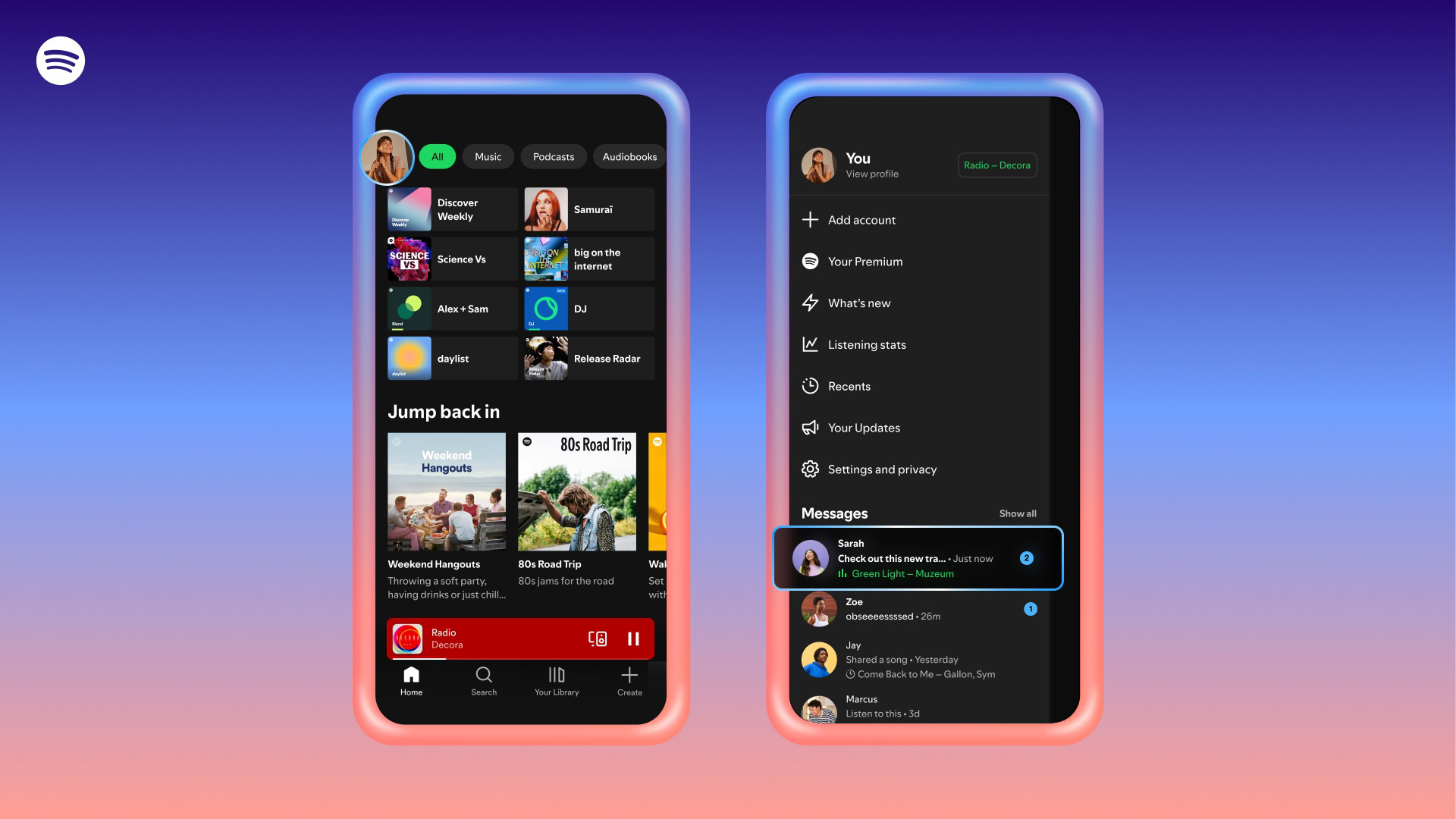
The newly unveiled Listening Activity addresses this contextual gap directly. It is an opt-in feature allowing users to broadcast their current sonic endeavors within their established Spotify Messages contacts. This functions much like an online status indicator, but tailored specifically to music consumption. Crucially, the system intelligently defaults to the most recently played track if the user is not actively streaming, ensuring a persistent, albeit slightly delayed, snapshot of their musical taste is always available.
From an expert perspective, the "opt-in" nature is vital for adoption. Privacy concerns surrounding real-time location or activity tracking are significant barriers in digital services. By framing this as a conscious choice, Spotify lowers the psychological hurdle for engagement. Furthermore, the visibility is restricted to existing connections within the Messages ecosystem—friends and family already mutually connected. This creates a safe, curated social environment, contrasting sharply with the more public-facing sharing options found elsewhere.
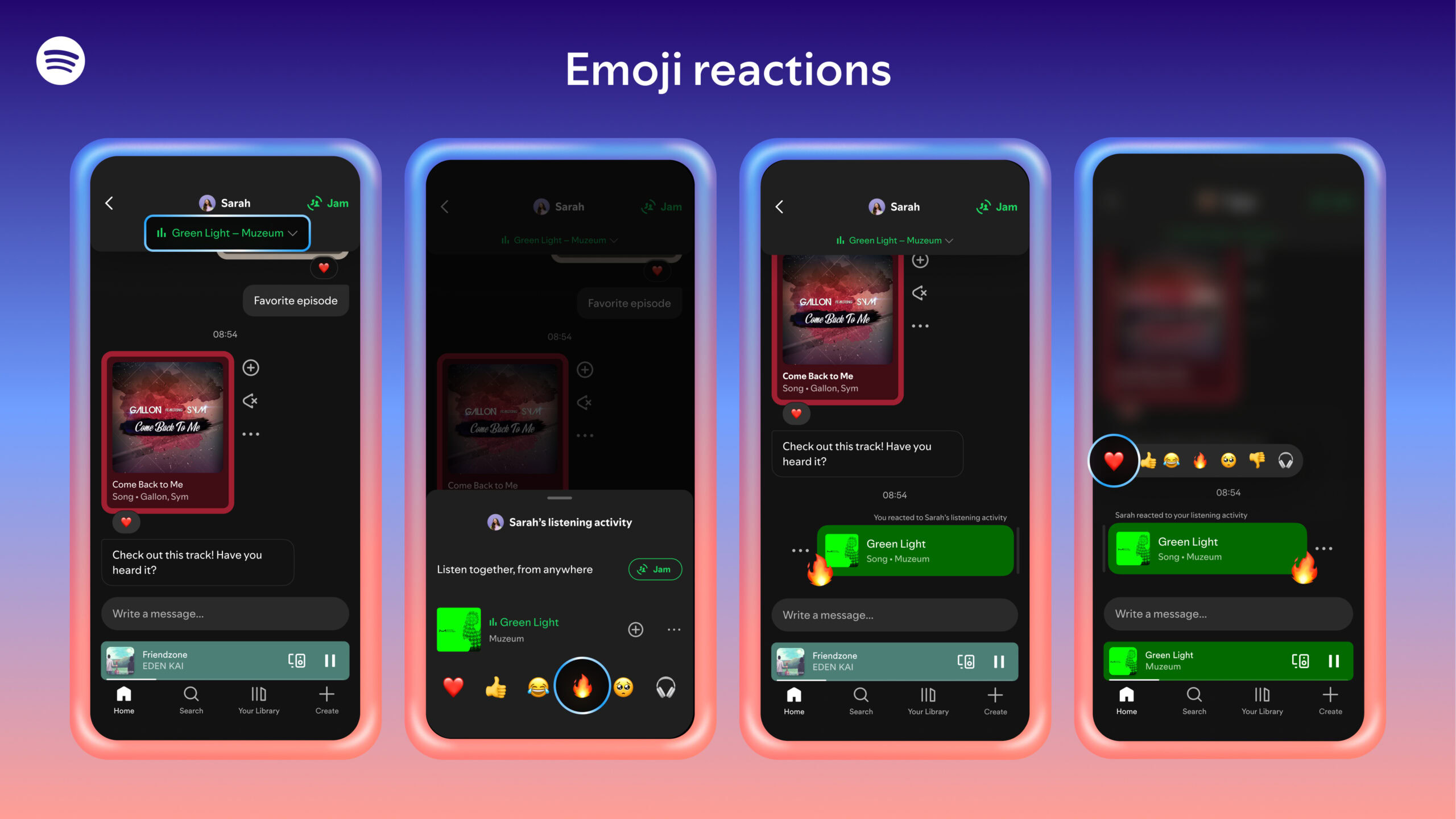
When a user taps on a friend’s active status, they unlock immediate utility: the ability to add the displayed track to their personal library, initiate immediate playback, access the track’s full context menu, or—perhaps most engagingly—react using a set of six standard emojis. This transforms a passive status indicator into an active, low-effort engagement tool. It allows for the digital equivalent of tapping someone on the shoulder to ask, "What are you listening to right now?" without interrupting the flow of either user’s session.
Synchronicity Solved: The Evolution of Spotify Jam
The real synergy emerges when this real-time awareness is married to Spotify Jam. Jam, Spotify’s feature enabling synchronized, remote listening sessions where multiple users can control a shared queue, has long been lauded for bridging geographical distance. Yet, as the source material noted, coordinating a Jam often required an external communication chain: "Are you free now? Want to listen to this playlist together?"
The introduction of the "Request to Jam" feature within the Messages interface streamlines this process into a single, in-app action. A user can now see a friend is actively listening to something interesting (via Listening Activity) and immediately send a direct invitation to co-listen via a remote Jam session, accessible via a dedicated button in the chat header.
This transforms the interaction from a multi-step negotiation to a direct proposal-and-acceptance mechanism. If the recipient accepts, they seamlessly become the host of the new Jam session, immediately aligning their playback with the requester’s device. The system includes a timeout for pending invitations, maintaining a clean interface by automatically discarding stale requests.
This integration is more than a quality-of-life improvement; it represents a fundamental shift in how Spotify views its social features. It moves from sharing content to sharing experience. The platform is actively reducing the latency between musical curiosity and shared enjoyment.
Industry Implications: The Socialization of Streaming
For the broader streaming industry, Spotify’s aggressive pursuit of in-app social mechanics carries significant implications. Competitors like Apple Music and YouTube Music have historically focused on algorithmic personalization and catalog depth. While they possess social sharing capabilities, they generally lack the deep, persistent, and integrated chat functionality that Spotify is now cultivating.
This strategy aims to increase stickiness—the measure of how frequently and deeply users engage with the application beyond core playback. When users begin forming habits around sharing their real-time status and spontaneously initiating co-listening sessions within the app, the cost of switching to a competitor rises substantially. The platform becomes less about the music library and more about the network of people you share that library with. This mirrors the success of platforms like Discord, which built an ecosystem around communication, layered on top of existing utility (gaming). Spotify is attempting to build a communication layer around music utility.
Furthermore, this focus on real-time interaction provides Spotify with richer behavioral data. Knowing not just what a user listened to last week, but who they were listening with, when they initiated that connection, and what reactions were exchanged offers a far more nuanced understanding of musical influence and taste formation. This data can feed directly back into playlist generation, recommendation engines, and targeted promotional campaigns.
Expert Analysis: Privacy, Freemium Tiers, and the Future of Connection
The deployment strategy reveals calculated business decisions. The Listening Activity is available to all users with Messages access, regardless of subscription tier. However, the ability to initiate a co-listening Jam appears to be tied to the inherent limitations of the freemium model. Free users can join a Request to Jam session, but only when invited by a Premium subscriber. This subtly incentivizes upgrading. Real-time, dynamic social engagement becomes a value-add that Premium members can bestow upon their Free-tier friends, creating a social pull factor for conversion.
The technical execution also merits attention. Maintaining real-time status across disparate mobile and desktop operating systems—while minimizing battery drain—requires sophisticated backend infrastructure. The latency must be minimal for the "real-time" designation to hold weight, especially for Jam sessions where precise synchronization is paramount.
Looking ahead, the announced plan to integrate Group support into Messages is the logical next step in this social evolution. If one-to-one connections are being solidified, the natural progression is to facilitate communal listening among established friend circles or affinity groups. Imagine a shared group chat where five friends can see each other’s active tracks, and one person can instantly spin up a five-person Jam session simply by tapping a button in the group thread. This moves Spotify into direct competition with decentralized social audio platforms, offering a more personalized, music-native alternative.
Future Trajectories and Potential Roadblocks
The future impact of these features hinges on sustained user engagement. If the "Request to Jam" feature gains traction, we might see Spotify developing more advanced social features:
- Shared Curation Tools: Allowing groups to collaboratively build and maintain "living" playlists based on ongoing Jam sessions.
- Contextual Playback Triggers: Perhaps automated Jam requests when multiple friends are simultaneously listening to the same newly released album within the first hour of its drop.
- Integration with Creator Content: Enabling artists to broadcast listening sessions directly to fan groups, merging social interaction with promotional strategy.
However, potential roadblocks exist. Over-saturation is a risk; users are already managing communications across multiple platforms. If Spotify Messages becomes another mandatory notification stream, users may simply disable the new status features to regain digital quietude. The success relies on making the interaction valuable enough to justify the cognitive load of another communication channel.
Moreover, the platform must carefully navigate the line between promoting discovery and creating social pressure. While seeing what friends listen to can be inspiring, persistent visibility of musical choices could lead to self-censorship among users wary of being judged by their network—a phenomenon often seen on platforms like the former Spotify "Friend Activity" sidebar that many users manually disabled.
In conclusion, Spotify’s latest move to integrate live listening status and one-tap co-listening requests within its messaging framework is a powerful strategic maneuver. It deepens the platform’s roots in social interaction, enhances the utility of the already popular Jam feature, and builds proprietary network effects designed to lock users more tightly into the Spotify ecosystem. By focusing on ambient presence and low-friction synchronous experiences, Spotify is aggressively redefining itself as the social operating system for music listening. The impending rollout of group support suggests this is just the opening salvo in a broader campaign to make shared musical moments an inseparable part of the streaming experience.
