


The evolution of the mobile device has always been defined by a tension between aspiration and engineering constraint. When Samsung first introduced the Galaxy Fold, it was less a finished product and more a bold, albeit cumbersome, proof of concept—a fragile window into a foldable future. That initial awkwardness was the price of pioneering. Fast forward six iterative generations to the Galaxy Z Fold 7, a device that finally achieved a near-perfect balance, delivering a folding experience that felt sleek, manageable, and arguably, "normal" for daily carry. However, the landscape at CES 2026 has shifted again, marked by the unveiling of the Samsung Galaxy Z TriFold, a device promising a quantum leap in screen real estate by incorporating a double hinge to transform a standard smartphone footprint into a genuine 10-inch tablet experience.
Initial engagement with the TriFold suggests that Samsung has indeed captured a tangible piece of the future in its complex mechanics. The smooth, almost balletic unfolding across two axes is undeniably impressive, offering an expansive canvas for media consumption and productivity. Yet, this immediate awe is quickly tempered by a nagging realization: in reaching for this expanded future, the device seems to have deliberately sacrificed the ergonomic achievements of its immediate predecessor, creating a significant step backward in portability.
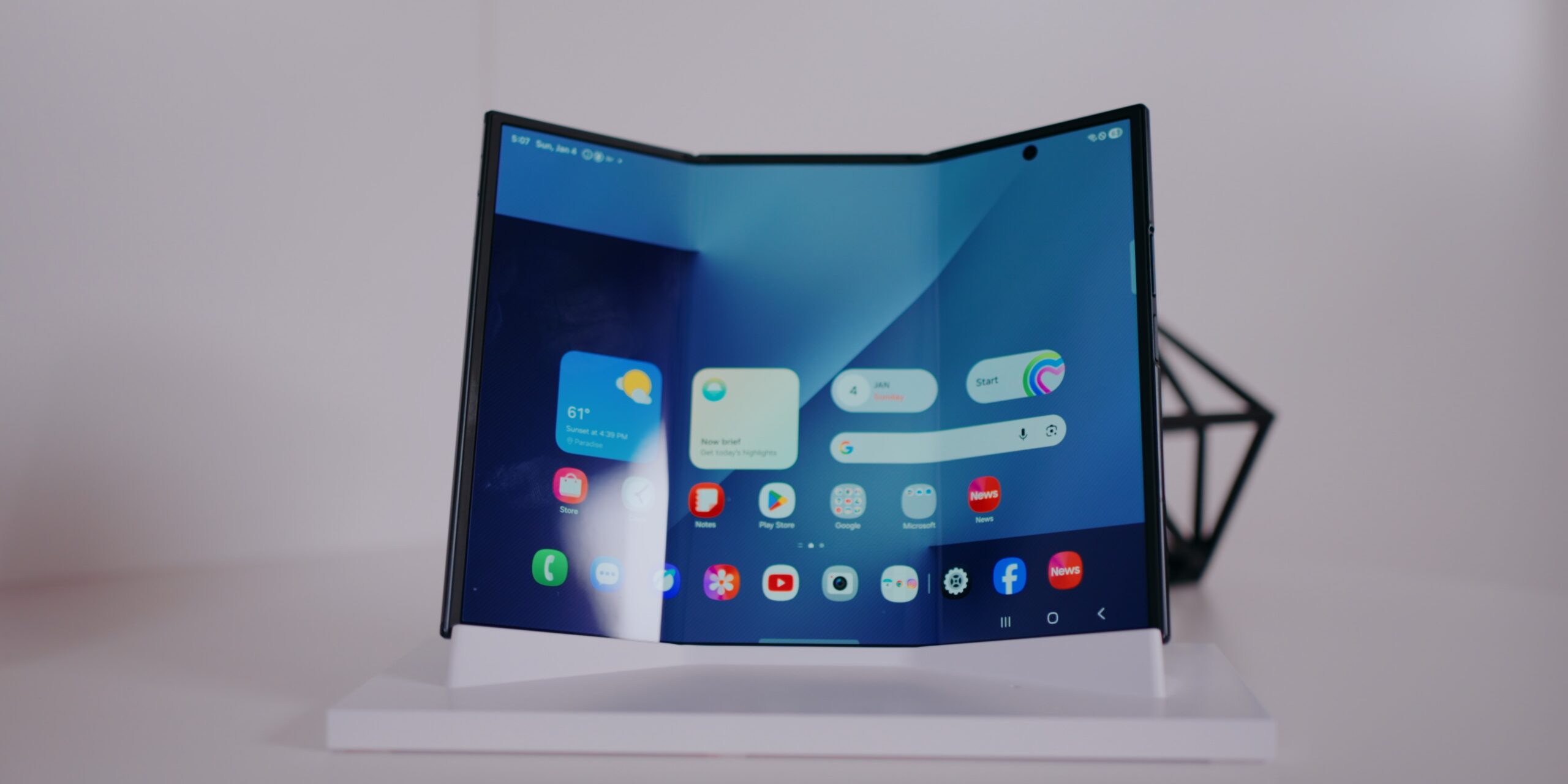
Defining the Double-Fold Architecture
To understand the TriFold, one must first address its nomenclature. Despite the "TriFold" designation, the mechanism involves two distinct hinges, resulting in three separate, articulated screen panels rather than three sequential folding actions. This design choice clearly separates Samsung’s philosophy from competitors like the HUAWEI Mate XT, which opted for an external wrap-around display launched in 2024. Samsung’s commitment to an inward fold for the primary, expansive display is a pragmatic engineering decision. By maintaining a traditional, glass-protected cover screen for conventional phone use, the device shields its most delicate component—the ultra-thin glass (UTG) flexible display—from the inevitable abrasions of pocket life. Given the projected cost of this device, approaching the apex of current flagship pricing, this protective measure is less a preference and more a necessity for mass-market viability.
Further demonstrating a focus on user education and damage mitigation, Samsung has integrated sophisticated defensive software. An attempt to manually reverse the folding sequence triggers an immediate, multi-sensory deterrent: a bright visual alert across the display panels coupled with escalating, high-intensity haptic feedback. This is an intuitive, low-friction method to prevent users from inadvertently damaging the complex hinge mechanism—a necessary safeguard for a device housing such advanced and expensive components.
Comparative Analysis: TriFold Versus the Refined Fold 7
From a foundational hardware perspective, the Galaxy Z TriFold is deeply rooted in the architecture of the recently released Galaxy Z Fold 7. This commonality is telling; it suggests the TriFold represents an extension of the existing platform rather than an entirely new silicon generation. Both devices are powered by the Qualcomm Snapdragon 8 Elite chipset. While this processor remains exceptionally capable, its presence, rather than the rumored, more advanced Gen 5 variant, indicates a prioritization of display engineering and hinge complexity over the absolute cutting edge in raw computational speed for this specific launch cycle. The imaging suite mirrors this continuity, utilizing the same proven 200MP primary sensor, accompanying ultrawide, and telephoto optics found in the Fold 7.
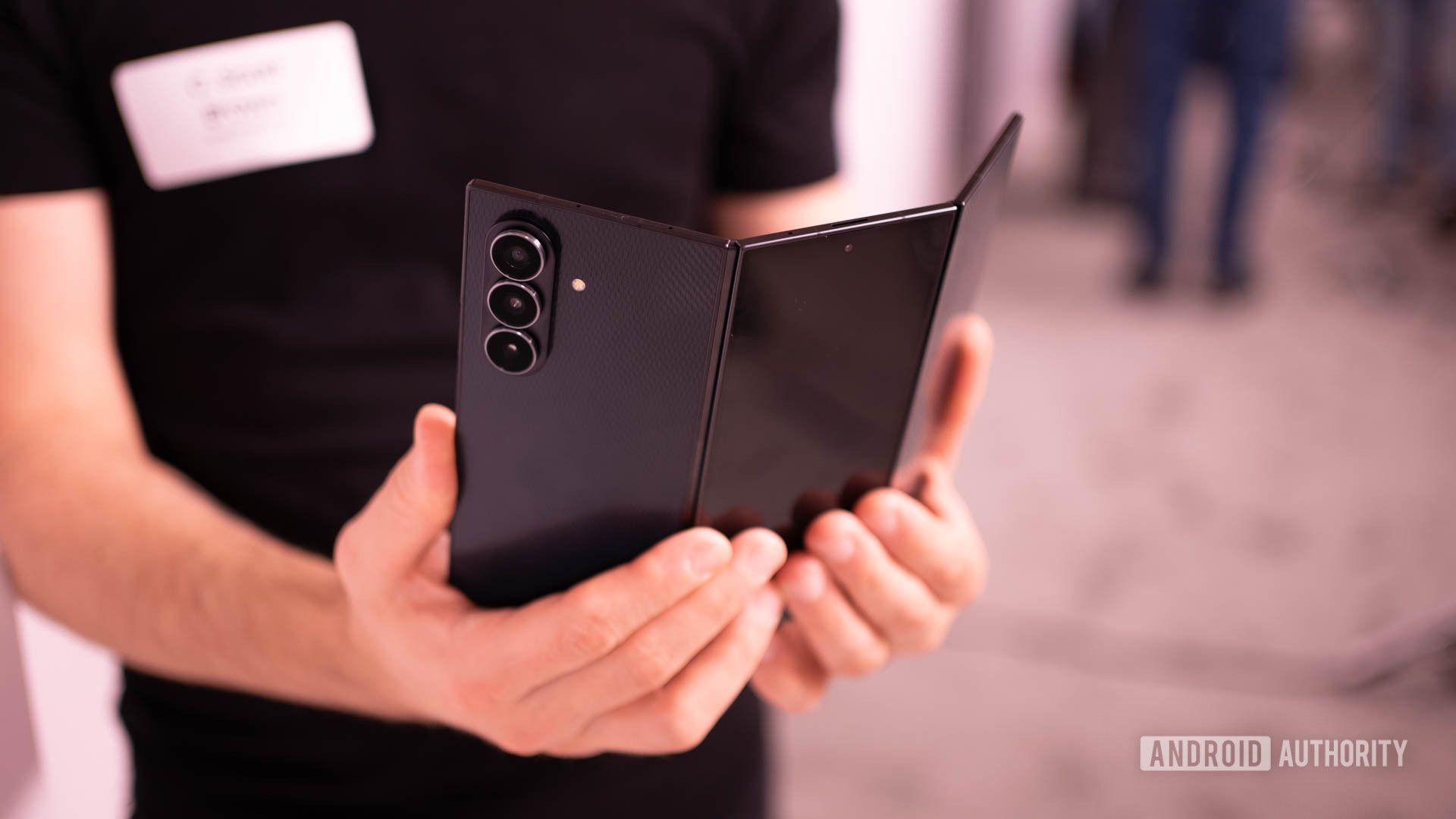
The most significant divergence on the specification sheet lies in the power cell. The TriFold boasts a 5,400mAh battery, representing a notable 23% increase in capacity over the Fold 7. On paper, this enhancement suggests improved endurance, but this assumption must be heavily qualified by the demands of the unfolded state. Driving two sequential fold mechanisms culminates in a display area that is significantly larger than the single fold. The sheer pixel count of the resulting 10-inch canvas will place extraordinary stress on that larger battery. Early estimations, pending rigorous real-world testing, suggest that the increased capacity may only serve to maintain parity with the Fold 7’s battery life when utilizing the TriFold’s full potential, rather than offering a substantial net gain in longevity.
Unlocking New Dimensions in Software Utility
The TriFold runs One UI 8, layered atop the latest Android 16 operating system. While the foundational software experience remains familiar to current Samsung foldable users, the expansive real estate afforded by the dual fold has necessitated—and enabled—two critical software enhancements designed to exploit the hardware fully.
The first is the introduction of true, equitable three-app multitasking. The previous generation of foldables, when forced into a three-pane layout, often resulted in severely compressed and functionally crippled application windows. The TriFold’s wider central panel, combined with the ability to divide the entire 10-inch surface into three distinct, useable quadrants, fundamentally alters the productivity paradigm. Each of these three running applications—be it Slack, a web browser, or a streaming service—retains an aspect ratio closely resembling that of a standard, non-folding smartphone. For professionals relying on synchronous communication and data reference, this capability transitions the device from a niche productivity tool into a genuinely viable mobile workstation.
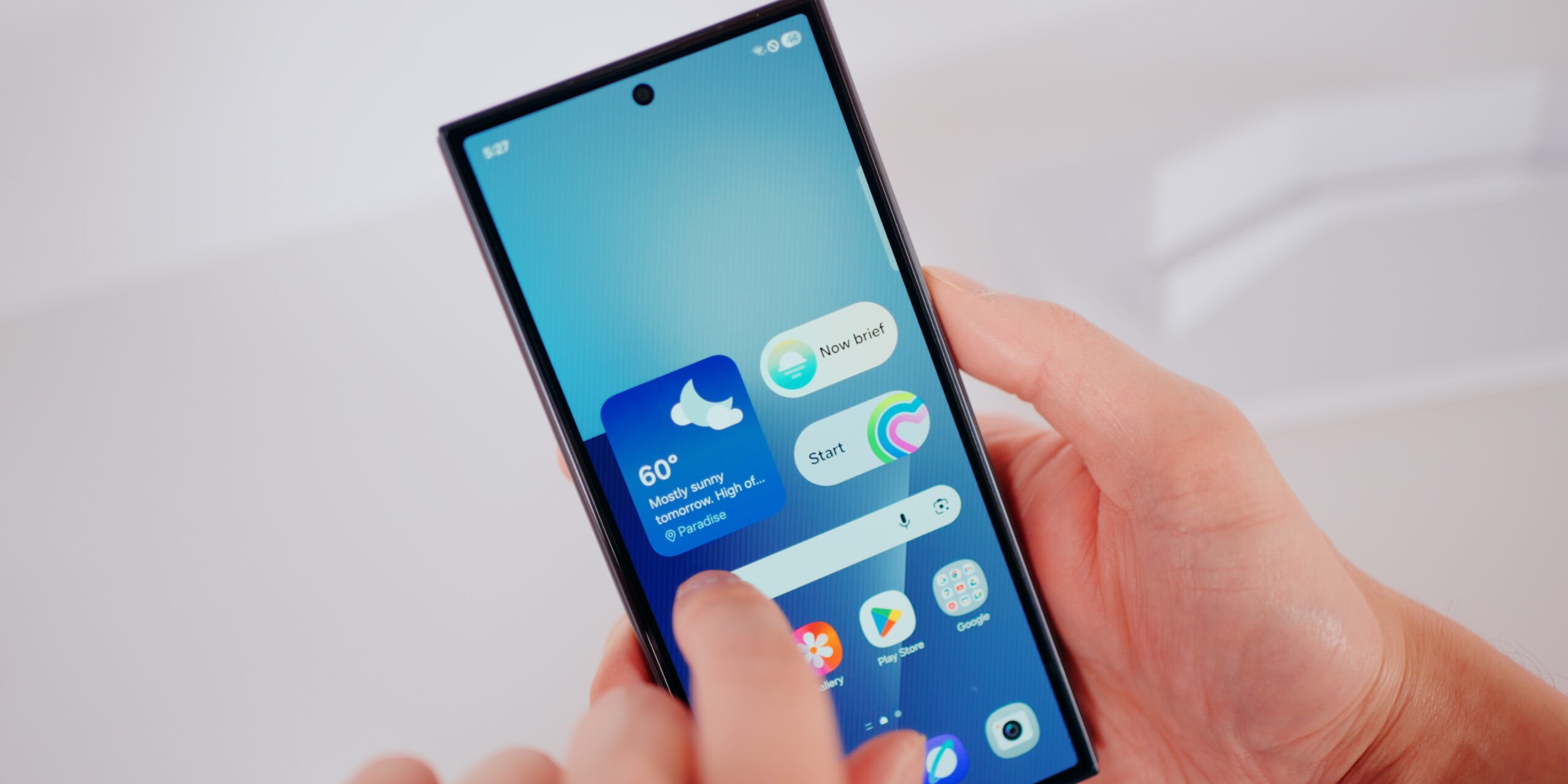
The second major software feature is the native, monitor-free execution of Samsung DeX. Previously, DeX required external display hardware to unlock its full desktop environment. On the TriFold, the fully unfolded inner display is deemed large enough to host a persistent taskbar, fully windowed applications, and the familiar desktop interface without external peripherals. While DeX functionality is now standard on Samsung’s latest tablets, integrating it seamlessly into a device that maintains a pocketable form factor (when closed) resurrects the long-standing science fiction vision of the "pocket PC." While DeX remains a feature utilized by a dedicated minority, its enhanced accessibility on the TriFold may catalyze its adoption, proving the viability of a single device serving as phone, tablet, and desktop interface simultaneously.
The Physical Conundrum: A Regression in Portability
Despite the technological sophistication displayed in the hinge engineering and the software optimization for massive screen space, the most immediate and unavoidable critique of the Galaxy Z TriFold centers on basic physics. The paradox of folding technology is that every added layer of screen and every required hinge introduces compounding bulk.
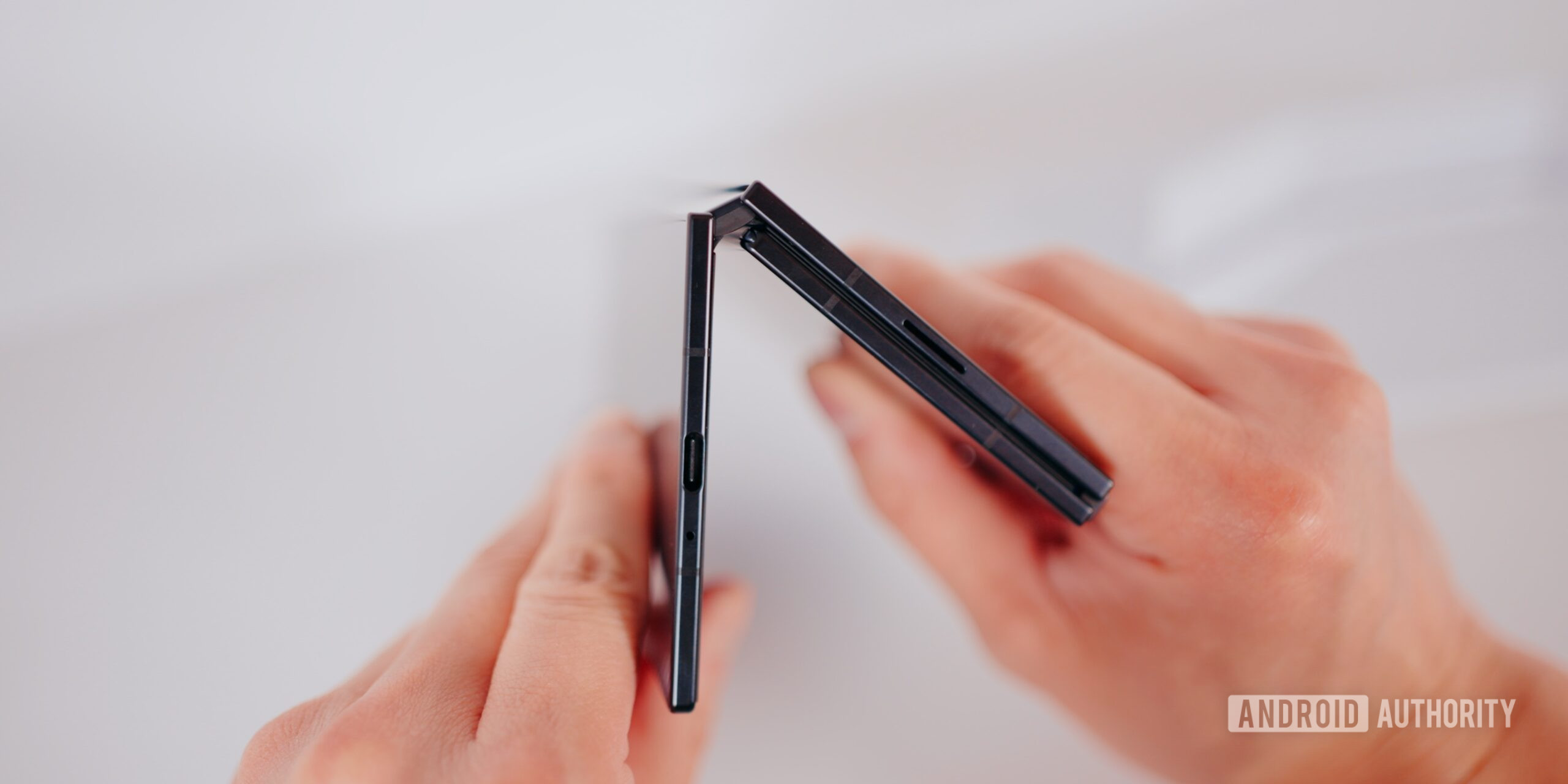
Comparing the closed TriFold side-by-side with the relatively slim profile of the Galaxy Z Fold 7 revealed a jarring disparity. The TriFold registers significantly thicker when collapsed, and its weight surpasses the 300-gram threshold, making it approximately 100 grams heavier than the previous model. This weight gain is not merely a statistical anomaly; it translates directly into a noticeable pocket presence. The Fold 7 represented the successful culmination of years of slimming down the book-style foldable, achieving a device that was genuinely comfortable to carry daily. The TriFold, in its current iteration, feels like an active reversal of that hard-won portability. Testing the device in a standard trouser pocket confirmed the suspicion: it felt less like a modern smartphone and more like a dense, early-generation prototype, reminiscent of the first thick, weighty mobile devices that preceded the smartphone era.
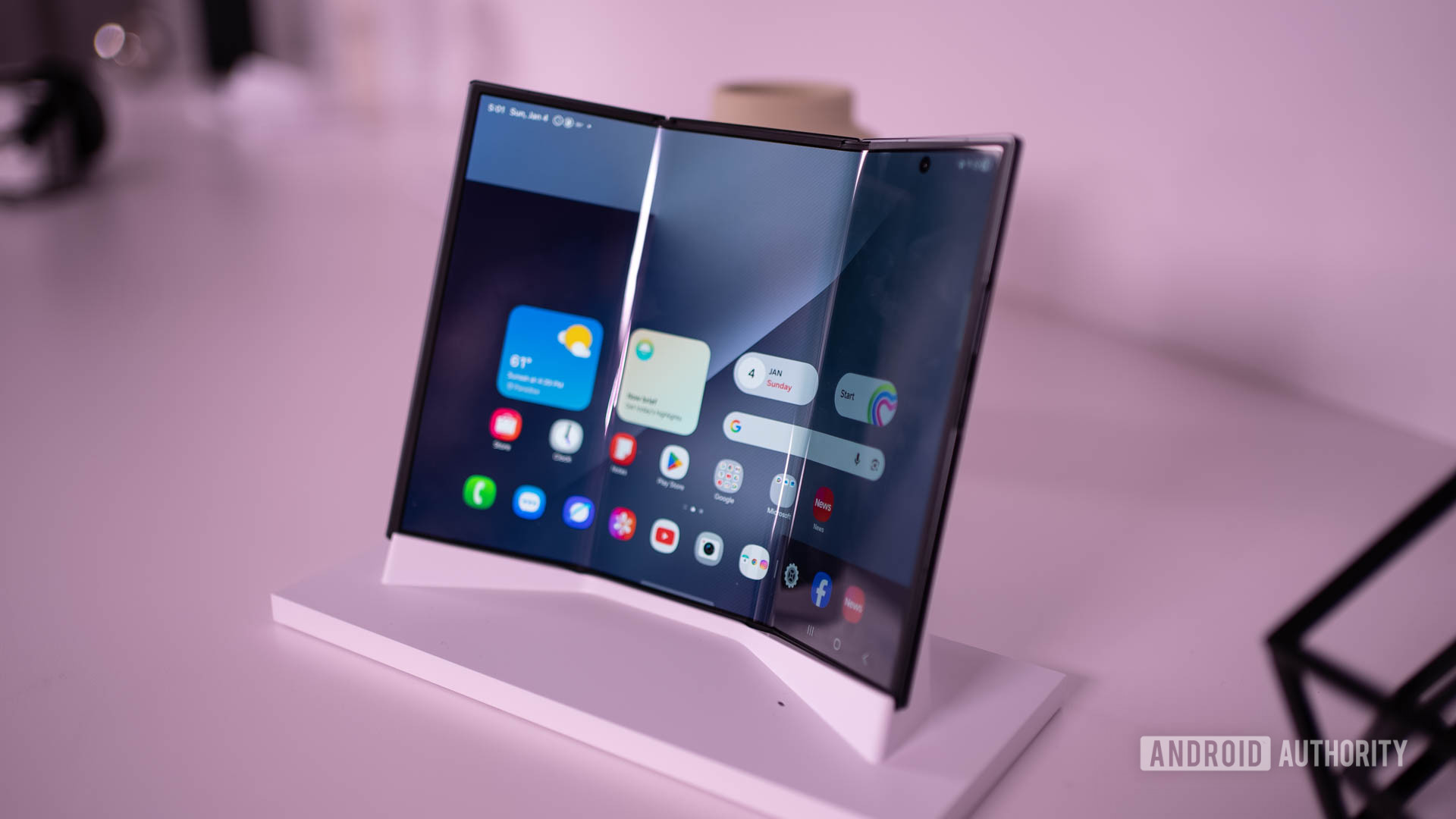
This physical regression illuminates the central challenge facing the foldable industry: the trade-off triangle between screen size, battery capacity, and device thickness. To achieve the 10-inch unfolded surface while retaining the current battery density, the second hinge and the necessary structural reinforcement demand significant volume. Achieving further significant thinning—perhaps to match the Fold 7’s closed profile—would likely require radical sacrifices, such as eliminating the USB-C port entirely in favor of wireless charging dependency, or severely compromising the size and capability of the integrated camera modules. The implication is clear: the TriFold is an engineering triumph that achieves its goal by revisiting—and accepting—the bulky compromises that the industry has spent half a decade diligently trying to eliminate.
Industry Implications and the Future Trajectory of Foldables
The launch of the Galaxy Z TriFold at CES 2026 is not just a product announcement; it is a strategic market signal. Samsung is clearly signaling its commitment to pushing the boundaries of form factor, even if the first iteration demands significant user concessions. This move positions Samsung not merely as a participant in the foldable market, but as the primary driver of its most radical possibilities.
The immediate industry implication is competitive pressure. Rivals, particularly those focused on rollable and outward-folding designs, must now contend with the reality that Samsung can deliver a tablet-sized screen that still closes into a functional phone form factor, albeit a thick one. This will force competitors to accelerate their own multi-hinge research or double down on alternative form factors, such as tri-fold tablets that prioritize screen expansion over pocketability.
From a technological forecasting perspective, the TriFold serves as a critical benchmark. It demonstrates that the computational power exists (Snapdragon 8 Elite is sufficient) and the software ecosystem (Android 16/One UI 8) is adaptable enough to handle complex, segmented displays. The bottleneck is purely materials science and hinge mechanism miniaturization. The next major breakthrough required for the TriFold architecture to become truly mainstream is not in processing power, but in creating ultra-durable, ultra-thin structural composites that can house two hinges without adding significant mass. Until that material science hurdle is cleared, devices like the TriFold will remain expensive, boundary-pushing "halo" products, appealing to early adopters with deep pockets and a high tolerance for bulk, rather than becoming the successor to the standard slab phone.
The pricing, reportedly hovering between $2,500 and $3,000 in international markets, reinforces its status as an experimental flagship. This extreme valuation suggests that the cost of developing and manufacturing the dual-hinge mechanism, combined with the premium display panels, is currently astronomical. This reinforces the notion that the true successor to the Fold 7—the device that marries the convenience of the Fold 7 with the screen size of the TriFold—is still several years and likely several generations of engineering refinement away.
The Samsung Galaxy Z TriFold is, therefore, a necessary, if paradoxical, device. It is an engineering marvel that successfully executes a concept long relegated to speculative fiction, proving that a tablet can indeed reside in a pocket. However, it simultaneously functions as a stark reminder of the fundamental compromises inherent in current folding technology. We have glimpsed the future of mobile computing’s potential scale, but in achieving it, we have momentarily lost the hard-earned convenience of the immediate past. The journey to the seamless, thin, and affordable double-fold device has effectively reset to zero, requiring another six years of focused refinement to make this dual-hinge dream as effortless to carry as its single-fold predecessor.
