

Advanced Micro Devices (AMD) utilized the global stage of CES 2026 in Las Vegas to solidify its strategic direction, positioning itself as the primary architect of the next generation of personal computing. Kicking off the annual technology summit, AMD Chair and CEO Dr. Lisa Su articulated a unifying vision centered on democratizing computational power, encapsulated by the mantra, "AI for everyone." This philosophical commitment to making artificial intelligence capabilities ubiquitous and accessible forms the core of the company’s latest product announcements, which span from mobile productivity to extreme desktop gaming.
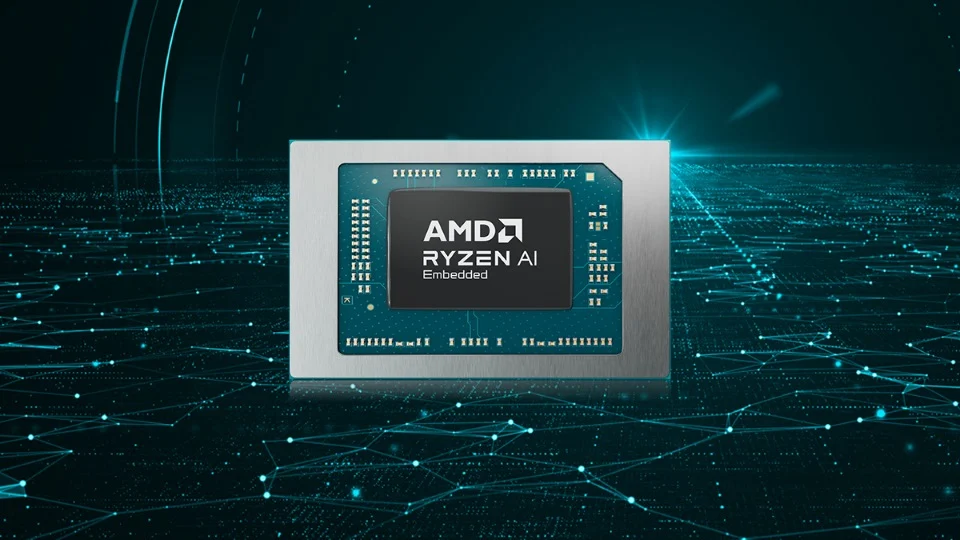
The centerpiece of this strategy is the introduction of the AMD Ryzen AI 400 Series processor, the company’s newest iteration of its integrated AI-powered PC chips. This launch is not merely an incremental performance boost; it represents AMD’s decisive move to redefine the foundational structure of the personal computer, ensuring that Neural Processing Units (NPUs) are treated as essential components alongside the traditional CPU and GPU.
The Ryzen AI 400 Series is architecturally optimized for demanding on-device AI workloads, which are increasingly crucial for modern operating systems and productivity suites. Preliminary performance benchmarks released by the semiconductor giant claim impressive gains over key competitors, including a 1.3 times faster performance metric in complex multitasking scenarios and a substantial 1.7 times acceleration in content creation tasks—a metric heavily influenced by generative AI applications like image processing and video editing.
Under the hood, these new mobile processors feature a powerful configuration: 12 CPU Cores coupled with 24 threads. This core-and-thread density is vital for modern efficiency, allowing the system to handle numerous independent streams of instruction simultaneously. The high thread count ensures that while the dedicated NPU is managing low-latency AI inference (e.g., real-time background blurring, noise cancellation, or local large language model execution), the CPU cores remain free to manage general system operations and demanding applications without performance degradation.
Background Context: The AI PC Paradigm Shift
The introduction of the Ryzen AI 400 Series marks the third generation of AMD’s dedicated AI silicon, building upon the foundations laid by the preceding 300 Series (announced in 2024). While the initial Ryzen processor line first debuted in 2017, the integration of a dedicated NPU—the defining characteristic of the ‘AI PC’—is a relatively recent evolution driven by the explosive growth of generative AI since late 2022.
The concept of the AI PC is rooted in power efficiency and latency reduction. Historically, intensive AI tasks relied on offloading data to the cloud or utilizing the GPU, which, while powerful, is optimized for parallel graphical workloads, often consuming significant power. The NPU, conversely, is purpose-built for matrix calculations and inference at extremely high efficiency (measured in TOPS, or Tera Operations Per Second), allowing sophisticated AI features to run continuously, locally, and quietly on a laptop battery.
This architectural shift is a critical battleground in the modern semiconductor war. AMD is competing fiercely against rivals like Intel, which is pushing its Core Ultra platform (with its own dedicated NPUs), and against the rising tide of ARM-based competitors, notably Qualcomm’s Snapdragon X series, which emphasizes extreme power efficiency for Windows devices. AMD’s strategic response with the 400 Series is to deliver superior raw compute performance (12 cores) combined with a highly capable NPU, aiming to capture both the performance and efficiency crowns in the mainstream and premium mobile segments.
Industry Implications and Ecosystem Maturation
The success of a new processor generation is measured not just in raw silicon performance, but in its adoption across the Original Equipment Manufacturer (OEM) landscape. Rahul Tikoo, senior vice president and general manager of AMD’s client business, highlighted a crucial industry benchmark during a recent press briefing: AMD has expanded its presence to encompass over 250 distinct AI PC platforms. This milestone represents a doubling of platform growth over the previous year, demonstrating accelerated confidence from major manufacturers like HP, Dell, Lenovo, and Asus.
This rapid ecosystem expansion carries profound implications. First, it signifies OEM readiness to invest heavily in the AI PC category, suggesting that they view the NPU as a non-negotiable feature for consumers moving forward. Second, it guarantees broad consumer choice across various form factors, from ultrathin laptops to powerful mobile workstations, all equipped with consistent AI capabilities.
Tikoo emphasized the transformative nature of this integration, stating: “In the years ahead, AI is going to be a multi-layered fabric that gets woven into every level of computing at the personal layer. Our AI PCs and devices will transform how we work, how we play, how we create and how we connect with each other.”
This vision of AI as a "multi-layered fabric" suggests a future where AI is not a single application, but a continuous, contextual operating system layer. Imagine a system where the PC proactively manages resources, anticipates user needs, provides instant contextual suggestions across applications, and automatically optimizes communication streams based on real-time emotional detection—all running locally without reliance on the cloud, addressing privacy and latency concerns simultaneously.
Expert Analysis: The Architecture of Contextual Computing
For technology analysts, the 12-core, 24-thread configuration of the Ryzen AI 400 Series speaks directly to the demands of modern contextual computing. Previous generations struggled when running demanding applications concurrently with continuous background AI tasks. The increased core count ensures that high-demand applications, such as professional video editing or complex code compilation, do not starve the NPU or the OS of necessary resources.
Furthermore, the performance claims—especially the 1.7x faster content creation—are directly tied to the NPU’s ability to handle large models. Running complex generative models (like locally optimized versions of Stable Diffusion or a compact large language model such as Llama) requires immense memory bandwidth and sustained TOPS capability. By integrating a highly optimized NPU directly onto the silicon die, AMD minimizes the latency penalty associated with moving data between the CPU, GPU, and memory banks, resulting in the tangible speed boosts claimed in creative workflows.
The competitive edge here lies in optimization. As Tikoo noted, "You have thousands of interactions with your PC every day. AI is able to understand, learn context, bring automation, provide deep reasoning and personal customization to every individual.” This level of personalization requires the AI to be constantly running and analyzing data streams (text input, camera feed, audio), which is only economically feasible on a low-power, dedicated NPU. The 400 Series is designed to provide the headroom for this continuous, power-efficient, ambient intelligence.
The Enthusiast Frontier: Ryzen 7 9850X3D and Redstone
While the Ryzen AI 400 Series dominates the discussion surrounding mobile and general productivity, AMD did not neglect the high-performance enthusiast and desktop gaming segment. Concurrent with the AI PC announcements, the company unveiled the AMD Ryzen 7 9850X3D, the newest flagship in its line of gaming-focused processors.
The ‘X3D’ designation is critical. It denotes the incorporation of AMD’s revolutionary 3D V-Cache technology, which stacks an immense layer of Level 3 cache memory directly onto the processor die. This massive increase in available cache drastically reduces memory latency for the CPU, a factor that often proves to be the bottleneck in modern video games, especially those that rely heavily on rapid data access for rendering and physics calculations. The 9850X3D is engineered to provide industry-leading frame rates in gaming, often outperforming chips with higher clock speeds simply due to its superior latency performance.
The focus on the gaming ecosystem was further amplified by the announcement of the latest version of AMD’s proprietary graphics technology: Redstone ray tracing. Ray tracing is a computationally intensive technique that simulates the physical behavior of light, resulting in hyper-realistic video game graphics—accurate shadows, reflections, and global illumination. Historically, achieving high-fidelity ray tracing required immense graphical processing power, often resulting in a significant performance or speed lag (lower frame rates).
The new Redstone implementation promises enhanced optimization, allowing gamers to experience photorealistic visuals without the traditional performance penalty. This advancement suggests a refined synergy between AMD’s graphics processing units (GPUs) and the CPU architecture, ensuring that the computational load for ray tracing is managed efficiently, perhaps leveraging aspects of the integrated NPU or specialized cores for de-noising and upscaling, similar to existing techniques but optimized for the new hardware stack. The combined power of the Ryzen 7 9850X3D’s gaming latency advantage and the efficiency of Redstone ray tracing places AMD in a commanding position in the high-end desktop market for 2026.
Future Impact and Market Trends
The combined launch of the Ryzen AI 400 Series and the 9850X3D highlights AMD’s comprehensive market strategy: dominate the emerging AI productivity space while retaining leadership in the lucrative enthusiast gaming segment.
Looking forward, the true impact of the AI PC wave will manifest in software design. Operating systems like Windows are already being rebuilt to deeply integrate NPU capabilities. Developers will increasingly design applications that assume the presence of a powerful, local AI engine. This will revolutionize how consumers interact with their devices, moving away from explicit commands toward implicit, context-aware assistance.
For instance, in professional environments, local LLMs powered by the 400 Series will allow lawyers, doctors, and researchers to process highly sensitive documents and proprietary data using AI for summarization, drafting, and analysis, all while maintaining strict data sovereignty—a major security advantage over current cloud-based solutions.
The availability timeline for these products is aggressive, with PCs featuring both the Ryzen AI 400 Series processor and the AMD Ryzen 7 9850X3D expected to hit the market in the first quarter of 2026. This early-year launch is strategically timed to capitalize on the initial wave of enterprise IT refresh cycles and the consumer demand generated by the CES announcements.
In essence, AMD is not simply participating in the AI race; it is defining the hardware prerequisites for the next decade of personal computing. By successfully integrating high core density, superior efficiency, and dedicated neural processing capabilities into its mobile chips, and simultaneously pushing the boundaries of gaming performance with V-Cache technology, AMD has drawn a clear line in the sand, asserting that the future of computing is fundamentally heterogeneous, deeply personalized, and decisively on-device. The 2026 computing landscape will undoubtedly be shaped by the performance and pervasive intelligence offered by these new Ryzen architectures.
