

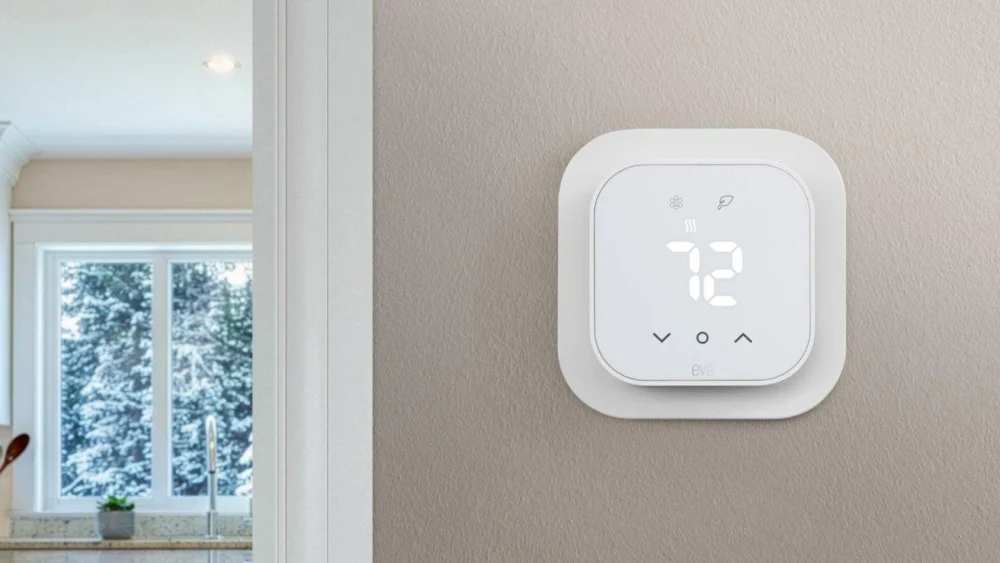
The landscape of the modern smart home is undergoing a fundamental shift, moving away from fragmented, cloud-dependent ecosystems toward a future defined by local control and universal interoperability. At the forefront of this transition is Eve Systems, a company that has long championed the "privacy-first" ethos in consumer electronics. At the 2026 Consumer Electronics Show (CES) in Las Vegas, the company reinforced its market position by expanding its Matter-over-Thread portfolio with the official introduction of the Eve Thermostat. This latest addition to the Eve lineup represents more than just a hardware refresh; it is a strategic assertion that high-end home automation should not require a compromise on data sovereignty or a reliance on external servers.
The Eve Thermostat arrives at a pivotal moment for the industry. For years, smart thermostats have been the centerpiece of the "connected home," yet they have often acted as walled gardens, requiring specific hubs or proprietary accounts to function. By leveraging the Matter standard over a Thread network, Eve is attempting to dismantle these barriers. The device is designed to be platform-agnostic, meaning it can coexist and communicate seamlessly within any major smart home ecosystem—be it Apple Home, Amazon Alexa, Google Home, or Samsung SmartThings. This flexibility allows members of the same household to control the climate using their preferred voice assistants or mobile devices without the friction of cross-platform incompatibility.
The Technical Foundation: Matter and Thread
To understand the significance of the Eve Thermostat, one must look under the hood at the networking protocols it employs. Unlike traditional smart thermostats that rely on power-hungry Wi-Fi or short-range Bluetooth, the Eve Thermostat utilizes Thread. As a low-power mesh networking protocol, Thread is specifically designed for IoT (Internet of Things) devices. It eliminates the single point of failure inherent in Wi-Fi-based systems; if one node in a Thread network goes down, the data packets simply find another path to their destination. This creates a self-healing, robust infrastructure that is ideal for critical home functions like heating and cooling.
Furthermore, the integration of Matter ensures that the Eve Thermostat is "future-proof." Matter is the industry-unifying language that allows devices from different manufacturers to speak to one another locally. By combining Matter with Thread, Eve ensures that the thermostat does not need to "phone home" to a cloud server to execute a command. When a user adjusts the temperature via a smartphone app or a voice command, the signal travels directly through the local network. This reduces latency to near-zero levels and ensures that the system remains fully operational even if the home’s internet connection is severed.
Local Control as a Luxury Feature
In an era where "subscription fatigue" has become a common consumer grievance, Eve’s commitment to a no-account, no-subscription model is a significant differentiator. Most contemporary smart home devices require users to create an account, share personal data, and often pay a monthly fee for advanced automation or historical data tracking. The Eve Thermostat eschews this model entirely. All schedules, automations, and temperature logs are stored locally on the device and within the user’s local Matter controller.
This "sovereign" approach to the smart home addresses a growing concern regarding the longevity of IoT devices. Historically, when a company goes bankrupt or decides to shut down its cloud servers, the associated smart devices often become "bricks"—expensive pieces of plastic that no longer function. By operating locally via Matter, the Eve Thermostat remains functional as long as the hardware itself persists, independent of Eve Systems’ corporate servers. This is a crucial selling point for the environmentally and economically conscious consumer who views home technology as a long-term investment rather than a disposable gadget.
Design, Installation, and User Experience
Aesthetically, the Eve Thermostat maintains the minimalist, premium design language for which the brand is known. It features a large, high-contrast LED display that is legible from across a room, complemented by intuitive touch controls for manual adjustments. The physical interface is designed to be as simple as possible, acknowledging that while automation is the goal, there are times when a user simply wants to walk up to the wall and nudge the temperature up or down.
The installation process has been refined to cater to both tech enthusiasts and DIY novices. Recognizing that HVAC systems in older homes can be temperamental, Eve includes a trim plate in the box to cover any unsightly holes or unpainted patches left by previous, larger thermostats. For homes lacking a "C-wire" (common wire)—the dedicated power line required by most modern thermostats—Eve offers an optional C-wire adapter. This inclusion acknowledges the reality of diverse housing stocks, particularly in North America, where HVAC wiring can vary wildly from one decade to the next.

One of the standout software features is the presence-based automation system. By integrating with the broader Matter ecosystem, the thermostat can leverage data from other sensors—such as motion detectors or the geofencing capabilities of a user’s phone—to determine if the house is occupied. If the home is empty, the thermostat can automatically transition to an energy-saving "Eco" mode. Visual indicators on the device’s display provide immediate feedback when the system is operating within these energy-efficient ranges, encouraging more sustainable consumption habits without requiring the user to micromanage settings.
The Android Disparity: A Transitional Hurdle
Despite the "platform-agnostic" promise of Matter, the launch of the Eve Thermostat is not without its caveats. Historically, Eve Systems was an Apple-exclusive brand, built entirely on the HomeKit framework. While the company has made aggressive strides to embrace the broader market, the Android version of the Eve app currently lags behind its iOS counterpart.
Specifically, the Android app does not yet support the full suite of thermostat-specific features, such as detailed scheduling and advanced configuration. While Android users can still control the thermostat through the Google Home or Samsung SmartThings apps—thanks to the universal nature of Matter—they will lack access to the granular "pro" settings that the native Eve app provides on iOS. This highlights a lingering challenge in the smart home industry: while the communication between devices is becoming standardized, the management software remains fragmented. Eve has signaled that updates are forthcoming, but for the Q1 2026 launch window, the device remains most potent when paired with an iPhone or iPad.
Industry Implications and Market Context
The release of the Eve Thermostat at $129.95 places it in a competitive mid-range bracket. It sits comfortably between the entry-level "smart" thermostats that offer basic scheduling and the high-end flagship models from competitors like Nest or Ecobee, which often retail for $200 or more. However, Eve’s value proposition isn’t based on being the cheapest option, but on being the most private and reliable.
As we look toward the latter half of the decade, the smart home market is expected to bifurcate. On one side will be the "data-for-service" models, where devices are subsidized by the collection of user data or recurring subscriptions. On the other side will be the "premium-privacy" models, championed by companies like Eve. The Eve Thermostat is a bellwether for this second category. It appeals to a demographic that is increasingly wary of the "surveillance capitalism" inherent in many modern tech products.
Furthermore, the device’s reliance on Thread border routers—which are now commonly built into devices like the Apple TV 4K, latest-generation Echo speakers, and Eero mesh routers—means that the barrier to entry for a Thread-based home is lower than ever. Most consumers likely already own a compatible hub without realizing it. This "stealth" infrastructure rollout is what will finally allow Matter to reach critical mass.
Future Outlook: Toward a Self-Sustaining Ecosystem
The Eve Thermostat is a clear indicator that the era of "dumb" appliances is over, but so is the era of "tethered" smart appliances. As energy costs continue to fluctuate and environmental regulations become more stringent, the role of the thermostat as an active energy manager will only grow. Future firmware updates for the Eve Thermostat could potentially include deeper integration with local weather forecasts or even "Time of Use" (TOU) pricing from utility companies, allowing the device to pre-cool or pre-heat a home when electricity is cheapest and cleanest.
By choosing to build on the foundation of local control, Eve is betting that the consumers of 2026 and beyond will value reliability over flashy, cloud-based gimmicks. The Eve Thermostat is a sophisticated, understated piece of technology that does its job quietly and efficiently, respecting the user’s privacy as much as their comfort. As it hits the shelves in early 2026, it will serve as a benchmark for what a modern, responsible IoT device should look like.
