

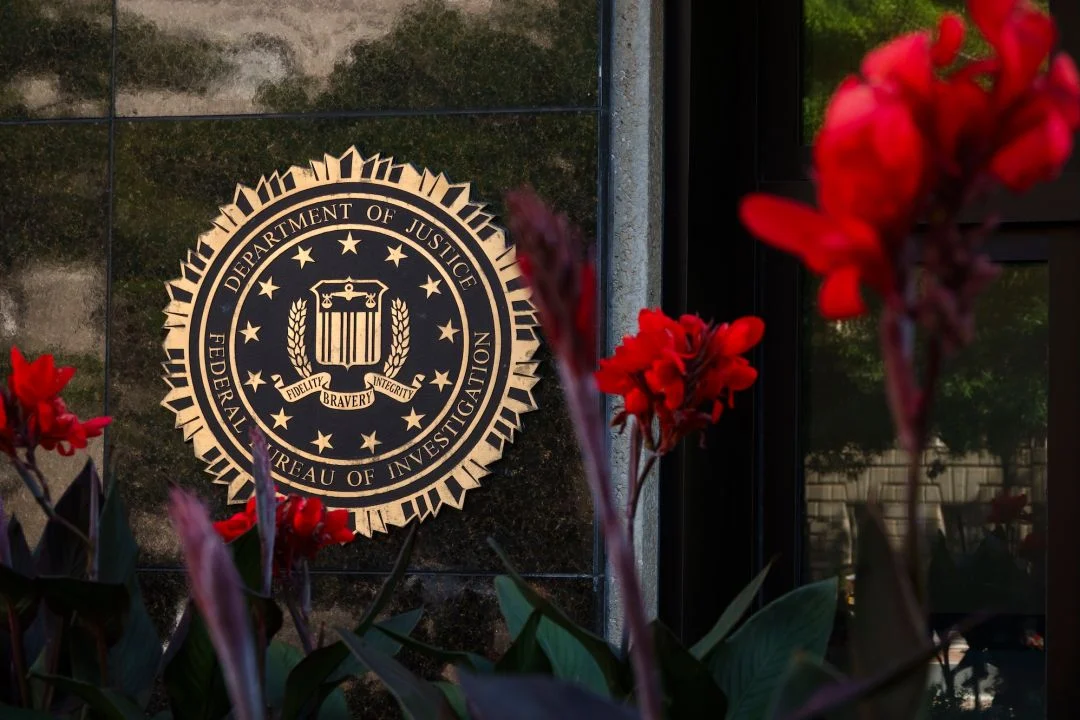
Federal authorities are investigating a suspected cyber intrusion into the National Crime Information Center, an essential data clearinghouse that underpins daily law enforcement operations across the United States. The breach strikes at the core of the country’s domestic security architecture, compromising a centralized repository utilized around the clock by municipal police departments, state troopers, federal investigators, and judicial personnel. As technical specialists work to identify the vector of entry and determine whether foreign adversaries or criminal syndicates gained access, the incident has laid bare glaring vulnerabilities in the nation’s interconnected law enforcement infrastructure while triggering urgent political and operational fallout.
Donald Trump publicly addressed the emerging situation during a televised broadcast, describing the compromise of the federal repository as an undeniably negative development. However, the former president quickly shifted the discussion toward long-standing institutional grievances, speculating that the security failure might inadvertently expose internal agency records and shed light on past federal investigations, including the controversial inquiries into his campaign’s historical ties to foreign actors. The intrusion, and the political reactions trailing in its wake, highlights an escalating crisis at the intersection of high-stakes cybersecurity, operational law enforcement, and institutional trust.
The compromised repository, operational since 1967 and overseen by the Federal Bureau of Investigation’s Criminal Justice Information Services Division in Clarksburg, West Virginia, represents the digital backbone of American criminal justice. It maintains tens of millions of active records partitioned into discrete, highly specialized registries: outstanding felony arrest warrants, stolen firearms, suspected gang associations, protective orders, missing persons, foreign fugitives, and immediate identification markers for individuals deemed armed and dangerous. Whenever a patrol officer conducts a routine traffic stop, a border agent inspects a passport, or a firearm vendor submits a mandatory background check, the query is funneled directly through this centralized exchange.
Because the system serves as an indispensable clearinghouse, investigators and digital forensics experts view the threat through two distinct yet equally devastating dimensions: confidentiality and integrity. In classical data compromises, the primary objective of an adversary is exfiltration—the clandestine extraction of sensitive data for espionage, extortion, or intelligence synthesis. If unauthorized actors systematically copied portions of the database, the consequences would be severe. Foreign intelligence entities could cross-reference target names against domestic watchlist indices, locate high-value individuals under witness protection, or decipher ongoing, sealed investigations.
However, veteran security practitioners argue that the compromise of data integrity presents an even more perilous scenario. Unlike passive data theft, an integrity attack involves the silent alteration, injection, or deletion of database entries. If an adversary gains administrative or read-write access to active warrant directories or protective orders, the entire machinery of daily policing is placed in immediate jeopardy. A deleted felony warrant could result in the release of a dangerous suspect during a routine roadside checkpoint. Conversely, the malicious insertion of fictitious alerts—such as falsely marking an innocent individual as armed, violent, or subject to an active apprehension order—could directly trigger lethal encounters between unsuspecting patrol officers and the public.
This foundational uncertainty poses immediate risks to police safety and civil liberties alike. Officers in the field rely on the absolute veracity of the system to make split-second life-or-death determinations. If the reliability of warnings regarding violent tendencies or weapons possession is fundamentally undermined, front-line personnel are forced to operate in an information vacuum. Simultaneously, the civil rights implications are profound. Unlawful detentions, baseless searches, and erroneous arrests stemming from manipulated entries could spark widespread constitutional challenges in state and federal courts.

The breach arrives on the heels of another significant digital penetration within the federal law enforcement ecosystem. Only two months earlier, senior leadership within the bureau was forced to issue internal notices to operational personnel confirming that malicious actors had compromised sensitive personnel records, exfiltrating the personally identifiable information of field agents and administrative staff. The convergence of these two incidents suggests that attackers may be systematically probing the agency’s perimeter, leveraging access gained through specialized credential harvesting, compromised partner portals, or downstream software supply chains to pivot deeper into core mission networks.
The systemic weakness of the law enforcement data exchange lies largely in its vast, decentralized footprint. The national clearinghouse does not exist in an isolated digital enclave; it is linked to thousands of disparate municipal, county, and state agencies via the National Law Enforcement Telecommunications System and state-level control points. Many of these peripheral endpoints are maintained by underfunded local agencies running legacy operating systems, lacking modern endpoint detection and response software, and possessing limited personnel dedicated to network hygiene. A compromise at the regional level, whether executed via targeted spear-phishing, credential stuffing, or zero-day exploitation of remote access software, can potentially provide an intrusion corridor straight into the central clearinghouse.
The potential operational disruption extends directly into the judicial sphere. The legal framework of American criminal procedure relies implicitly on the legal doctrine of good faith and the presumptive accuracy of official databases. In cases where an officer executes an arrest or an impoundment based on an active clearinghouse hit, courts routinely uphold the constitutionality of the action. However, if digital forensic examinations reveal that the database was subject to prolonged, undetected manipulation by third parties, defense attorneys across the country will inevitably launch aggressive evidentiary challenges. A demonstrated vulnerability in the system’s chain of custody could invalidate thousands of ongoing prosecutions, forcing judicial review of warrant authentications, wiretap authorizations, and background disqualifications.
The geopolitical dimensions of the incident are equally pronounced. Nation-state threat actors from China, Russia, Iran, and North Korea have increasingly shifted their tactical focus from traditional espionage against diplomatic and defense corridors toward domestic law enforcement, municipal critical infrastructure, and supply chain hubs. Advanced persistent threat groups operating on behalf of foreign intelligence services seek not only to glean intelligence on counterintelligence investigations directed against their own operatives, but also to plant persistent footholds capable of causing asymmetric disruption during times of heightened geopolitical conflict. The ability to manipulate the central communications artery of American law enforcement represents a formidable capability in hybrid warfare.
Addressing this systemic exposure will demand far more than standard post-incident patch management. While the federal government has committed billions of dollars toward enterprise-wide cybersecurity overhauls—mandating the adoption of zero-trust architecture, robust multi-factor authentication, and centralized cloud modernization—the complex reality of the domestic justice network complicates these mandates. Migrating legacy mainframes to cloud-native platforms requires reconciling incompatible state databases, overcoming technical debt that stretches back decades, and enforcing rigorous access standards on resource-starved sheriff’s offices and municipal precincts.
Looking ahead, industry architects argue that the criminal justice network must implement immutable audit logging and cryptographic verification protocols. By employing append-only ledgers and mathematical signatures for every record creation, modification, or deletion, federal systems could mathematically prove the integrity of every entry, instantly alerting administrators to unauthorized changes. Until such architectural modernizations are fully deployed, federal cybersecurity teams will remain in a reactive posture, forced to manually audit petabytes of server logs, cross-examine database snapshots, and conduct extensive digital damage control across fifty states and international liaison posts.
The latest penetration into the nation’s most sensitive domestic intelligence hub underscores a stark reality: cybersecurity is no longer merely an IT operational concern, but a core component of public safety and national sovereignty. As the investigation continues to trace the scope, duration, and attribution of the intrusion, the immediate challenge facing federal leadership is not solely repelling the adversary from the network, but restoring trust in the vital information that keeps police officers alive, ensures civil liberties are protected, and maintains the integrity of the constitutional justice system.
