

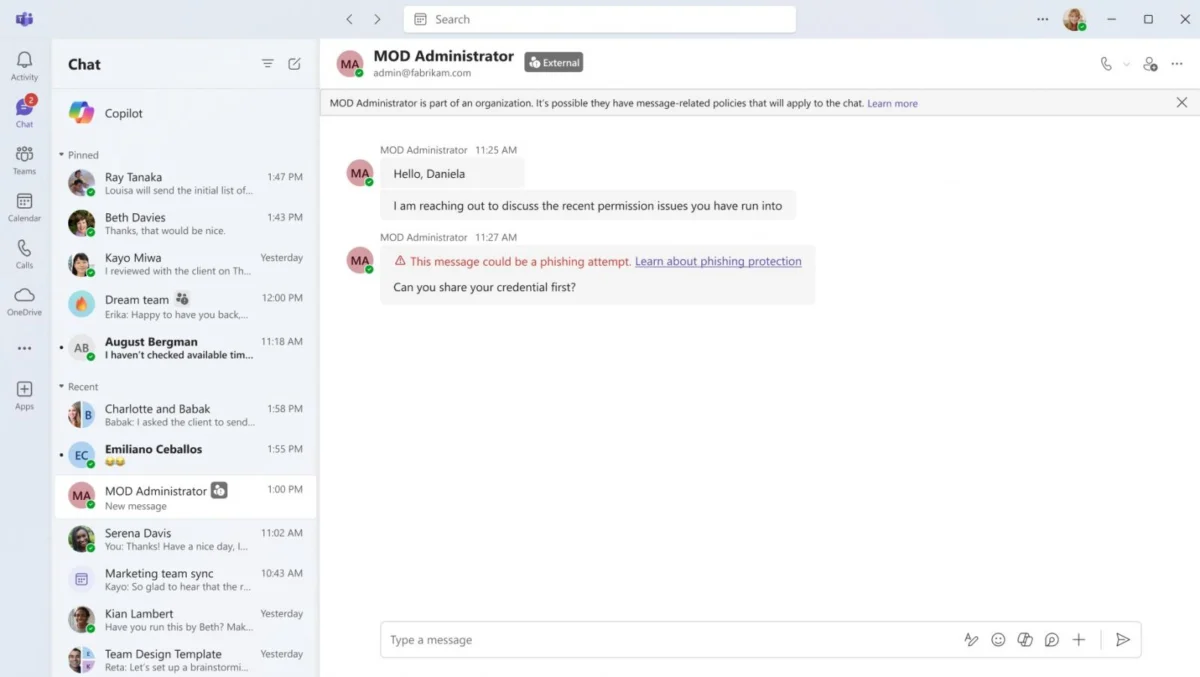
As enterprise communication platforms cement their role as the operational nervous systems of modern organizations, they have simultaneously transformed into prime real estate for sophisticated threat actors. In response to an escalating volume of targeted social engineering campaigns, credential harvesting schemes, and impersonation plots originating inside enterprise chat environments, Microsoft has announced a major upgrade to its security architecture. Beginning in early November 2026, Microsoft Teams will incorporate a specialized, artificial intelligence-powered phishing detection system designed to analyze conversation context and flag deceptive behavior in real time, shifting the security paradigm away from traditional file and link scanning toward deep linguistic and behavioral evaluation.
The upcoming security rollout is scheduled to commence with a targeted release phase, moving swiftly through iterative deployment loops before culminating in worldwide general availability projected for early to mid-December. According to technical documentation updated via the Microsoft 365 Message Center, this capability aims to close a critical visibility gap by scrutinizing high-risk communication vectors—most notably, initial chat interactions originating from external domains. Unlike historical defense mechanisms that rely heavily on known bad signatures, malicious hyperlinks, or corrupted file attachments, this contextual engine evaluates the overarching conversational framework to detect hidden malicious intent, subtle coercion, and unauthorized authority impersonation.
The Evolution of Collaboration Security and the Rise of Chat-Based Threats
For decades, enterprise security strategies were fundamentally anchored to email and perimeter network gateways. Secure Email Gateways (SEGs) and domain-based authentication protocols such as SPF, DKIM, and DMARC served as the primary digital bulwarks against external deception. However, as organizations shifted toward cloud-native productivity suites and hybrid work frameworks, adversaries rapidly adapted. They abandoned traditional vector pathways in favor of unified collaboration applications where employees inherently trust messages from external partners, vendors, and clients.
Microsoft Teams, boasting hundreds of millions of active enterprise users, became an immediate target for financially motivated cybercriminal syndicates and advanced persistent threat (APT) groups alike. Ransomware operators and specialized intrusion brokers have repeatedly demonstrated a capacity to exploit trusted communication channels through techniques like session hijacking, voice-phishing (vishing) campaigns, and fraudulent IT support impersonation. In these scenarios, attackers utilize legitimate external accounts or compromised credentials to initiate seemingly innocuous conversations with internal personnel. Because the communication occurs within a verified corporate workspace ecosystem, standard URL filters and signature scanners frequently fail to flag the threat, as the initial messages contain neither malicious binaries nor blacklisted hyperlinks.
By introducing an AI-driven, context-aware analytical framework, Microsoft is directly addressing this vulnerability. The technology evaluates the semantic trajectory of an exchange—identifying anomalies such as sudden shifts in tone, requests for sensitive credentials disguised as routine administrative checks, or subtle pressure tactics designed to bypass standard corporate verification protocols. This behavioral approach enables security systems to intercept attacks at their inception, long before an employee realizes they are interacting with a malicious actor.
Technical Mechanics and Privacy Safeguards
Implementing artificial intelligence within enterprise collaboration tools naturally raises valid concerns regarding data privacy, confidentiality, and regulatory compliance. Recognizing that corporate chat logs contain proprietary intellectual property, strategic financial discussions, and personally identifiable information (PII), Microsoft has instituted strict architectural guardrails governing the operation of its new contextual detection system.

According to roadmap disclosures and administrative documentation, the AI-powered scanning engine operates on a stateless or ephemeral processing model. While the capability continuously evaluates conversational context to identify deceptive indicators, customer message content is explicitly not retained by the detection infrastructure. The data processed during the analytical cycle is siloed exclusively for threat mitigation; it is legally and technically barred from being recycled for secondary machine learning model training, user productivity enhancement, automated summarization, targeted advertising, or general user monitoring.
Furthermore, IT administrators will not be burdened with complex provisioning workflows or manual configuration requirements. The feature is engineered to deploy automatically across tenant environments, focusing its analytical resources primarily on external first-contact scenarios where the risk profile is highest. This zero-configuration rollout ensures that organizations lacking dedicated security operations centers (SOCs) immediately benefit from advanced threat protection without introducing administrative overhead or disrupting standard user workflows.
A Layered Defense Strategy for the Modern Workspace
The introduction of context-aware phishing detection does not exist in a vacuum; rather, it represents the latest milestone in a comprehensive, multi-layered security overhaul orchestrated by Microsoft throughout the year. The modern threat landscape requires an integrated defense-in-depth architecture where individual security features reinforce one another to deny attackers lateral movement.
Earlier defensive milestones underscore this holistic philosophy. In January, Microsoft expanded administrative controls via the Microsoft Defender portal, empowering security teams to systematically block or restrict external users under specific threat conditions. This capability was strategically deployed to disrupt cybercrime operations—such as the infamous Matanbuchus malware distribution networks and aggressive ransomware organizations like Black Basta—which historically utilized compromised external accounts or manipulated voice call features to infiltrate corporate networks by posing as internal IT helpdesks.
Meeting environments have also received substantial security enhancements. A meeting protection policy rolled out earlier in the year grants administrators the authority to automatically block all identified external bots from participating in sensitive corporate gatherings, neutralizing automated data scraping and reconnaissance operations. Additionally, Microsoft addressed emerging visual deception vectors by implementing features designed to blur QR codes transmitted by external senders, effectively mitigating quishing (QR code phishing) attempts designed to bypass desktop security filters by shifting authentication actions to personal mobile devices.
To cultivate a collaborative security culture, recent platform updates allow employees to directly report suspicious guest invitations within the Teams interface. This user-generated telemetry feeds back into organizational security dashboards, equipping defenders with actionable intelligence to neutralize malicious guest accounts before access can be established. Looking further ahead, Microsoft has signaled its intention to integrate third-party deepfake detection solutions and advanced impersonation protection mechanisms into Teams meetings, anticipating an era where generative artificial intelligence will be weaponized by adversaries to clone executive audio and video streams in real time.
Industry Implications and the Changing Face of Enterprise Risk
The deployment of context-aware AI defenses within enterprise chat applications reflects a broader, industry-wide acknowledgment that perimeter security is dead. Modern cybersecurity philosophy is built on the principle of continuous verification, recognizing that perimeter walls will inevitably be breached—whether through sophisticated phishing, social engineering, or compromised legitimate credentials.
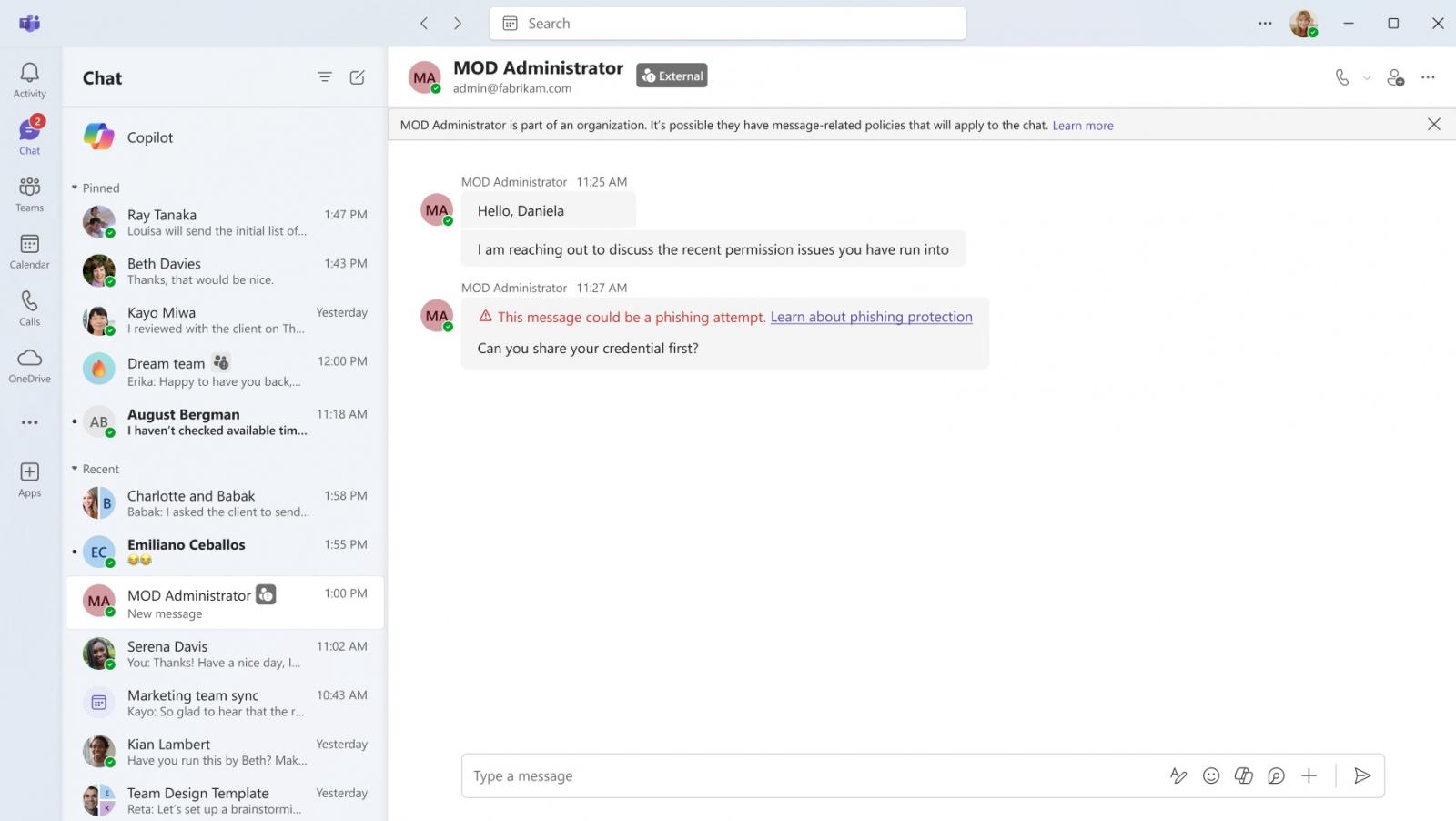
Empirical data from recent cybersecurity research underscores this stark reality. Industry reports tracking millions of simulated attack vectors in production environments reveal that once an adversary successfully acquires valid user credentials, traditional prevention mechanisms often experience significant drops in efficacy. When an attacker operates inside a network using legitimate credentials, their behavior closely mimics that of an authorized user, rendering static access controls and legacy rule-based firewalls largely ineffective.
In this environment, behavioral analytics and contextual artificial intelligence serve as the ultimate line of defense. By shifting the security focus from who holds the credentials to how those credentials and communication channels are being utilized in practice, platforms can catch anomalies that slip past initial access barriers. If an external contact suddenly initiates a conversation characterized by social engineering markers—such as urgent demands for financial transfers, unusual requests for multi-factor authentication resets, or deceptive impersonation of corporate leadership—contextual AI can flag the anomaly regardless of whether the underlying account token is technically valid.
Challenges and Future Trajectories in AI-Driven Security
Despite the profound promise of context-aware security tools, deployment at global scale introduces notable technical and operational challenges. Chief among these is the delicate balance between false positives and operational friction. In fast-paced enterprise environments, legitimate external partners often communicate with a degree of urgency, negotiation, or unorthodox phrasing that could superficially resemble social engineering to an overly aggressive algorithm. If a security system frequently flags legitimate business negotiations as phishing attempts, it risks generating "alert fatigue" among security analysts and frustrating end users, potentially driving employees to seek insecure shadow IT channels to bypass administrative controls.
To mitigate this risk, Microsoft’s ongoing refinement during the targeted release and general availability phases will be critical. Fine-tuning the sensitivity thresholds of the linguistic and behavioral models ensures high fidelity, minimizing false alarms while maintaining an unyielding stance against malicious actors.
Looking toward the future, the arms race between artificial intelligence-enabled defense systems and generative AI-powered attacks will undoubtedly intensify. As threat actors begin leveraging large language models to craft hyper-personalized, contextually nuanced social engineering attacks tailored specifically to individual corporate hierarchies, static defensive postures will become entirely obsolete. The future of enterprise security belongs exclusively to autonomous, real-time, adaptive defense engines capable of reasoning across unstructured communication data without compromising individual privacy.
Microsoft’s deployment of context-aware phishing detection in Teams marks a decisive step into this next generation of cybersecurity. By treating conversation context as a vital telemetry source while rigorously protecting customer data privacy, the platform establishes a new baseline for enterprise communication safety. As these capabilities mature through late 2026 and beyond, they will redefine how organizations protect their digital workspaces, ensuring that collaboration tools remain engines of productivity rather than vectors for compromise.
