

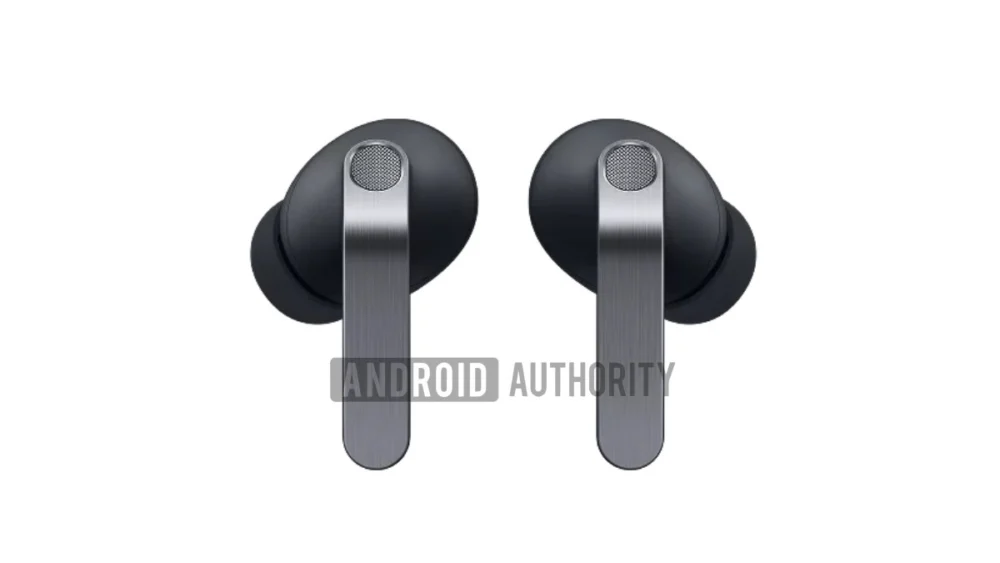
The relentless pursuit of incremental improvement in the premium true wireless stereo (TWS) market often hinges on two critical metrics: audio fidelity and endurance. Recent forensic analysis of internal software builds—specifically within the framework of a forthcoming One UI 8.5 iteration—suggests that Samsung is preparing a significant strategic pivot with its next flagship audio offering, the Galaxy Buds 4 Pro. This analysis, rooted in code string interpretation, points toward a notable advancement in battery longevity, coupled with a more focused implementation of advanced user interface controls, namely ‘Head Gestures.’
To contextualize these findings, it is essential to understand the current landscape of Samsung’s TWS hierarchy. The Galaxy Buds lineage has long battled established titans like Apple’s AirPods Pro, where perceived seamless integration and battery consistency are paramount consumer considerations. While the Galaxy Buds 3 series delivered iterative refinements, early code archaeology surrounding the Buds 4 generation indicates a specific effort to address the perpetual Achilles’ heel of high-end earbuds: sustained usage time away from the charging case.
Our initial discovery, dating back to the early days of December, highlighted preliminary battery specifications. At that juncture, the analysis indicated a rated capacity of 57mAh for the standard Buds 4 Pro, contrasted with a smaller 42mAh unit for the base Buds 4 model. Crucially, these initial figures were labeled with terminology suggesting they represented the "typical capacity." However, subsequent scrutiny of updated code strings has necessitated a critical re-evaluation of these values, clarifying the distinction between two fundamental battery metrics: rated versus typical capacity.
For the technically astute reader, this differentiation is vital. Rated capacity defines the guaranteed minimum charge a battery must hold under standardized testing protocols—it is the floor, not the ceiling. Conversely, typical capacity reflects the statistical average capacity observed across a production batch, measured under specific, manufacturer-defined operating conditions (e.g., constant playback at 50% volume).
The updated firmware analysis reveals that the initial 57mAh figure for the Buds 4 Pro was, in fact, the rated capacity. The newly uncovered typical capacity metric now stands at a more promising 61mAh. This recalibration marks a significant upward revision in expected real-world endurance.
To benchmark this potential leap, we must look backward. The preceding generation, the Galaxy Buds 3 Pro, featured a typical battery capacity of 53mAh. If the projected 61mAh for the Buds 4 Pro materializes as the typical operating standard, this represents an approximately 15% increase in cell capacity year-over-year. This magnitude of increase in a highly miniaturized component space is substantial, often requiring innovations in cell chemistry or significant redesign of the internal architecture—a departure from the marginal 2-4% gains often seen in subsequent generations of TWS devices.
Conversely, the standard Galaxy Buds 4 model presents a more complex picture. Its initial reported rated capacity was 42mAh, with the updated typical capacity now listed at 45mAh. Comparing this to the Buds 3’s typical capacity of 48mAh suggests a slight regression in raw cell size for the non-Pro variant. This divergence suggests a clear product segmentation strategy: Samsung is channeling its primary power efficiency and capacity investment into the premium Pro line, differentiating it more sharply from the base model.
The implications of this 61mAh cell size in the Buds 4 Pro are profound, particularly when considering Samsung’s historical performance benchmarks. Reaching 61mAh brings the Pro model’s cell size back in line with the highly regarded Galaxy Buds 2 Pro, which also boasted a typical capacity of 61mAh. If the Buds 4 Pro can match this capacity while simultaneously leveraging newer, more efficient processing units (likely incorporating updated Bluetooth LE Audio standards and more sophisticated Active Noise Cancellation—ANC—chipsets), the resulting cumulative battery life could surpass the 2 Pro model significantly, assuming corresponding efficiency gains in software management.
In the broader TWS industry, endurance remains a primary driver of consumer purchasing decisions, often trumping nuanced audio signature debates. Competitors are aggressively pushing playback times, often relying on larger case capacities rather than the buds themselves. By focusing on cell density and internal optimization within the earbud chassis—a more challenging engineering feat—Samsung is signaling a commitment to improving the on-device usage window, which directly impacts user convenience during extended calls or long listening sessions without immediate access to the charging case.
Beyond the raw power metrics, the firmware teardown provided crucial updates regarding the highly anticipated "Head Gestures" feature, which was first hinted at in earlier code examination. This feature promises a novel, touchless interaction paradigm, moving beyond simple taps and swipes to utilize the earbud’s integrated motion sensors—accelerometers and gyroscopes—to interpret user head movements.
The initial strings suggested a broad application for these gestures: nodding, shaking the head, or perhaps subtle head tilts could theoretically control playback, notification dismissal, or volume adjustment. Such functionality, if executed flawlessly, would revolutionize accessibility, particularly for users engaged in activities requiring free hands, such as cycling, cooking, or engaging in physical labor.
However, the recent update to the underlying code paints a more constrained, and perhaps more realistic, initial deployment scope. The revised strings suggest a deliberate narrowing of gesture utility, focusing heavily on critical communication pathways. Specifically, the nod and head shake movements appear to be earmarked primarily for:
- Call Management: Answering or declining incoming phone calls through a simple, discreet physical affirmation or negation.
- Bixby Interaction: Confirming or denying responses to Bixby voice queries ("Yes" or "No" confirmations).
- Session Termination: Ending an active voice conversation with the Bixby assistant.
This focused implementation suggests that Samsung is prioritizing reliability over feature breadth for this nascent technology. Introducing complex gesture recognition across numerous system functions (like dismissing every notification or adjusting volume via a head tilt) carries a high risk of false positives—unintentional activations that severely degrade the user experience. By restricting the functionality to high-stakes, binary choices (Answer/Decline, Yes/No), Samsung can rigorously test and perfect the motion detection algorithms in a controlled environment before expanding their purview.
The exclusion of gestures for dismissing non-critical alerts—such as alarms, timers, calendar reminders, or general notifications—is a pragmatic engineering choice. These interactions require a higher level of precision and context awareness that complex gesture mapping might currently struggle to provide without introducing frustrating errors. This staged rollout mirrors best practices in software development, ensuring core functionality is robust before layering on peripheral enhancements.
The integration of advanced sensor data processing within the TWS form factor itself speaks volumes about the increasing computational power embedded in these devices. Moving beyond basic audio codecs and ANC processing, the ability to accurately and consistently track head orientation and movement in real-time requires dedicated, low-power processing cores within the earbuds. This hints at potential underlying hardware upgrades, perhaps incorporating a more advanced, specialized motion co-processor designed specifically for low-latency biomechanical input interpretation.
The competitive ramifications of successful Head Gesture implementation are significant. While gesture control has seen limited, often gimmicky, implementations in smart glasses, its successful adoption in TWS earbuds would establish a new benchmark for device interaction. If Samsung masters the latency and accuracy required, it could force rivals to rapidly accelerate their own R&D into integrating sophisticated motion sensing for user interface navigation, moving TWS earbuds further away from being simple audio accessories toward being true, multi-modal personal computing peripherals.
It is crucial to reiterate the inherent caveat accompanying all firmware teardowns: these findings are based on in-development code strings. While they offer a strong predictive indicator of Samsung’s engineering trajectory, the final product released to the general consumer market is subject to change, deprecation, or refinement. Features discovered in this manner may never see the light of day, or they may launch in a significantly altered state.
Nonetheless, the confluence of evidence—a targeted 15% boost in typical battery capacity for the Pro model and a strategic, safety-first rollout plan for complex head gesture controls—suggests the Galaxy Buds 4 Pro are being engineered not merely as an iteration, but as a platform refresh aimed squarely at addressing core user pain points (endurance) while pushing the boundaries of hands-free interaction. The coming generation of Samsung audio hardware appears poised to deliver tangible, user-facing advancements rather than solely internal processing tweaks. As the unveiling approaches, monitoring the evolution of these specific code strings will provide the clearest early signal of the final feature set.
